Parma Cathedral & Correggio's Dome Fresco
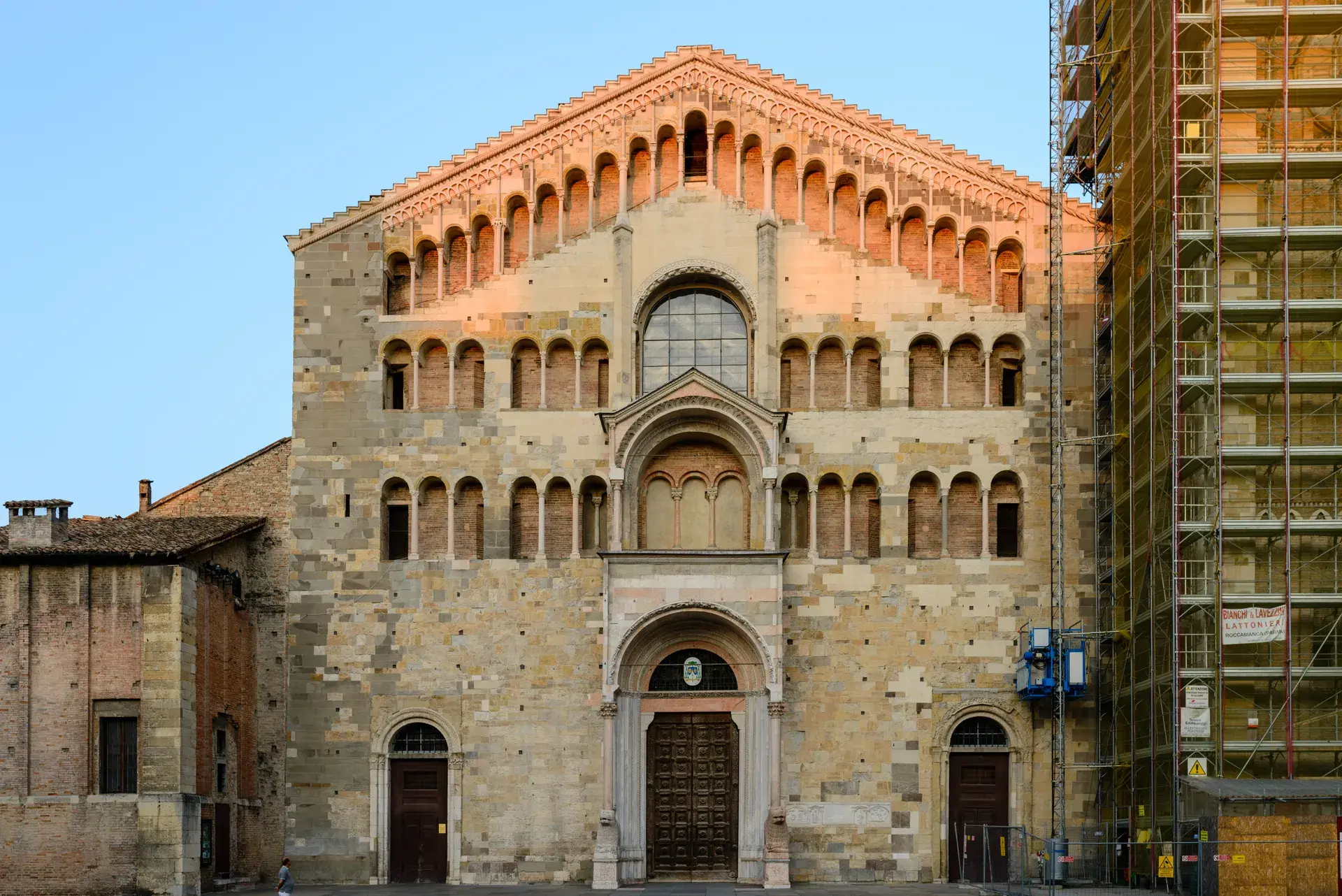
The Cathedral of Santa Maria Assunta, anchoring the bustling Piazza Duomo alongside the Baptistery and towering bell tower, represents one of Northern Italy's most intact medieval and Renaissance squares. While its striking Romanesque facade commands the exterior, the interior holds a transformative artistic treasure: Antonio Allegri's majestic sky.\n\n## The Assumption of the Virgin Fresco\n\nBetween roughly 1526 and 1530, the artist commonly known as Correggio painted an 11-meter fresco across the octagonal dome of the cathedral. Titled The Assumption of the Virgin, the artwork relies on an extreme di sotto in sù (foreshortening from below) technique. This illusionistic perspective effectively dissolves the physical stone masonry, replacing it with a swirling vortex of clouds, divine figures, and radiant light.\n\nThe base squinches of the dome feature Parma's four patron saints. Above them, a dizzying spiral of Apostles, music-making angels, and biblical figures surrounds the Virgin Mary, dressed in traditional red and blue. She ascends toward a descending, radically foreshortened Christ.\n\n## A Masterclass in Illusion and Perspective\n\nThe cathedral's architecture enhances the fresco's visual impact. A stark transition occurs when moving from the dim, heavy stone arcades of the Romanesque nave into the crossing. Here, daylight from eight drum windows and the warm painted gold of the cupola pull the gaze upward, creating a weightless, rotational pull of floating figures.\n\nTo master these complex, gravity-defying angles, Correggio employed an inventive technique. The artist modeled small wax and clay figurines, suspending them with strings from his workshop ceiling. This allowed him to accurately sketch the complex perspectives of figures floating through clouds from below.\n\n## Controversy and a Master's Defense\n\nCorreggio's radical foreshortening and the dense cluster of dangling bare legs initially horrified some conservative 16th-century clergy members. One cathedral warden supposedly dismissed the masterpiece as a guazzetto di rane, or a stew of frogs.\n\nHowever, the work quickly found influential admirers. According to historical tradition, the Venetian master Titian later defended the dome. He famously declared that even if the cupola were inverted and filled entirely with gold coins, it would not equal the painting's true artistic value.\n\n## Legacy and the Correggio Trail\n\nFollowing his success at the nearby Abbey of San Giovanni Evangelista, the cathedral overseers originally commissioned Correggio in 1522 to decorate the crossing, dome, and apse. While he completed the dome and pendentives, he retired to his hometown before finishing the apse, which was later completed by artists like Girolamo Mazzola Bedoli.\n\nToday, the dome is recognized as the direct precursor to the High Baroque ceiling style, influencing later masters such as Giovanni Lanfranco and Pietro da Cortona. The cathedral serves as the climax of the city's Correggio trail, establishing Parma as a crucial center of Renaissance and proto-Baroque innovation.\n\n## Modern-Day Visits\n\nParma Cathedral remains the active Romanesque seat of the Diocese of Parma, hosting daily Catholic liturgical services. The building is open to the public daily, offering free individual entry to view the dome. For those wishing to closely observe the intricate details of Correggio's ceiling fresco, illumination machines are available in the crossing to light up the masterpiece.
FAQ
Who painted the dome in Parma Cathedral?
The dome was painted by Antonio Allegri, commonly known as Correggio, between roughly 1526 and 1530. The fresco is titled The Assumption of the Virgin.
How much does it cost to enter Parma Cathedral?
Individual entry to the cathedral to view the dome is free. Nominal booking fees only apply to organized tour groups.
What technique did Correggio use for the dome fresco?
Correggio used an extreme illusionistic perspective known as di sotto in sù (foreshortening from below) to create a swirling, gravity-defying vortex of ascending figures. He used suspended wax and clay models to study the complex angles.