Teatro Regio Parma: Opera's Toughest Audience
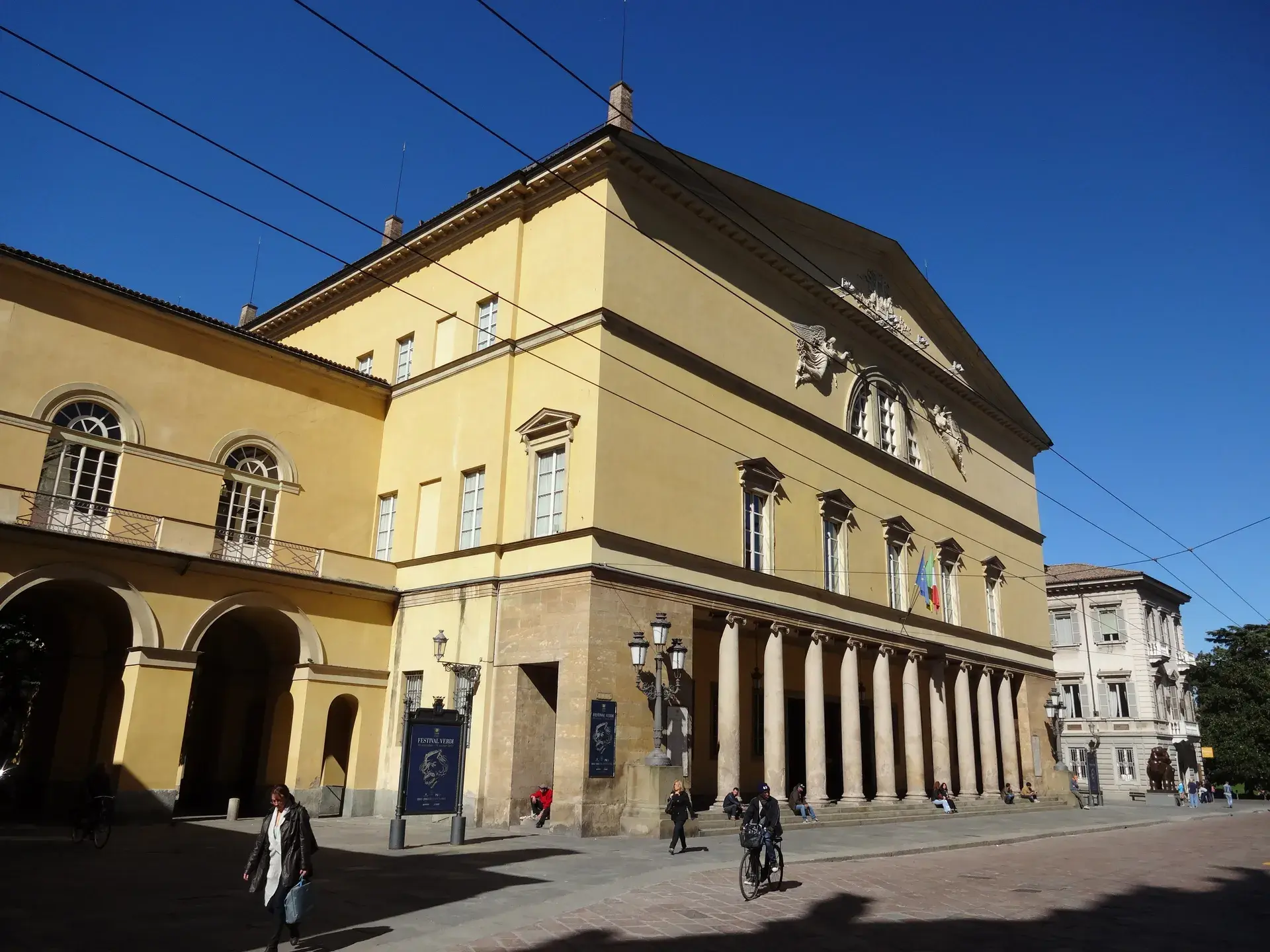
Step inside the domain of the most terrifying critics in Italian opera. Located centrally on Strada Giuseppe Garibaldi in Parma, the Teatro Regio anchors the city's rich musical identity. Originally founded as the Nuovo Teatro Ducale, the historic venue remains one of Italy's premier cultural landmarks and serves as an uncompromising bastion of Giuseppe Verdi's operatic repertoire.
A Grand Civic Opera House
Following the Congress of Vienna, Duchess Marie Louise of Austria sought to replace Parma's obsolete Ducal Theatre with a modern civic opera house. She commissioned court architect Nicola Bettoli to design the new structure on the site of the former Monastery of Sant'Alessandro.
Construction took place between 1821 and 1829. The theatre was officially inaugurated on May 16, 1829, featuring Vincenzo Bellini’s opera Zaira, which was composed specifically for the opening. In 1849, the building was officially renamed the Teatro Regio.
Neo-Renaissance Opulence and Secret Passages
The exterior of the building features a neoclassical facade painted in traditional "giallo Parma" (Parma yellow). It is framed by a portico of Ionic granite columns and relief sculptures by Tommaso Bandini depicting Apollo's Lyre and allegories of Fame.
Inside, the classic Italian horseshoe auditorium originally featured neoclassical white and blue decor. In 1853, under Duke Charles III, scenographer Girolamo Magnani redesigned the interior with gilded stucco, neo-Renaissance ornamentation, and rich red velvet. The hall accommodates between 1,200 and 1,400 spectators across the stalls, four tiers of boxes, and an upper gallery.
Above the auditorium hangs the "Astrolampo," a massive gilded bronze chandelier manufactured in Paris that measures over four metres high and weighs more than 1,100 kilograms. The stage also retains a rare painted curtain created by Giovan Battista Borghesi, depicting Duchess Marie Louise allegorized as the goddess Minerva. For the Duchess's privacy, a secret corridor was constructed between the neighboring Ducal Palace and the Royal Box, allowing her to attend performances unseen by the public. Another historical curiosity is the original illuminated clock centered above the proscenium arch, which updates every five minutes so audiences can track time in the dark.
The Loggionisti: Opera’s Most Exacting Critics
The Teatro Regio is internationally renowned for the occupants of its upper gallery (loggione). Known as the loggionisti, these passionate attendees are famously considered the most vocal and unforgiving opera audience in the world.
These exacting critics have a well-documented history of openly booing, hissing, heckling, or walking out if a singer falls short in pitch or phrasing. Their uncompromising standards have intimidated and reduced celebrated international opera stars to tears.
Parma's deep devotion to opera is also upheld by the local 'Club dei 27', an exclusive group capped at exactly 27 male members. Each member bears the name of one of Giuseppe Verdi's 27 completed operas.
Modern Performances and Access
Today, the Teatro Regio hosts an active annual opera season, symphony concerts, and the ParmaDanza ballet series. Every autumn, it serves as the primary stage for the prestigious Festival Verdi and its fringe initiative, Verdi Off.
The theatre also runs educational initiatives like the Accademia Verdiana for young opera singers. The building is open for guided public tours in Italian and English, granting access to the Foyer, the Main Auditorium, and the Ridotto. Visitors can also see the historic Gran Caffè del Teatro Regio located within the venue.
FAQ
When was the Teatro Regio built?
Construction began in 1821 under the commission of Duchess Marie Louise of Austria. The theatre was inaugurated on May 16, 1829, with a performance of Vincenzo Bellini’s opera Zaira.
Who are the loggionisti?
The loggionisti are the audience members who occupy the theatre's upper gallery. They are famous in the opera world for being highly critical and unforgiving, often loudly booing or heckling singers who miss a pitch or phrase.
Is the Teatro Regio open to the public for tours?
Yes, the theatre conducts guided public tours in both Italian and English, which include views of the Foyer, the Main Auditorium, and the Ridotto.
What is the Astrolampo?
The Astrolampo is a massive, gilded bronze chandelier hanging from the auditorium's dome. Manufactured in Paris, it stands over four metres high and weighs more than 1,100 kilograms.