Porta di Sovana: Pitigliano's Historic Gateway
The Western Portal of Pitigliano
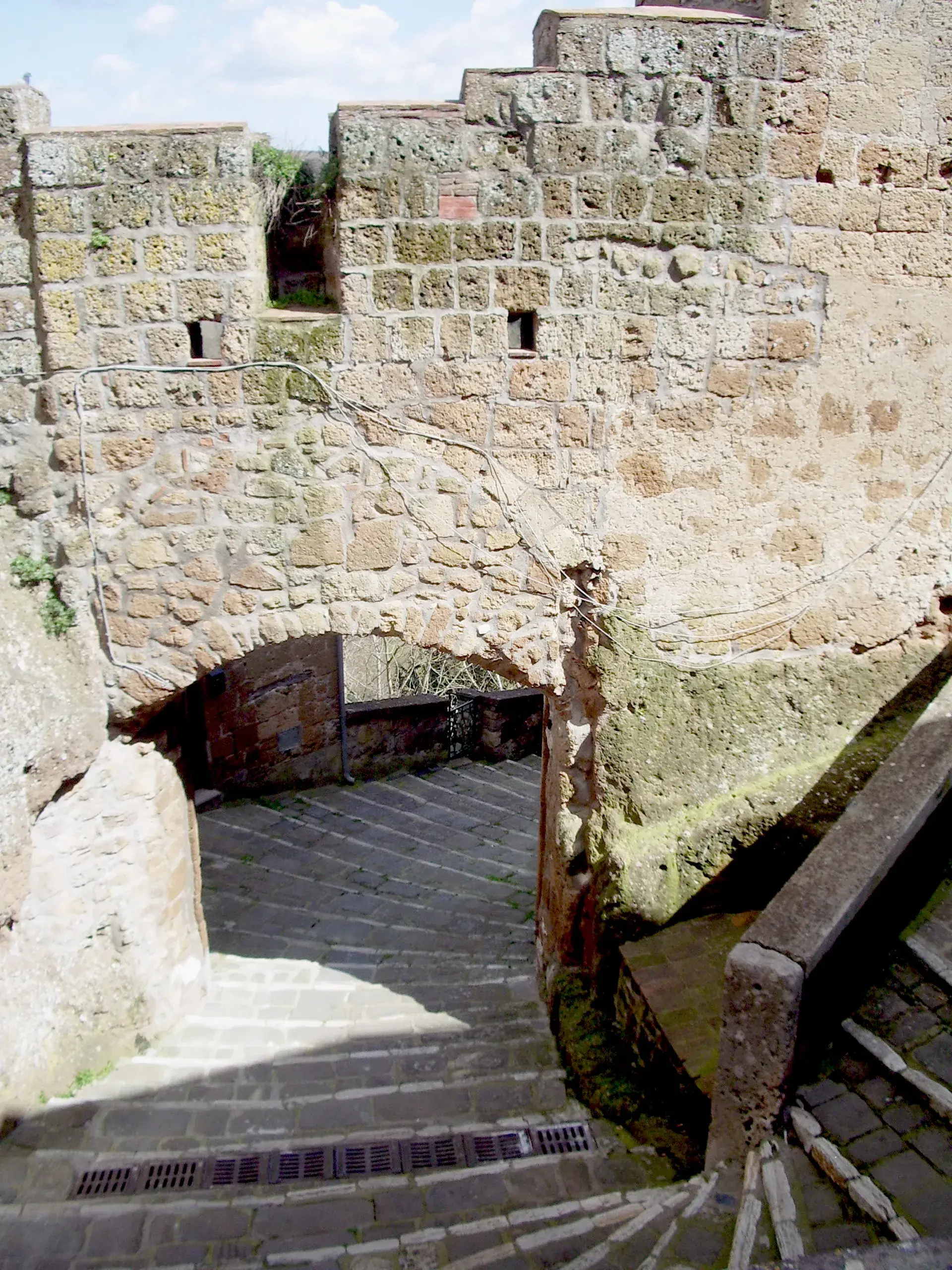
Positioned at the northwestern tip of Pitigliano in the medieval Capisotto quarter, Porta di Sovana marks the historic transition between the town's cliffside streetscapes and the surrounding canyon ravines. While the Fortezza Orsini and Porta della Cittadella secure the eastern plateau—Pitigliano's only level approach—Porta di Sovana anchors the opposite, isolated western promontory. Historically, this gate operated as the fortified threshold connecting the settlement to the valley floor, neighboring necropolises, and ancient regional pathways.
Etruscan Foundations and Medieval Fortifications
The site of Porta di Sovana holds defensive origins that predate the medieval era. Etruscan builders originally fortified this narrow promontory edge where converging river valleys meet, employing monumental blocks of volcanic tuff. Sections of this ancient ashlar masonry, known as opera quadrata, remain visible directly adjacent to the gateway.
In the 13th century, the Aldobrandeschi counts commissioned Porta di Sovana as a fortified link between Pitigliano and Sovana, the historic capital of the county. The defensive layout originally consisted of a dual-gate gatehouse system protected by the Torrione di Pietralata. Under subsequent Orsini rule, the defensive works underwent Renaissance modifications associated with the Sangallo redesigns. Over later centuries, the Torrione di Pietralata was absorbed into adjacent residential buildings. The dual-portal entrance survived until the early 1970s, when one of the two historic arches collapsed.
Pathways to the Vie Cave
In 1844, British antiquarian George Dennis documented passing through Porta di Sovana, describing the descent from the tight stone alleys of Capisotto directly into the shaded, moss-covered volcanic ravines leading to Sovana. The passage marks an abrupt environmental shift from dense medieval masonry to towering tuff cuts.
Today, Porta di Sovana functions as an open pedestrian passage and the primary trailhead linking the historic center to the regional hiking network. Below the gate, a stone staircase descends directly to the Sentiero della Selciata, a loop trail running along the base of the cliffs toward the Medicean Aqueduct pillars and the Medicean washhouses (Lavatoio Mediceo).
The portal also serves as the entrance to the ancient vie cave—sunken roads carved through the volcanic bedrock—including the Via Cava di Poggio Cani and the Via Cava di San Giuseppe, alongside routes toward the Lente River waterfalls. Every year around the spring equinox on March 19, these rock-cut pathways host the Torciata di San Giuseppe, an annual tradition in which hooded torchbearers ascend from the ravines into Pitigliano.
FAQ
Where is Porta di Sovana located?
Porta di Sovana is located at the northwestern tip of Pitigliano's historic center, at the edge of the medieval Capisotto quarter.
What defensive features originally surrounded Porta di Sovana?
The gate was originally part of a two-gate defensive layout guarded by the Torrione di Pietralata and was built alongside surviving Etruscan ashlar tuff walls.
What happened to the dual-gate layout of Porta di Sovana?
The dual-portal structure stood intact until the early 1970s, when one of the two historic gates collapsed.
Which trails connect directly to Porta di Sovana?
The gate provides access to the Sentiero della Selciata cliff-base path, the Medicean washhouses, the Lente River trails, and sunken Etruscan roads such as Via Cava di Poggio Cani and Via Cava di San Giuseppe.