Pitigliano Cathedral: History and Architecture
The Spiritual Heart of Pitigliano
The Cathedral of Saints Peter and Paul (Cattedrale dei Santi Pietro e Paolo), also known as the Duomo di Pitigliano, serves as the mother church and episcopal seat of the Roman Catholic Diocese of Pitigliano-Sovana-Orbetello. Located in Piazza San Gregorio at the western terminus of Via Roma, the monument anchors the spiritual core along the spine of the volcanic promontory, counterbalancing the defensive presence of the Orsini fortress at the town's eastern entrance.
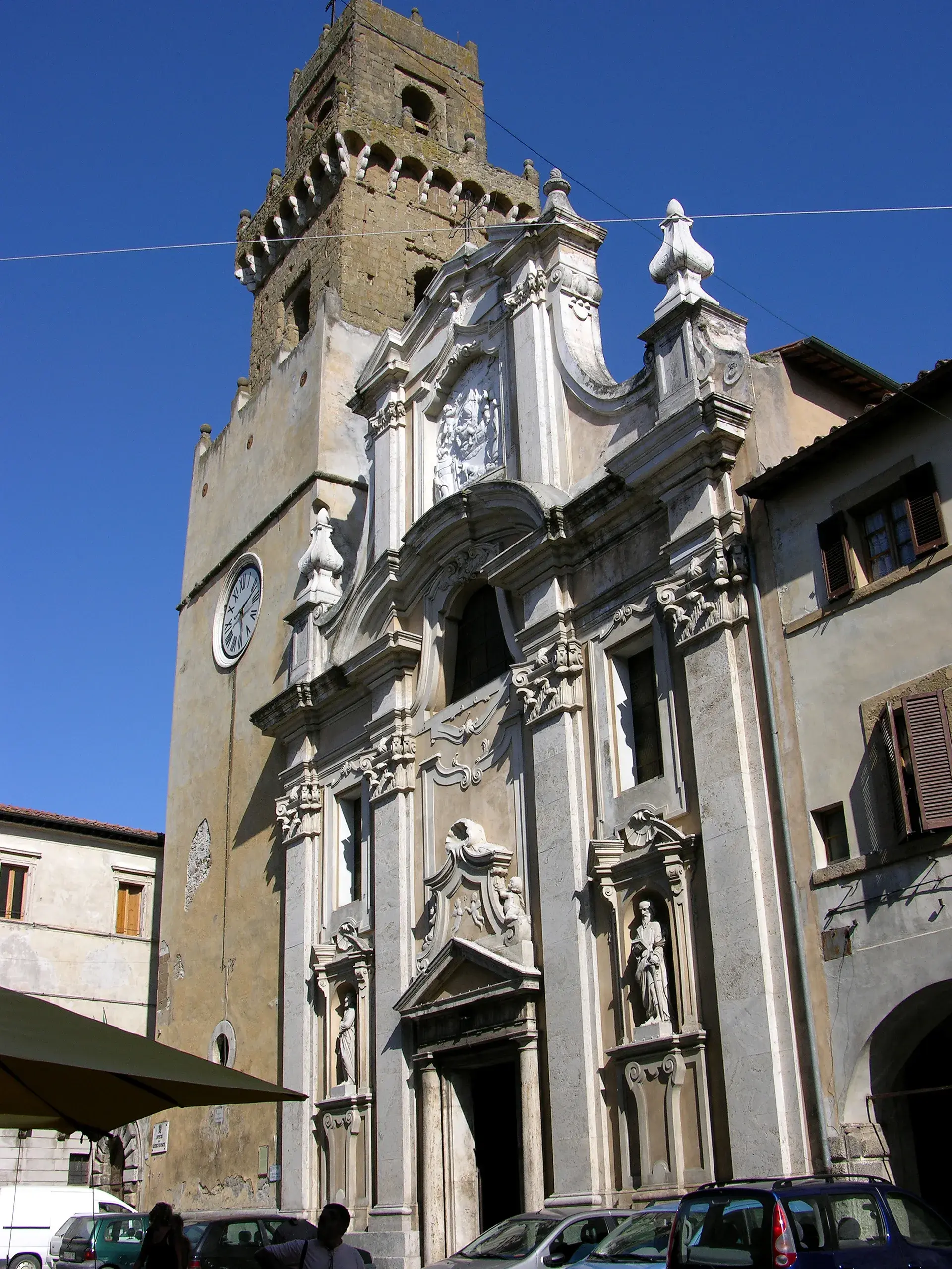
While the surrounding streets are characterized by porous, warm volcanic tuff, the cathedral's exterior presents a striking visual departure with its pale stone finishes, refined stucco, and sculpted Carrara marble.
The Late Baroque Façade
The cathedral's exterior showcases an 18th-century Late Baroque design, completed around 1758, which incorporates earlier 16th-century Renaissance structural components. The façade is organized vertically into three bays divided by four monumental pilasters.
At ground level, a 16th-century travertine central portal anchors the structure, crowned by an 18th-century stucco relief of cherubs supporting a cross. Flanking the main doorway are two stuccoed niches containing travertine statues of Saint Peter on the left and Saint Paul on the right. Above, the second tier incorporates three stucco-framed windows, leading up to an upper pediment that encloses a Carrara marble bas-relief depicting the Assumption of Mary with Saint Roch and Saint Francis.
A Civic Watchtower Transformed
Rising approximately 35 metres on the church’s left flank stands a stone tower with Romanesque origins. Unlike conventional church campaniles, this structure was not originally conceived for religious purposes. It was built as a secular, two-tiered civic and military watchtower dedicated to the defense of the town.
This early defensive role remains permanently embedded in the town's civic identity, as the original two-tiered watchtower is the structure depicted on Pitigliano's official municipal coat of arms. Under Medici rule, a third level was constructed atop the fortifications, transforming the military post into a church bell tower.
Medieval Origins and Cathedral Elevation
Historical records document a parish church dedicated to Saint Peter on this site as early as 1061 and 1276, which later became a collegiate church dedicated to Saints Peter and Paul. Following centuries of damage and structural decline, the church underwent a major rebuilding around 1509 under Niccolò III Orsini, Count of Pitigliano—an intervention commemorated by an interior inscription near the entrance.
The comprehensive overhaul concluded around 1758 established the church's present Baroque interior, introducing side chapels, substantial pilasters, ornate plaster decorations, and a monumental high altar (macchina barocca). In 1845, Bishop Francesco Maria Barzellotti transferred the official episcopal seat from Sovana to Pitigliano, formally elevating the building to cathedral status.
Interior Heritage
Inside, the cathedral houses notable works of art, including two late 19th-century historical paintings by Pietro Aldi. These canvases commemorate key moments in the life of Pope Gregory VII (Ildebrando of Soana), an 11th-century pontiff born in the surrounding territory. One canvas depicts the young Ildebrando receiving his spiritual calling, while the other portrays Holy Roman Emperor Henry IV kneeling at Canossa.
Today, the cathedral continues to serve as an active place of worship, hosting regular Catholic masses and diocesan liturgies while welcoming visitors interested in the town's architectural and religious history.
FAQ
Why is the cathedral's bell tower featured on the municipal coat of arms?
The tower was originally built as a two-tiered secular and military watchtower before a third tier was added under Medici rule to convert it into a bell tower. Its original defensive form is the structure illustrated on Pitigliano's official coat of arms.
When did the church become a cathedral?
The church was elevated to cathedral status in 1845, when Bishop Francesco Maria Barzellotti officially transferred the episcopal seat of Sovana to Pitigliano.
What artworks are highlighted inside Pitigliano Cathedral?
The interior features two late 19th-century historical paintings by Pietro Aldi depicting scenes from the life of local native Pope Gregory VII, including Emperor Henry IV kneeling at Canossa.