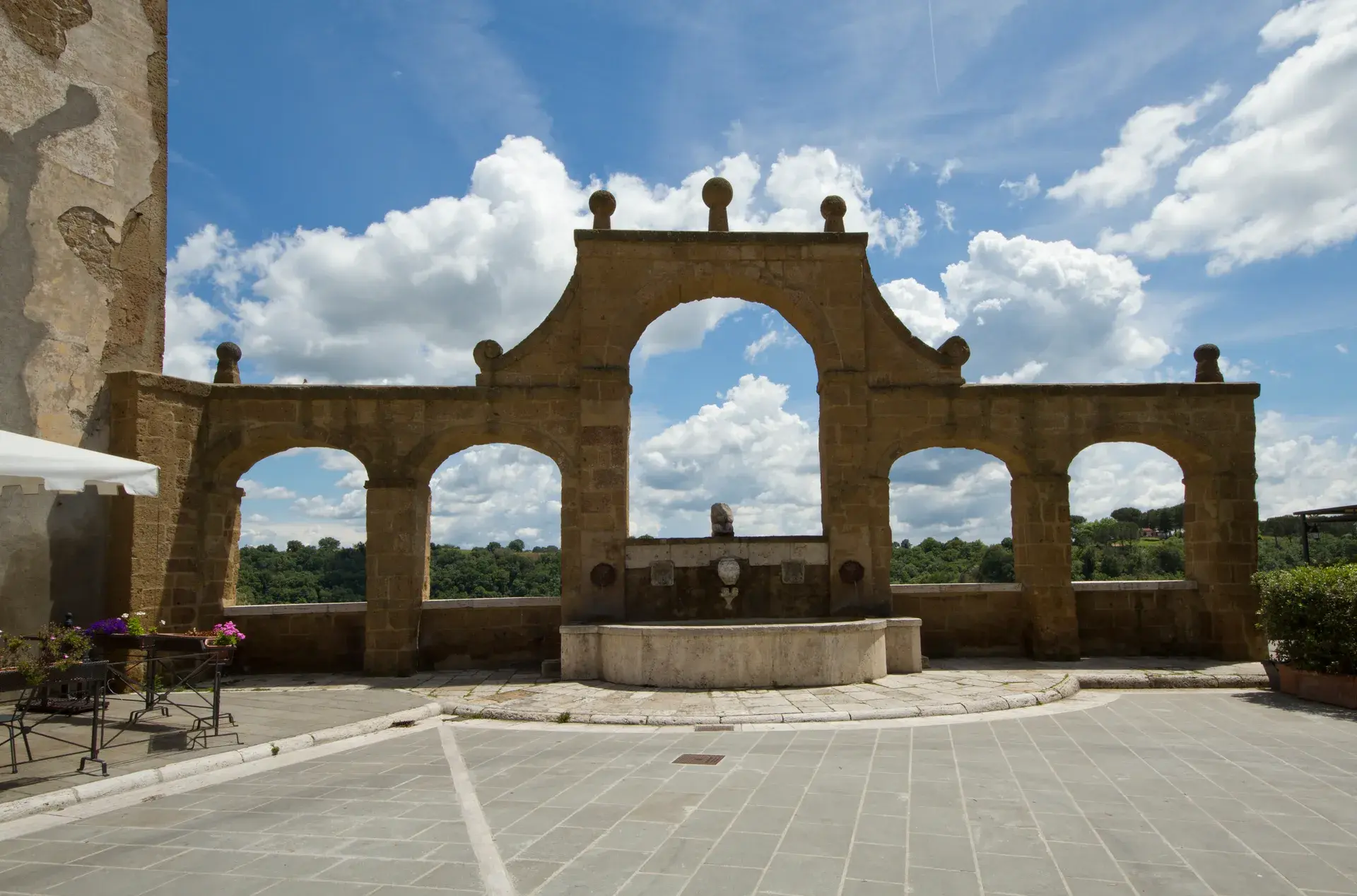
Pitigliano Centro Storico: Cliffside Via Zuccarelli
Architecture Carved from Volcanic Tufa
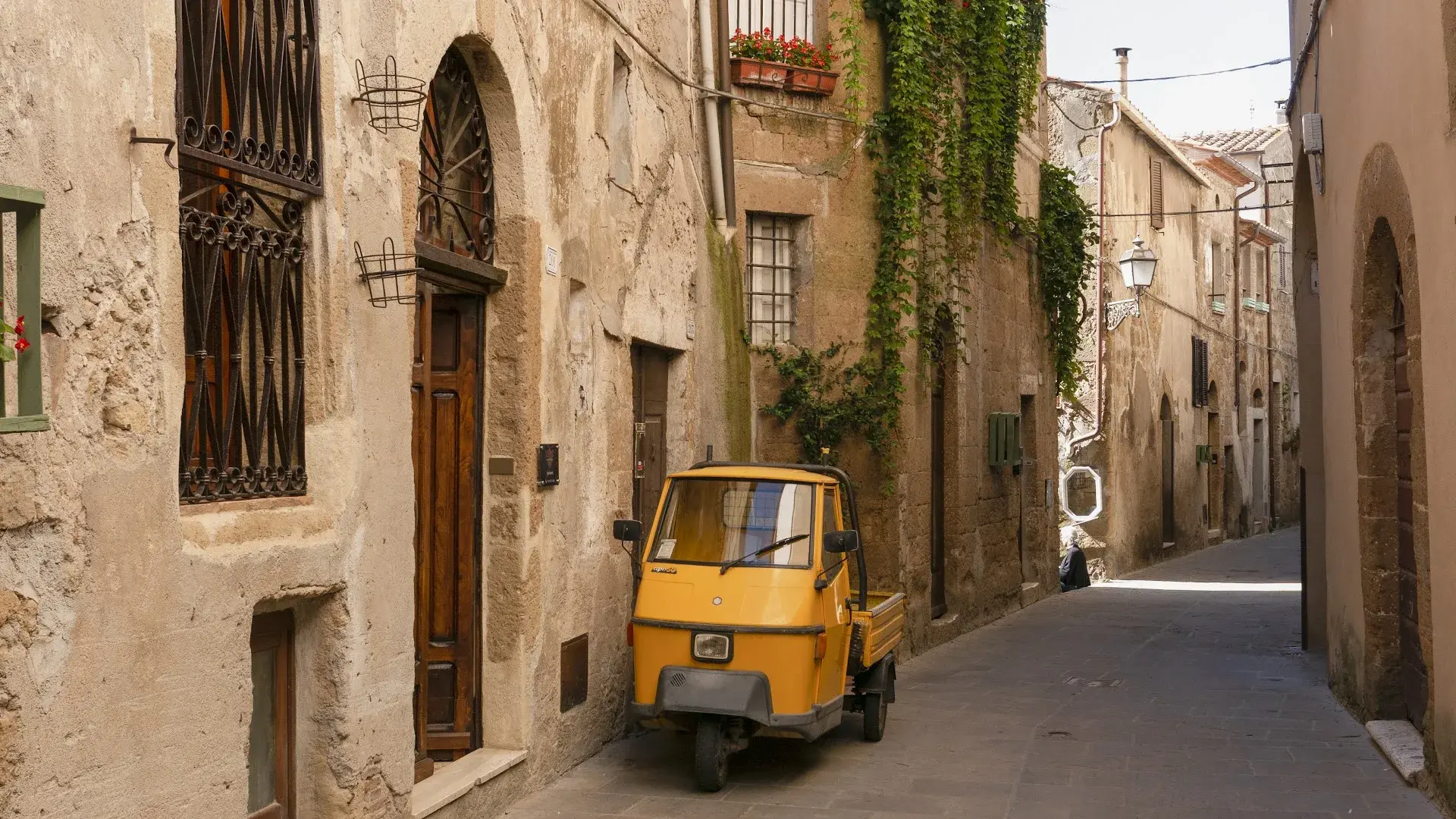
Pitigliano’s historic center rests upon a narrow volcanic spur bordered by the Meleta, Lente, and Prochio river ravines. The urban plan is organized along three parallel east-west axes: Via Vignoli to the north, Via Roma through the center, and Via Zuccarelli framing the southern perimeter. Extending westward from Piazza della Repubblica toward the ancient Capisotto district, Via Zuccarelli features homes built flush with the sheer vertical drop of tufa rock.
These structures were quarried directly from the porous volcanic stone upon which they stand. Because the facades share the identical ochre and brown tones of the cliff face, the town creates the visual effect of rising organically out of the gorge. In several places, narrow alleys and domestic rear doorways terminate abruptly at parapets overlooking a 300-meter plunge directly into the Meleta river valley.
Subterranean Networks and Ancient Origins
Human settlement on the promontory dates back to prehistoric and Etruscan times, when early inhabitants carved hypogea, burial tombs, and water conduits into the soft volcanic tufa. As space grew limited during the medieval and Renaissance eras, builders pushed outward to the cliff line, utilizing the sheer geological drop as defensive ramparts instead of constructing secondary exterior curtain walls.
Beneath street level, the ridge remains honeycombed with a multi-level subterranean system of cellars, cisterns, stables, and drainage channels. Moving from the open cobblestone lanes into these carved tufa chambers produces an immediate drop in temperature, accompanied by the damp, mineral scent characteristic of volcanic stone.
The Historic Ghetto of "La Piccola Gerusalemme"
Via Zuccarelli represents the cultural center of Pitigliano’s identity as "La Piccola Gerusalemme" (Little Jerusalem), marking centuries of integrated civic life between Christian and Jewish residents. Following sanctuary extended by the Orsini counts during the 16th century, an enclosed Jewish ghetto was officially designated along Via Zuccarelli and neighboring alleys by the Medici Grand Dukes in 1622.
The quarter was established around the historic synagogue, which had been erected in 1598. Today, Via Zuccarelli serves as the primary route to the reconstructed synagogue and the excavated underground Jewish Museum complex, which contains a historic mikveh (ritual bath), a kosher wine cellar, a kosher slaughterhouse, and an unleavened bread bakery.
Wartime Scars: Le Macerie Memorial
At the eastern entrance of Via Zuccarelli, near Piazza della Repubblica, the street preserves evidence of modern conflict. On June 7, 1944, an Allied air strike hit the area, causing multiple cliffside homes to collapse into the valley and killing approximately 80 residents.
The impacted site has been converted into an open-air historical space known as Le Macerie. Glass protective panels safeguard the exposed foundations, preserved subterranean tufa cellars, and structural debris, complemented by informational plaques that document the event and memorialize the casualties.
Daily Life and Street Lore
The street is named in honor of Giacomo Francesco Zuccarelli (1702–1788), an acclaimed Rococo landscape painter born in Pitigliano who later co-founded the Royal Academy of Arts in London.
Today, the paved pedestrian thoroughfare is lined with private homes, craft workshops, and residential rentals. It retains rich neighborhood lore from the 20th century, such as the story of Jewish carpenter Augusto Sadum, known as "Barbetta." Working from a shop too narrow for his trade, Sadum assembled custom wooden coffins directly on the cobblestones of Via Zuccarelli, often entertaining curious onlookers with invented names for their intended occupants.
FAQ
Why were houses built on the cliff edge along Via Zuccarelli?
During the medieval and Renaissance periods, population growth on the narrow volcanic ridge left little room for expansion. Builders positioned houses flush with the cliff edge to maximize space and use the natural rock precipice as a defensive barrier instead of constructing outer stone walls.
Why is Pitigliano called "La Piccola Gerusalemme"?
The town earned the title "Little Jerusalem" due to its significant Jewish community that flourished under the protection of the Orsini counts and later within the enclosed ghetto established on Via Zuccarelli by the Medici Grand Dukes in 1622.
What is the Le Macerie site on Via Zuccarelli?
Le Macerie is an open-air memorial preserving the ruins and subterranean tufa cellars of homes destroyed by an Allied air strike on June 7, 1944, which claimed around 80 lives.
Discover Pitigliano like never before
Dive into Pitigliano hidden stories and secret spots with Ciceru interactive tours.
Explore tour
Audioguide
Quizzes
Maps
Solo
Couples
Groups & families

© Photo by Casa del Ghetto via Google Maps · Google Places