Chiesa di Sant'Agostino, San Gimignano: Art & History
History and Architecture of Sant'Agostino
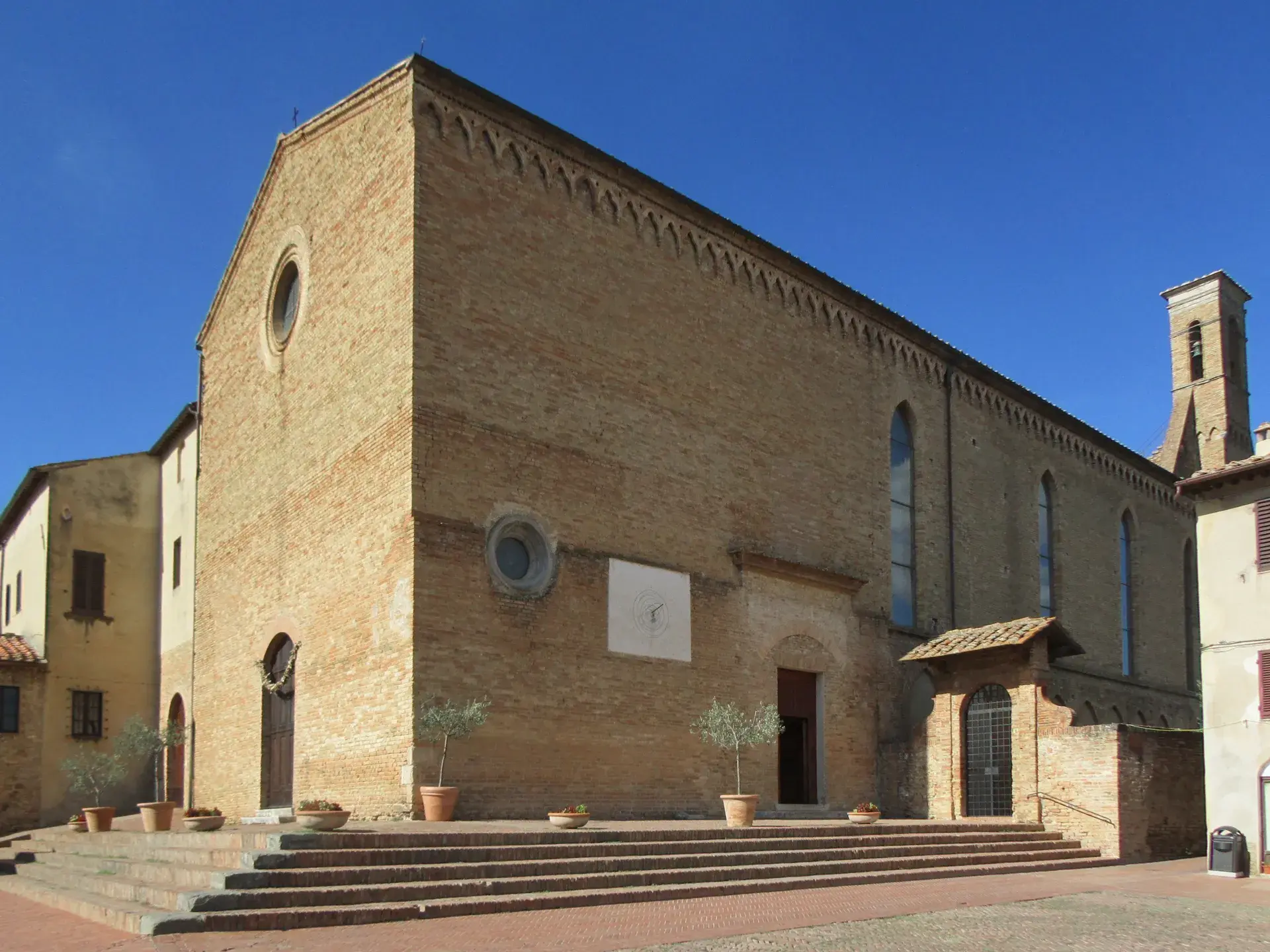
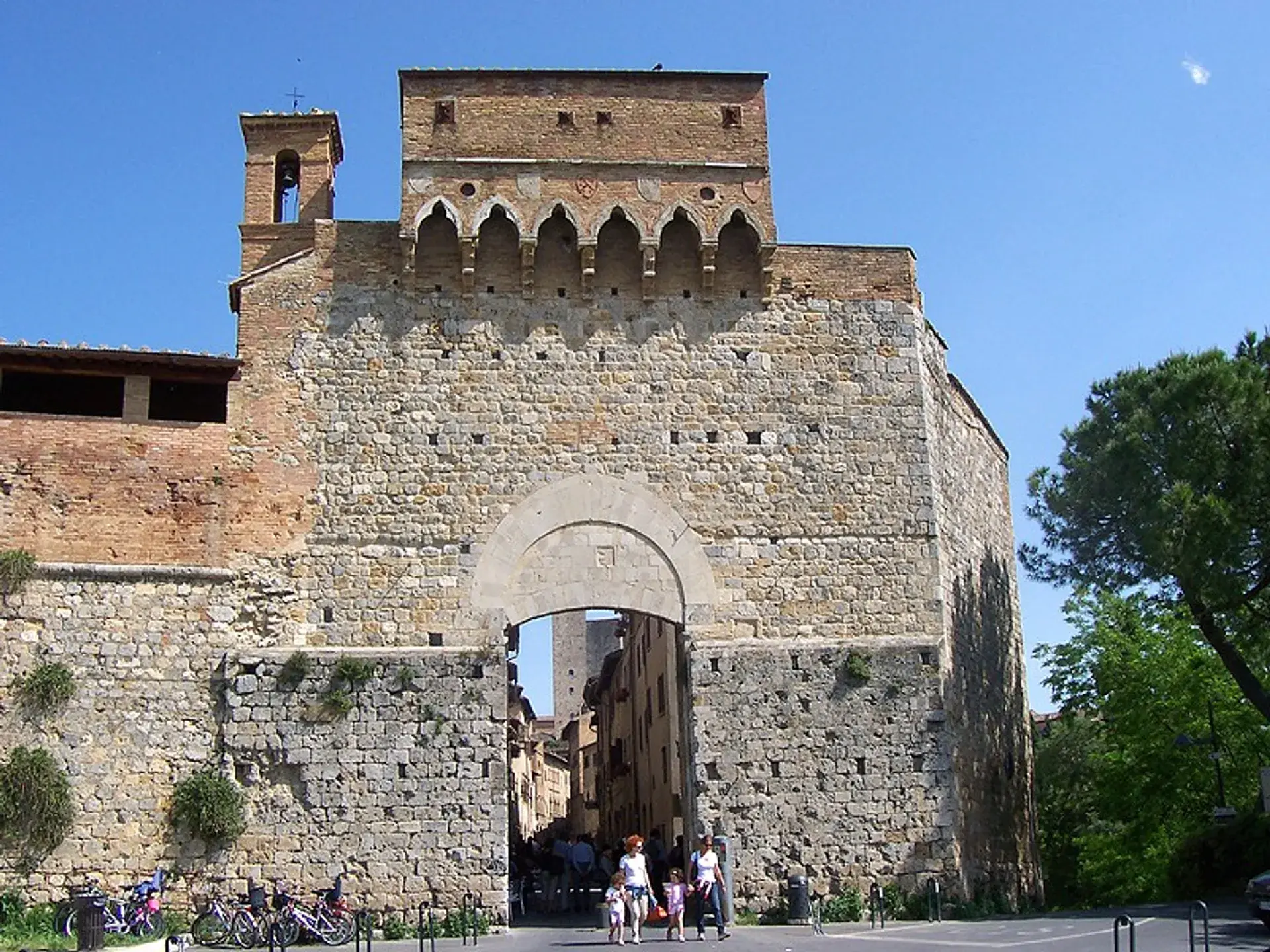
Situated on Piazza Sant'Agostino near the Porta San Matteo, the Church of Sant'Agostino marks the northern edge of San Gimignano's historic walled center. Serving as the northern terminus of the primary route that traverses the town from Porta San Giovanni through the central squares, it is the settlement's second-largest church.
Augustinian friars were initially tasked with establishing a monastery outside the town walls at Racciano in 1272. By 1280, the friars secured civic support to relocate inside the fortifications, receiving a municipal grant of lime and 20,000 bricks to build their complex. Cardinal Matteo d'Acquasparta consecrated the church and monastery on March 31, 1298.
Constructed primarily in brick during the late 13th century, the building integrates Romanesque and Gothic architectural forms. The interior consists of a single wide nave covered by an open timber-truss ceiling, terminating in three square presbytery chapels. While San Gimignano's Collegiata church is famous for 14th-century Sienese art, Sant'Agostino represents the town's 15th-century Renaissance height, driven by Augustinian patronage that attracted leading Florentine artists.
Benozzo Gozzoli and the 1464 Plague Fresco
Florentine painter Benozzo Gozzoli fled to San Gimignano in 1463 to escape an epidemic in Florence. When the plague reached the hill town in the summer of 1464, the Augustinian friars commissioned an urgent votive wall painting of Saint Sebastian, revered as an intercessor against epidemic illness. Gozzoli and his workshop executed the monumental fresco on the nave wall in approximately 16 days, completing it on July 28, 1464.
Departing from the conventional iconography of Saint Sebastian bound to a stake and pierced by arrows, Gozzoli depicted the saint fully clothed in classical vestments. Standing in the manner of a Virgin of Mercy, Sebastian holds open his broad protective cloak over the huddling townspeople. Plague arrows cast down from above snap harmlessly against his mantle, while Christ and the Virgin Mary intercede above to plead for divine mercy. The friar and intellectual who financed and designed the work's theological program, Fra Domenico Strambi, appears painted in profile beside Saint Sebastian.
Renaissance Masterpieces and San Bartolo
Beyond the plague fresco, Gozzoli completed a major 17-panel fresco cycle depicting the Life of Saint Augustine between 1464 and 1465, located in the central choir apse. Fra Domenico Strambi is depicted throughout several narrative scenes of this cycle as well. In the presbytery, the high altar displays Piero del Pollaiuolo's panel painting of the Coronation of the Virgin, dated to 1483.
The church is also home to the Cappella di San Bartolo, dedicated to Bartolo Buonpedoni (1228–1300). Known locally as the "Job of Tuscany," Buonpedoni was a Franciscan tertiary who spent two decades tending to patients at the Cellole leper hospital before succumbing to the disease. The chapel features a carved white marble altar-shrine created by sculptor Benedetto da Maiano between 1494 and 1495, set above glazed majolica floor tiles produced by Andrea della Robbia.
The Cloister and Practical Information
Adjoining the nave is a quiet 15th-century double-tiered brick cloister. This space once held the town's natural history and ornithological museum until the collection was relocated in 1983.
Today, the site remains an active convent and place of worship administered by the Order of Saint Augustine. Daily masses are held in Italian, alongside a dedicated Sunday Mass celebrated in English at 11:00 am to accommodate international travelers and pilgrims following the Via Francigena. The church is open daily with split morning and afternoon visiting hours, closing during the middle of the day. Admission is free, though coin-operated meters requiring €0.50 coins provide spotlight illumination for the choir cycle and side chapels.
FAQ
Why is Saint Sebastian depicted differently in Sant'Agostino?
Rather than being shown semi-nude and bound to a post with arrows, Saint Sebastian is portrayed fully clothed in classical garments, spreading his cloak like a Virgin of Mercy to deflect falling plague arrows away from the citizens below.
Who was San Bartolo?
Bartolo Buonpedoni was a local 13th-century religious tertiary who cared for lepers at Cellole for twenty years until contracting leprosy himself. His relics reside in the church's Cappella di San Bartolo inside a marble shrine by Benedetto da Maiano.
Are there English church services at Sant'Agostino?
Yes, an English-language Catholic Mass is held every Sunday at 11:00 am, serving travelers and pilgrims walking the Via Francigena route alongside daily services in Italian.