Porta San Giovanni: San Gimignano's Historic Gate
The Southern Threshold of San Gimignano
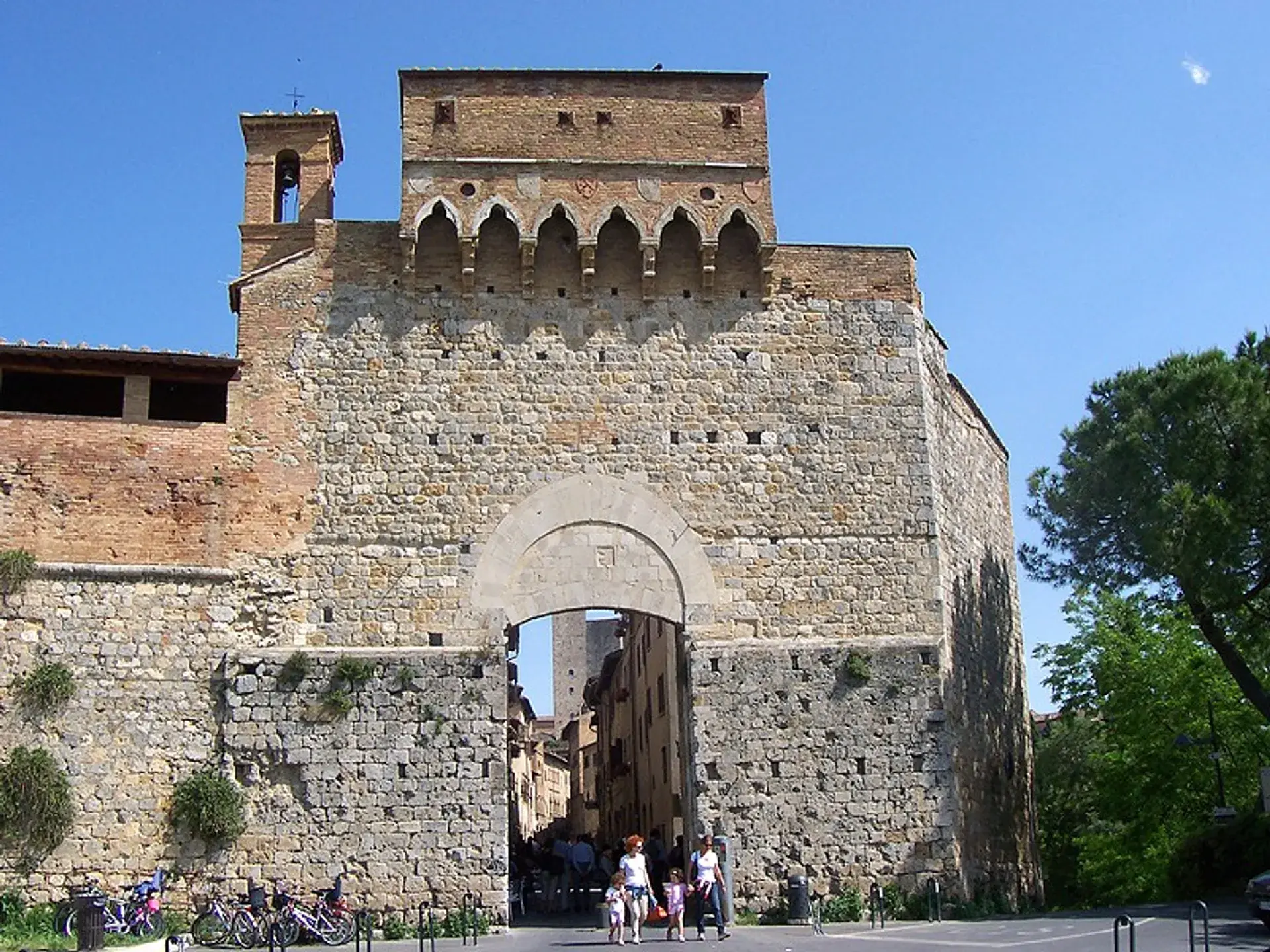
Completed in 1262 as part of the town's second defensive wall circuit (seconda cerchia muraria), Porta San Giovanni stands as the monumental southern entrance to San Gimignano. Built to face neighboring Siena, the portal served as a primary conduit along the Via Francigena, the vital medieval pilgrimage and trade corridor linking northern Europe to Rome.
Throughout the 13th century, the gate functioned as an economic valve for the commune. Merchants, pilgrims, and financial emissaries entered the city under its archway, generating tax tolls and commercial activity. The wealth garnered from banking, textiles, and the lucrative saffron trade directly financed the construction of the iconic stone towers that define the city's skyline today.
Medieval Architecture and Fortifications
Crafted from local stone masonry, Porta San Giovanni exemplifies regional medieval military architecture. The entrance is defined by a flattened Sienese arch (arco ribassato), built to manage the flow of traffic while maintaining a fortified perimeter. Directly above the archway rests a projecting sentry post (guardiola), supported by stone corbels (beccatelli) that feature trefoil arches (archetti trilobati) and functional machicolations (caditoie) designed to counter assaults.
Over the centuries, the defensive works surrounding the gate evolved alongside changes in warfare. During the 16th century, under Florentine rule, the defenses were reinforced with the circular Bastione San Francesco. This robust artillery bastion was engineered to safeguard the town against potential bombardments advancing from the direction of Siena.
Historical Alterations and Curiosities
Directly outside the gate lies Piazzale dei Martiri di Montemaggio. This modern open space occupies the former site of the 13th-century Convento di San Francesco, a Franciscan complex that was systematically dismantled centuries ago to eliminate potential siege cover for approaching armies.
On the Bastione San Francesco, a stone plaque commemorates a notable moment in Florentine political history. In 1507, diplomat and military organizer Niccolò Machiavelli visited the fortress to inspect and drill the civilian militia on behalf of the Florentine Republic.
Another architectural oddity remains directly attached to the ramparts. In 1601, the Baroque church of Madonna dei Lumi was constructed directly against the medieval portal. By 1922, the body of the church was demolished to widen the passage and relieve traffic congestion, leaving behind only a standalone decorative bell tower perched above the stonework as an architectural relic.
Modern Pedestrian Gateway
Today, Porta San Giovanni serves as the primary pedestrian portal into San Gimignano’s UNESCO-listed historic center. Visitors arriving from the transit stops and parking areas at Piazzale dei Martiri di Montemaggio pass beneath its deep stone vault, moving from the open, sun-exposed landscape of rolling Tuscan hills into the narrow, shaded corridor of Via San Giovanni.
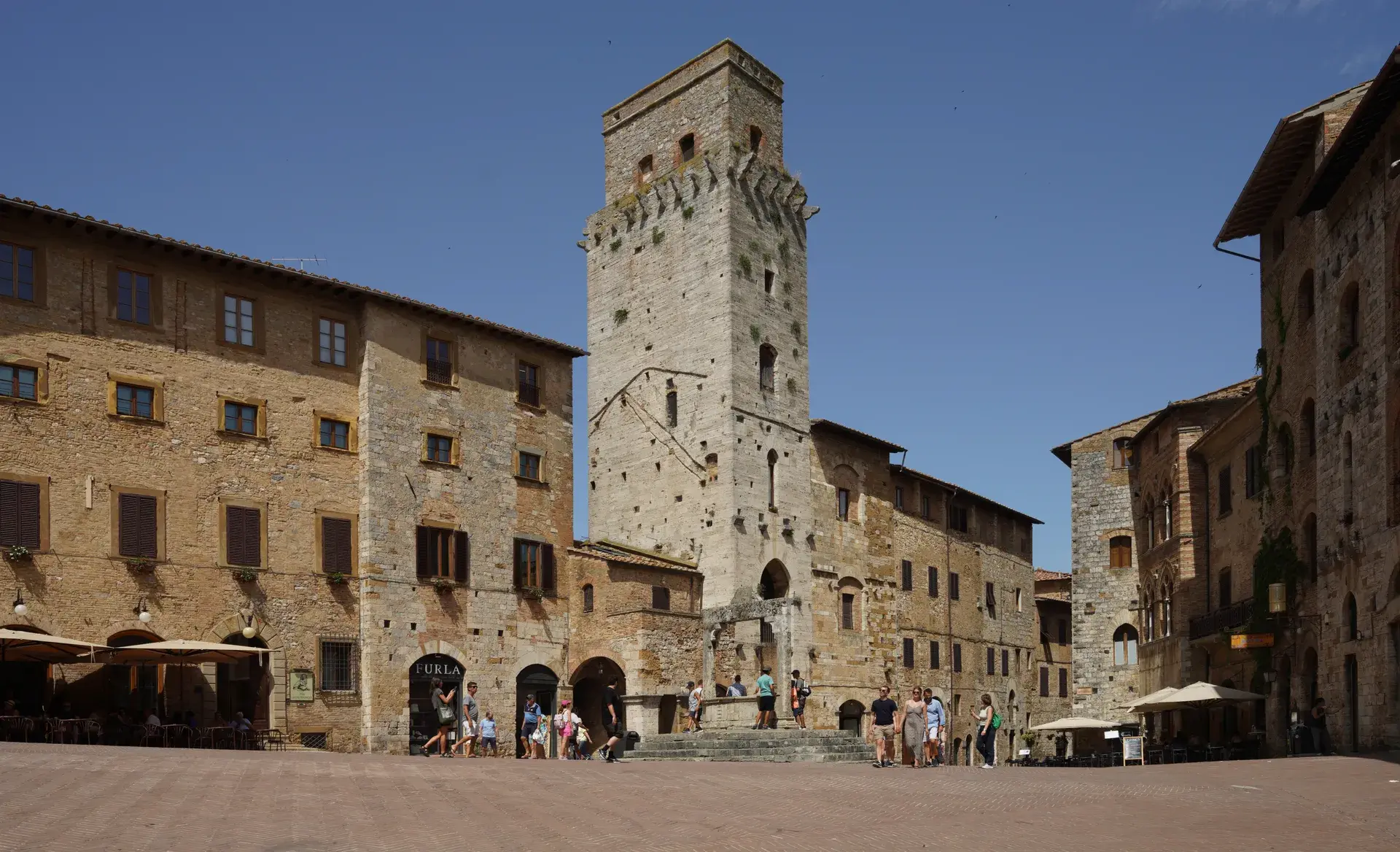
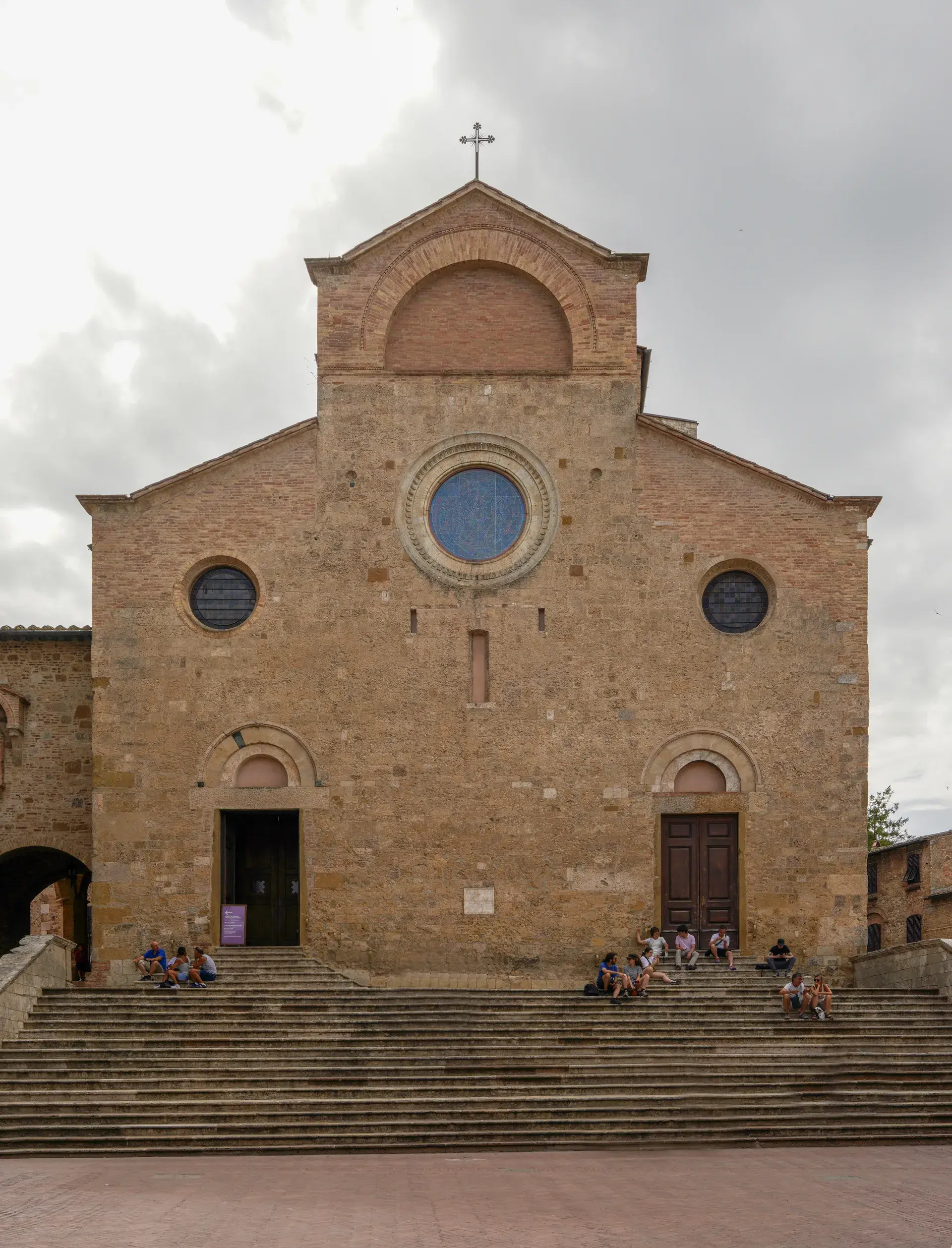
This stone-paved street, lined with traditional artisan workshops, specialty food stores, and cafes, leads directly uphill into the core of the ancient town, terminating at Piazza della Cisterna and Piazza del Duomo.
FAQ
When was Porta San Giovanni constructed?
Porta San Giovanni was completed in 1262 as part of the expansion of San Gimignano's second circuit of medieval defensive walls.
Why is there an isolated bell tower above Porta San Giovanni?
The bell tower is the only remaining structure of the Baroque church of Madonna dei Lumi, built in 1601 and dismantled in 1922 to widen the road and reduce congestion.
What role did the Via Francigena play in the gate's history?
Porta San Giovanni was the southern gateway for the Via Francigena in San Gimignano. The trade, pilgrimage traffic, and tolls funneled through this portal fueled the city's wealth in saffron, finance, and textiles.
What historical connection does Niccolò Machiavelli have to the gate?
A commemorative plaque on the adjacent Bastione San Francesco marks where Niccolò Machiavelli visited in 1507 to inspect and drill the local civilian militia for the Florentine Republic.