Torre Grossa: San Gimignano’s Tallest Medieval Tower
The Civic Summit of San Gimignano
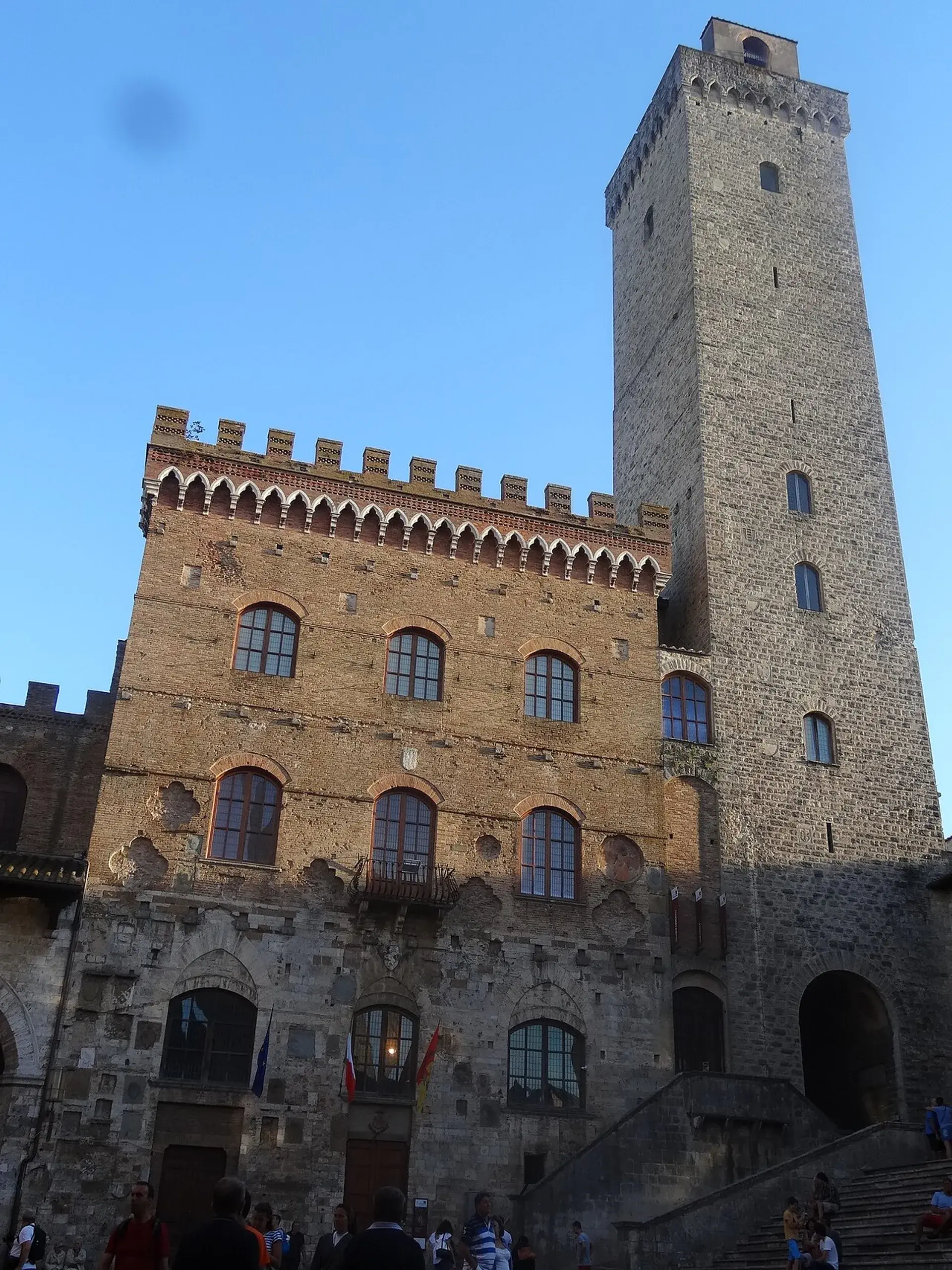
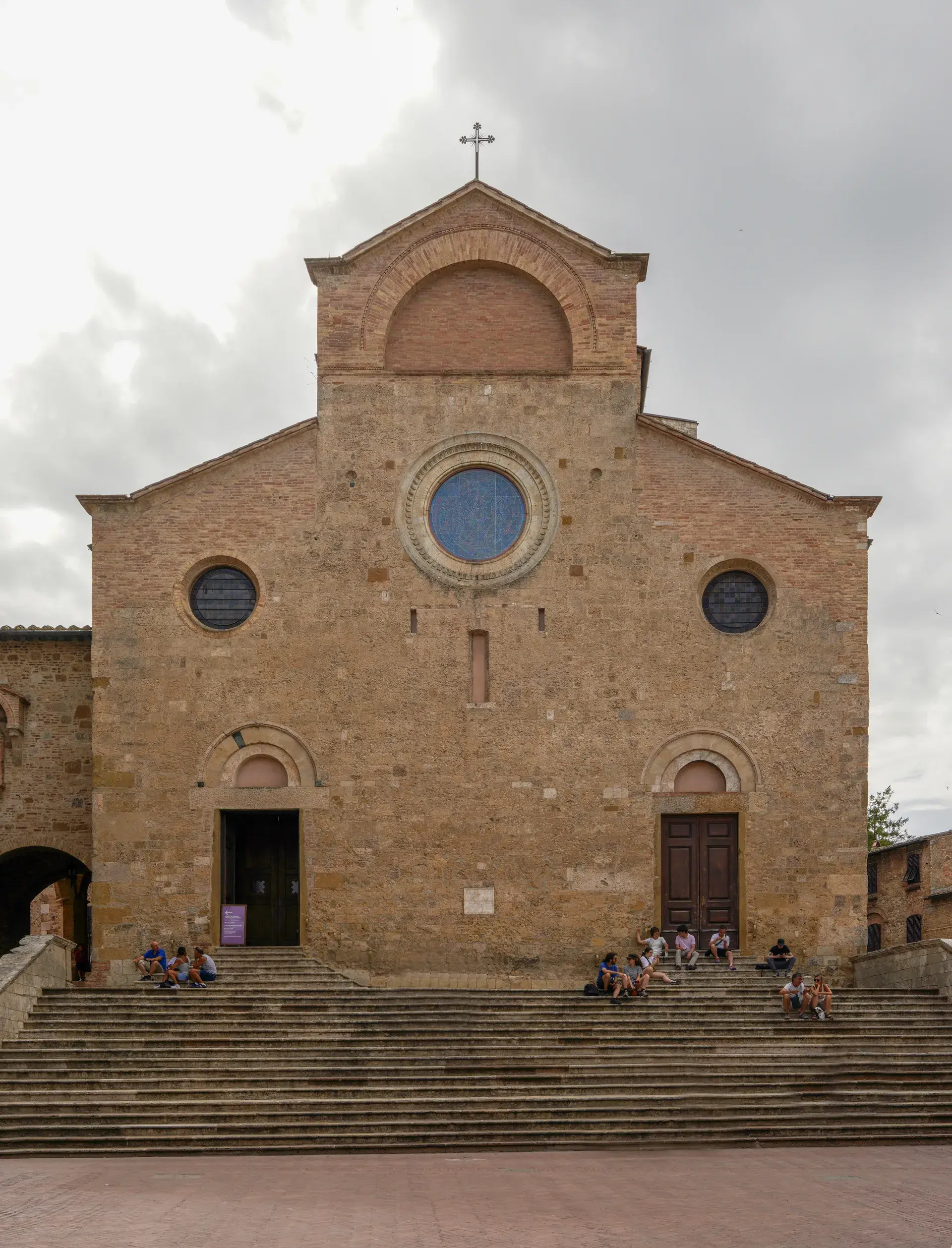
Torre Grossa, also recognized as the Torre del Podestà, is the tallest surviving medieval tower in San Gimignano. Rising to 54 meters (177 feet), the structure dominates Piazza del Duomo, adjoining the Palazzo Comunale (also known as the Palazzo del Popolo). Situated directly across from the Collegiata church, the tower serves as the municipal counterweight to the town's primary religious center.
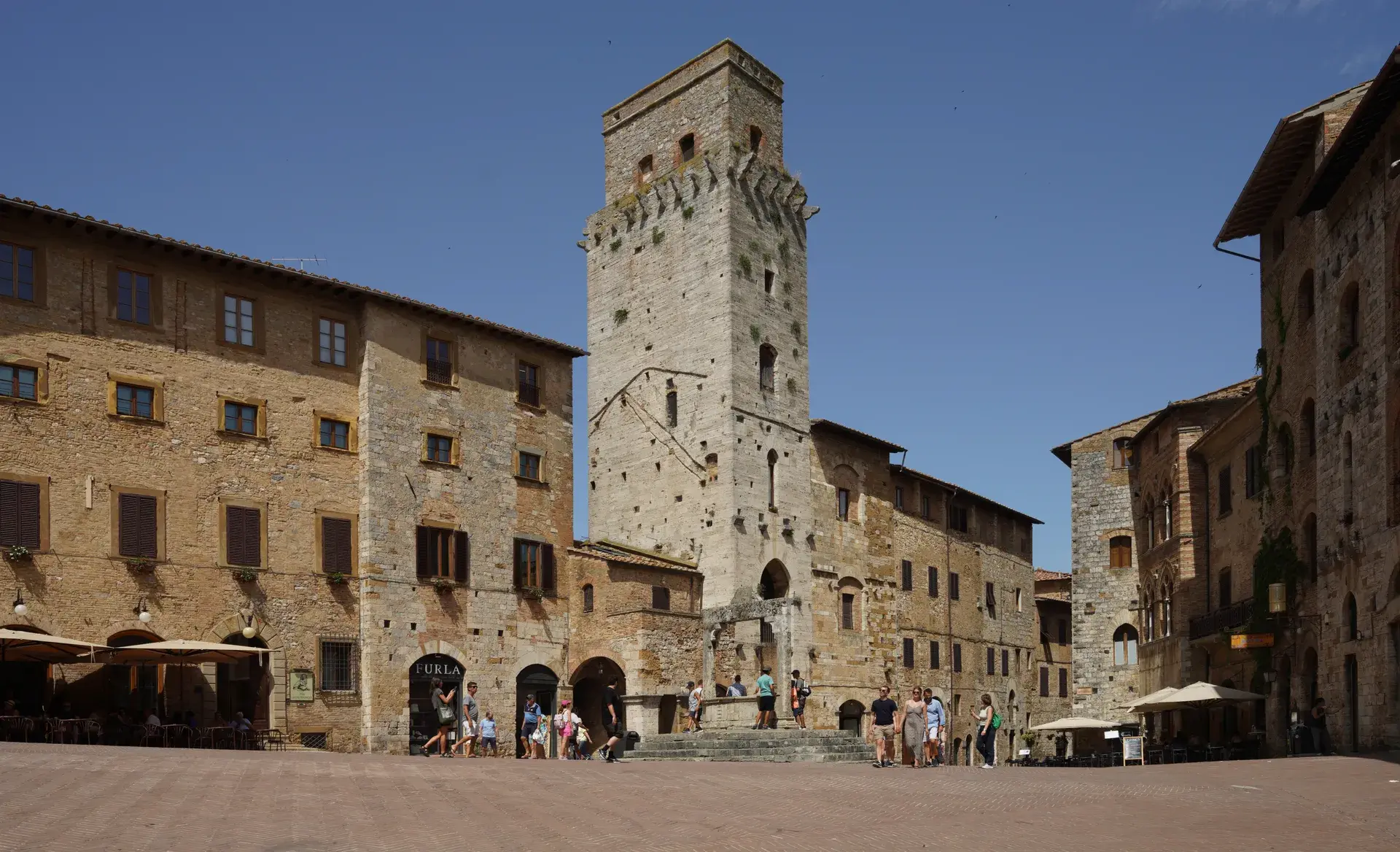
During the height of the Middle Ages, San Gimignano boasted an estimated 70 to 72 tower-houses, built as displays of family power and defensible strongholds. Today, only 13 to 14 of these structures remain standing, with Torre Grossa enduring as the highest architectural summit of the surviving medieval cluster.
Curbing Feudal Ambition: The 54-Meter Ceiling
Unlike the private towers constructed by rival noble clans—most notably the Guelph Ardinghelli and the Ghibelline Salvucci—Torre Grossa was commissioned directly by the municipal government (the Commune). Throughout the 13th century, aristocratic feuds manifested in aggressive building competitions, prompting the city to pass a law in 1255 forbidding private towers from rising higher than Torre Rognosa, the old communal seat measuring approximately 51 to 52 meters.
When rival families repeatedly flouted or challenged this statute, the Commune enforced the decree by mandating the truncation of the offending upper stories. To establish permanent civic superiority over private aristocratic ambition, the Commune commissioned Torre Grossa at 54 meters, deliberately capping the skyline and ensuring that no private family could surpass the municipal seat.
Architecture, Dante, and Historical Fate
Construction of Torre Grossa began on August 21, 1300, and concluded in 1311. The timing coincides closely with an important literary figure: Dante Alighieri had arrived in San Gimignano in May 1300 as an ambassador of the Guelph League, addressing the council in the adjoining civic palace only three months prior to groundbreaking.
The tower was built on a square plan featuring stone masonry walls approximately two meters (6.5 feet) thick. It is crowned by a belfry characterized by hanging blind arches and an open roof terrace. In the 17th century, the upper belfry sustained severe damage from a lightning strike, which necessitated subsequent repairs.
The tower's completion marked the final chapter of the town's competitive construction era. Decades later, the 1348 Black Death devastated San Gimignano's population and economy, eventually leading to subjugation by Florence. This sudden halt in development effectively froze the town's skyline in its early 14th-century configuration.
The Tower Climb and Rural Panorama
Torre Grossa is operated as part of the San Gimignano Civic Museums (Musei Civici). Access to the monument is through the interior of the Palazzo Comunale, leading visitors through historic municipal spaces such as the Sala di Dante and the Pinacoteca.
The ascent requires climbing roughly 218 interior steps and a steep upper stairway. The route shifts from shaded, echoing stone corridors enclosed by massive walls to an open-air observation platform exposed to bright sun and hill winds. From the top terrace, the vantage point looks directly down onto the medieval rooftops and across the surrounding olive groves of the Val d'Elsa countryside.
FAQ
How tall is Torre Grossa?
Torre Grossa reaches a height of 54 meters (177 feet), making it the tallest surviving medieval tower in San Gimignano.
Why did the municipal government build Torre Grossa?
The Commune commissioned Torre Grossa to assert public authority over competing noble families, such as the Ardinghelli and Salvucci clans, by intentionally surpassing the height of all private towers in the town.
How is Torre Grossa accessed today?
The tower is part of the San Gimignano Civic Museums (Musei Civici) and is entered via the Palazzo Comunale, taking visitors past the Sala di Dante and Pinacoteca before the climb of approximately 218 steps to the top terrace.
What connection does Dante Alighieri have to the site?
Dante visited San Gimignano as an ambassador for the Guelph League in May 1300 to speak in the adjacent municipal palace, only three months before ground was broken for Torre Grossa in August 1300.