Porta San Matteo: San Gimignano's Northern Gate
The Northern Gateway of San Gimignano
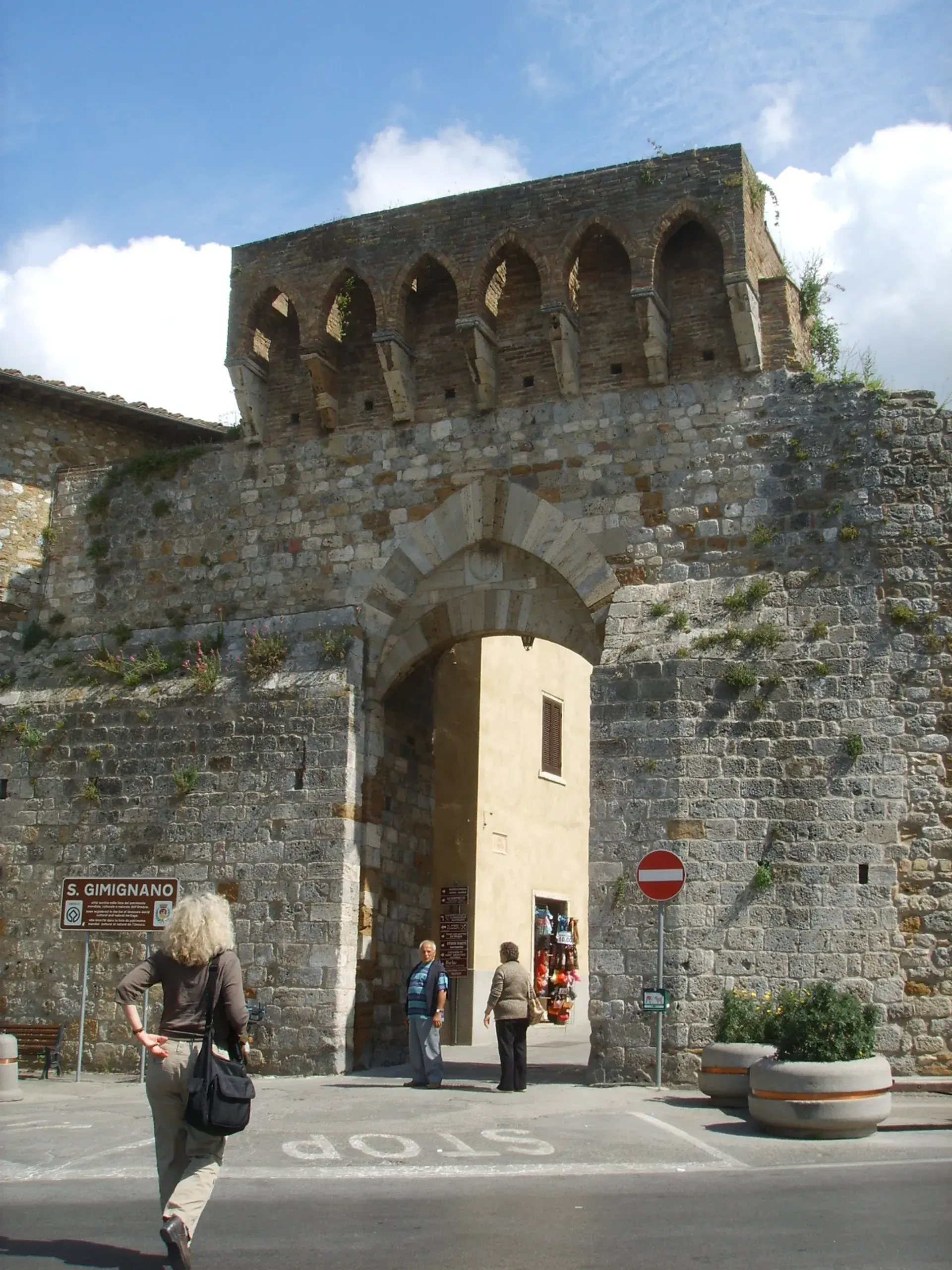
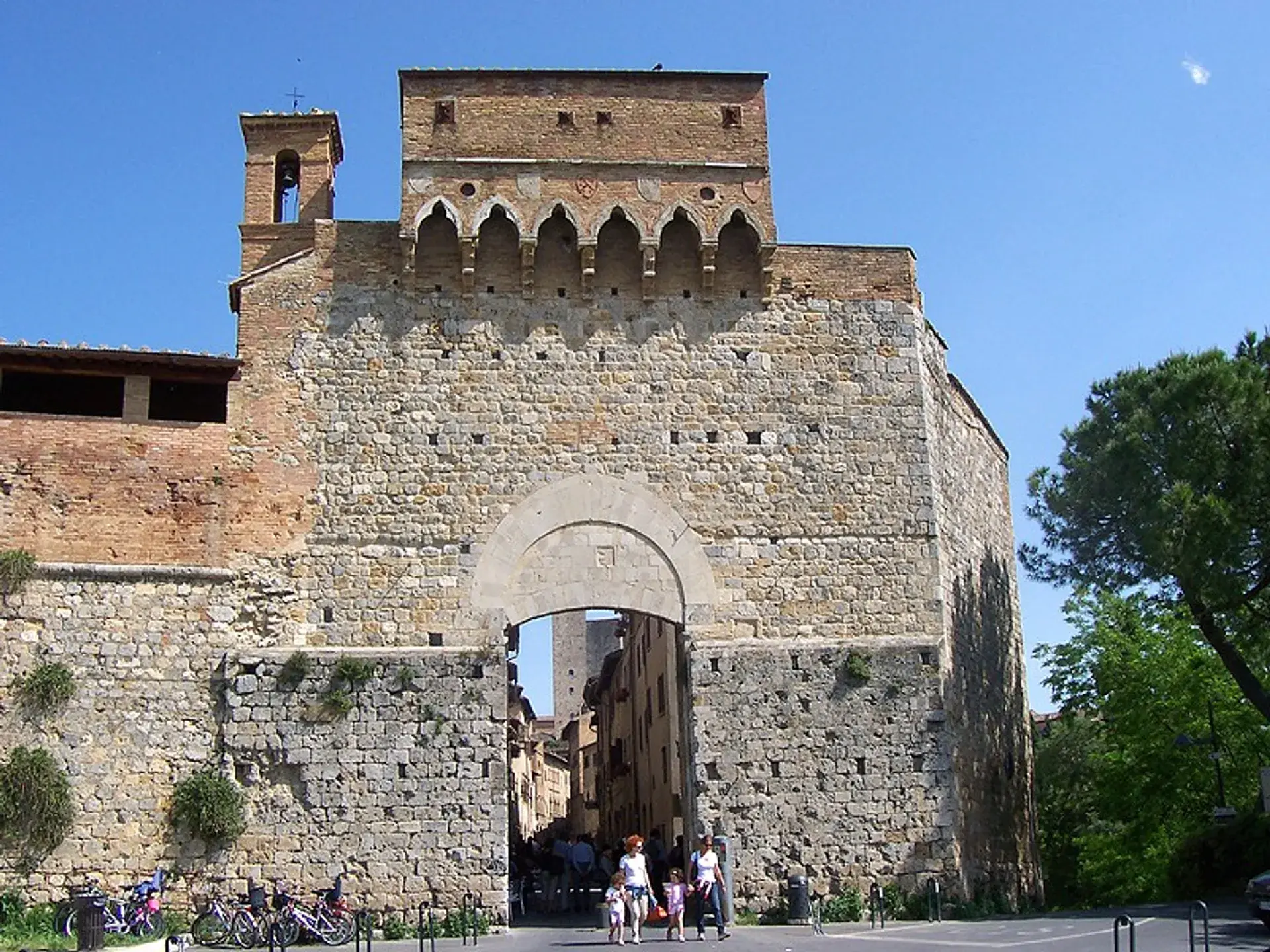
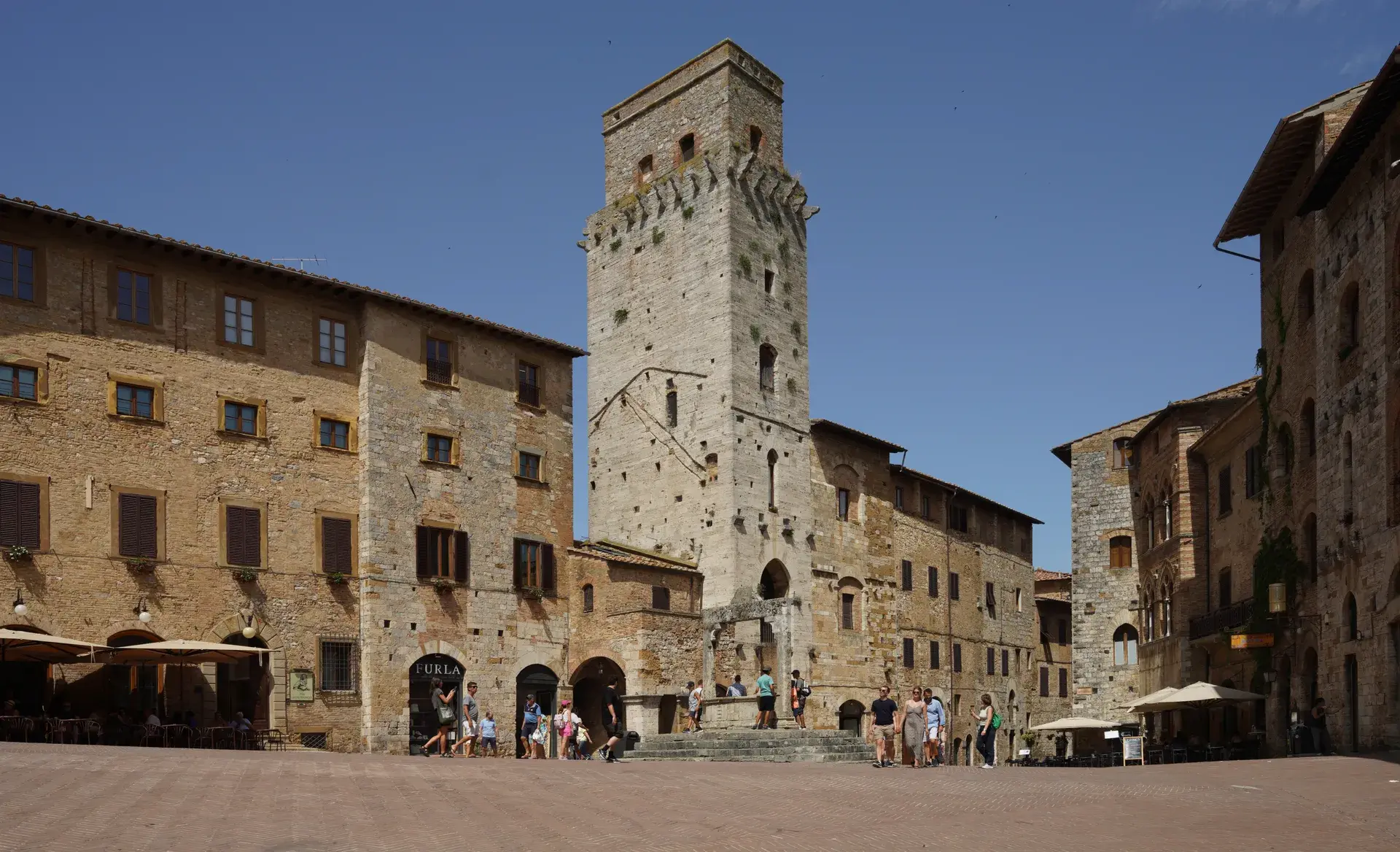
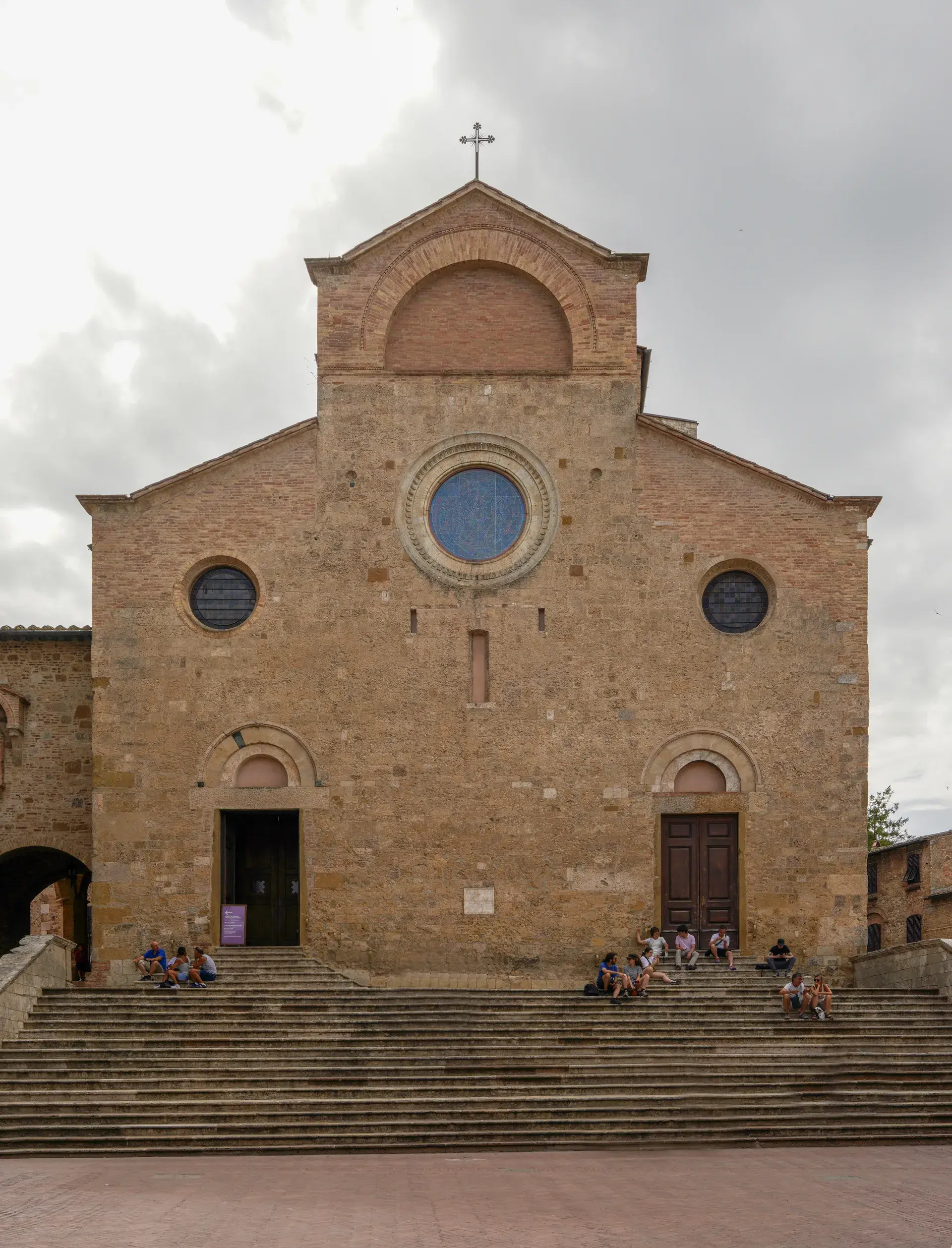
Porta San Matteo serves as the primary northern gateway of San Gimignano, situated along the northern perimeter of the town's second defensive wall circuit. San Gimignano's urban layout is structured along a single primary north–south artery, anchored by Porta San Matteo in the north and Porta San Giovanni in the south. The civic and religious hubs of Piazza della Cisterna and Piazza del Duomo lie directly at the midpoint of this axis.
Crossing from the open hillside landscape directly beneath the gate's deep stone archway creates an immediate change in acoustics and light, leading into the shadowed, tightly enclosed medieval corridor of Via San Matteo.
History and the 1262 Expansion
During the late 12th and 13th centuries, economic prosperity and heavy traffic along the Via Francigena stimulated growth outside San Gimignano's original 10th-century fortifications. A commercial and residential suburb developed along the northern route heading toward Pisa. To safeguard this expanding district, the commune enclosed the area within a second stone wall ring in 1262.
Porta San Matteo was erected as the formal fortified checkpoint and entry portal for northern European merchants, travelers, and pilgrims journeying toward Rome. While local architectural records document the 1262 civic construction campaign in detail, surviving documentary evidence regarding standalone sieges or military engagements isolated specifically to Porta San Matteo is sparse.
Sienese Architecture and Design
The gateway was constructed using large squared stone blocks characteristic of the Sienese architectural style. Its structure features a distinctive double-arch opening composed of an upper pointed arch (arco a sesto acuto) positioned directly over a lowered segmental arch (arco a sesto ribassato). This fortified passage opens immediately onto Via San Matteo, funneling foot traffic directly toward the town center.
The Via Francigena and Modern Access
Today, Porta San Matteo functions as an open pedestrian entryway into San Gimignano's restricted-traffic historic center. It provides pedestrian access for visitors arriving from northern parking facilities.
While the southern entrance at Porta San Giovanni absorbs the heaviest volume of tourist coach traffic, Porta San Matteo remains the primary arrival point for long-distance hikers completing Stages 31 and 32 of the Via Francigena walking pilgrimage.
Beyond the Gate: Arco della Cancelleria
Continuing straight along Via San Matteo brings visitors to a second, older gateway known as the Arco della Cancelleria. This interior archway originally functioned as the northern gate of San Gimignano's 10th-century first wall circuit, marking the former urban perimeter before the commune expanded outward in 1262.
FAQ
When was Porta San Matteo constructed?
Porta San Matteo was built in 1262 as part of the expansion that created San Gimignano's second defensive wall circuit.
What architectural style is used for Porta San Matteo?
The gate is built in the Sienese style with large squared stone blocks and features a double arch: an upper pointed arch set above a lowered segmental arch.
What role does Porta San Matteo play along the Via Francigena?
Historically an entry point for medieval travelers to Rome, it now serves as the primary northern portal for modern hikers walking Stages 31 and 32 of the Via Francigena.
What is the Arco della Cancelleria?
Located farther along Via San Matteo, the Arco della Cancelleria is a stone arch that served as the northern portal of San Gimignano's first 10th-century wall ring before the 1262 expansion.