Basilica di Santa Maria Maggiore in Trento
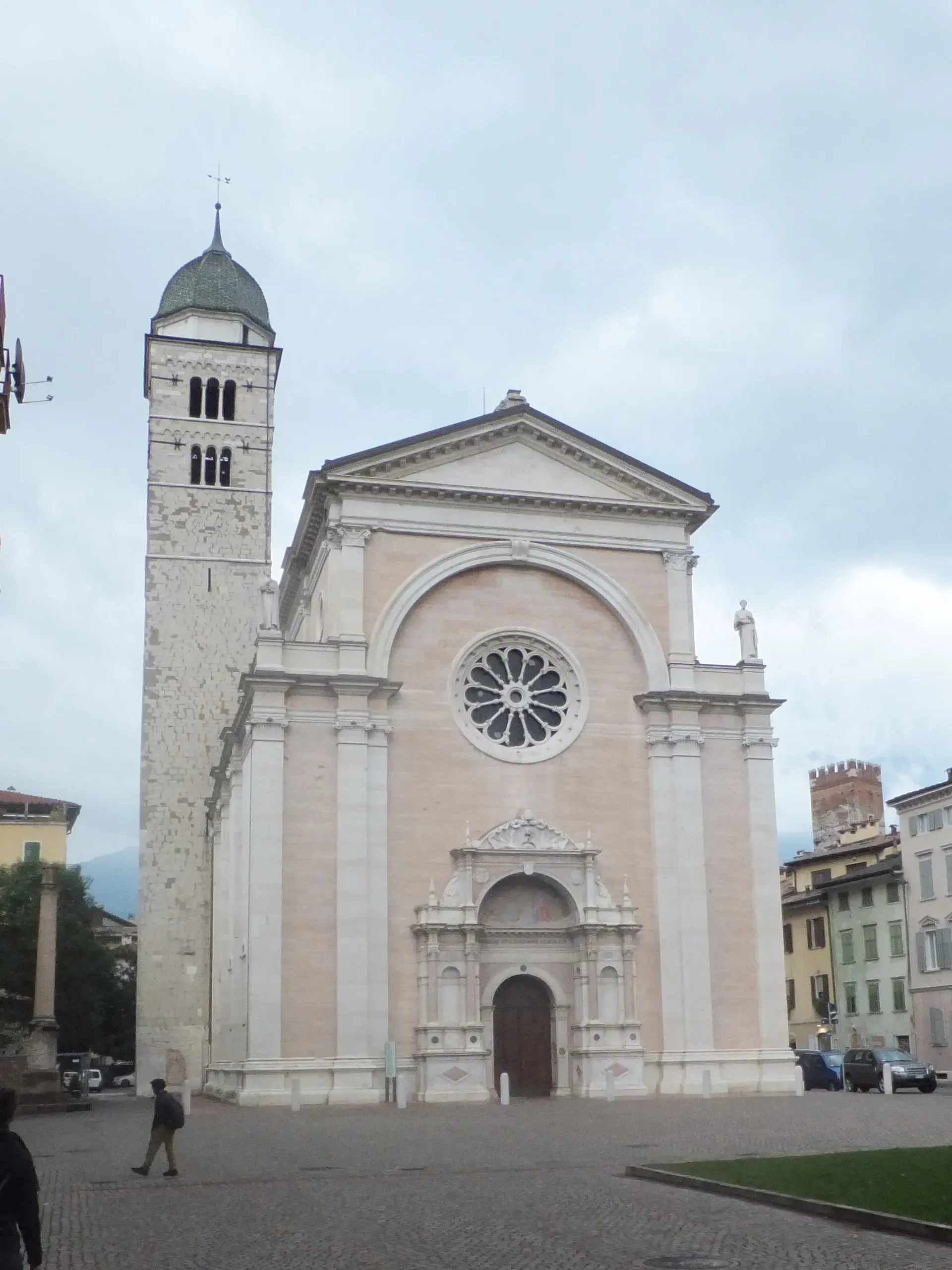
The Basilica di Santa Maria Maggiore stands as a defining Renaissance monument in central Trento. Commissioned in 1520 by Prince-Bishop Bernardo Clesio and designed by architect Antonio Medaglia, the structure replaced the medieval church of Santa Maria ad Nives. Today, it remains an essential piece of Trento's religious heritage, anchoring a historic circuit that links to the nearby Cathedral of San Vigilio.
A Layered Archaeological History
While the current structure is a Renaissance masterpiece, the site holds a complex archaeological past. Excavations beneath the basilica have revealed 1st-century Roman thermal baths and a paleochristian basilica dating to the late 5th or 6th century. This early structure served as Trento's first cathedral. Though local tradition once attributed the original cathedral to Trento's 4th-century patron, Saint Vigilius, archaeological findings confirm the later date. The site also contains the remains of 11th and 14th-century churches, which were demolished to construct the 16th-century monument seen today.
The Council of Trent and Counter-Reformation
The basilica is globally renowned for hosting the third and final phase of the Council of Trent from April 1562 to December 1563. Catholic prelates, ambassadors, and theologians assembled inside the church's sweeping single nave to debate and enact foundational Counter-Reformation decrees regarding sacraments, church dogma, and clergy reform. This world-shaping religious event is memorialized both inside and out. In 1845, a stone centenary column was erected outside the church to commemorate the 300th anniversary of the Council's opening. Inside, historical canvases and 1902 vault frescoes by Sigismondo Nardi depict the crowded assemblies.
Architecture and Notable Art
The basilica features a distinctive red-and-white local limestone facade that evokes a classical temple. A portal, commissioned in 1539 by Prince-Bishop Cristoforo Madruzzo, leads into a wide, unified single hall flanked by lateral chapels. Outside stands a 53-meter white limestone bell tower, the tallest in the city of Trento. Within the expansive apsed presbytery is the Cantoria, a white marble organ gallery sculpted with intricate Renaissance bas-reliefs by Vincenzo and Girolamo Grandi. The pipe organ itself boasts a surprising musical history: in the early 18th century, the celebrated German-British composer George Frideric Handel visited the basilica and performed on it.
Active Parish Life
Elevated to a minor basilica in 1973 by Pope Paul VI, the building continues its long history of religious service. It operates as an active parish church, hosting daily morning Mass and Rosary services. The basilica is open to the public daily free of charge, offering visitors a direct connection to Trento's profound historical and spiritual legacy.
FAQ
When was the Basilica di Santa Maria Maggiore built?
The current Renaissance basilica was commissioned in 1520 by Prince-Bishop Bernardo Clesio, replacing earlier medieval structures on the site.
Why is the basilica historically significant?
It hosted the third and final phase of the Council of Trent from 1562 to 1563, where major Counter-Reformation decrees were enacted.
How tall is the bell tower?
The basilica's white limestone bell tower stands at 53 meters, making it the tallest in Trento.
Is the basilica open to the public?
Yes, it operates as an active parish church and is open to the public daily free of charge.