Trento Cathedral: Council of Trent Site & History
A Romanesque Masterpiece in Piazza del Duomo
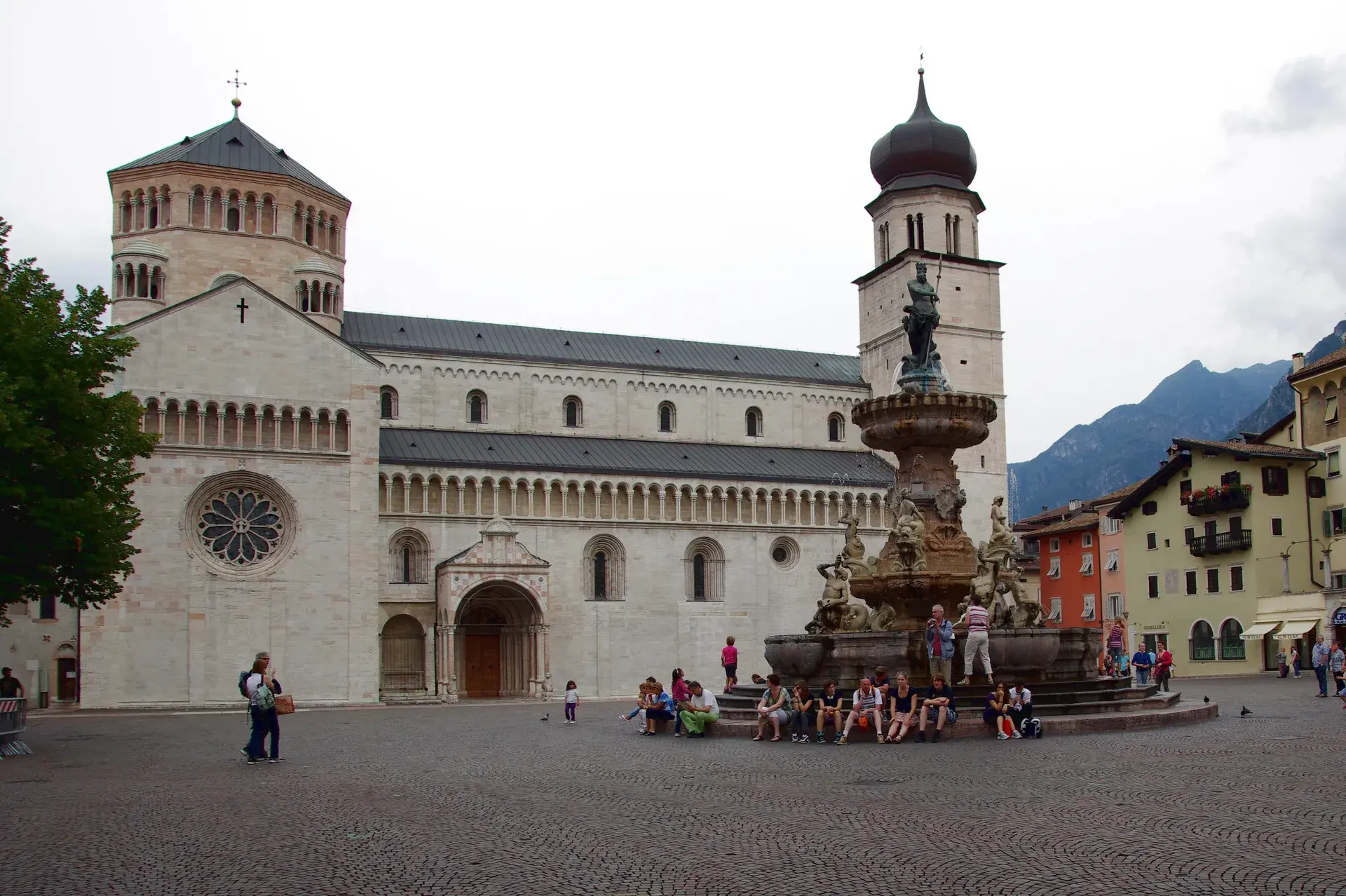
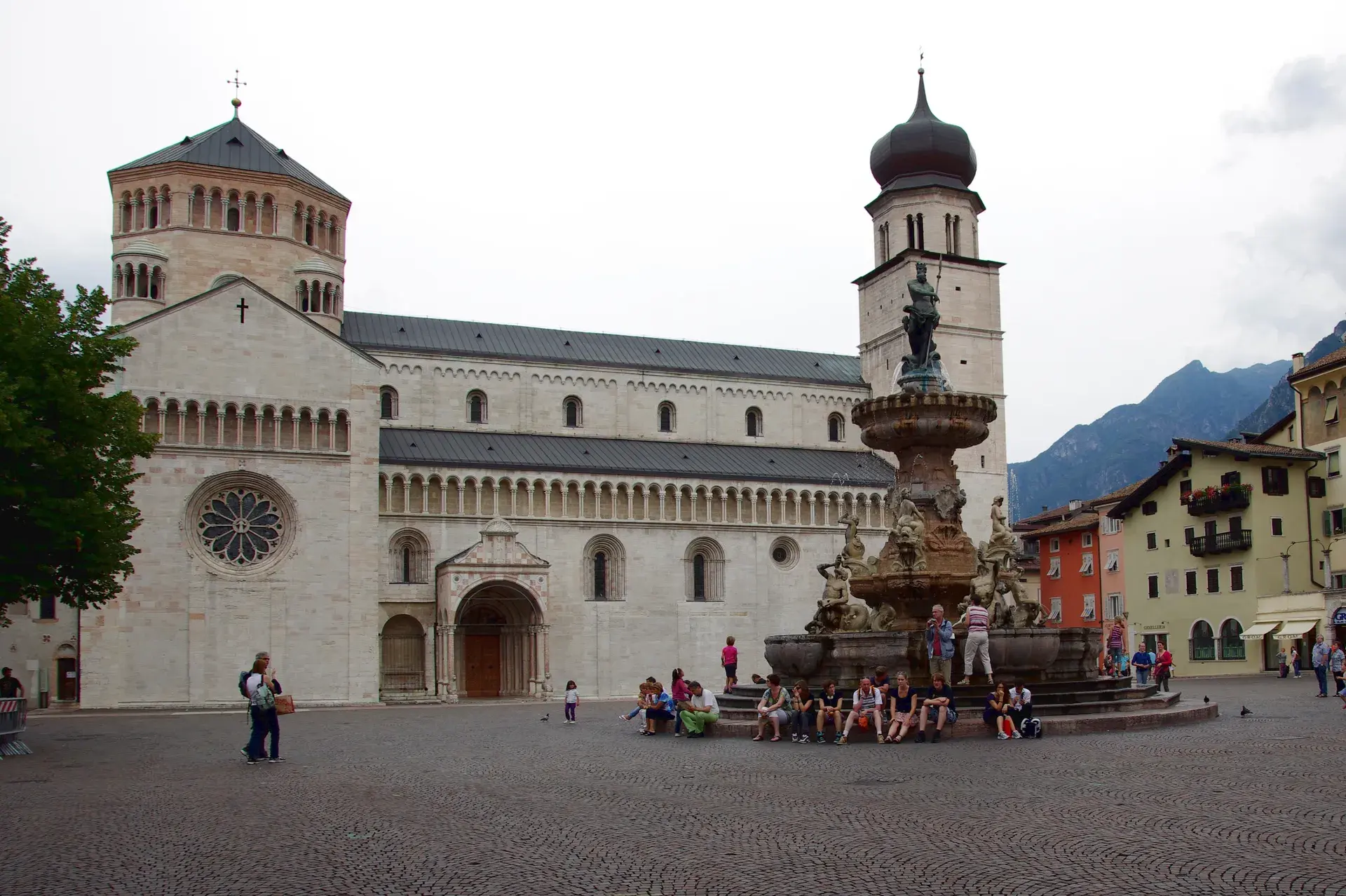
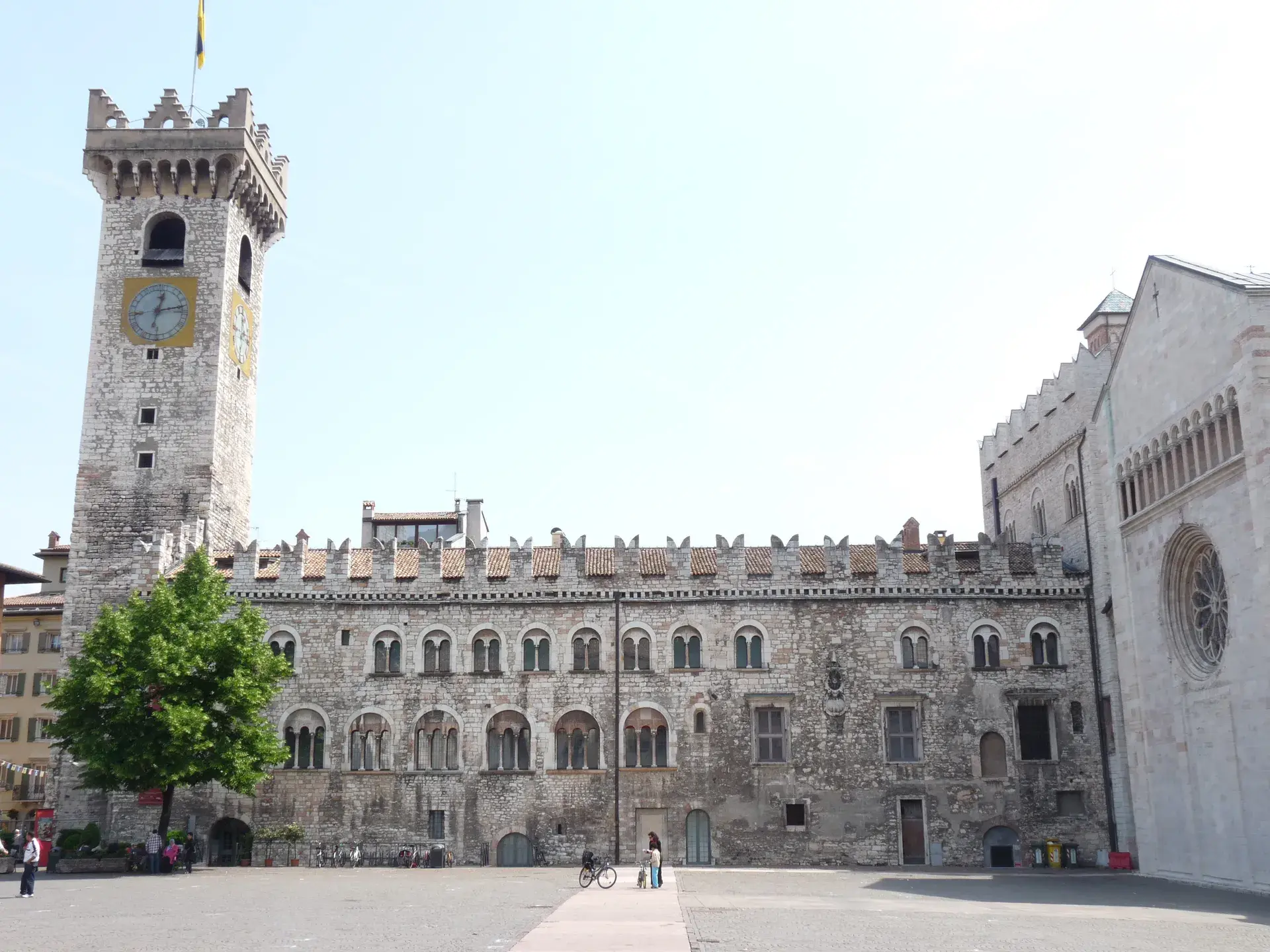
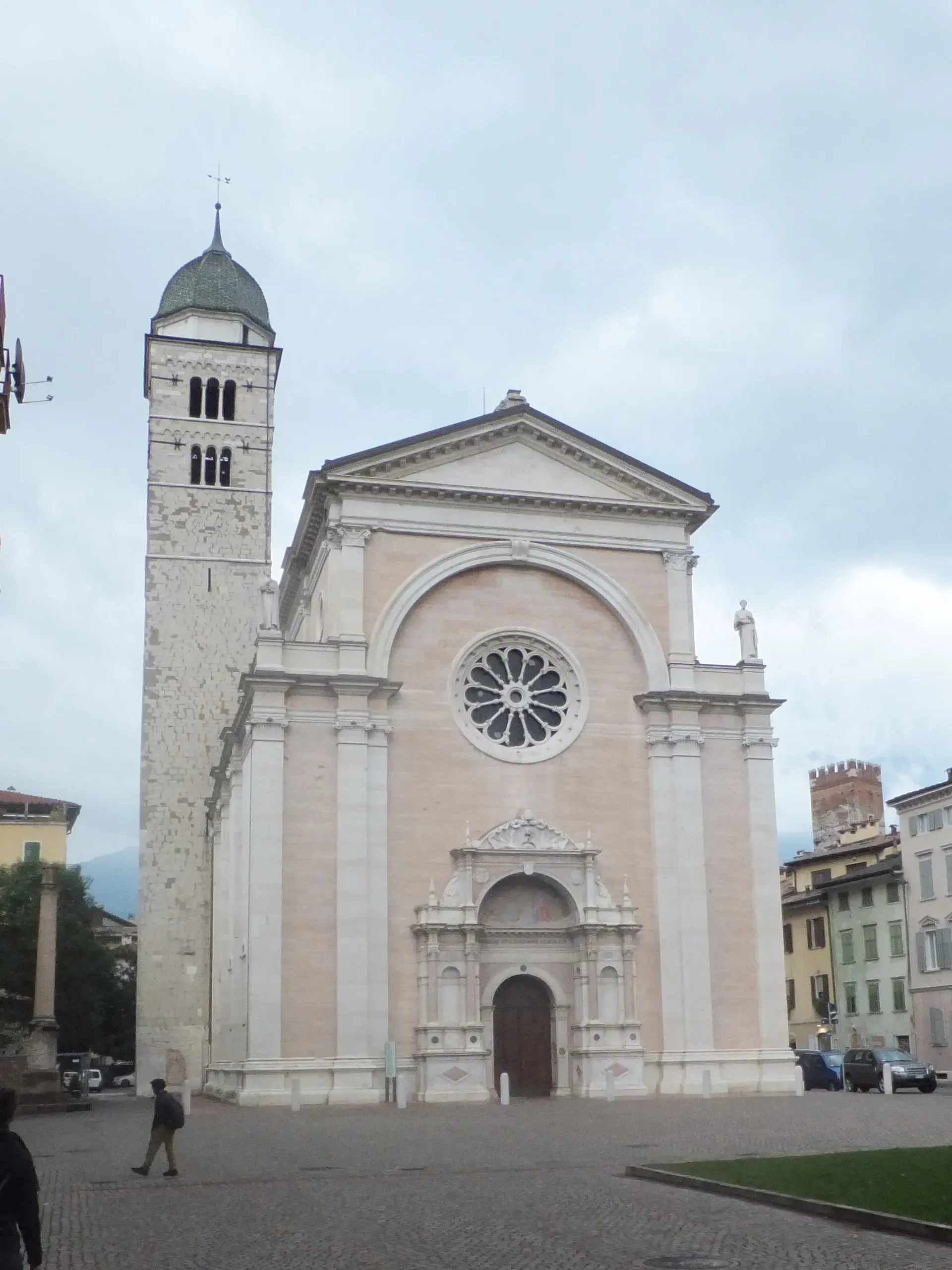
The Cathedral of Saint Vigilius, widely known as Trento Cathedral, stands as the central historical forum of the city, anchoring Piazza del Duomo alongside Palazzo Pretorio and the Torre Civica. Commissioned in 1212 by Prince-Bishop Federico Vanga, the structure was designed by master builder Adamo d'Arogno in a Lombard Romanesque style. It features transitional Gothic vaults and an asymmetrical west facade defined by a single completed bell tower.
The exterior is built from soft, pale, and pinkish local limestone that glows in the natural alpine light. The northern flank of the cathedral features a Romanesque porch supported by stone lions. Above it, the northern transept displays an intricate rose window known as the "Wheel of Fortune," which features sculpted human figures clinging to its rim to represent changing fate and human vulnerability.
The Stage for the Counter-Reformation
Built over a paleochristian basilica that originally held the relics of Saint Vigilius and other early Christian martyrs, the site carries centuries of deep historical significance. In 1508, Holy Roman Emperor Maximilian I was crowned inside the cathedral after Venetian forces blocked his route to Rome.
Decades later, the cathedral became the principal stage for the 19th Ecumenical Council of the Catholic Church, known as the Council of Trent. Formally opening in 1545 and concluding in 1563, this landmark event launched the sweeping Counter-Reformation. Solemn plenary sessions took place in the presbytery on an elevated, temporary wooden amphitheater constructed directly above the crypt to seat participating cardinals, bishops, and theologians. The early 16th-century wooden Council Crucifix, before which the final decrees were proclaimed, remains preserved inside the cathedral's Baroque Crucifix Chapel.
Hidden Curiosities and Paleochristian Roots
Inside the cool, high-vaulted nave, the muffled reverb of steps echoes across worn stone floor tiles. The walls hold remarkable architectural secrets, including two spiral staircases carved directly into the thickness of the medieval stone perimeter walls, leading to the upper galleries and towers.
The transept is home to the 14th-century stone statue known as the "Madonna of the Drowned" (Madonna degli Annegati). Historically, this statue served as a site where prayers were offered for recovered victims of the nearby Adige River. Beneath the modern floor tiles, the underground archaeological area of the paleochristian basilica remains accessible for cultural tours. Today, the cathedral operates as the active mother church of the Roman Catholic Archdiocese of Trento and a minor basilica, holding regular daily masses.
FAQ
Why is Trento Cathedral historically famous?
Trento Cathedral famously hosted the opening and conclusion of the Council of Trent from 1545 to 1563. It served as the principal stage for the Catholic Church's Counter-Reformation, with solemn plenary sessions held on a temporary wooden amphitheater built above the crypt.
What is the architectural style of Trento Cathedral?
Commissioned in 1212, the cathedral was designed primarily in a Lombard Romanesque style with transitional Gothic vaults. It features an asymmetrical west facade with a single bell tower and a northern porch supported by stone lions.
What is the Wheel of Fortune window?
The Wheel of Fortune is an intricate rose window located on the cathedral's northern transept. It depicts an allegorical wheel with sculpted human figures clinging to its rim, representing changing fate and human vulnerability.
What is the 'Madonna of the Drowned' statue?
The 'Madonna of the Drowned' (Madonna degli Annegati) is a 14th-century stone statue inside the cathedral where prayers were traditionally offered for victims recovered from the nearby Adige River.
Gallery