Palazzo Pretorio: Trento's Historic Palace & Civic Tower
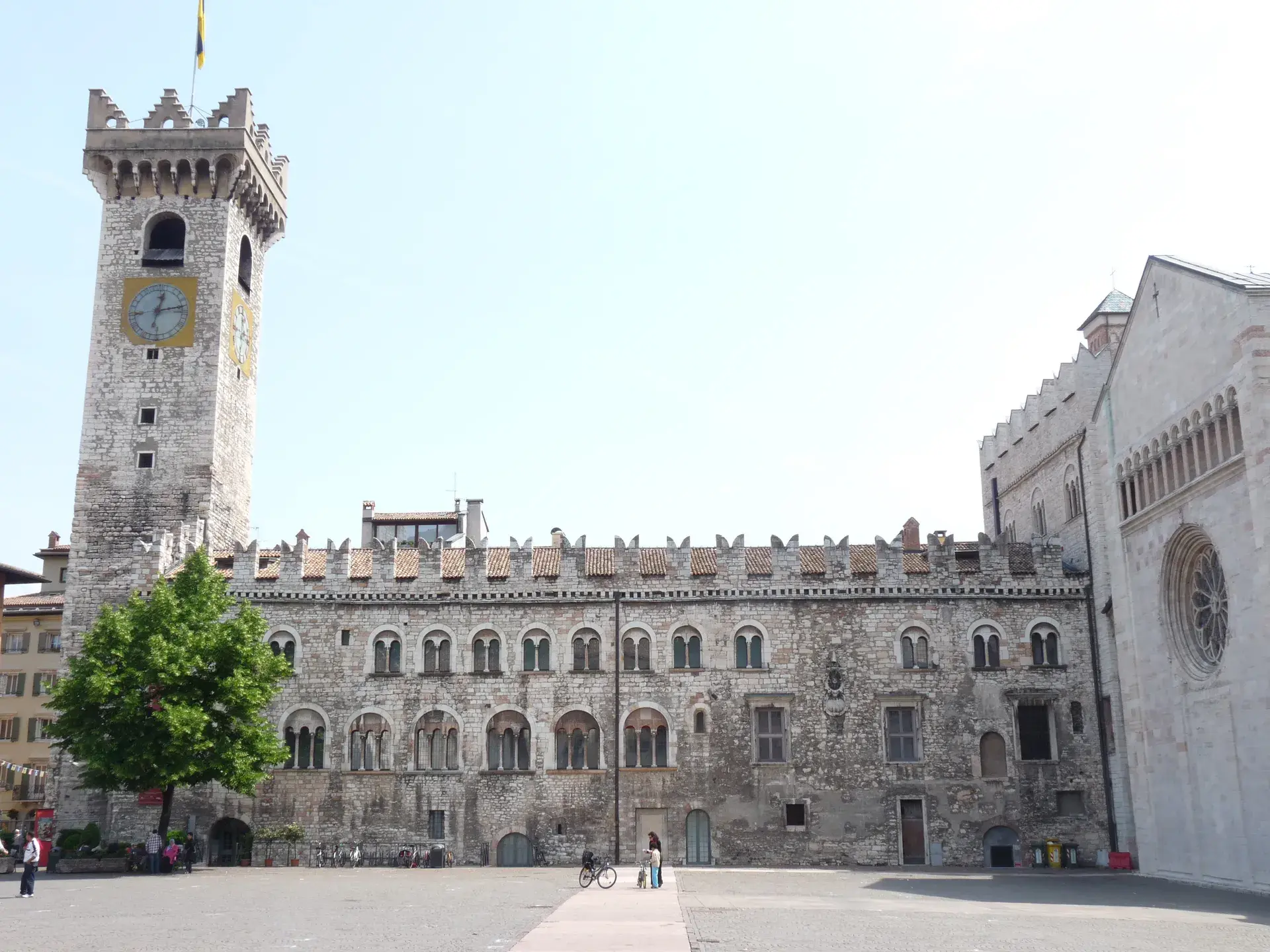
Observe the historic stone facade and battlements of Palazzo Pretorio right in the heart of Piazza del Duomo. A Romanesque palace and 45-meter tower, it served as Trento's original seat of power before the prince-bishops relocated to a grander castle.
A Seat of Prince-Bishops
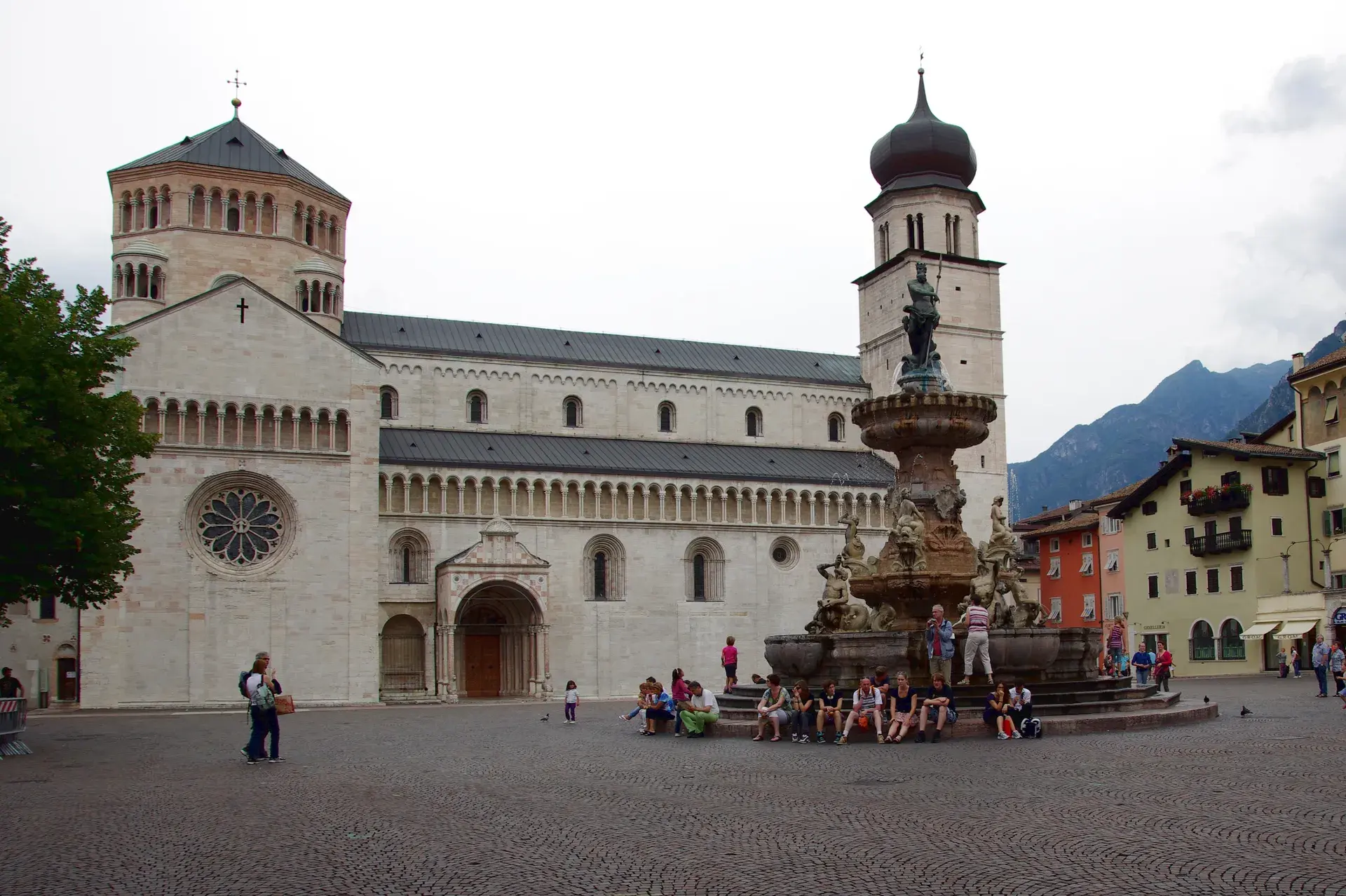
Palazzo Pretorio, also known as the Episcopal Palace, stands on the eastern flank of Piazza Duomo, directly adjoining the Cathedral of San Vigilio. Documented as an episcopal residence as early as 1071, it functioned as the seat of Trento's prince-bishops from the 9th century until the mid-13th century.
Around 1220, Prince-Bishop Federico Vanga undertook major reconstructions that gave the complex its medieval fortified character. In 1255, Prince-Bishop Egnone da Appiano relocated the official episcopal residence to the Castello del Buonconsiglio. Following this transfer of power, Palazzo Pretorio transitioned into a municipal and judicial center, housing the Praetor, the court of justice, and later the Monte di Pietà.
Romanesque Architecture and the Civic Tower
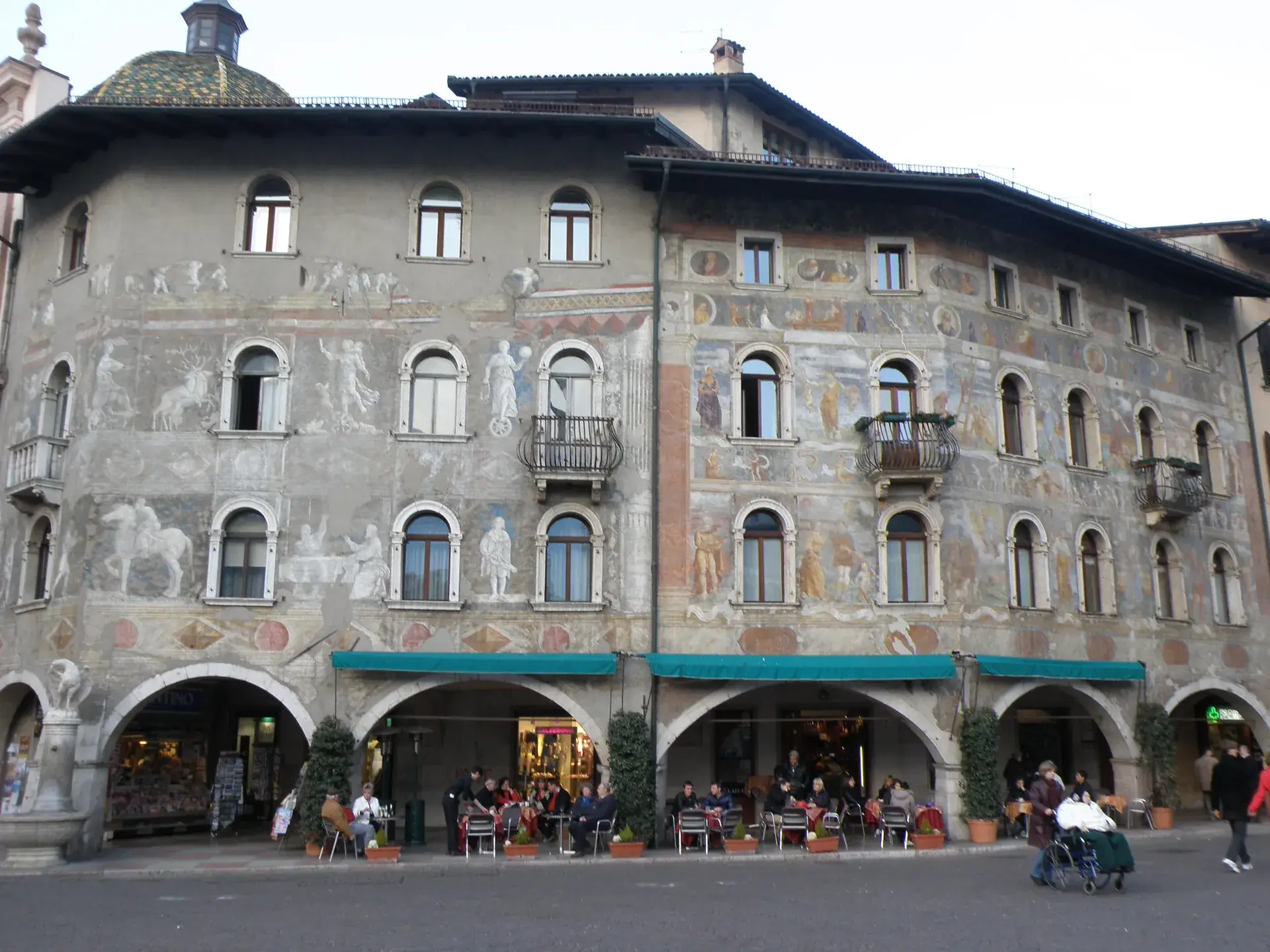
The structure features a distinct Romanesque facade topped with swallowtail Ghibelline battlements and two tiers of mullioned windows, including trifora and bifora openings. Its stark, exposed stone masonry creates an austere fortified skyline that sharply contrasts with the painted Renaissance frescoes found on the opposite side of Piazza Duomo.
Attached to the palace is the 45-meter Torre Civica. The tower originally operated as a defensive keep before taking on civic and municipal roles. While the building underwent major exterior alterations in the 17th century, a comprehensive restoration in the 1950s stripped away later plastering and modifications to return the palace to its authentic medieval appearance.
Echoes of Justice and Liberty
The Civic Tower holds a dark and layered history. For centuries, its interior chambers were repurposed as the local town jail. Higher up, the tower houses the Campana della Renga, a historic bell traditionally rung to assemble citizens for public gatherings, known as the arengo, and to announce executions taking place in the square below.
At the base of the tower in Piazza Duomo sits a linden tree. Originally planted during the Napoleonic era as a civic "liberty tree," it has been carefully replaced across successive generations, remaining a living fixture beneath the medieval stone.
Museo Diocesano Tridentino and Roman Foundations
Today, Palazzo Pretorio serves as the permanent home of the Museo Diocesano Tridentino. Founded in 1903 and moved to this location in 1963, the museum exhibits ten centuries of sacred art, tapestries, and artifacts connected to the Council of Trent.
Together with the Cathedral of San Vigilio and the Neptune Fountain, the palace forms the civic and spiritual nucleus of Trento's historic center. The museum manages guided access to the upper levels of the municipally-owned Torre Civica. Additionally, the entire complex rests directly above the archaeological layers of ancient Roman Tridentum. The museum coordinates visits to these underground excavations, which reveal ancient remnants including portions of the Roman gate, Porta Veronensis.
FAQ
What is inside Palazzo Pretorio today?
Palazzo Pretorio houses the Museo Diocesano Tridentino, which displays ten centuries of sacred art, tapestries, and artifacts related to the Council of Trent. The museum also coordinates guided access to the Civic Tower and the underground Roman archaeological excavations.
How tall is the Torre Civica?
The Torre Civica, attached to Palazzo Pretorio, is 45 meters tall. It originally served as a defensive keep before functioning as a town jail and housing the Campana della Renga, a historic bell used to assemble citizens and announce executions.
When was Palazzo Pretorio built?
The palace was documented as an episcopal residence as early as 1071. It underwent significant reconstructions around 1220 under Prince-Bishop Federico Vanga to establish its fortified medieval appearance.