Casa Cazuffi - Rella: Trento's Painted Renaissance Facades
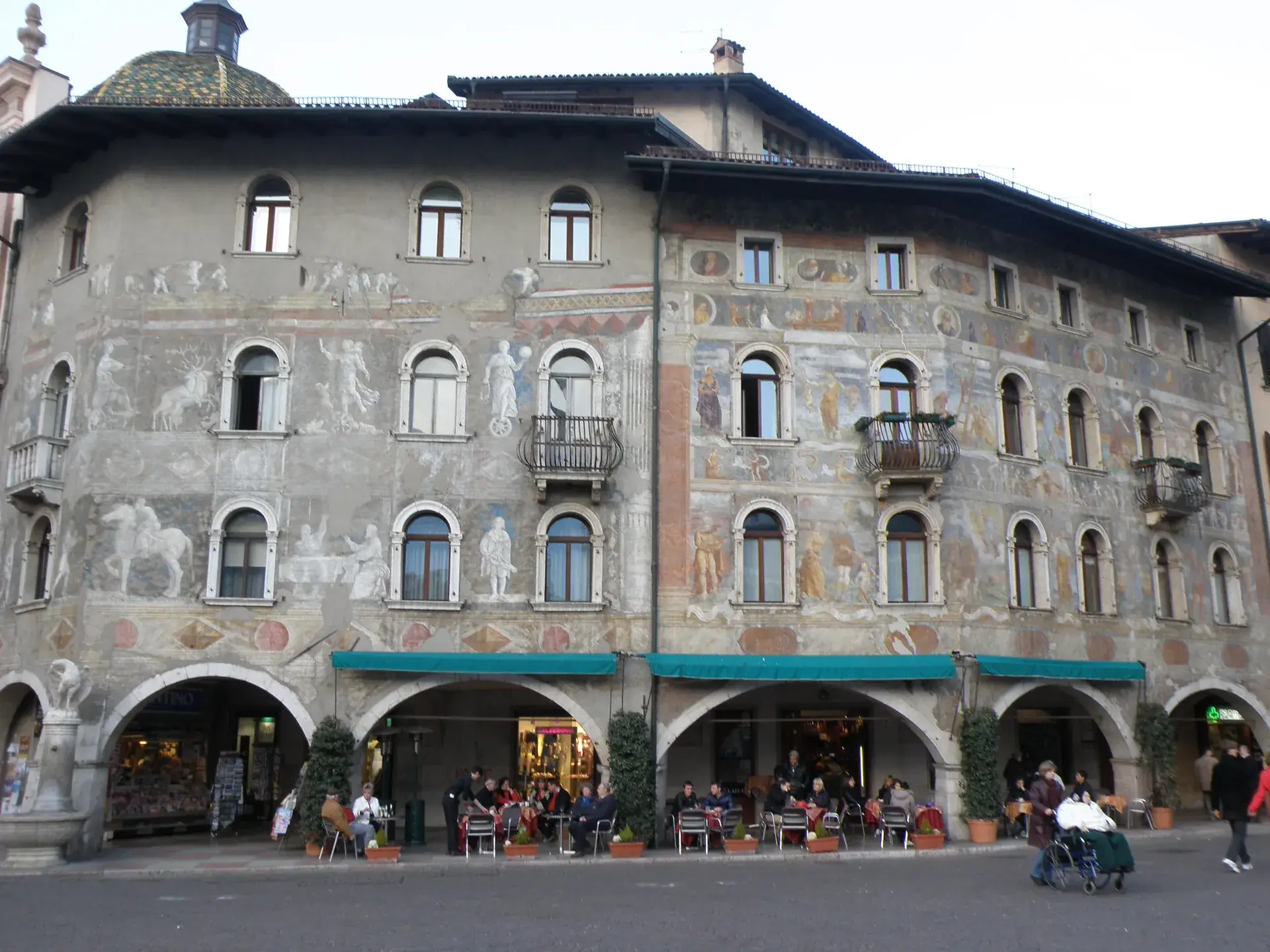
Anchoring the intersection of Piazza del Duomo and Via Rodolfo Belenzani, Casa Cazuffi and Casa Rella define Trento’s visual identity as a quintessential "painted city" of the northern Italian Renaissance. These adjoining 16th-century buildings are famous for their lavish exterior frescoes, creating an open-air moral treatise right on the square. Today, the structures remain in active use, featuring private residential apartments above and bustling commercial services and cafes beneath their ground-floor arcades.
The Vision of a Painted City
The elaborate facades are the result of a broader urban beautification initiative launched in the early 16th century by Prince-Bishop Bernardo Clesio. The goal was to transform Trento into an impressive Renaissance showpiece to welcome international dignitaries arriving for the Council of Trent.
Following this vision, Dr. Tommaso Cazuffi, a prominent merchant and civic leader, modernized his family’s older medieval structures between 1531 and 1540. The renovation introduced a ground-floor arcade with heavy pillars and lowered arches, topped by three upper residential levels with arched single-light windows and balconies.
Allegories and Civic Commentary
The upper levels of both buildings are covered in chiaroscuro frescoes inspired by Renaissance emblem books, particularly Andrea Alciati’s Emblematum liber. Instead of depicting religious devotion, the painted scenes act as blunt civic commentary. They feature Latin moral maxims warning townspeople against treacherous neighbors, condemning greed, and mocking wealthy men devoid of virtue.
Originally, the monochrome figures stood out against vibrant azurite blue backgrounds. Over the centuries, this copper-carbonate blue pigment deteriorated and flaked away, leaving the chiaroscuro figures set against the exposed plaster tone.
The Fugitive Painter
The frescoes on Casa Cazuffi were painted between 1531 and 1536 by Marcello Fogolino. His work depicts classical mythological figures and allegories, including Fortune, Nemesis, the monster Geryon, and the banquet of Damocles. Surprisingly, Fogolino was a fugitive who had fled to Trento after being implicated in a murder alongside his brother in Friuli. Despite this scandalous background, he secured the protection and patronage of Prince-Bishop Bernardo Clesio.
The adjacent Casa Rella was painted later, around 1540, by an unknown artist. Its frescoes focus on themes of Time, Abundance, Apollo, the Triumphs of Love, and the Scale of Virtues.
Traces of the Medieval Past
While the Renaissance facelift defines the buildings today, remnants of their medieval origins still exist. High near the roofline adjacent to the Church of the Annunziata, fragments of a 14th-century Gothic frieze and an early Cazuffi coat of arms peek out from beneath the 16th-century plaster, offering a glimpse into the older structures that once stood on the square.
FAQ
Who painted the frescoes on Casa Cazuffi and Casa Rella?
Casa Cazuffi was painted by Marcello Fogolino between 1531 and 1536. Interestingly, Fogolino was a fugitive fleeing a murder implication who gained the patronage of Prince-Bishop Bernardo Clesio. The frescoes on Casa Rella were added later, around 1540, by an unknown artist.
What is the meaning behind the paintings on the facades?
The chiaroscuro frescoes serve as civic commentary rather than religious devotion. Inspired by Renaissance emblem books, the scenes and accompanying Latin maxims mock ignorant wealthy men and warn the public against unchecked greed and treacherous neighbors.
Why are the frescoes missing their original blue background?
The backgrounds were originally painted with azurite, a vibrant copper-carbonate blue pigment. Over the centuries, this specific pigment deteriorated and flaked off, leaving only the monochrome chiaroscuro figures against the bare plaster.