Palazzo Thun: Trento's Renaissance Town Hall
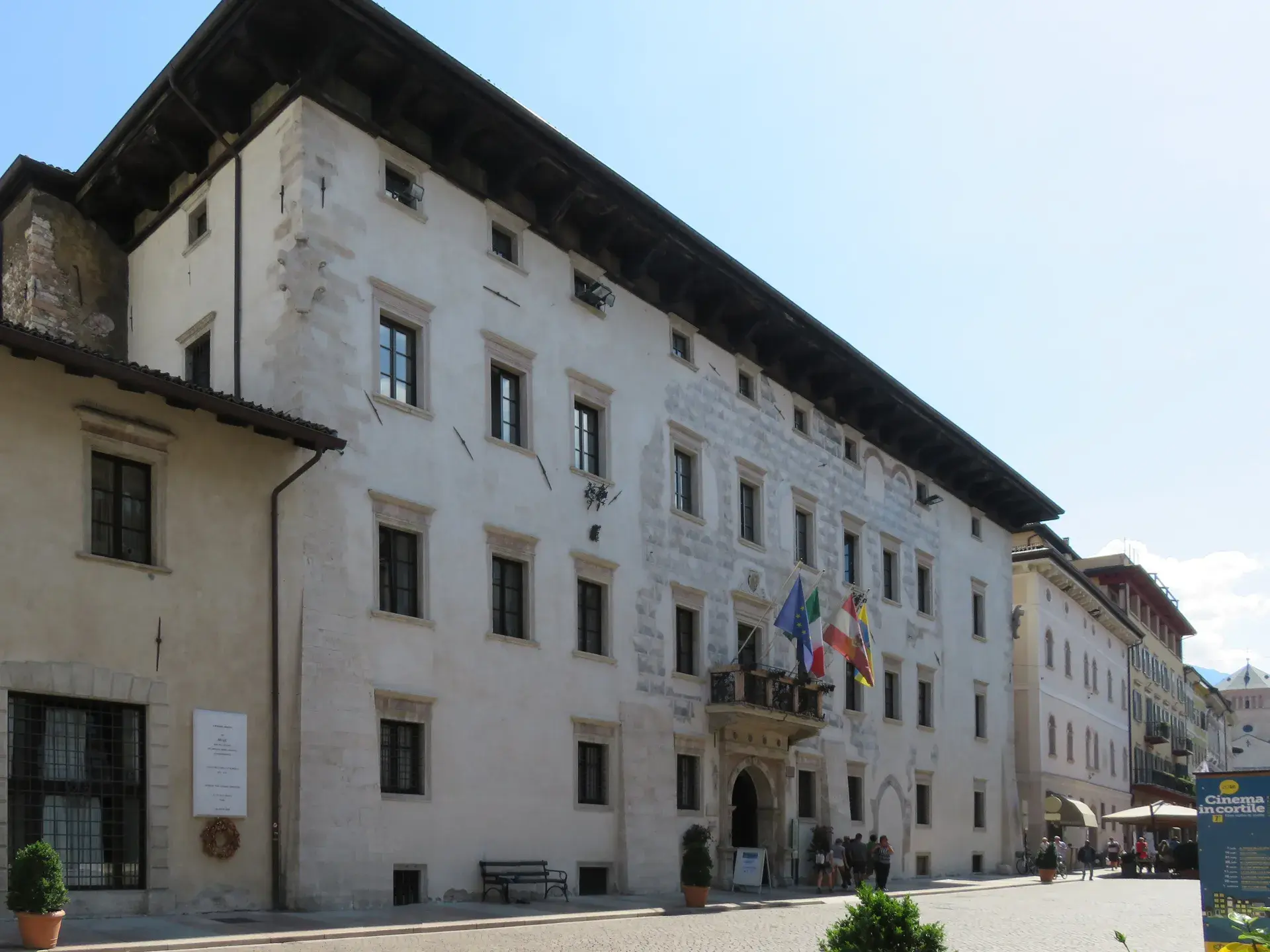
Palazzo Thun stands as the civic heart of Trento, a palace that once housed papal delegates and now governs the city. Located at Via Rodolfo Belenzani 19, the building anchors the city's grand Renaissance axis leading to Piazza del Duomo. The stately exterior illustrates a major historical shift in Trento from medieval ecclesiastical dominance toward patrician civic display.
A Renaissance Transformation
The origins of the complex trace back to 1454 when Sigismondo de Thono began acquiring medieval housing lots in the San Benedetto district to establish a prominent family seat. Between 1543 and 1557, his grandson expanded the estate by purchasing adjacent feudal properties and the medieval Torre Mirana. This expansion unified disparate Gothic lots into a cohesive Renaissance palace.
Today, traces of trompe-l'oeil painted stonework, known as finto bugnato, remain visible across the facade. Carved coats of arms belonging to the Thun family adorn the building's corners and the keystone of the central portal.
The Council of Trent
Palazzo Thun played a pivotal role during the Council of Trent from 1545 to 1563. The residence housed prominent papal legate cardinals, including Ercole Gonzaga and Giovanni Morone, and hosted preparatory congregations for the council’s third phase. A raised wooden footbridge temporarily spanned the street to connect the palazzo to a neighboring complex, allowing high-ranking delegates private passage away from the bustling street crowds.
Neoclassical Updates and Modern Civic Use
The Thun-Hohenstein family owned the estate for over four centuries. In the 1830s, architect Rodolfo Vantini led a neoclassical restructuring of the interior spaces, colonnaded courtyard, and private chapel. In 1873, the municipality of Trento acquired the property.
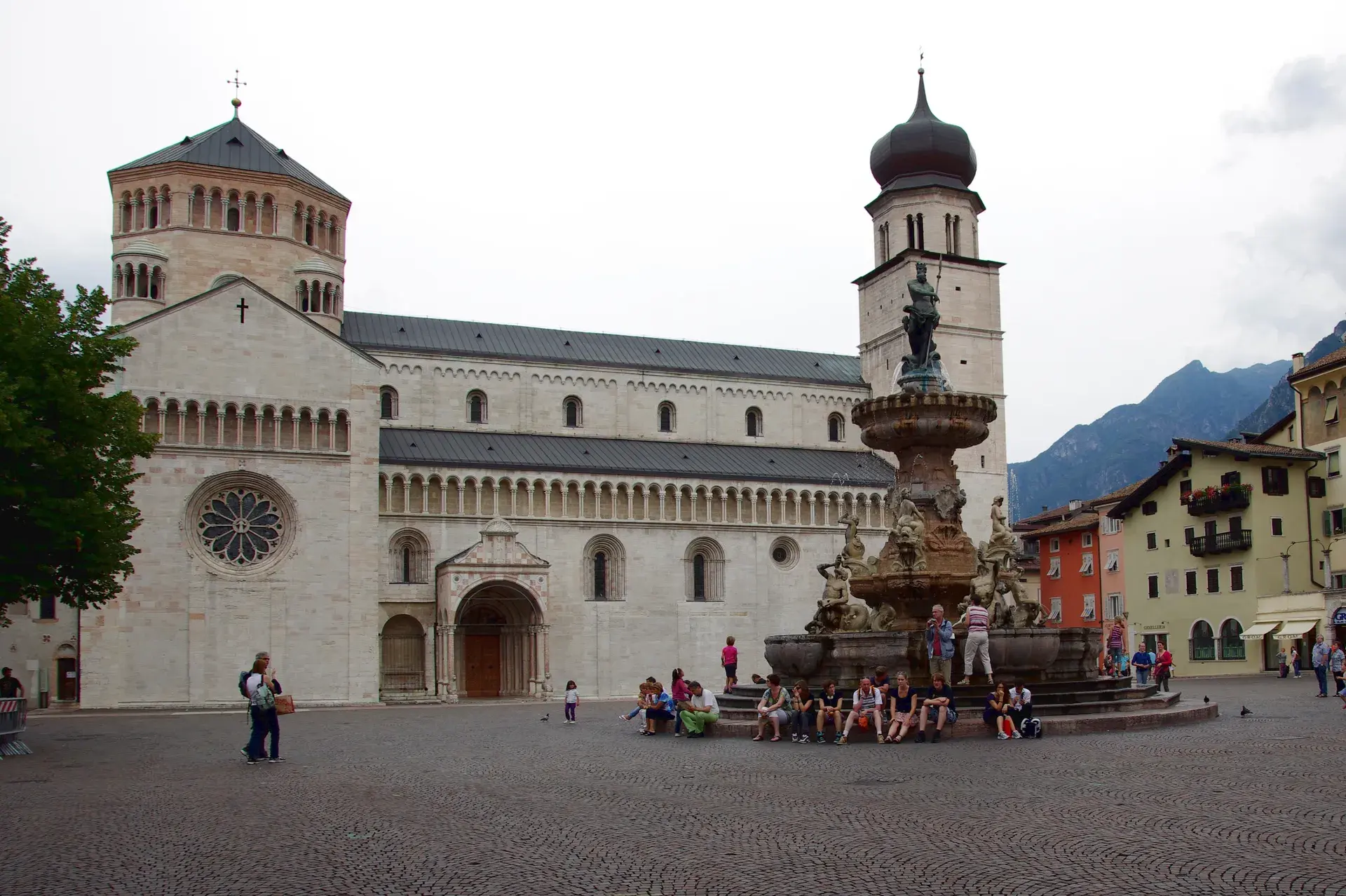
Today, Palazzo Thun serves as the active seat of the Mayor and the Municipal Council of Trento. Passing from the stone-paved street through the vaulted entrance portal reveals a quiet, expansive colonnaded courtyard laid with traditional river cobblestones. While the upper floors house administrative offices, the ground-floor and basement areas—including Sala Thun, the Cantine di Torre Mirana, and the Cappella Vantini—regularly host temporary public art exhibitions and cultural events. The palazzo is also home to the original 1768 soft-stone Neptune statue from the Piazza del Duomo fountain, which was moved indoors to shield it from weathering.
FAQ
Where is Palazzo Thun located?
Palazzo Thun is located at Via Rodolfo Belenzani 19, anchoring the grand Renaissance axis that connects to Piazza del Duomo in Trento.
What is Palazzo Thun used for today?
The building serves as the active town hall for the municipality of Trento. While the upper floors are administrative offices, spaces like the main courtyard, Sala Thun, and Cappella Vantini host public art exhibitions and cultural events.
What is the historical significance of Palazzo Thun during the Council of Trent?
During the Council of Trent (1545–1563), the palazzo served as the residence for papal legate cardinals and hosted preparatory congregations. A temporary wooden footbridge was constructed to allow delegates private passage over the street.
Why is the Neptune statue inside Palazzo Thun?
The palazzo houses the original 1768 soft-stone Neptune statue, sculpted for the fountain in Piazza del Duomo. It was moved indoors to protect it from weathering, while a bronze replica now stands in the square.