Statua del Nettuno: Trento's Fountain & Historic Landmark
Defying the Doubts of a City
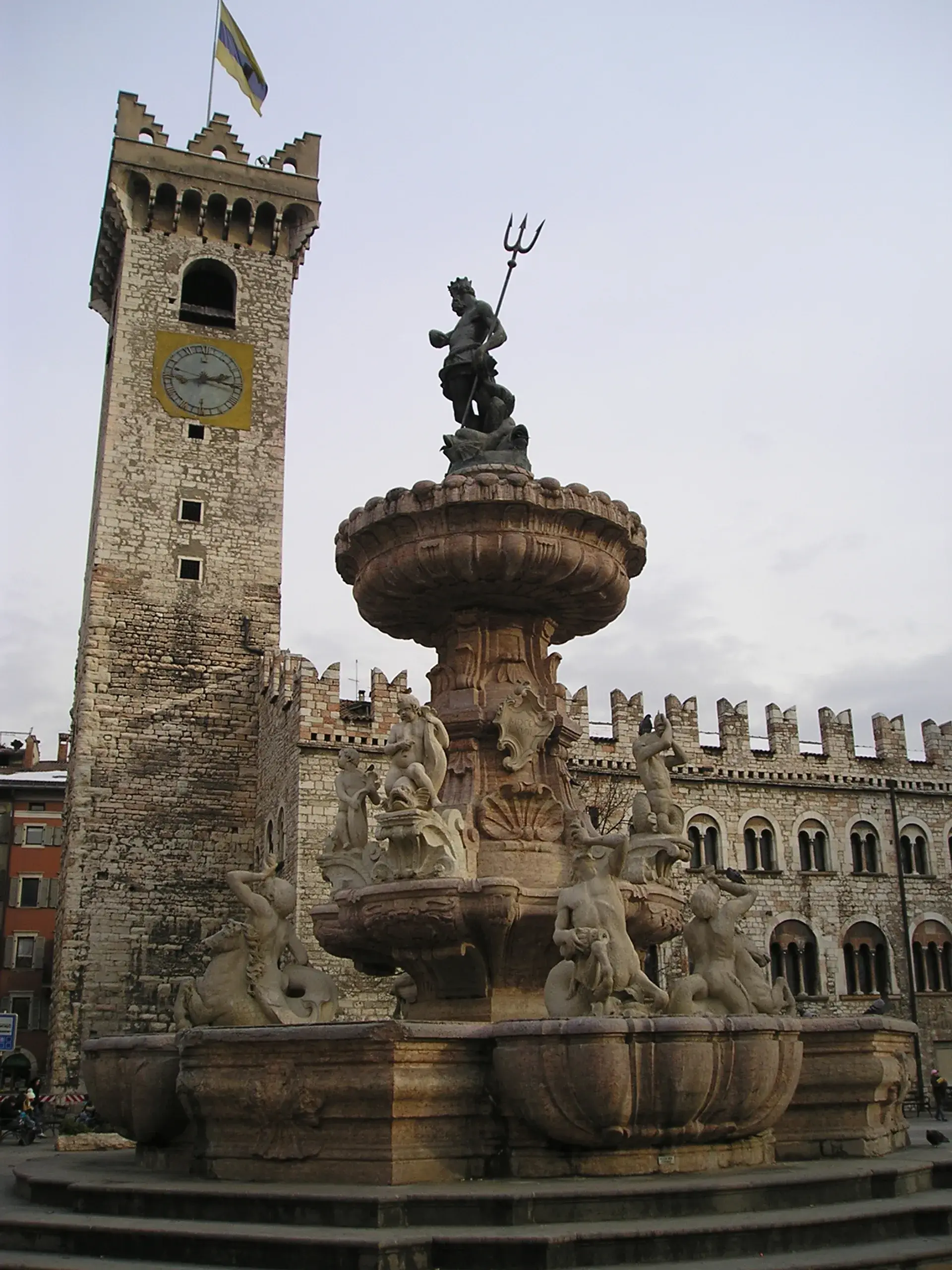
To bring continuous running water to Trento's historic core, an 18th-century engineer had to defy the doubts of an entire city. Commissioned in 1767 during the Enlightenment era, the fountain was designed by architect and hydraulic specialist Francesco Antonio Giongo. The monument was created to bring safe, running water directly into the urban center. Giongo achieved this by piping fresh water through pine-wood conduits across the Bus de Vela gorge.
The fountain was officially inaugurated during the festival of Saint Vigilius on June 26 and 27, 1769. A Latin inscription engraved on the central stem celebrates Giongo’s hydraulic success, noting he brought perpetual running water "when all had despaired."
Sculptural Details and Materials
Rising 12 meters at the center of Piazza Duomo, the monument features a striking contrast of local stone. The polygonal stepped basin and central column are constructed from red ammonitic limestone. The aquatic sculptures, which include tritons, sea horses, and putti on dolphins, were originally carved from white Arco limestone by Stefano Salterio da Laglio.
Today, the continuous sound of cascading water dropping through the multi-tiered red-stone shell basins fills the square. The statue currently crowning the monument is a bronze replica cast in 1942 by Davide Rigatti and installed in 1945.
A Daring Civic Statement
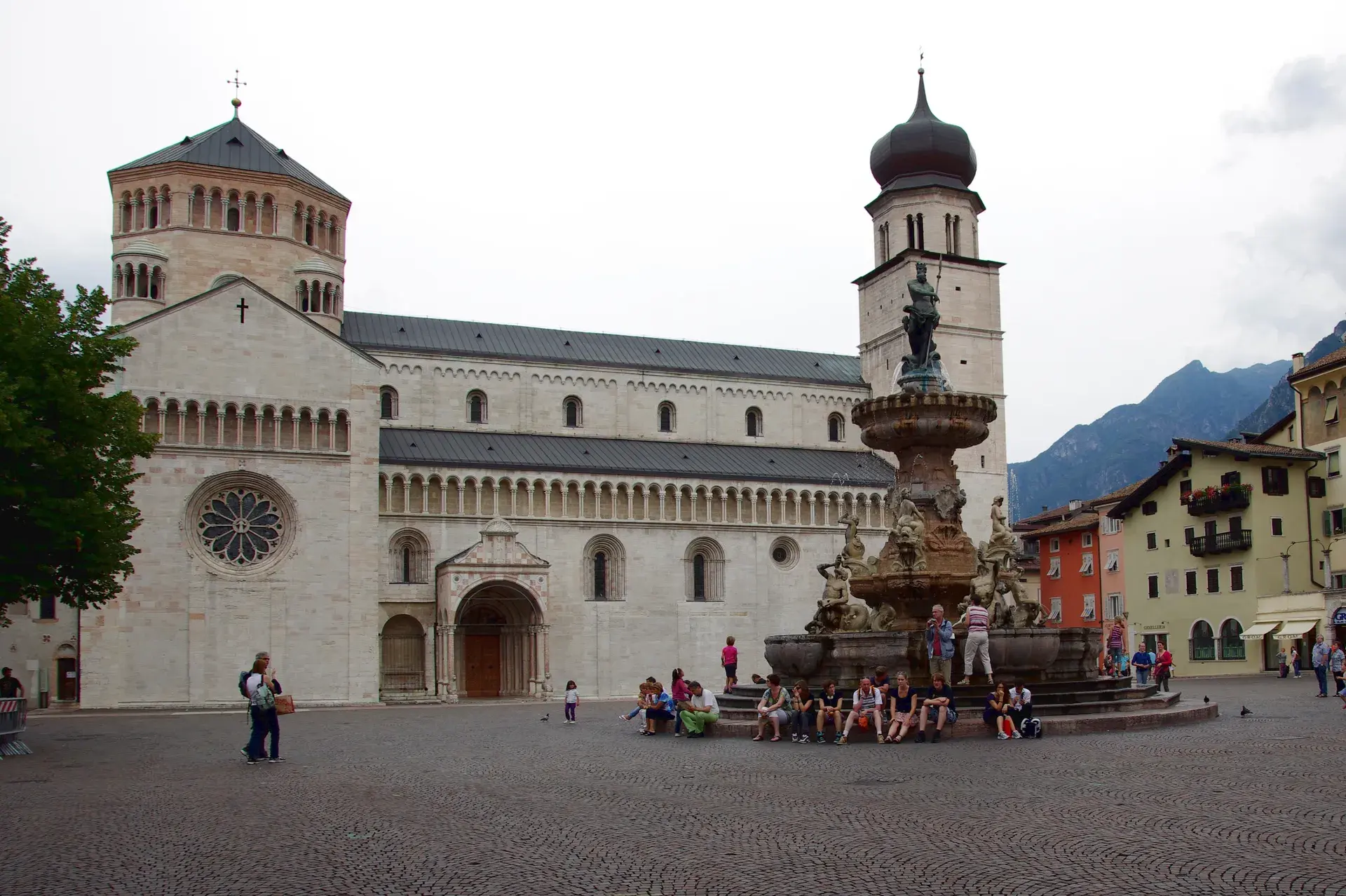
Local tradition links the choice of a pagan sea god in a high-Alpine valley town to Trento's ancient Roman name, Tridentum, referencing Neptune's three-pronged trident. The placement of a monumental pagan sea deity right beside the Cathedral of San Vigilio, where the Counter-Reformation Council of Trent convened, was considered an unusually daring civic statement for its time.
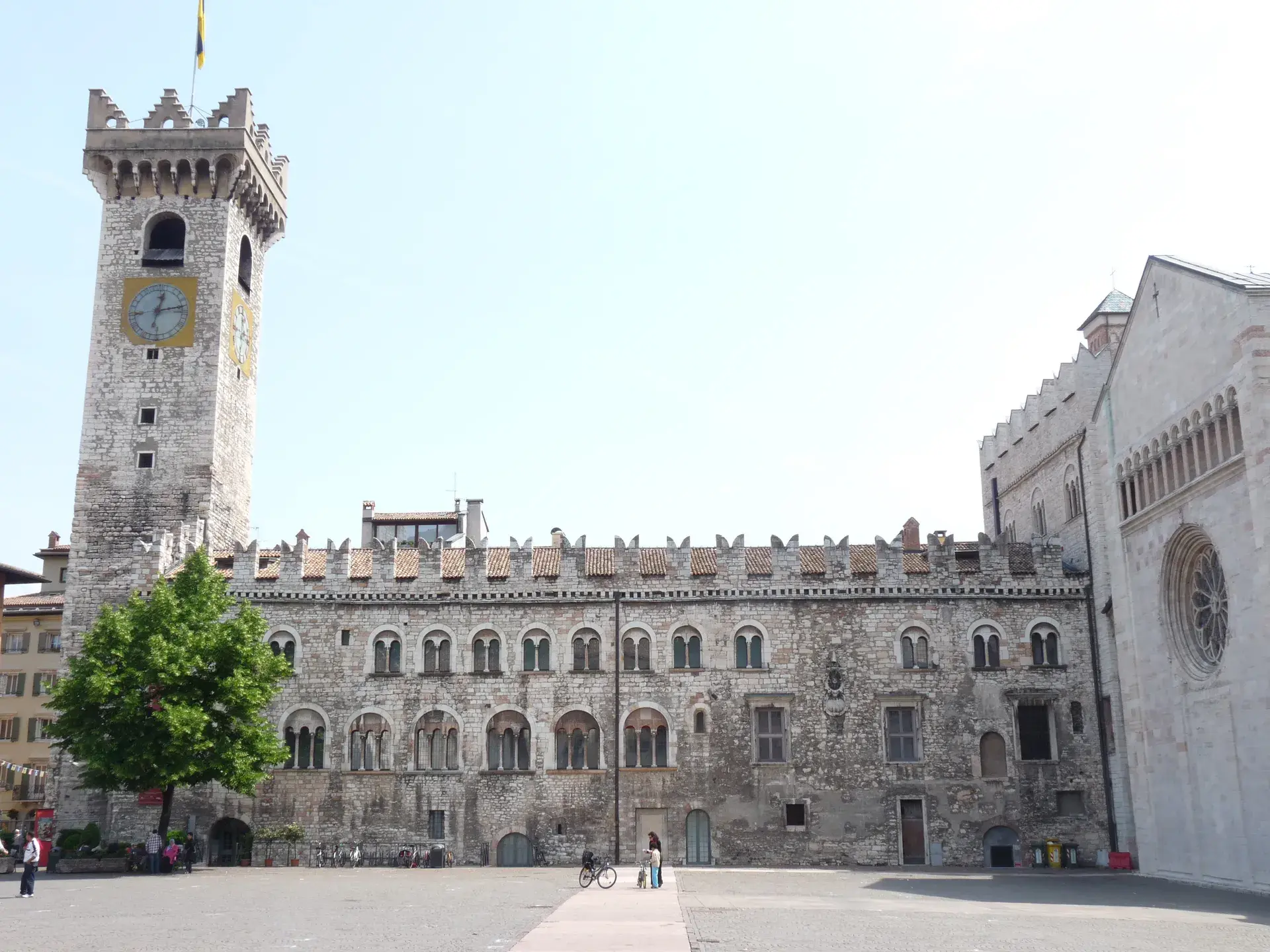
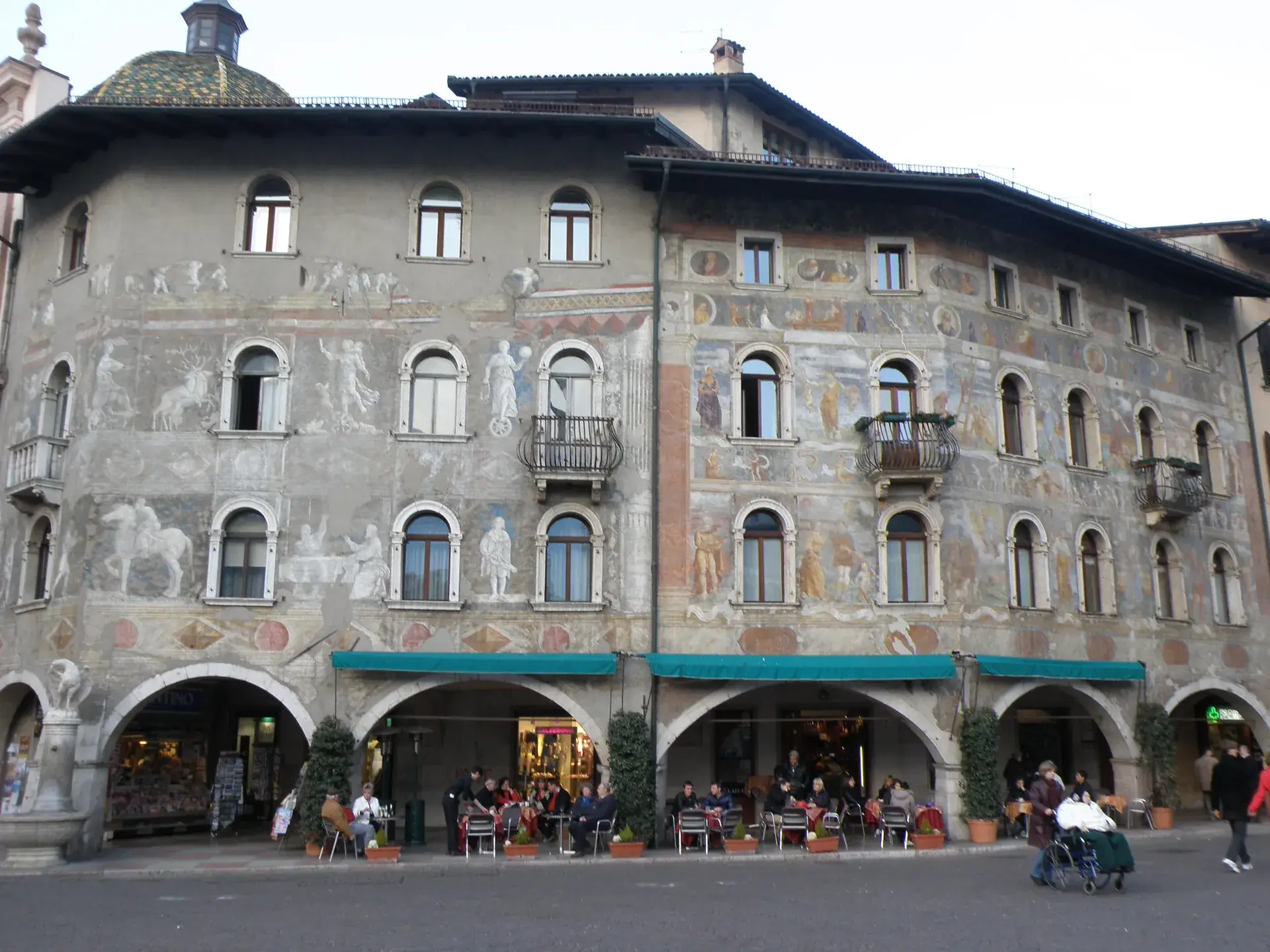
The monument serves as a central landmark in Piazza Duomo, anchoring a historic streetscape that connects the Torre Civica, the frescoed Cazuffi-Rella houses, and the aristocratic palaces along Via Belenzani.
Preservation and a German Twin
Over the centuries, the fountain has undergone necessary civic restorations. Due to stone erosion, the lower sculpted figures were replaced between 1869 and 1872 with replicas carved by local sculptor Andrea Malfatti, based on detailed surveys by painter Ferdinando Bassi. The original 18th-century stone Neptune by Stefano Salterio was removed to protect it from weather damage and is now displayed in a rocaille-styled niche within the courtyard of Palazzo Thun.
The fountain's design inspired international admiration. In 1895, sculptor Leo Müsch constructed a full-scale replica of Trento’s Neptune Fountain for the German city of Elberfeld, which is now part of Wuppertal.
FAQ
Who designed the Statua del Nettuno in Trento?
The monument and its water systems were designed and engineered between 1767 and 1769 by architect Francesco Antonio Giongo. The original stone sculptures were carved by Stefano Salterio da Laglio.
Is the Neptune statue on the fountain the original?
No, the current statue is a bronze replica cast in 1942 and installed in 1945. The original stone statue was removed for preservation and is now displayed in the courtyard of Palazzo Thun.
Why is there a sea god statue in an Alpine town?
Local tradition links the pagan sea god to Trento's ancient Roman name, Tridentum, which is a reference to Neptune's three-pronged trident.