Calmaggiore: Treviso's Frescoed Main Street
The Historic Spine of Treviso
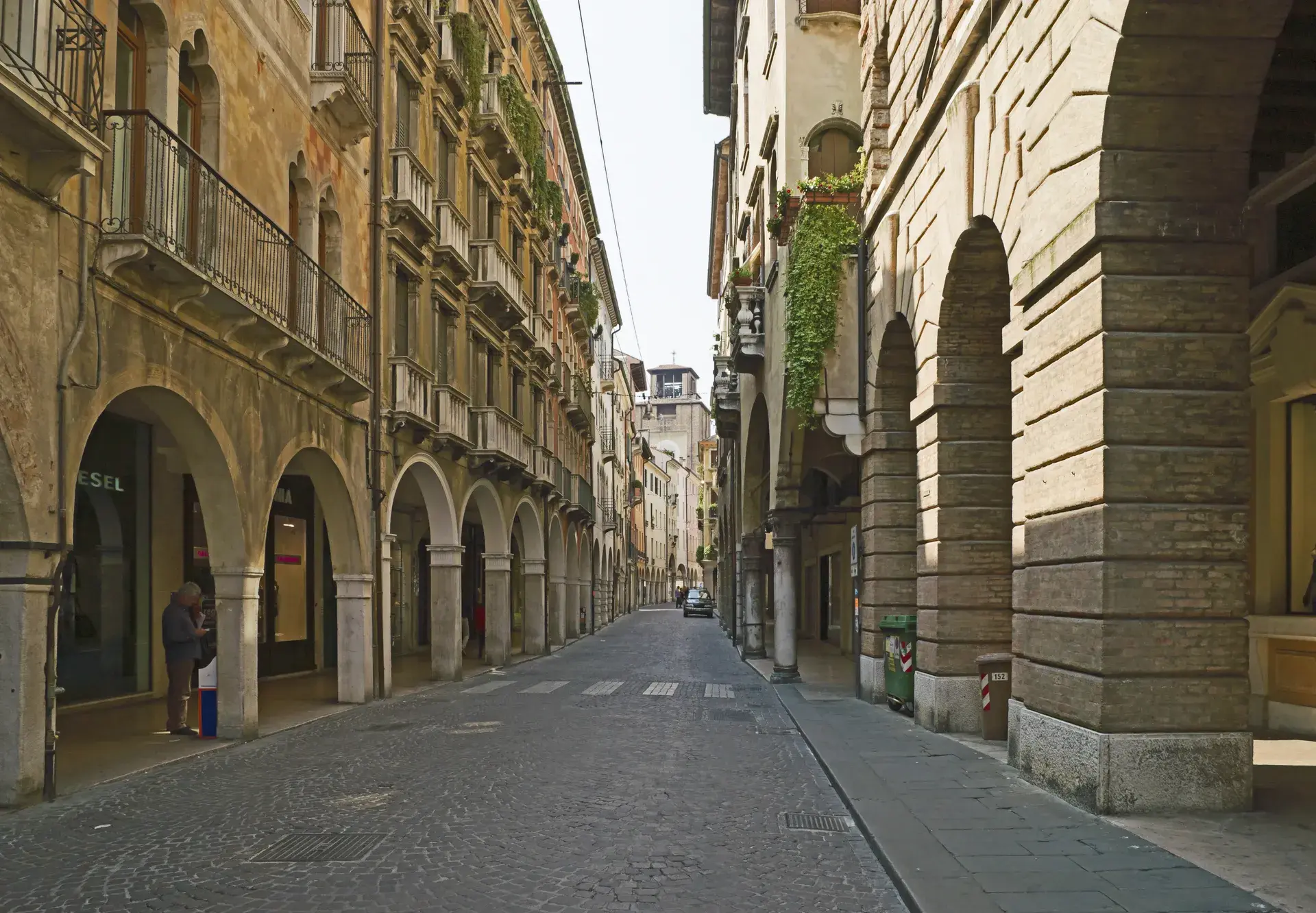
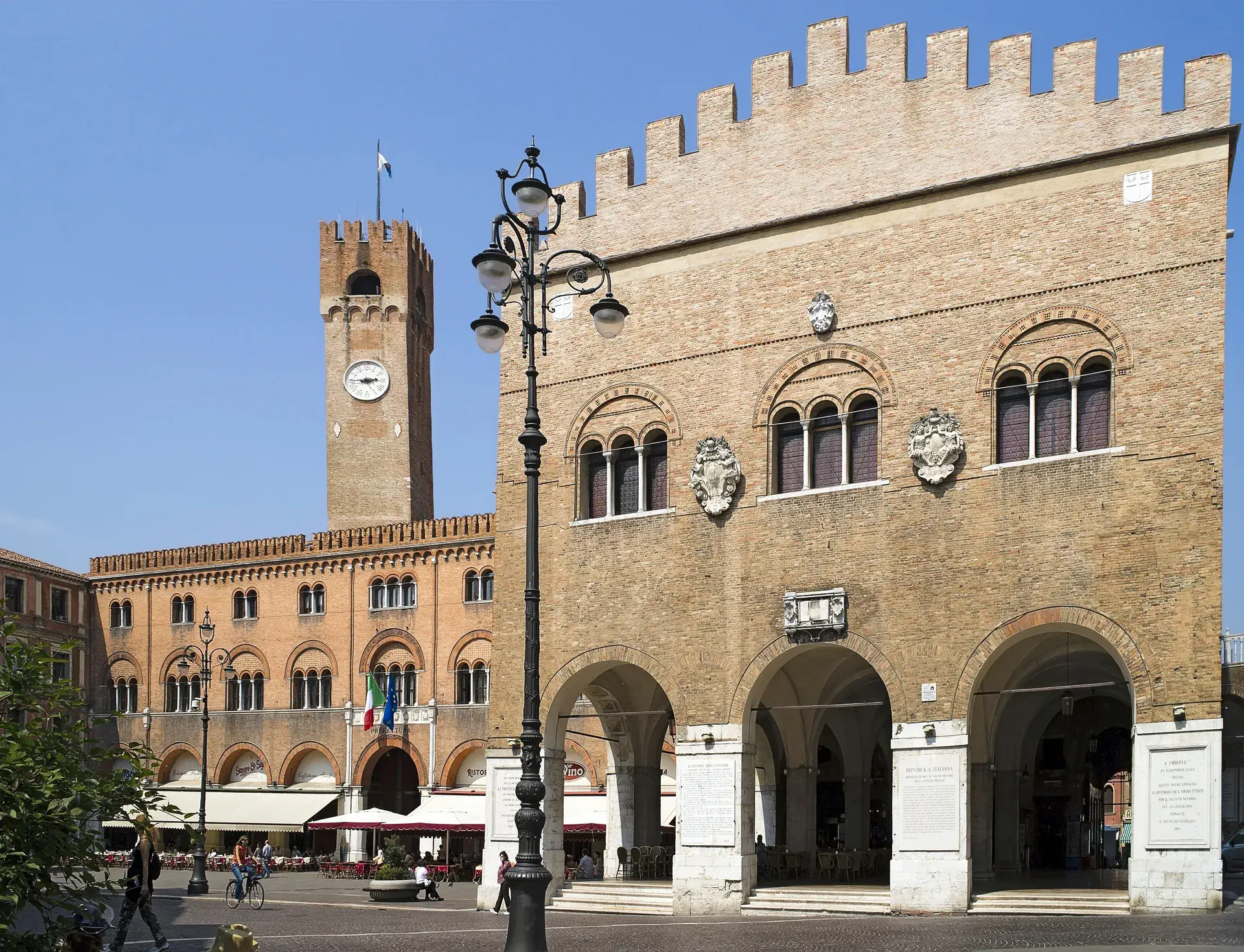
Calmaggiore, officially designated as Via Calmaggiore, serves as the primary historic thoroughfare of Treviso. Its name derives from the Latin callis maior, meaning "main road" or "major way." The street runs directly through the historic center, physically and symbolically linking the city's civic core at Piazza dei Signori—anchored by the Palazzo dei Trecento and Palazzo del Podestà—with its religious center at Piazza del Duomo, home to the Cathedral of San Pietro.
The alignment of Calmaggiore follows the urban plan of antiquity, overlaying the cardo maximus, the primary north-south axis of Roman Tarvisium. Throughout the Middle Ages and the period of Venetian rule, the road maintained this structural role, serving as the essential route connecting temporal and ecclesiastical governance.
The Painted Facades of the Urbs Picta
Calmaggiore is characterized by multi-story historic palazzi fronted by continuous covered porticoes. Due to a local scarcity of decorative stone, builders and patrons from the late medieval era through the 16th century embellished exterior brick surfaces with paint, contributing to Treviso's identity as an urbs picta, or painted city.
Exterior walls, portico vaults, and lunettes were decorated with geometric patterns, simulated tapestries, heraldry, and Mannerist compositions. Notable fresco cycles, including works commissioned by Lodewijk Toeput (also known as Ludovico Pozzoserrato), remain visible at Palazzo Zignoli and on buildings at street numbers 4–6, 27, 29, and 41. Surviving plaster reveals faded mineral earth pigments, terracotta tones, and original sinopia preparatory outlines. At arch and eye level, the porticoes also incorporate 16th-century votive frescoes depicting figures such as the Madonna and Child and the Agnus Dei, designed to provide spiritual protection along the public way.
Modern Promenade and Hidden Heritage
Calmaggiore is a fully pedestrianized corridor and functions as Treviso's central shopping avenue and the primary setting for the daily social promenade, or passeggio. Deep shade under the vaulted arcades contrasts with the open daylight along the central pavement. The covered sidewalks are lined with fashion boutiques, jewelers, shoe retailers, espresso bars, and pastry shops.
Beneath this active commercial street lie older architectural layers. Portions of the Roman cardo maximus and historic defensive paving survive directly beneath retail spaces, including an accessible archaeological section preserved in the basement of the Argenteria Marza shop.
Off the main street, a walkway passing through the Galleria della Strada Romana into the courtyard of Palazzo Zignoli leads to the Fontana delle Tette. This monument is a 1989 replica of a 1559 fountain whose original is preserved in the Palazzo dei Trecento. Under the Venetian Republic, following the election of each new podestà, the fountain was engineered to spout red wine from one breast and white wine from the other for three consecutive days for the city's residents.
FAQ
What is the historical origin of the name Calmaggiore?
The name comes from the Latin phrase "callis maior," which translates to "main road" or "major way," reflecting its role as the city's principal thoroughfare.
Why are the buildings along Calmaggiore painted with frescoes?
Because decorative stone was scarce in the region, brick buildings from the late Middle Ages through the 16th century were embellished with exterior frescoes, geometric designs, and heraldry, contributing to Treviso's reputation as an "urbs picta" (painted city).
Can Roman ruins be seen along Calmaggiore?
Calmaggiore directly overlays the Roman cardo maximus of Tarvisium. Ancient paving and fortification elements remain preserved under modern retail shops, including an accessible section located in the basement of the Argenteria Marza shop.
What is the significance of the nearby Fontana delle Tette?
Located in the courtyard of Palazzo Zignoli off Calmaggiore, this 1989 replica of a 1559 fountain commemorates a Venetian tradition where the fountain spouted free red and white wine for three days following the election of a new podestà.