Canale dei Buranelli: Treviso's Little Venice
The Waterway of Venetian Traders
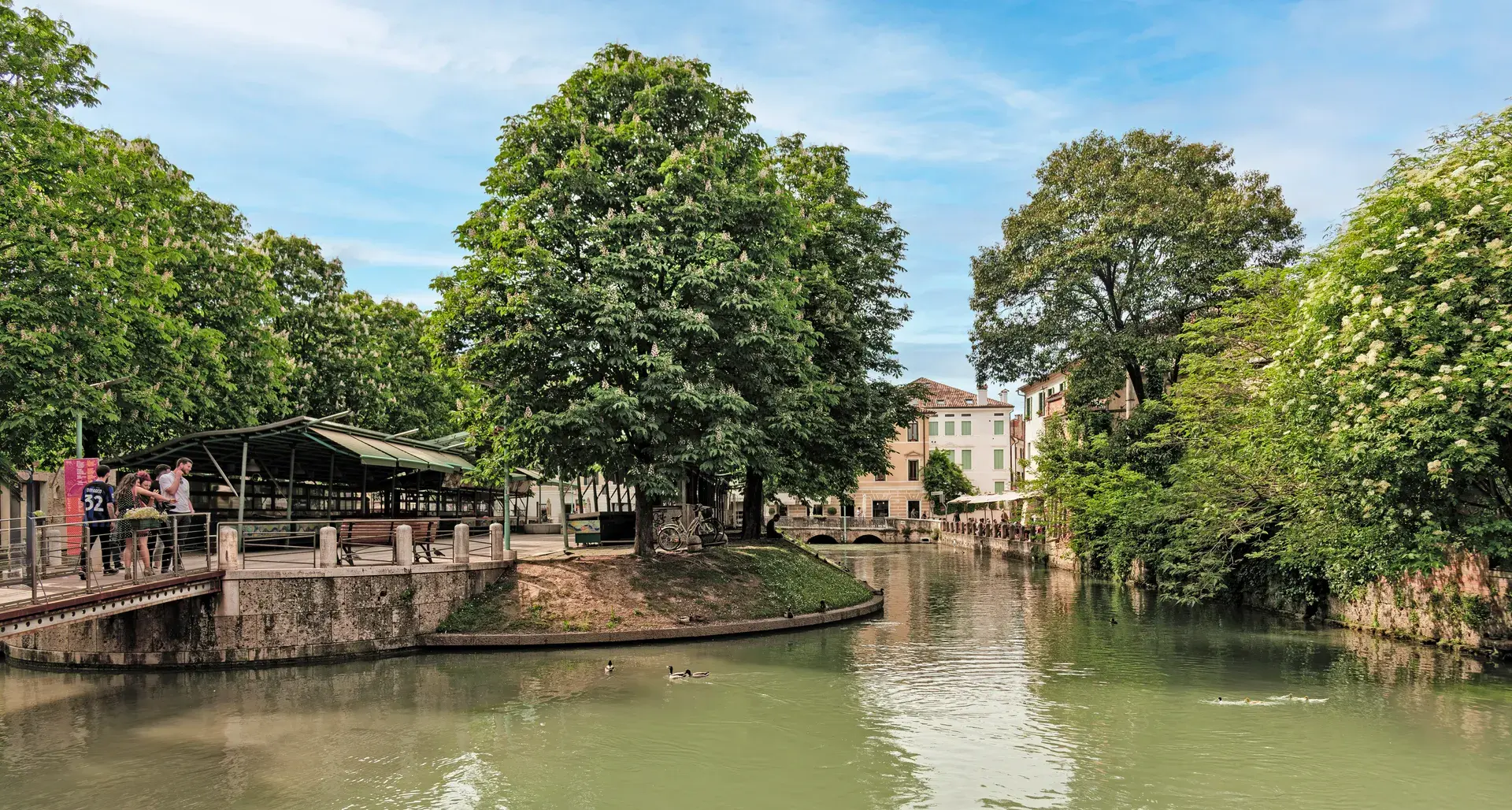
The Canale dei Buranelli, also documented as the Canale Medio or Rio Buranelli, forms a core element of Treviso’s historic water network. The waterway is an interior branch of the Botteniga, a resurgence river flowing from the north. At the Ponte de Pria (Stone Bridge), Renaissance sluices divide the Botteniga into three central channels before they ultimately discharge into the Sile River.
Following Treviso's integration into the Venetian Republic in 1339, the city's aquatic routes were fortified for defense under Fra Giovanni Giocondo and developed as vital trade corridors. Merchants and fishermen traveled from the Venetian lagoon inland along the Sile and Botteniga river systems to provide mainland markets with eel and fish. By the 1500s, lagoon traders from the island of Burano established a permanent commercial hub along this corridor, lending the canal its enduring name. A surviving 16th-century brick building, which once operated as a residence and fish warehouse for Burano merchants, remains preserved on the embankment.
Architecture and Daily River Life
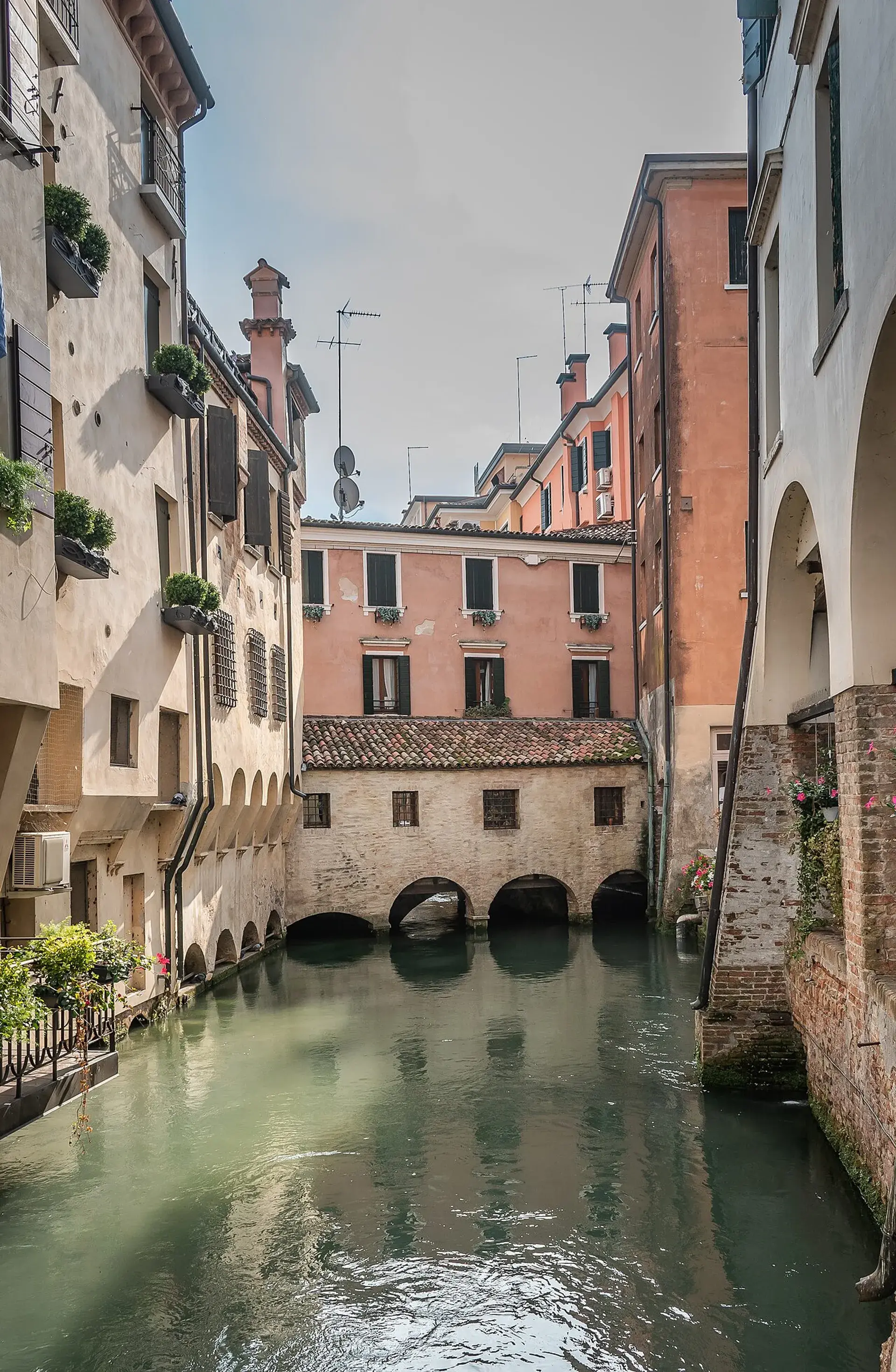
The canal exemplifies Treviso’s reputation as a città d'acque (city of water) and mainland "Little Venice" (Piccola Venezia). Its course is defined by low-arched stone pedestrian bridges, overhanging porticoes, and medieval and Renaissance brick residences whose exterior walls rise directly out of the spring-fed current. The area is filled with the quiet, continuous murmur of water moving past stone foundations.
Beyond commercial transport, the canal historically served as an active center of domestic labor. Through the early 20th century, local washerwomen, known as lavandaie, knelt at stone water-level steps to rinse linens in the flowing current. Physical traces of this past remain visible today, including original iron rings and hanging chains embedded in the masonry, which were used to tether washboards securely against the river current.
Literary Ties and Alternate Names
Affixed to a masonry wall along the water is a contemporary wire-mesh silhouette sculpture created by artist Mario Martinelli. The work commemorates the Treviso writer and poet Giovanni Comisso, who resided by the canal, alongside an outline of his small vessel, the Bronsa. The boat famously sank during Comisso's attempt to navigate the river network down to the Venetian lagoon.
The waterway also carries multiple colloquial designations. It is frequently referred to as the Canale delle Beccherie due to the adjacent Ristorante Le Beccherie, recognized as the birthplace of tiramisù. Downstream, after passing beneath Via Martiri della Libertà and running under the former Santa Maria dei Battuti hospital, the waterway is locally called the Canale dell'Ospedale.
Visiting Canale dei Buranelli
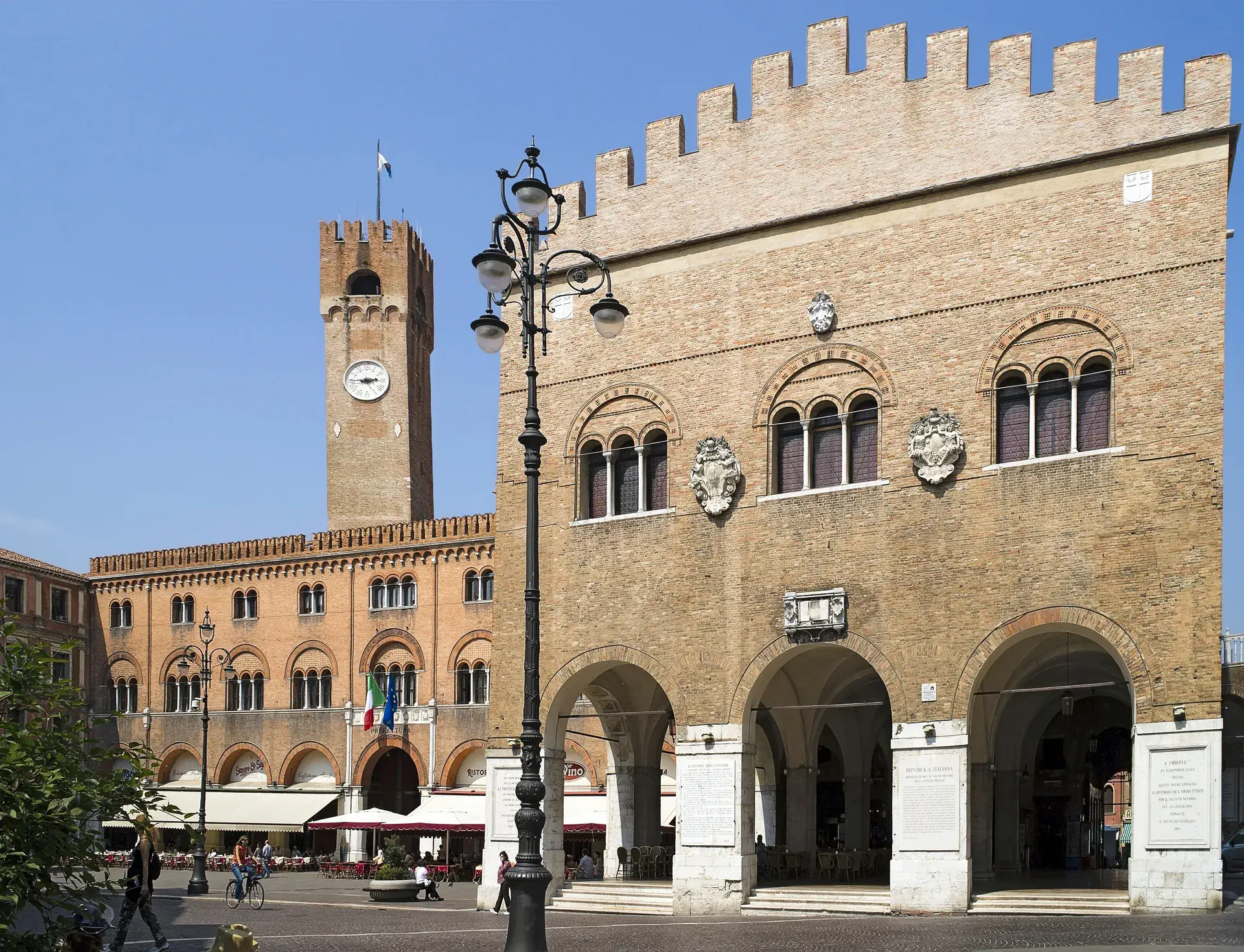
Situated between the civic heart of Piazza dei Signori and the morning fish market on the Isola della Pescheria, the Canale dei Buranelli functions as an open, unticketed public promenade accessible 24 hours a day. The surrounding stone footbridges, quays, and adjoining alleys feature benches, cafes, and traditional osterie where patrons gather for wine and cicchetti (traditional bar snacks).
FAQ
Why is the canal named Canale dei Buranelli?
It takes its name from 16th-century fishermen and traders from the Venetian lagoon island of Burano, who traveled upriver to sell fish and eels and maintained warehouses along the banks.
What do the iron rings in the canal walls signify?
The iron rings and chains embedded near the water-level steps were historically used by local washerwomen (lavandaie) to anchor their washboards in the river current.
What is the wire silhouette sculpture on the canal wall?
The wire-mesh silhouette is an artwork by Mario Martinelli depicting Treviso writer Giovanni Comisso and his small boat, the Bronsa, which sank during an attempt to sail to the Venetian lagoon.
Why is the waterway sometimes called Canale delle Beccherie?
It is colloquially known as Canale delle Beccherie because of its location next to Ristorante Le Beccherie, the historic restaurant recognized as the birthplace of tiramisù.