Porta San Tomaso: The Northern Gate of Treviso
Renaissance Defense and Architecture
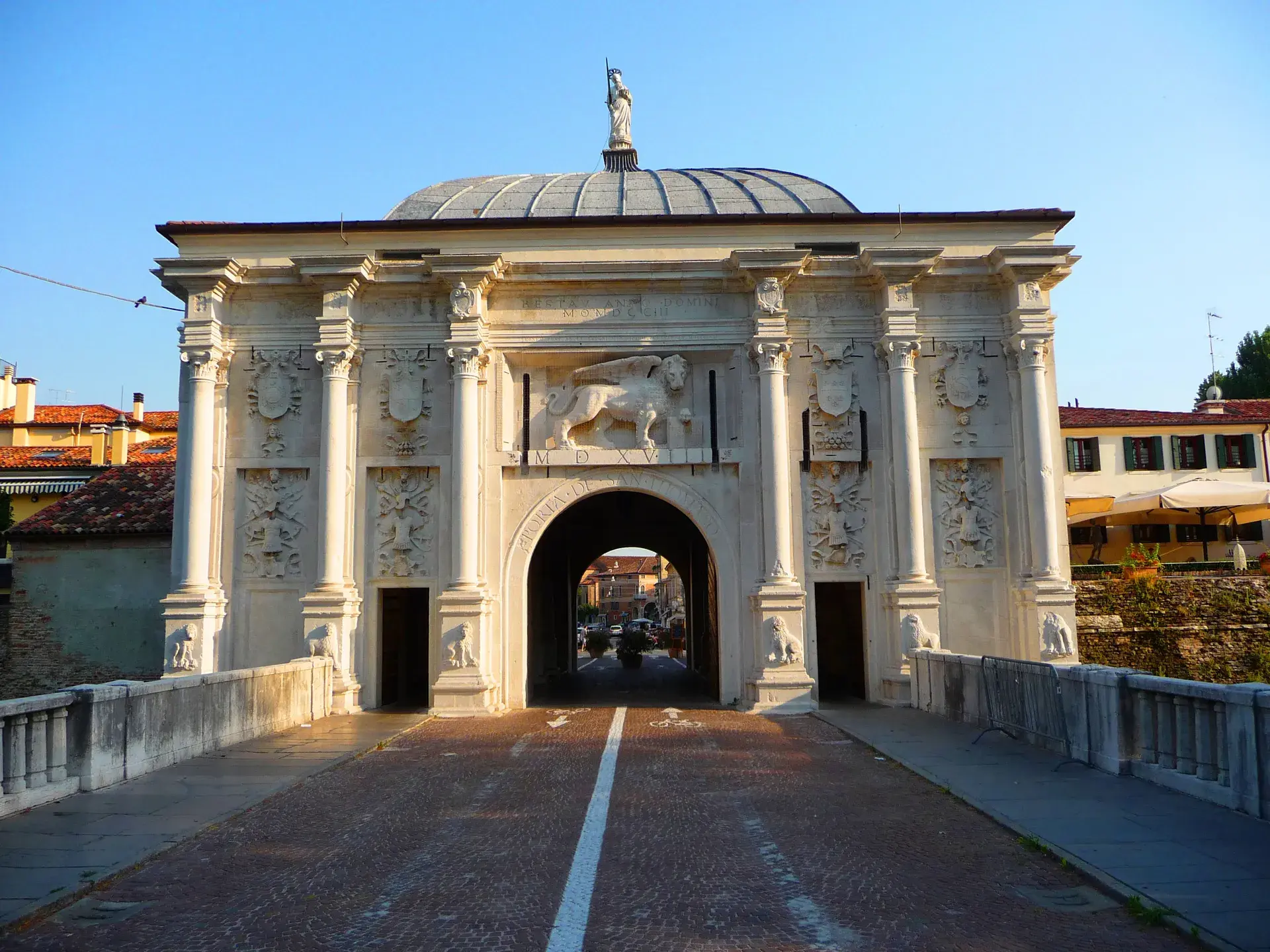
Completed in 1518 under Venetian Podestà Paolo Nani, Porta San Tomaso stands as the northernmost and most monumental gateway in Treviso's 16th-century defensive perimeter. Its construction formed part of a major fortification program overseen by Fra Giocondo following the War of the League of Cambrai, during which Venice transformed Treviso into an artillery stronghold. The gate's architectural design is generally attributed to Guglielmo d'Alzano.
Architecturally, the gate is conceived as a triumphal arch. While the core structure and city-facing side feature dark red brick masonry, the exterior facade is clad in smooth, pale Istrian stone. Crowning the monument is a distinctive wooden cupola sheathed in lead.
The Winged Lion and Dedicatory Curiosities
The exterior facade displays the heraldic arms of both Treviso and the Republic of Venice, centered around a prominent bas-relief of the winged Lion of Saint Mark. The original lion emblem was destroyed in 1797 following the fall of Venice to Napoleon's forces. In 1857, the missing relief was replaced with an antique stone carving.
A political dispute surrounds the statue atop the structure. Although the Venetian Senate decreed that the gate should honor Saint Thomas Becket, referencing a nearby medieval church, Podestà Paolo Nani installed a statue of his own patron saint, the Apostle Paul. Nani hoped this personal flourish would lead locals to colloquially name the gate "Porta Nana."
Linguistic Divide and Modern History
Porta San Tomaso features a deliberate linguistic distinction between its two sides. The exterior facade, facing rural arrivals and traders entering from the countryside, is inscribed in the Venetian vernacular dialect as Porta de San Thomaso. In contrast, the interior facade, addressing the city's educated populace, bears a formal inscription in classical Latin: Porta Sancti Thomae – Dominus custodiat introitum et exitum tuum.
During the 19th-century Risorgimento and continuing into the early 20th century, the gateway was officially renamed Porta Mazzini before later reverting to its historic title. Between 1910 and 1938, transit infrastructure adapted to the monument when tracks for Line 1 of Treviso's municipal electric tramway were routed directly through the central barrel vault.
Current Role in Treviso
Along with Porta Santi Quaranta and Porta Altinia, Porta San Tomaso is one of only three surviving gates from the city's historic defenses. Now under municipal ownership, it serves as a pedestrian entry point to Treviso's northern edge, leading visitors toward landmarks such as the Duomo and Piazza dei Signori. It also functions as a primary access point to the roughly four-kilometer elevated walking circuit atop the preserved Venetian ramparts.
FAQ
When was Porta San Tomaso built?
Porta San Tomaso was completed in 1518 under Venetian Podestà Paolo Nani as part of Treviso's refortification program following the War of the League of Cambrai.
Why does the gate have two different language inscriptions?
The exterior facade facing incoming rural travelers is written in the Venetian dialect ("Porta de San Thomaso"), while the interior facade facing the urban population is inscribed in classical Latin ("Porta Sancti Thomae").
Which statue stands atop Porta San Tomaso?
Although the gate was officially dedicated to Saint Thomas Becket, the rooftop statue depicts Saint Paul, placed there by Podestà Paolo Nani in honor of his own patron saint.