Isola della Pescheria: Treviso's Island Market
The 1856 Engineering of an Island Market
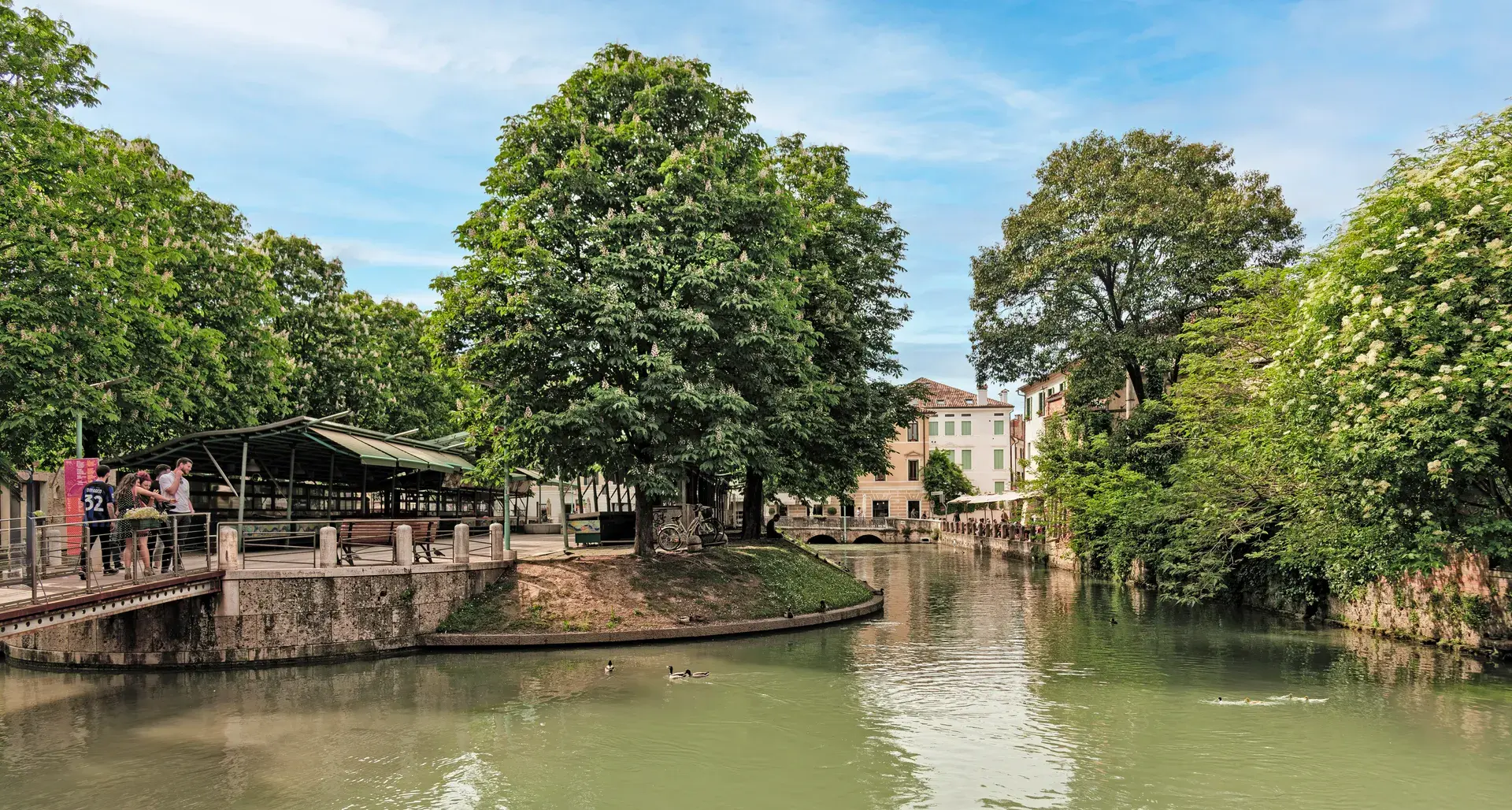
Isola della Pescheria is an artificial, elliptical river island set within the historic center of Treviso. Encircled by the Cagnan Grando—the primary branch of the Botteniga river—the island was engineered in 1856 during Austrian rule under the Kingdom of Lombardy–Venetia. Municipal engineer Francesco Bomben designed the project based on an idea by Pietro Liberali, joining three natural river shoals with landfill to establish a dedicated, isolated marketplace downstream from Ponte di San Parisio.
For centuries prior, Treviso’s fish trade operated out of Piazzetta del Monte di Pietà, situated beside Piazza dei Signori. The market generated ongoing complaints about unpleasant odors in the civic center, but a severe cholera outbreak in 1855 prompted city administrators to take decisive action. By positioning the fishmongers in the center of the Cagnan Grando, municipal planners harnessed the river’s continuous, flowing current to wash away organic waste and manage odors through natural hydraulic sanitation.
Daily Rhythms: From Morning Fishmongers to Evening Osterie
The island continues to fulfill its original municipal function six days a week. From Monday through Saturday mornings, it hosts an open-air fish market where local fishmongers arrange Adriatic and lagoon catches on beds of crushed ice alongside seasonal fruit and vegetable vendors. The atmosphere is shaped by vendor calls, water reflections on nearby painted building façades, and the steady sound of the Cagnan Grando coursing past the island’s stone banks.
By midday, commercial stalls are dismantled and the stone grounds are washed down. During the late afternoon and evening, the area transitions into a social gathering point. Residents gather at the surrounding canal-side wine bars (osterie) and beneath nearby porticoes for drinks such as the spritz paired with traditional cicchetti appetizers.
Bridges, Sculptures, and Canal Relics
Pedestrian bridges connect Isola della Pescheria to the mainland canal banks, most notably a 19th-century cast-iron footbridge. The railings of this crossing are decorated with sculpted, stylized fish motifs that signal the civic purpose of the island.
Art and industrial history intersect directly around the water's edge. Rising from the riverbed of the Cagnan Grande beside the island is the Sirenetta, a bronze mermaid sculpture cast by Treviso artist Luigi Simionato. Just steps away along the canal banks stands the Molinetto della Pescheria, an intact 19th-century wooden watermill wheel preserved as a monument to the period when over 60 mills operated across the city's waterways. Historically, fishmongers from the Venetian lagoon island of Burano traveled inland to trade at this site, a relationship reflected in the neighboring Canale dei Buranelli.
A Gateway to Treviso's Waterways
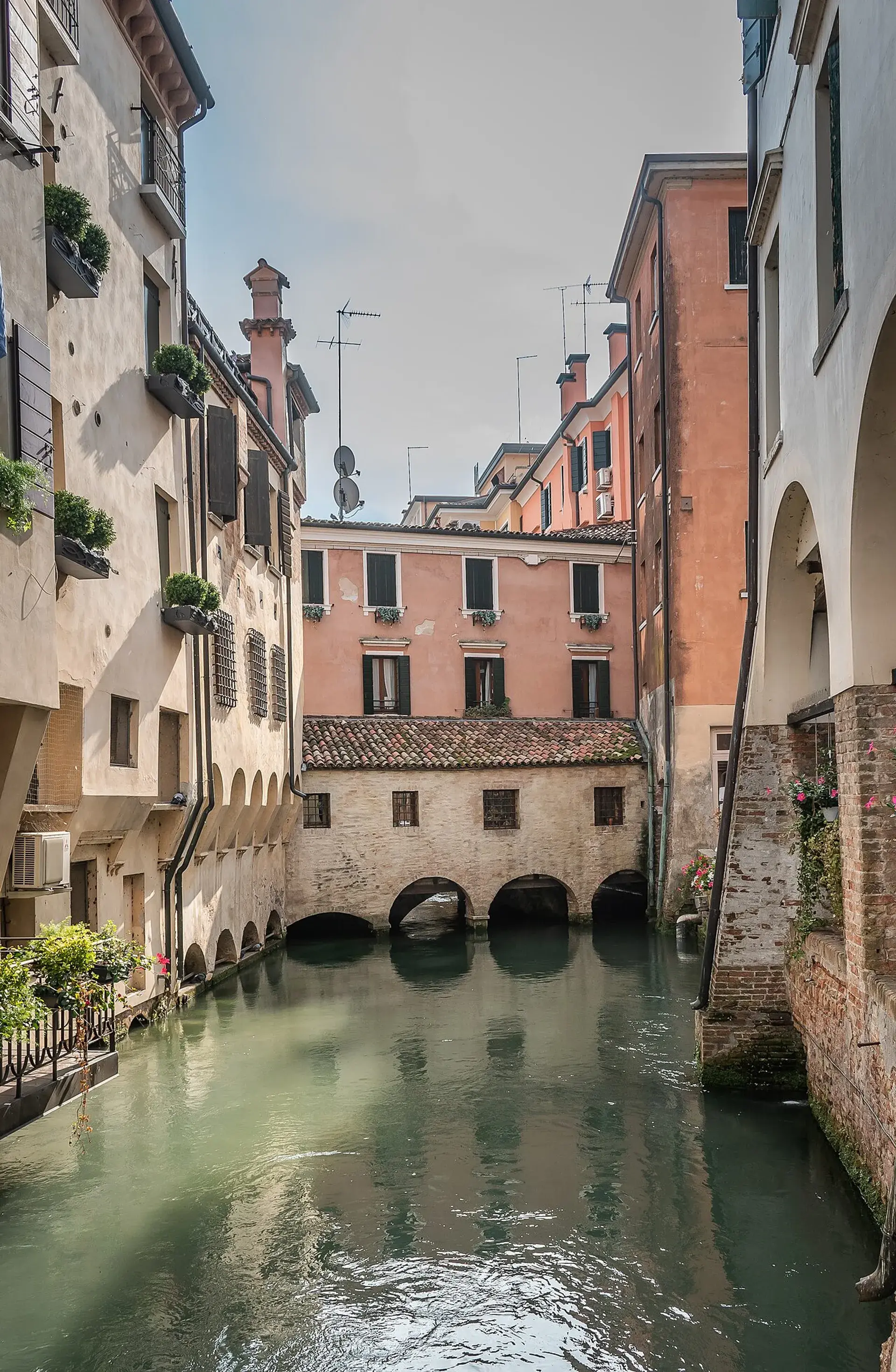
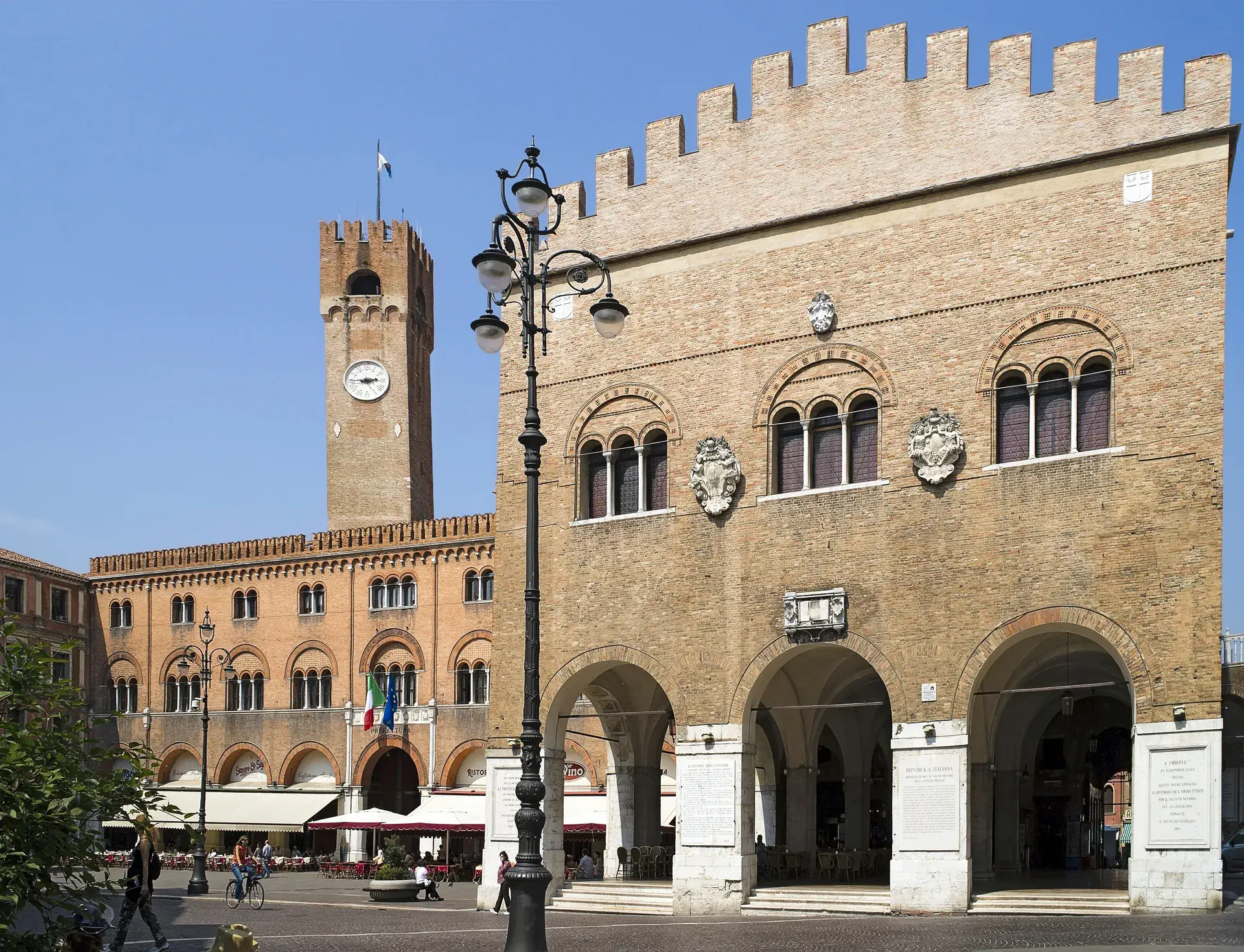
Treviso is known as a mainland city of waters (città d’acque), defined by the split channels of the Botteniga river that wind through the historic core before reaching the Sile river. Positioned only minutes from major cultural landmarks like Piazza dei Signori and Ca' dei Carraresi, Isola della Pescheria links the city's civic architecture with the working hydraulic networks that have sustained urban commerce and sanitation for centuries.
FAQ
When does the market on Isola della Pescheria operate?
The open-air market runs Monday through Saturday mornings, offering fresh fish and seasonal produce until stalls are packed away at midday.
Why was Isola della Pescheria built?
The artificial island was engineered in 1856 by Francesco Bomben to relocate the fish market from Piazzetta del Monte di Pietà, using the river channel to improve hygiene following an 1855 cholera outbreak.
What is the statue located in the water beside the island?
The statue is the Sirenetta, a bronze mermaid sculpture by Treviso artist Luigi Simionato that rises directly out of the riverbed of the Cagnan Grande.
What is the Molinetto della Pescheria?
The Molinetto della Pescheria is a preserved 19th-century wooden watermill wheel located near the island, serving as a relic from an era when more than 60 mills operated along Treviso's canals.