Church of Saint Nicolò: Treviso's Gothic Giant
Architectural Grandeur and Dominican Roots
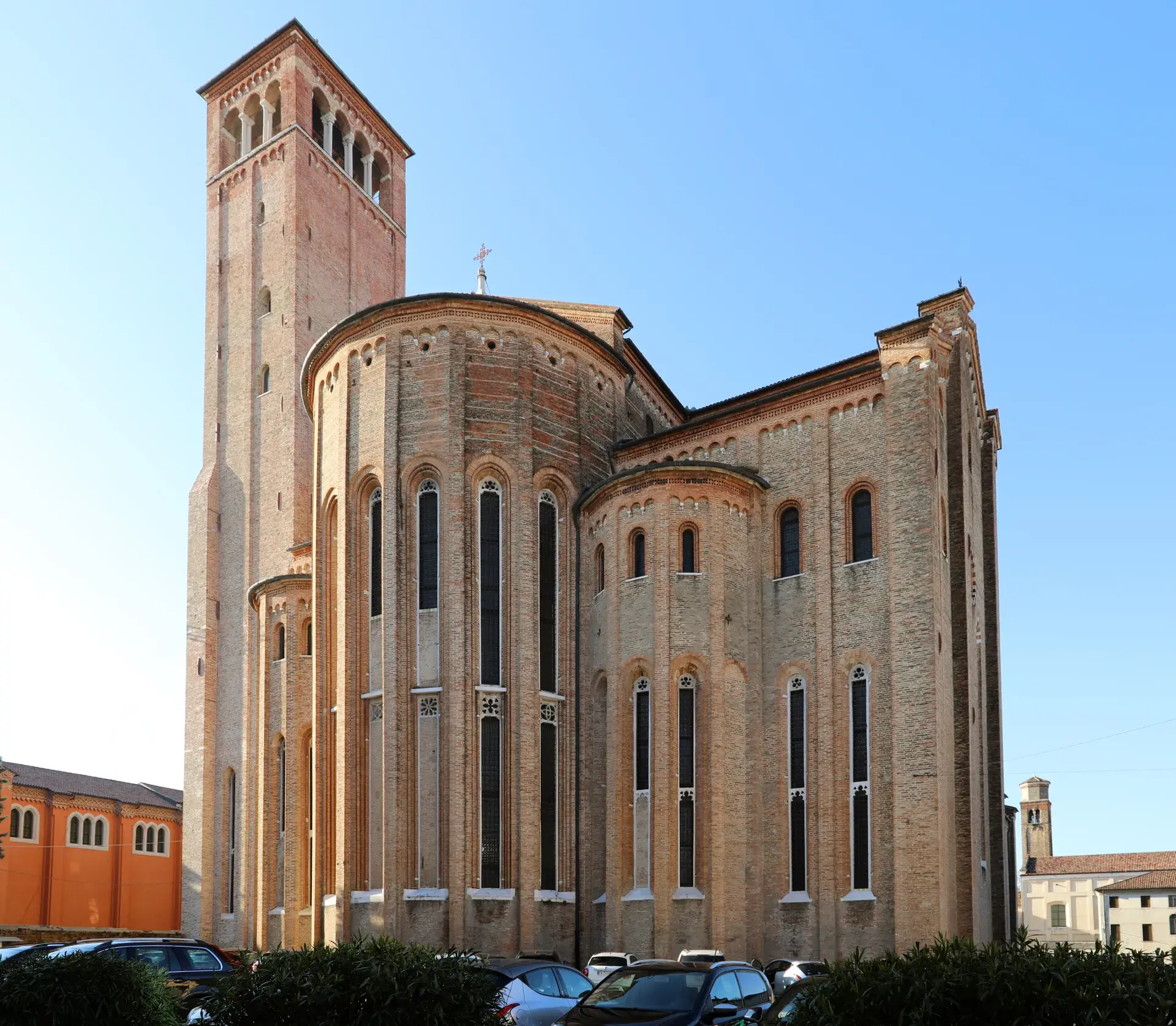
The Church of Saint Nicolò (Chiesa di San Nicolò or Tempio Monumentale Arcipretale) is a 13th- to 14th-century Dominican brick complex located in the southwestern quadrant of Treviso near the Sile river. Despite not serving as the diocesan seat, it is the largest church in the city by both footprint and volume, physically exceeding the Cathedral of Treviso.
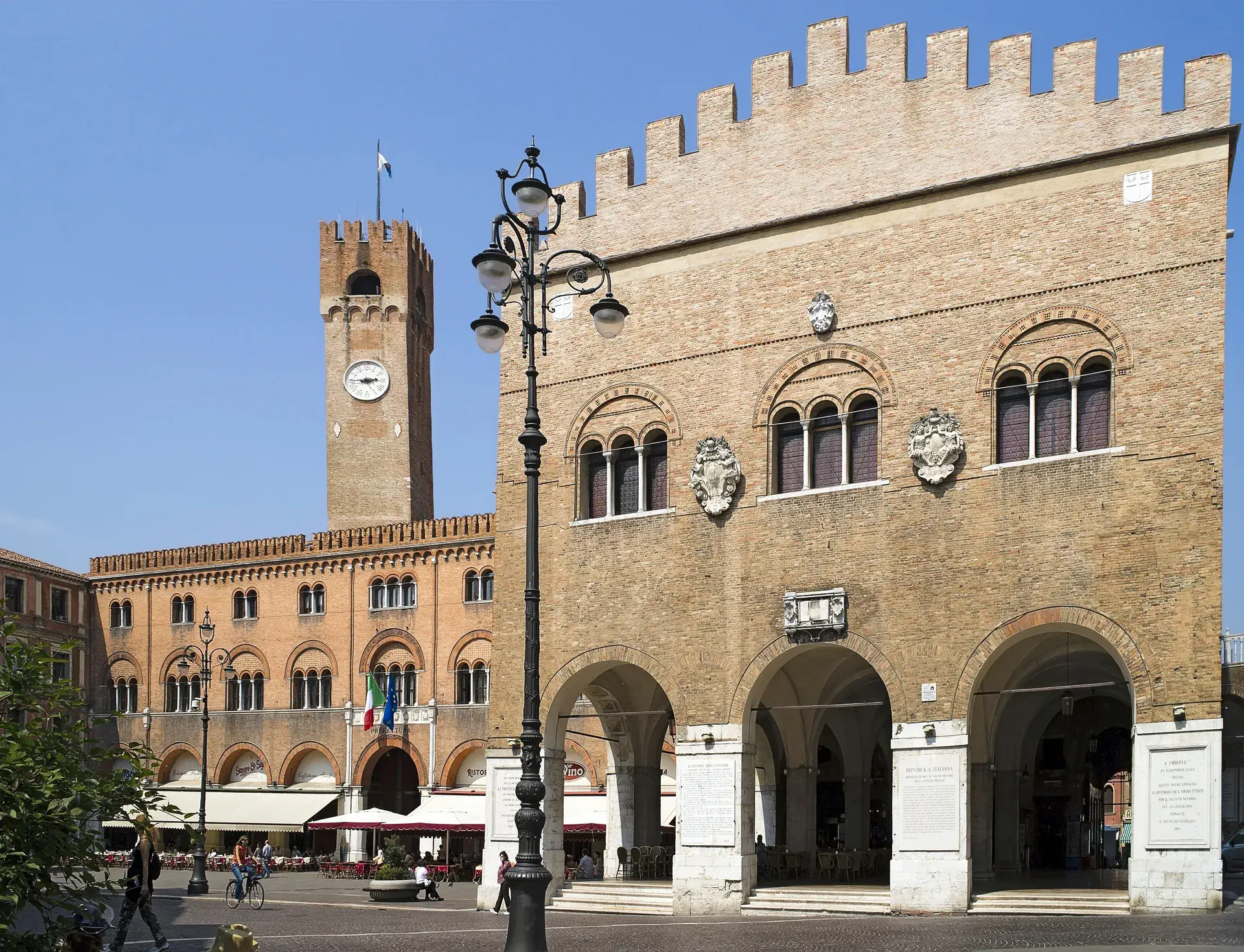
The Dominican Order arrived in the city around 1221, occupying an existing chapel dedicated to Saint Nicholas within the medieval walls. The initial church was consecrated by 1282, followed by an ambitious 14th-century expansion substantially financed by Treviso-born Dominican friar Nicolò Bocassino, who later became Pope Benedict XI. The complex anchored the southern edge of medieval Treviso, balancing the religious center of the Duomo and the civic core at Piazza dei Signori.
Interior Design and Monumental Scale
Constructed in a Lombard-Gothic style with Romanesque influences, the church follows a Latin cross plan measuring between 88 and 90 meters in length. The nave extends 27.5 meters wide, widening to more than 38 meters across the transept, while the ceiling reaches heights of roughly 33.5 to 34 meters. Overhead, a vast timber ship's-keel roof (soffitto a carena di nave) spans the space, framed below by 12 cylindrical columns representing the Twelve Apostles. Ten of these columns are constructed of exposed brick, while the front two are carved from stone.
The cavernous interior generates a pronounced acoustic resonance, contrasting the warm reddish-brown brickwork with remnants of medieval wall plaster and dark ceiling beams. The church was also constructed with an astronomical alignment of approximately 91° 4′ relative to the path of the sun. At midday on the winter solstice, beams of sunlight selectively illuminate six saint medallions painted along the northern wall.
Frescoes and Chapter House Art
San Nicolò houses significant medieval and Renaissance artworks. On the right wall of the nave, a 12-meter-tall fresco depicts Saint Christopher wading through water populated by freshwater fish native specifically to Treviso's Sile river, including trout, pike, and eels. In the presbytery stands the wall tomb of military commander Agostino Onigo, featuring sculptural work attributed to Tullio or Pietro Lombardo and painted pages whose attribution to Lorenzo Lotto remains an ongoing subject of scholarly debate. The interior also features an 18th-century organ crafted by Gaetano Callido between 1778 and 1779, alongside an additional positive organ installed in 2017.
In the adjoining Chapter House (Sala del Capitolo), Emilian artist Tommaso da Modena executed a fresco cycle in 1352 depicting forty prominent members of the Dominican Order. Celebrated for early pictorial naturalism, this cycle includes the earliest known depiction of eyeglasses in Western art: French Cardinal Hugh of Saint-Cher shown writing at a desk with rivet spectacles perched on his nose. A nearby portrait depicts Cardinal Nicholas of Rouen studying with a handheld magnifying lens.
Survival and Contemporary Role
The structure has weathered significant structural challenges over the centuries, including early tower collapses and direct bomb damage during Allied air raids on April 7, 1944, which destroyed parts of the roof and bell tower before post-war restoration efforts. The adjoining former convent was repurposed as Treviso’s Episcopal Seminary in 1840. Today, the complex remains an active Roman Catholic parish that welcomes independent visitors to explore its nave, historic cloisters, and the Chapter House.
FAQ
Is the Church of Saint Nicolò larger than Treviso Cathedral?
Yes, the Church of Saint Nicolò is the largest church in Treviso by footprint and volume, surpassing the city's cathedral.
What famous historical artwork is located in the Chapter House?
The Chapter House features a 1352 fresco cycle by Tommaso da Modena, which includes the earliest known depiction of eyeglasses in Western art on the portrait of Cardinal Hugh of Saint-Cher.
What is unique about the Saint Christopher fresco in the nave?
The 12-meter-tall fresco depicts Saint Christopher fording water filled with fish species native specifically to Treviso's local Sile river, such as pike, trout, and eels.
What happens in the church during the winter solstice?
Because of an alignment of approximately 91° 4′ to the sun's path, solar noon during the winter solstice directly illuminates six painted saint medallions on the northern wall.