Fontana delle Tette: Treviso's Historic Wine Fountain
Origins of the Fontana delle Tette
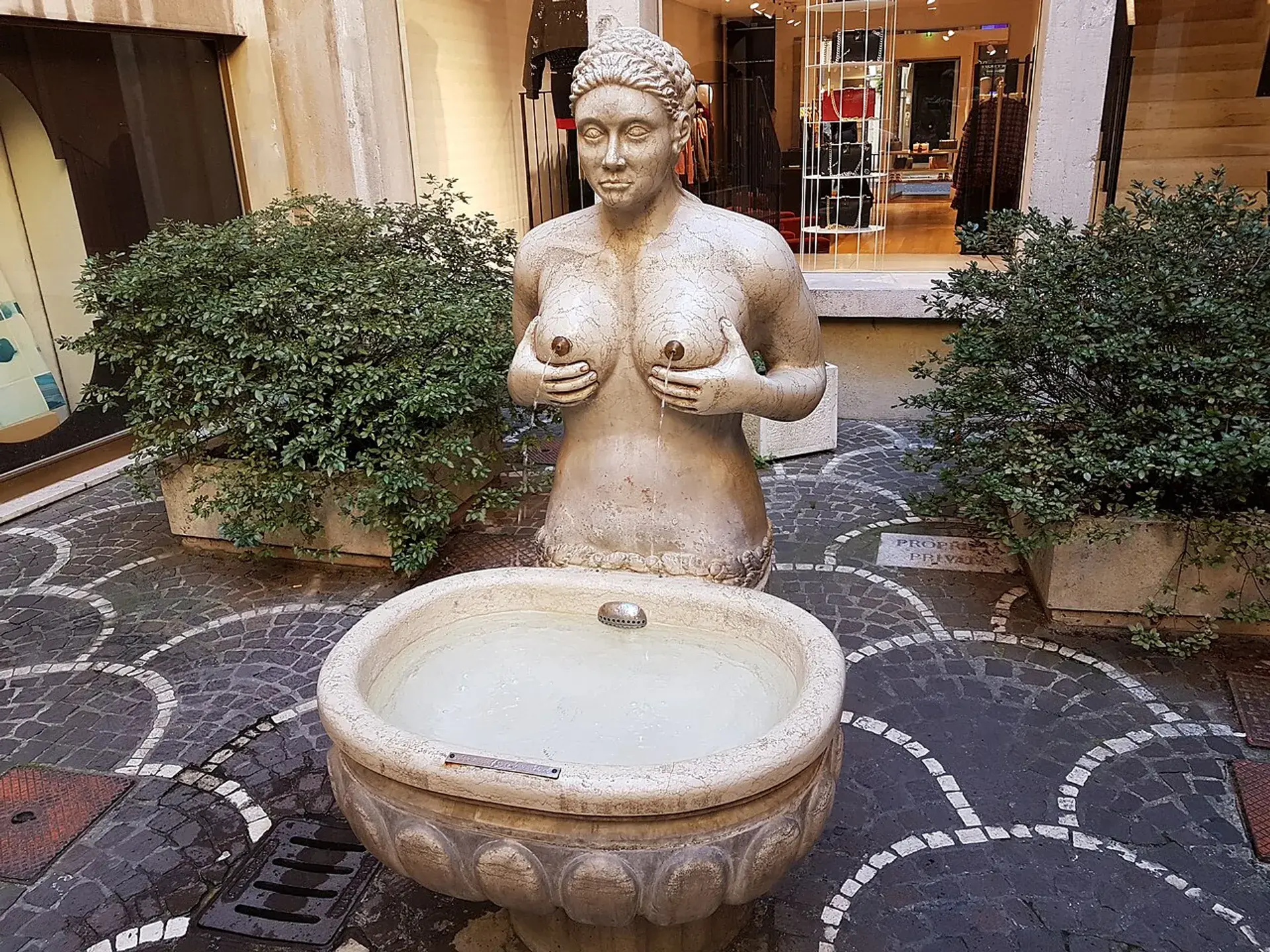
The Fontana delle Tette (Fontana dee tete in Venetian) is an anthropomorphic stone fountain depicting a woman pressing liquid from her breasts into a basin. Carved from Istrian stone, the sculpture was commissioned in 1559 by Alvise Da Ponte, the Venetian Podestà serving as the city’s chief magistrate. The commission followed a severe regional drought, serving both as a public utility and a civic monument.
Originally erected in the courtyard of the Palazzo Pretorio on Via Calmaggiore, the fountain linked the city's main civic and commercial artery. Via Calmaggiore forms the historic spine connecting Treviso's religious center at the Duomo with the political hub of Piazza dei Signori.
Three Days of Wine Under Venetian Rule
From its installation in 1559 until the collapse of the Venetian Republic in 1797, the monument took on a unique ceremonial role. During the autumn inaugurations of every newly elected Podestà, the fountain ceased spouting water. Instead, it dispensed red wine from one breast and white wine from the other for three consecutive days, free of charge to the public.
This communal celebration became a cornerstone of local civic life. Regional historians and residents often identify this centuries-long ritual of civic wine distribution as an early precursor to the Veneto's modern wine-bar hopping culture.
Engineering and Everyday Function
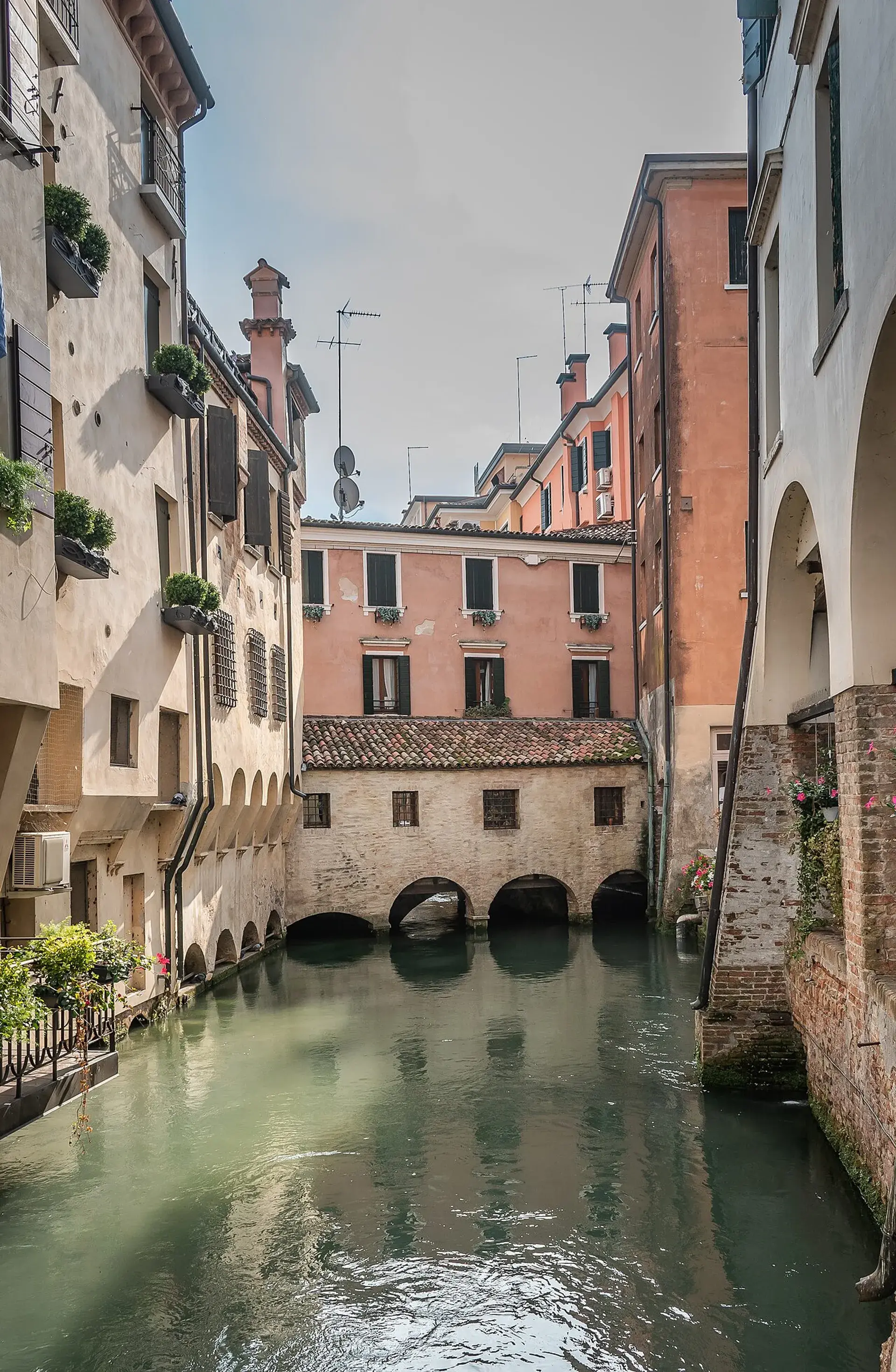
Beyond festive spectacles, the fountain served a vital municipal function. As recorded by 19th-century chronicler Matteo Sernagiotto, the regular operation of the fountain relied on a mechanical water wheel. This system drew fresh water from the nearby Cagnano canal, channeling a reliable supply to neighboring residents and commercial shops.
Damage, Recovery, and Modern Locations
The fall of the Venetian Republic to Napoleonic troops in 1797 brought an end to the fountain's tradition. Viewed as a symbol of Venetian governance, the sculpture was dismantled and severely damaged by occupying soldiers, subsequently vanishing from view. In the late 19th century, Abbot Luigi Bailo, a key figure in preserving Treviso's municipal history, rediscovered the surviving torso and integrated it into the city's civic museum collections.
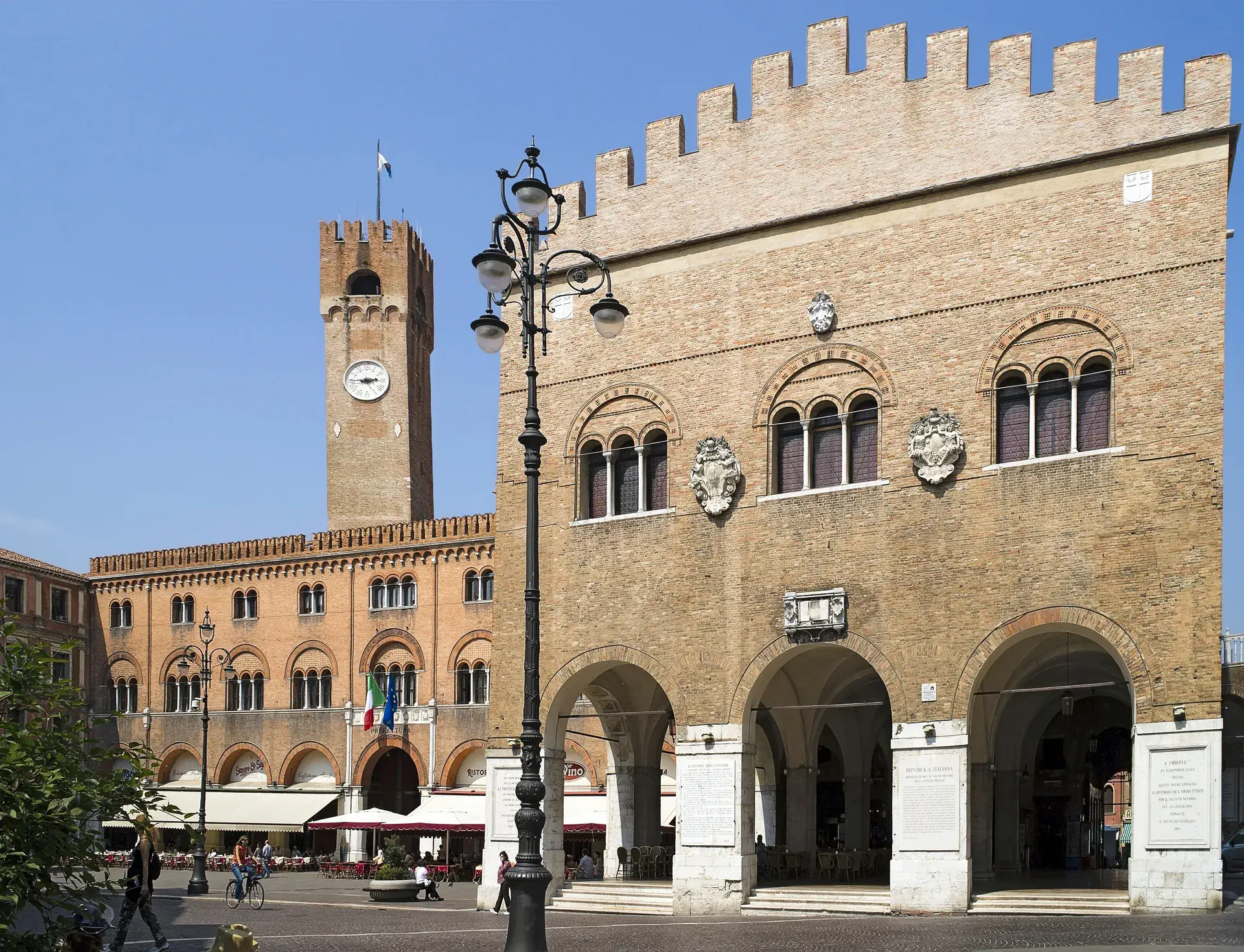
Today, the monument exists in two separate locations. The battered 16th-century original is preserved behind protective glass beneath the portico of the Palazzo dei Trecento on Piazza dei Signori. Meanwhile, a functional reproduction, sculpted in 1989 by Peruvian artist Miguel Miranda Quiñones, stands in the inner courtyard of Palazzo Zignoli, accessible through the covered passage of Galleria della Strada Romana just off Via Calmaggiore.
The Courtyard Atmosphere and Modern Lore
The passage through Galleria della Strada Romana dampens the street noise of Via Calmaggiore, opening into a shaded, brick-paved courtyard dominated by the steady splashing of water hitting the stone basin. While the replica now runs continuously on domestic tap water rather than wine, the sculpture retains an active cultural role. A popular modern superstition encourages visitors to touch the statue's breasts in pursuit of good fortune.
FAQ
Why was the Fontana delle Tette commissioned?
The fountain was commissioned in 1559 by Venetian Podestà Alvise Da Ponte to provide a reliable public water source following a severe drought.
When did the fountain dispense wine?
Between 1559 and 1797, the fountain dispensed red wine from one breast and white wine from the other for three days during the autumn inauguration of each new Podestà.
Where can the original and replica fountains be seen today?
The damaged 1559 original is preserved behind glass under the portico of Palazzo dei Trecento on Piazza dei Signori, while a 1989 working replica stands in the courtyard of Palazzo Zignoli off Via Calmaggiore.
What liquid flows from the fountain today?
The functioning replica in Palazzo Zignoli operates with a continuous flow of standard domestic tap water.