Porta Santi Quaranta: Treviso's Venetian Gate
Porta Santi Quaranta stands at the western terminus of Borgo Cavour as one of the primary historical gateways through Treviso's sixteenth-century fortifications. Along with Porta San Tomaso to the north and the medieval Porta Altinia to the south, it is one of only three surviving gates in the city's bastioned circuit, closing the western perimeter along Viale Bartolomeo d'Alviano.
Renaissance Defense and Architecture
The gate was constructed between 1516 and 1517 under the administration of Venetian podestà Nicolò Vendramin. Its creation was an integral element of the defensive overhaul directed by Fra Giocondo following the Republic of Venice's 1509 defeat at Agnadello during the War of the League of Cambrai. In response to artillery warfare, Venice modernized Treviso's defenses, moving the western entrance roughly 100 meters outward from the previous medieval gate to monitor and control inbound traffic from Padua, Vicenza, and Castelfranco.
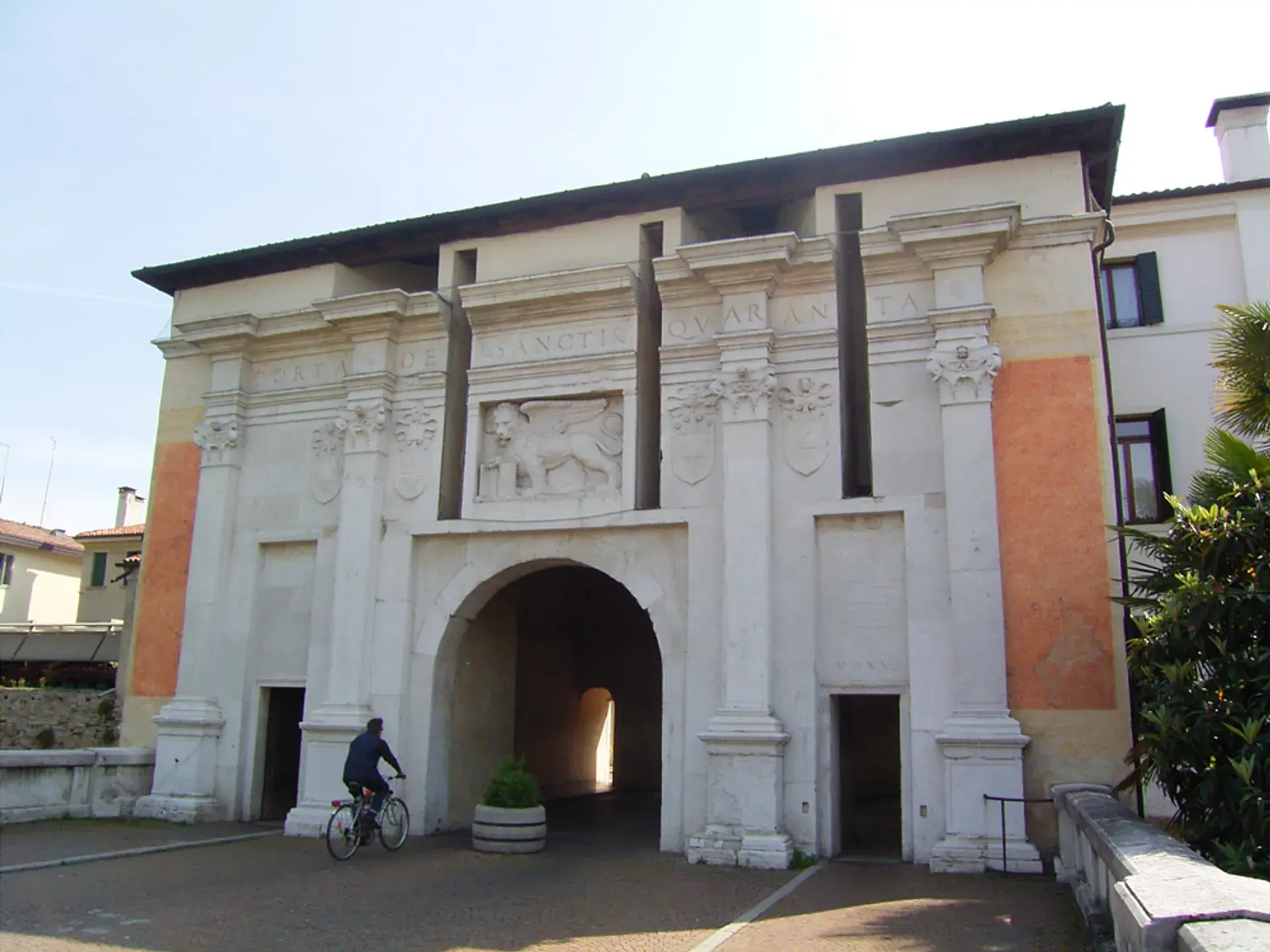
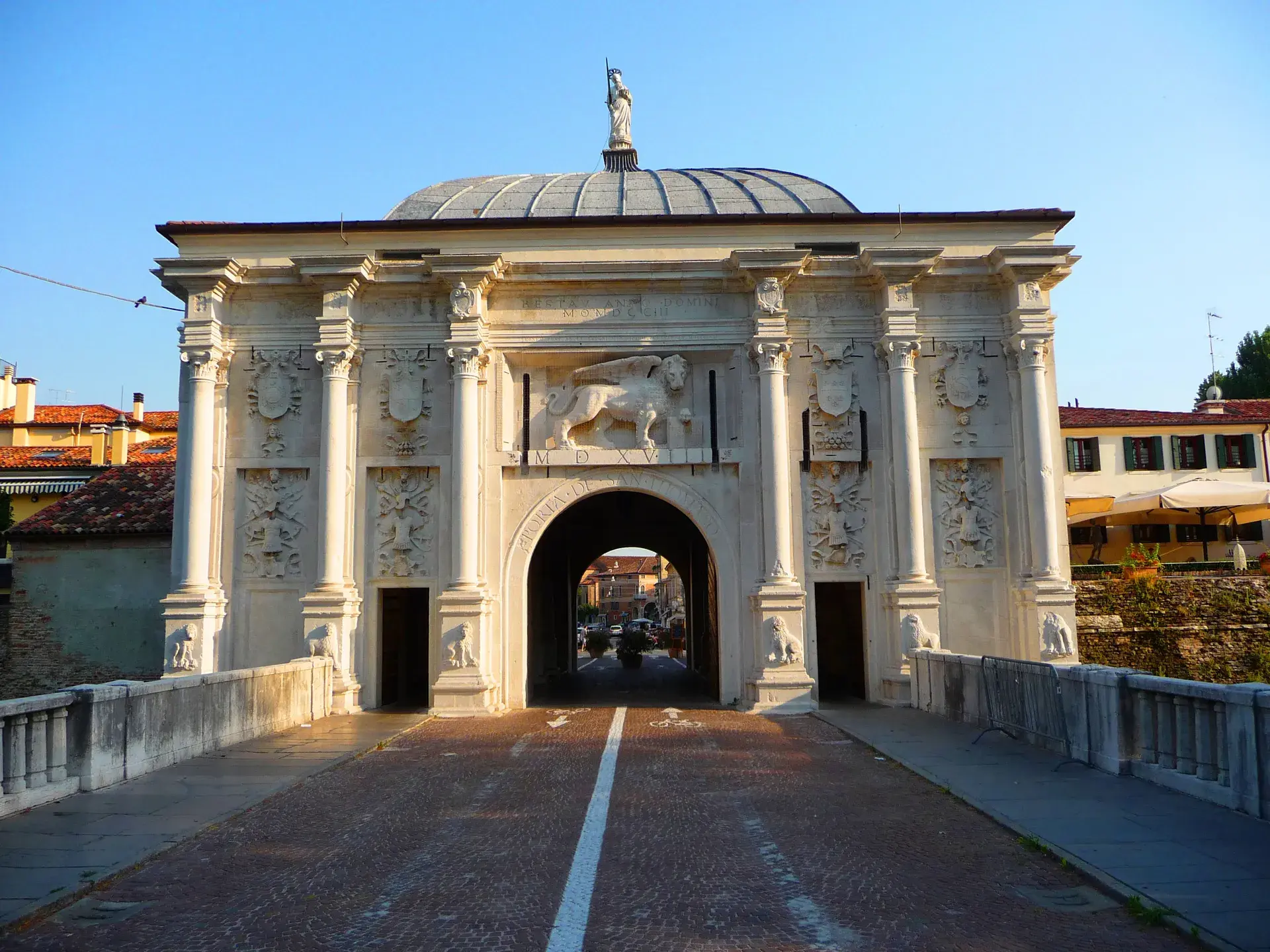
Widely attributed to the Venetian architect and sculptor Alessandro Leopardi, the gatehouse was designed on a square plan. The interior consists of cross-vaulted passageways beneath an upper guardroom, known as the Sala d'Arme, which is sheltered by a timber-trussed tile roof. The passage system includes three distinct portals: a broad central arch intended for carriages and wheeled traffic, flanked by two smaller lateral openings for pedestrians. Originally, the gate crossed the surrounding moat via separate wheeled and pedestrian drawbridges, which were later replaced by a permanent masonry bridge.
The exterior western facade presents a monumental display of white Istrian stone organized with four pilasters and an entablature. This bright stone facade creates a stark visual contrast against the surrounding earthen ramparts, moat waters, and the plastered brickwork of the gate's interior-facing eastern elevation.
Centuries of Conflict and Transition
Throughout its history, Porta Santi Quaranta reflected the broader political changes of the region. In 1797, occupying French forces damaged the Venetian insignia and defaced the central Lion of Saint Mark on the western facade. A stone replica of the lion was sculpted and installed during the nineteenth century to restore the original appearance.
On July 15, 1866, the gate served as the historic point of entry for the Cavalleggeri di Monferrato regiment during the Third War of Italian Independence, marking the formal annexation of Treviso to the Kingdom of Italy. Following Italian unification, the structure was officially renamed Porta Cavour. This designation remained in place for 66 years until the original historic name was restored in 1932.
Inscriptions and Political Erasures
The gate derives its name from the Forty Martyrs of Sebaste, honoring Roman soldiers martyred under Emperor Licinius, a dedication connected to a nearby historic church that later became the church of Sant'Agnese.
Notably, the structure bears two differing titular inscriptions: the exterior facade presents a formal Latin dedication (Porta Sanctorum Quadraginta) to greet arrivals, while the city-facing arch features a Venetian dialect version (Porta Sancti Quaranta) addressed to the local population.
The stonework also preserves traces of Venetian political discipline. Upon completing the gate, Podestà Nicolò Vendramin attempted to name the monument after himself as "Porta Vendramina" and placed an inscription over the portal. The Venetian Council of Ten condemned this display of personal ambition and commanded that the podestà's name be eradicated. The chisel marks left by this forced removal remain visible today on the stonework of the southern pedestrian passage.
Modern Civic Function
Today, Porta Santi Quaranta functions as an open civic portal connecting Borgo Cavour with the tree-lined pedestrian trail atop the Venetian ramparts and the outer ring road. On the earthen ramparts immediately flanking the gate, a full-scale bronze replica of a sixteenth-century Venetian cannon has been on display since 2006.
The municipal administration uses the upper Sala d'Arme as an exhibition hall for rotating displays of sculpture, art, and local history. The guardroom is traditionally accessible for guided visits on the fourth Sunday of each month, coinciding with the recurring Borgo Cavour antiques market.
FAQ
Why was Porta Santi Quaranta built?
Porta Santi Quaranta was erected between 1516 and 1517 as part of a defensive modernization plan following Venice's 1509 defeat at Agnadello. It shifted the city's western entrance 100 meters outward to control routes from Padua, Vicenza, and Castelfranco.
What caused the chisel marks in the gate's pedestrian passage?
Podestà Nicolò Vendramin attempted to name the gate after himself as Porta Vendramina. The Venetian Council of Ten prohibited this self-promotion and ordered his name chiseled away, leaving visible tool marks on the stone in the southern passageway.
What is the Sala d'Arme used for today?
The Sala d'Arme serves as a municipal exhibition space for rotating art and historical exhibitions, typically opening for guided tours on the fourth Sunday of each month during the local antiques market.