Mole Antonelliana: Turin's Tall Brick Landmark
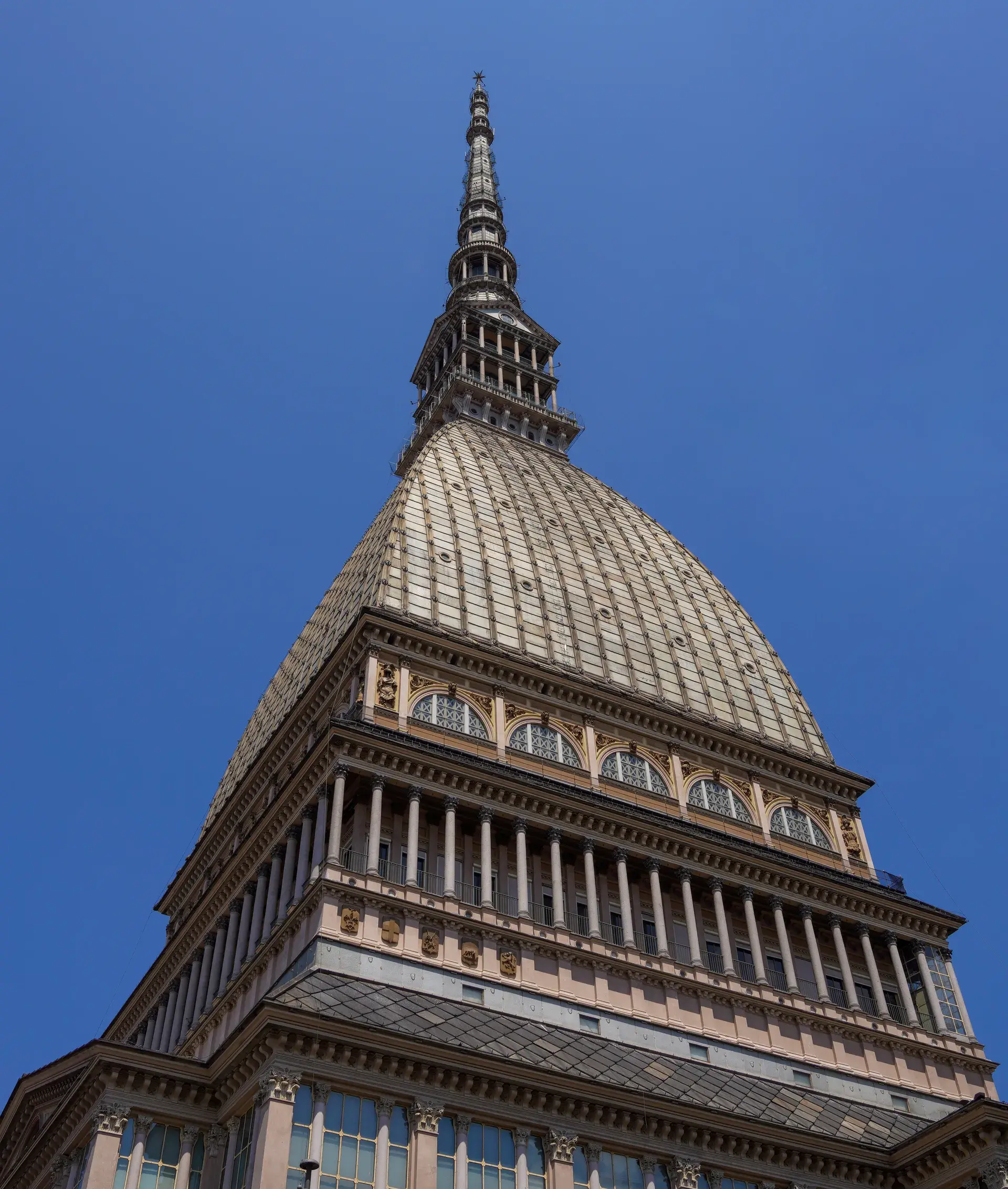
Gaze up from the street at the soaring dome and spire of the Mole Antonelliana, the iconic architectural symbol that defines Turin's skyline. Situated just east of Piazza Castello, the monument pierces Turin's rectilinear Baroque street grid and acts as the primary visual and navigational anchor across the city center. Discover how a wildly over-budget synagogue project ultimately produced one of the tallest unreinforced brick structures in the world.
From Synagogue to Civic Monument
In 1863, following the granting of religious freedom in Piedmont, Turin's Jewish community commissioned architect Alessandro Antonelli to design a grand synagogue. The project was meant to reflect the city's new status as the first capital of unified Italy. However, Antonelli repeatedly altered the designs, escalating the proposed height from an initial 47 meters to over 160 meters.
These soaring architectural ambitions caused massive budget overruns and severe construction delays. By 1876, the Jewish community withdrew from the project entirely. The Municipality of Turin subsequently took over the unfinished structure, dedicating it to King Victor Emmanuel II and the cause of national unity. Construction was finally completed in 1889 under the direction of Costanzo Antonelli, following his father's death in 1888.
Surviving Storms and Structural Shifts
Reaching a total height of 167.5 meters, the Mole Antonelliana has faced significant elemental challenges throughout its history. The original spire was crowned in 1889 with a winged genius statue. A severe storm destroyed this statue in 1904, leading to its replacement with a multi-pointed star.
Decades later, on May 23, 1953, a violent tornado-like storm sheared off the top 47 meters of the spire. The structure underwent extensive reconstruction between 1960 and 1961, with the destroyed upper section rebuilt using a stone-faced steel framework.
Inside the National Museum of Cinema
Since 2000, the building has served as the home of the National Museum of Cinema. The interior features a unique spiraling exhibition layout organized around the cavernous central Temple Hall.
A transparent glass panoramic elevator ascends freely through the hollow core of the cupola. Passengers glide straight up through the darkened central atrium, surrounded by the ambient sounds of movie clips echoing across multi-level screens. The lift reaches an outdoor observation terrace at 85 meters, offering unobstructed views of the city and the surrounding Alps.
Cultural Impact and Local Lore
Beyond its architectural significance, the Mole Antonelliana holds a deep place in Italian culture. An engraving of the building is featured on the reverse of the Italian 2-euro-cent coin. At night, the exterior dome illuminates with 'Il volo dei numeri', a red neon light installation by artist Mario Merz that displays the Fibonacci sequence.
The landmark also permeates local sports and events; its name is borrowed for the 'Derby della Mole', the historic football match between Juventus and Torino FC, and its distinctive spire inspired the official logo of the 2006 Winter Olympic Games in Turin. Furthermore, university folklore dictates a strict superstition: students must never ride the elevator to the top before completing their studies, as it is believed to bring bad luck and curse their graduation chances.
FAQ
How tall is the Mole Antonelliana?
The Mole Antonelliana reaches a total height of 167.5 meters and remains one of the tallest unreinforced brick structures in the world.
Why was the Mole Antonelliana originally built?
Construction began in 1863 when Turin's Jewish community commissioned architect Alessandro Antonelli to build a synagogue. Due to budget overruns and the architect's decision to drastically increase the building's height, the city eventually took over the project.
What is inside the Mole Antonelliana today?
Since 2000, the building has housed the National Museum of Cinema, which features a spiraling exhibition layout around a central atrium known as the Temple Hall.
Can visitors go to the top of the Mole Antonelliana?
Yes, a transparent glass panoramic elevator travels through the hollow core of the building to an observation terrace situated at 85 meters. However, local superstition warns university students not to go to the top before graduating, lest it bring bad luck.