Guide to Piazza Carlina (Carlo Emanuele II) in Turin
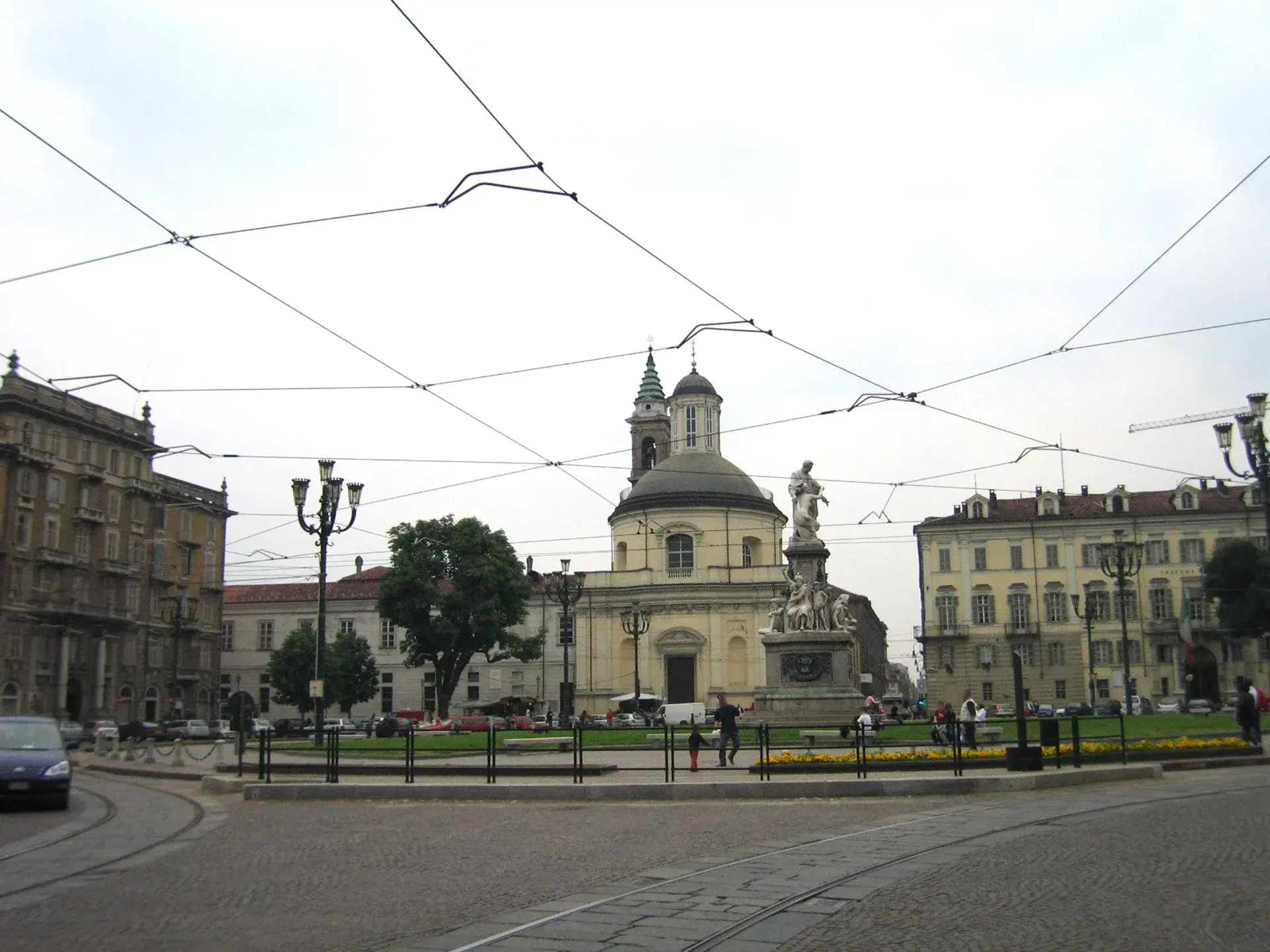
Officially named Piazza Carlo Emanuele II, this 120-by-120-meter square is universally known as Piazza Carlina. The expansive paved clearing creates a sudden sense of vast scale compared to the tighter surrounding grid, drawing the eye to the multi-tiered white marble and Baveno granite Cavour monument in the center. The square acts as an essential pedestrian link between the royal Piazza Castello and Via Po axis and the historical Jewish Ghetto.
Royal Ambitions and a Mocking Nickname
Created in 1673 during Turin's Second Expansion under Duke Carlo Emanuele II, the square was originally designed by architect Amedeo di Castellamonte as an octagonal place royale. Following the Duke's death and difficulties selling lots, the ambitious design was downgraded to a rectangular wine, timber, and coal market in 1678. According to local tradition, the public coined the feminine nickname "Carlina" ("Little Carla") to gently mock the Duke's perceived effeminate demeanor.
A Dark Era of Executions
During the French occupation from 1800 to 1814, the square was renamed Place de la Liberté and transitioned into a grim public spectacle. It served as the city's primary execution site, where over 400 people were guillotined. Public hangings briefly continued here even after the Savoy Restoration.
Architecture and The Paperweight
The perimeter of Piazza Carlina features significant historic structures, including the Palazzo del Collegio delle Province and the 1718 Baroque Church of Santa Croce. Designed by Filippo Juvarra, the church currently serves a Romanian Orthodox congregation.
At the center stands the 1873 monument to statesman Camillo Benso, Count of Cavour, sculpted by Giovanni Duprè. Cavour is depicted holding a parchment roll carved with his famous political maxim: "Libera Chiesa in libero Stato" (A Free Church in a Free State). Despite its grandeur, locals mockingly dubbed the heavy-based statue with its awkwardly draped allegorical figure "il fermacarte" (the paperweight).
Modern Transformation and Casa Gramsci
Today, Piazza Carlina illustrates the transition from formal ducal planning to utilitarian civic life. The square functions as an open pedestrian and dining area lined with restaurants and cafes. The historic former Albergo di Virtù now operates as a luxury hotel and houses Casa Gramsci. This public exhibition space honors Antonio Gramsci, who lived at No. 15 from 1919 to 1921 while editing the socialist periodical L'Ordine Nuovo.
FAQ
Why is Piazza Carlo Emanuele II called Piazza Carlina?
The Turin public coined the nickname "Carlina" (Little Carla) as a gentle mockery of Duke Carlo Emanuele II's perceived effeminate demeanor.
What is the central monument in Piazza Carlina?
The center features an 1873 monument to statesman Camillo Benso, Count of Cavour. Locals jokingly nicknamed it "the paperweight" due to its heavy base and awkwardly draped allegorical figure.
Was Piazza Carlina an execution site?
Yes. During the French occupation from 1800 to 1814, it was renamed Place de la Liberté and served as the city's main execution site, where over 400 people were guillotined.