Palazzo Carignano: Turin's Baroque Masterpiece
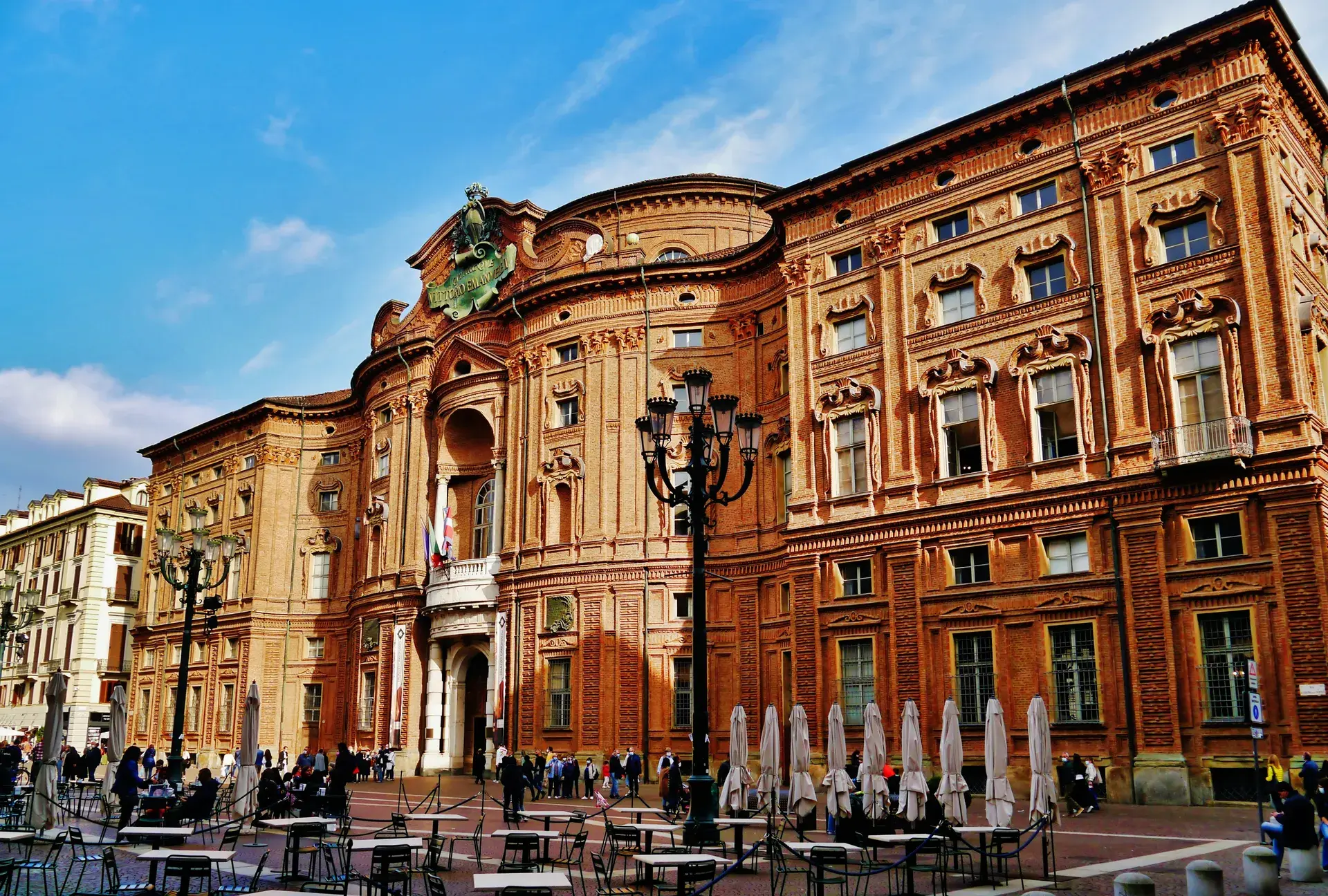
Stand outside the sweeping curved brick facade of Palazzo Carignano to admire one of the most striking masterpieces of 17th-century Baroque architecture in Italy. Commissioned in 1679 by Emanuele Filiberto of Savoy-Carignano, the structure was designed by the Baroque architect Guarino Guarini. Today, it stands as a UNESCO World Heritage site and a central landmark on Turin's essential historic routes, located immediately adjacent to the Museo Egizio.
A Double-Faced Architectural Marvel
The palace is a unique double-faced monument featuring two entirely different exterior styles. The west facade on Piazza Carignano, designed by Guarini, highlights warm red exposed terracotta. Its curved brick courses are manipulated to appear fluid, creating undulating wave-like patterns and deep shadow pockets.
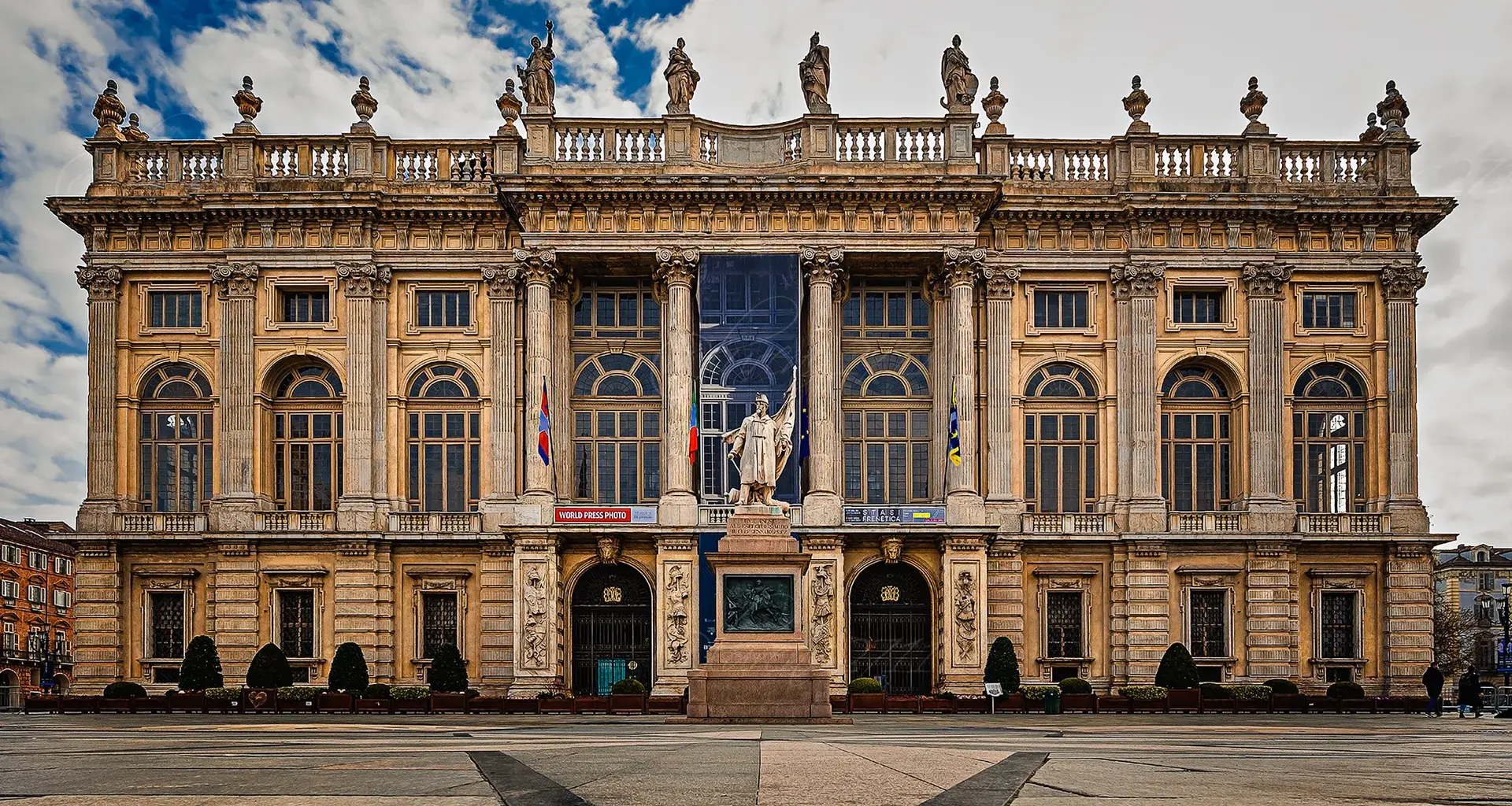
The building's vaulted atrium marks an abrupt transition from this sinuous 17th-century terracotta to a completely different era. The east facade on Piazza Carlo Alberto showcases rigid 19th-century proportions, massive pilasters, and white stone, designed by Domenico Ferri and Giuseppe Bollati and completed in 1871.
The Birthplace of Unified Italy
Palazzo Carignano holds a central place in the history of the Italian nation. It was the birthplace of King Carlo Alberto in 1798 and Vittorio Emanuele II in 1820, the latter of whom became the first king of a unified Italy.
In 1848, the palace's central elliptical ballroom was converted to house the Subalpine Parliament. On March 17, 1861, the Kingdom of Italy was officially proclaimed within its walls. An eastward expansion was constructed in the 19th century to accommodate the growing national parliament, though the capital was moved to Florence and later Rome before the grand legislative hall could see permanent use.
Museums and Historic Interiors
The first floor, or piano nobile, houses the Museo Nazionale del Risorgimento Italiano. This museum preserves the original 1848 Subalpine Parliamentary Chamber alongside the grand, never-used Chamber of Deputies of the Kingdom of Italy.
The ground-floor apartments of the Princes of Carignano are also open to the public as a museum. This space features opulent 17th-century gilded boiserie, mirrored rooms, and frescoes painted by Stefano Maria Legnani.
Hidden Historic Details
The Baroque facade hides a surprising historical detail above its first-floor windows. The decorative pediments feature detailed carvings of feather-headdressed Indigenous American heads. These carvings commemorate the Carignan-Salières Regiment, a military force representing the Carignano family that fought against the Iroquois Confederacy in New France during the 1660s.
The palace is also notable as the 1749 birthplace of Marie-Louise of Savoy, the Princesse de Lamballe, who later became a key confidante to French Queen Marie Antoinette.
FAQ
What museums are inside Palazzo Carignano?
The palace houses two main museum areas. The first floor contains the Museo Nazionale del Risorgimento Italiano, which includes the original 1848 Subalpine Parliamentary Chamber. The ground floor features the apartments of the Princes of Carignano, showcasing 17th-century gilded rooms and frescoes.
Why does the palace have two different facades?
The palace was expanded over time, resulting in two back-to-back styles. The west facade is a 17th-century Baroque design by Guarino Guarini made of undulating red brick. The east facade is a rigid, white stone neoclassical addition completed in 1871 for the expanded national parliament.
Why are there Indigenous American carvings on the building?
The decorative window pediments on the Baroque facade feature carvings of Indigenous American heads to commemorate the Carignan-Salières Regiment. This Carignano family regiment fought against the Iroquois Confederacy in New France in the 1660s.