Portone del Diavolo: Turin's Devil's Door
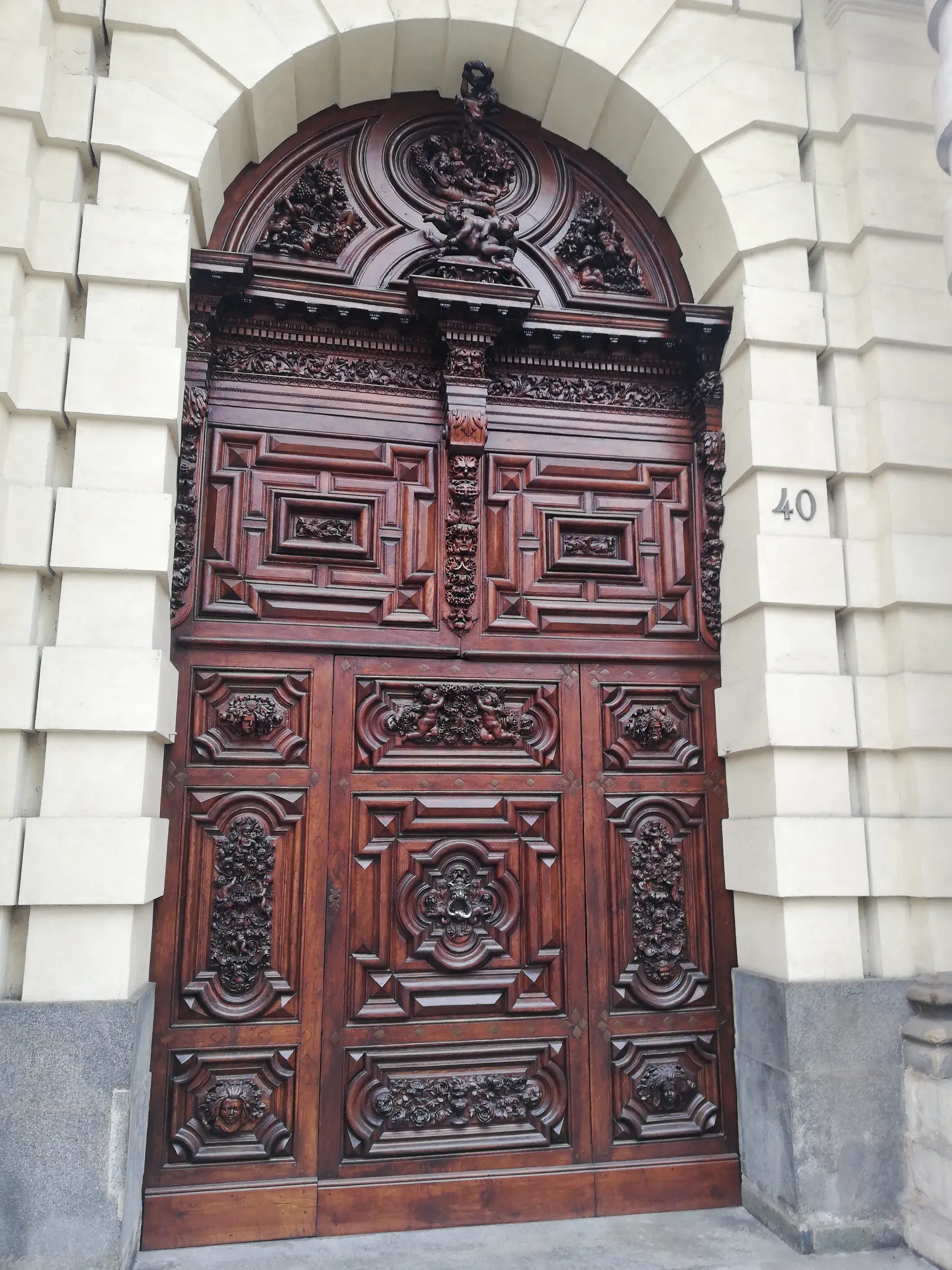
A finely carved Parisian door bearing the face of the Devil guards a prominent bank in central Turin, standing at the crossroads of grand Baroque architecture and dark esoteric legends. Located at the corner of Via XX Settembre and Via Vittorio Alfieri, the Portone del Diavolo, or Devil's Door, serves as the main entrance to Palazzo Trucchi di Levaldigi. Just a block from Piazza San Carlo, the portal is a celebrated landmark that connects the mainstream history of the House of Savoy to the city's famed reputation as a center of magic and the occult.
A Masterpiece of 17th-Century Design
Palazzo Trucchi di Levaldigi was built between 1673 and 1677 by royal architect Amedeo di Castellamonte. The palace was commissioned by Giovanni Battista Trucchi, the Count of Levaldigi and Minister of Finance under Duke Carlo Emanuele II of Savoy. Castellamonte designed the structure with a distinctive diagonal facade that uniquely cut across the corner, breaking Turin's standard orthogonal grid.
The famous wooden portal itself was carved in a Parisian workshop in 1675. The high-relief dark timber features an array of lush carvings, including floral motifs, fruit garlands, cupids, and allegorical figures. Hidden among these classic elements are small, carved human faces that stare down at those crossing the threshold. The focal point of the door is its central bronze knocker, which depicts a menacing Devil with an open mouth, holding two intertwined serpents whose heads meet to form the striking ring.
Occult Numerology and Tarot Connections
The eerie reputation of the door is bolstered by its historical ties to the occult. During the 17th and 18th centuries, the building carried the civic street number 15. In tarot, the 15th card of the Major Arcana is The Devil. Adding to this numerological coincidence, the building reportedly housed a tarot manufacturer during that era, deeply intertwining the site with esoteric traditions.
Dark Legends and Unsolved Mysteries
Local folklore provides several supernatural origin stories for the portal. According to tradition, the door materialized overnight when an apprentice sorcerer accidentally summoned dark forces. An irritated Devil allegedly appeared, sealing the door and trapping the sorcerer behind it forever.
The palace's history is also marked by alleged tragedies. A popular ghost legend claims that in 1790, during a masquerade ball hosted by Princess Marianna Carolina of Savoy, a sudden violent storm blew out all the lights. In the darkness, a ballerina named Emma Cochet was fatally stabbed on the ballroom floor. Neither the murderer nor the weapon was ever found. Decades later, another tale surrounds Major Melchiorre Du Perril, a French Napoleonic officer who supposedly vanished inside the palace while carrying secret military documents. According to the legend, his upright skeleton was discovered sealed behind a wall by laborers during 19th-century renovations.
The Devil's Door Today
Despite its centuries of dark folklore, the building now serves a highly practical function. After passing through various owners, the palace underwent extensive interior adaptations in the early 20th century. Since 1939, Palazzo Trucchi di Levaldigi has operated as a central branch and office for the Banca Nazionale del Lavoro (BNL). The notorious Devil's Door faces the public sidewalk and stands open to visitors during regular banking business hours.
FAQ
Where is the Portone del Diavolo located?
The Portone del Diavolo is located in central Turin at the corner of Via XX Settembre (civic number 40) and Via Vittorio Alfieri, just a block away from Piazza San Carlo.
Why is it called the Devil's Door?
The portal is named for its central bronze knocker, which was carved in Paris in 1675 and depicts the head of the Devil with an open mouth holding two intertwined serpents.
What is inside the building today?
Since 1939, Palazzo Trucchi di Levaldigi has functioned as a central branch and office for the Banca Nazionale del Lavoro. The door stands open during regular banking hours.
Are the legends about the door true?
The door is surrounded by local folklore, including tales of an apprentice sorcerer trapped by the Devil, a ballerina murdered during a 1790 masquerade ball, and a Napoleonic officer walled up inside. While rooted in Turin's esoteric traditions, these stories are unverified legends.