Royal Palace of Turin: House of Savoy Command Center
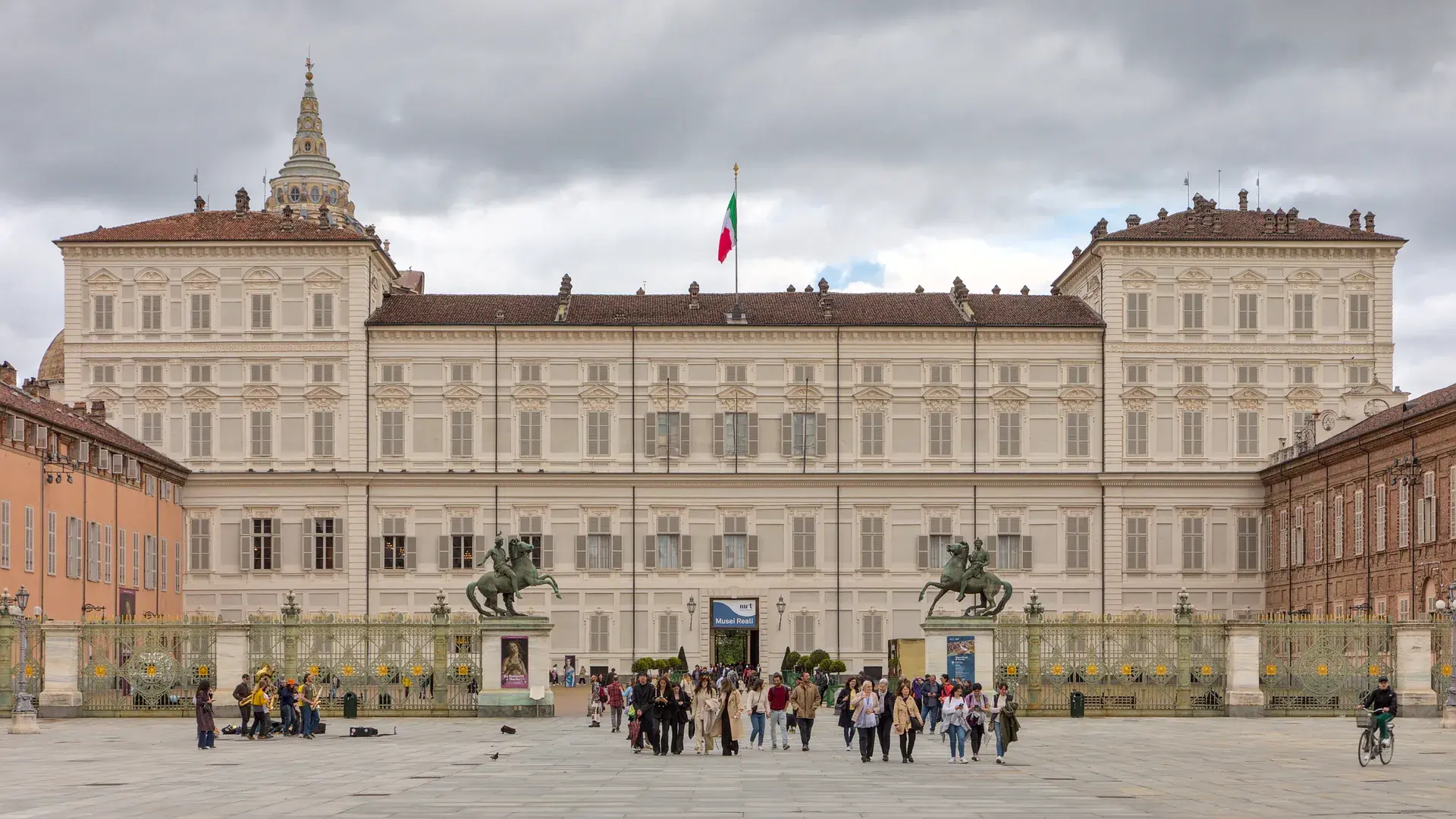
Stand in the expansive Piazzetta Reale to take in the majestic facade and regal presence of the Royal Palace of Turin.
Situated on Piazza Castello, the palace forms the nucleus of Turin's Baroque urban grid. The sprawling complex connects the historic Roman Quarter and Cathedral with the modern center of the city, serving as a monument to the region's political transformation. In 1997, it was inscribed as a UNESCO World Heritage site as part of the Residences of the Royal House of Savoy.
The House of Savoy Command Center
When Duke Emmanuel Philibert relocated the Savoy capital to Turin in 1563, he took residence in the city's ancient Bishop's Palace. Construction on the current royal structure began in 1584 under Duke Carlo Emanuele I. The building underwent a massive Baroque expansion starting in 1645 under Regent Christine Marie of France, who commissioned the Castellamonte architects to create the formal court apartments and grand facade.
Following the elevation of Duke Victor Amadeus II to king in 1713, court architect Filippo Juvarra integrated the sprawling complex into a comprehensive command area. For over three centuries, the palace acted as the official residence for the House of Savoy. In 1861, it briefly became the first royal palace of the newly unified Kingdom of Italy before the capital moved to Florence in 1864. The estate eventually passed into state ownership with the founding of the Italian Republic in 1946.
Architecture and the Royal Apartments
The interior spaces feature centuries of evolving artistic styles, blending heavy gilded wood carvings, elaborate stuccoes, and grand painted ceiling allegories by artists like Jan Miel and Daniel Seiter. King Carlo Alberto oversaw significant Neoclassical renovations in the 1830s and 1840s under architect Pelagio Palagi.
The royal apartments are marked by striking visual contrasts, from the austere scale of the Hall of the Swiss Guards to the Throne Room, which is draped in red-and-gold silk wall coverings. In the 19th-century ballroom, large Bohemia crystal chandeliers reflect across parquet floors and bronze-framed mirrors.
One of the most surprising architectural feats within the palace is Filippo Juvarra's 1720 Scissor Staircase. This self-supporting Baroque marble structure reaches the upper apartments without occupying central ground support, creating the optical illusion of scissor blades suspended in mid-air.
Historic Milestones and Hidden Details
The palace was the site of critical political developments. In 1848, King Carlo Alberto signed the Statuto Albertino in the palace's Council Room. This document functioned as unified Italy's constitution for exactly a century until 1948.
Outside the building, the central iron gates opening into the Piazzetta Reale feature gilded Medusa heads. These figures were traditionally placed as protective guardians to ward off intruders. Just behind the palace sit the 7-hectare Royal Gardens. The underlying layout of these restored public gardens traces back to a 1697 design by André Le Nôtre, the renowned landscape architect responsible for the gardens at Versailles.
The Royal Museums Complex
Today, the Royal Palace operates as the central anchor of the Musei Reali di Torino. The museum itinerary physically links the royal apartments with several other significant cultural institutions. The complex provides connected access to the Royal Armoury, the Royal Library, the Galleria Sabauda, Palazzo Chiablese, and the adjoining Chapel of the Holy Shroud.
FAQ
What is the Royal Palace of Turin used for today?
It operates as the central anchor of the Musei Reali di Torino (Royal Museums). The complex connects the historic royal apartments with the Royal Armoury, the Royal Library, the Galleria Sabauda, Palazzo Chiablese, and the Chapel of the Holy Shroud.
Who designed the Royal Palace of Turin?
Construction began in 1584, with major expansions over the centuries overseen by prominent architects including Ascanio Vitozzi, the Castellamontes, Filippo Juvarra, and Pelagio Palagi.
What is the historical significance of the palace's Council Room?
In 1848, King Carlo Alberto signed the Statuto Albertino in the Council Room. This fundamental constitutional law served as unified Italy's constitution until 1948.
What is the Scissor Staircase at the Royal Palace?
Designed by Filippo Juvarra in 1720, the Scissor Staircase is a self-supporting Baroque marble staircase that reaches the upper apartments without central ground support, creating an optical illusion of suspended scissor blades.