Castello di Vernazza: Doria Castle Guide & History
A Cliffside Sentinel Over Vernazza
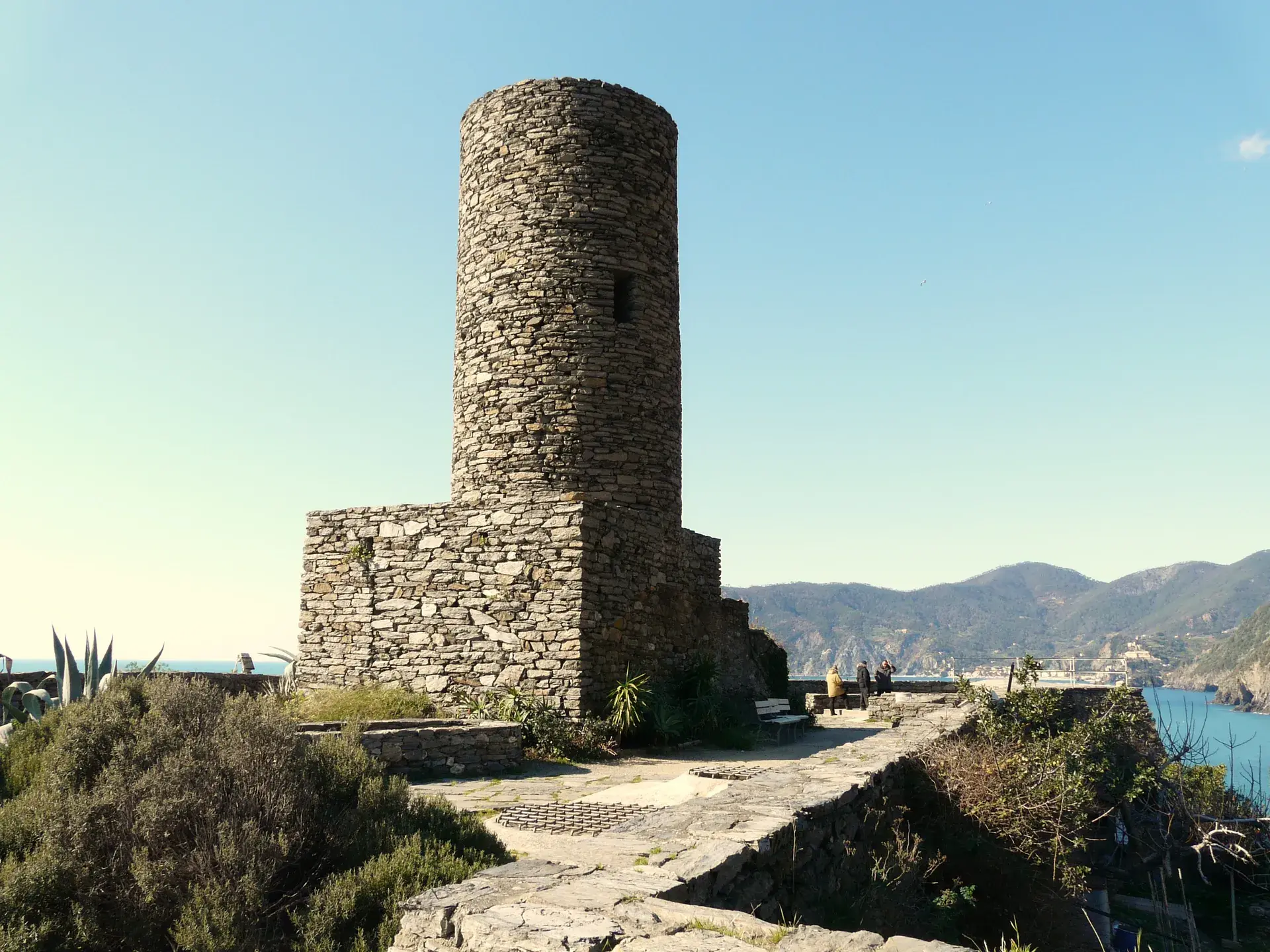
Perched on a rugged rock spur approximately 70 meters above sea level, Castello di Vernazza—commonly known as Doria Castle—anchors the southern flank of the village's natural harbor. The irregular footprint of the fortification directly traces the natural contours of the cliff edge. Today, the most prominent surviving architectural element is a tall cylindrical stone watchtower rising above an open stone terrace, accompanied by fragmented sections of medieval perimeter walls.
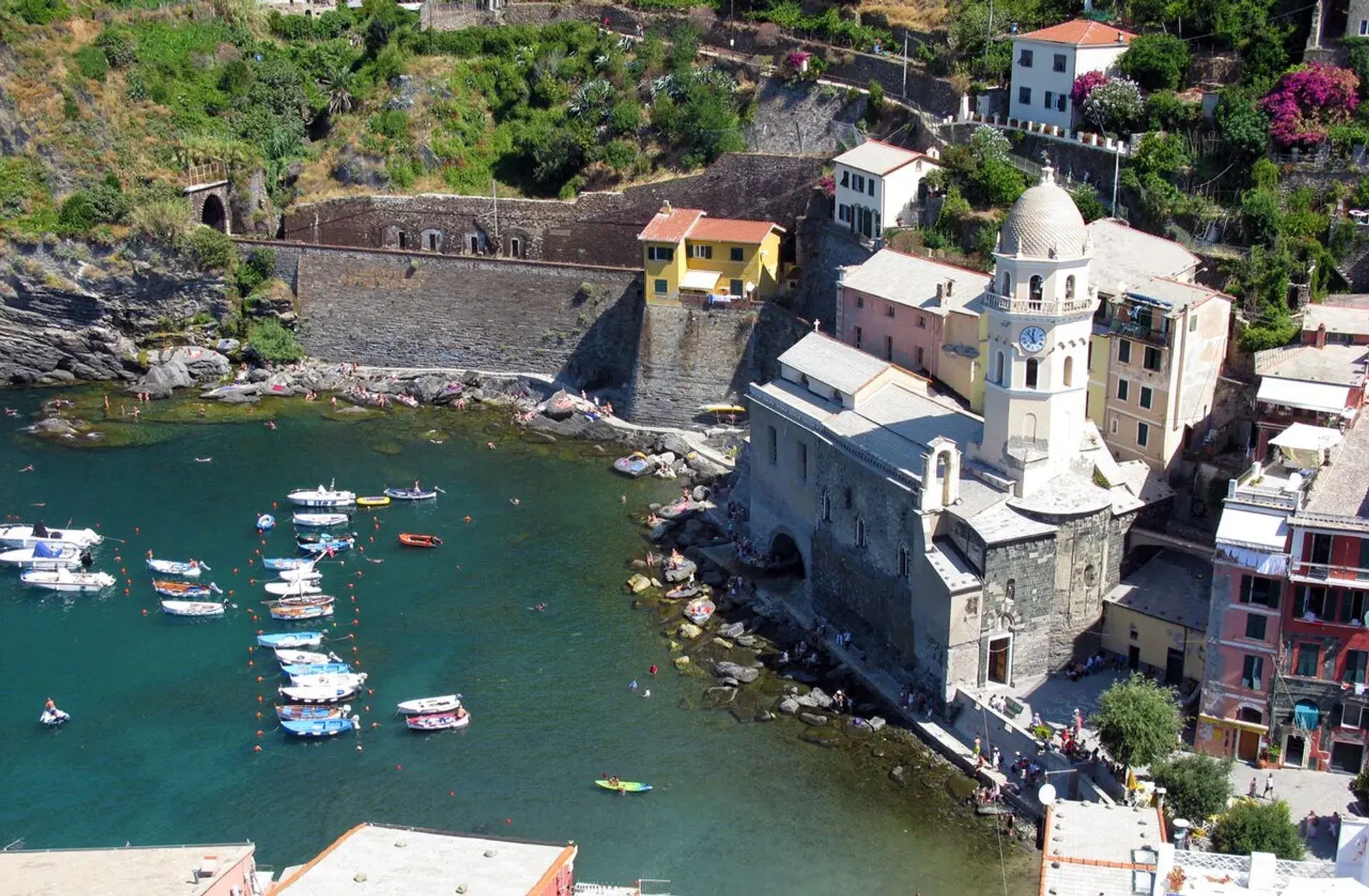
Named after the influential Genoese Doria dynasty, the fortress represents the vertical culmination of Vernazza's historic defenses. Vernazza held a distinct position among the Cinque Terre settlements because its sheltered bay was the only one capable of berthing, constructing, and defending naval war galleys for the Republic of Genoa.
From Feudal Outpost to Naval Stronghold
The earliest fortified nucleus on the promontory dates to the 11th century under the rule of the Obertenghi lords, with official written mentions appearing in the 13th century. Feudal control shifted through several hands, including the Bishops of Luni, the Da Passano family, and the Fieschi family, before the site was ceded to the Republic of Genoa in the 13th century.
During maritime conflicts linked to the 1284 Battle of Meloria, Pisan forces briefly occupied the stronghold before Genoa regained full authority. For centuries, the tower served primarily as a military lookout, tasked with warning the local population and defending the Ligurian coastline against raids by Barbary and Saracen corsairs.
20th-Century Conflict and Lost Relics
The castle retained defensive utility well into modern times. During the Second World War, German forces occupied the structure, converting the stone terrace and observation tower into an operational anti-aircraft battery.
Municipal archives reveal additional historical layers that have since disappeared. Documents from 1470 and 18th-century military maps confirm that an interior chapel dedicated to Saint John the Baptist once stood within the walls, though no physical remnants survive. Following World War II, a historical bronze cannon inscribed Comunitas Vernatiae was removed from the site as a war trophy by British forces, with local records noting its transfer to the British Museum in London.
A frequent misconception surrounds the castle's naming: visitors often refer to the round stone tower as Belforte. Historically, however, Bastione Belforte designates the square bastioned battery platform located directly beneath the castle promontory at the harbor entrance.
Visiting Castello di Vernazza
Castello di Vernazza is maintained as a municipal heritage site and panoramic viewpoint. Access is exclusively pedestrian, requiring a climb up steep, narrow stone stairways (carruggi) ascending from Via Roma and the waterfront. The passage transitions from narrow, shadowed rock corridors out onto a wide stone terrace exposed to coastal sea breezes.
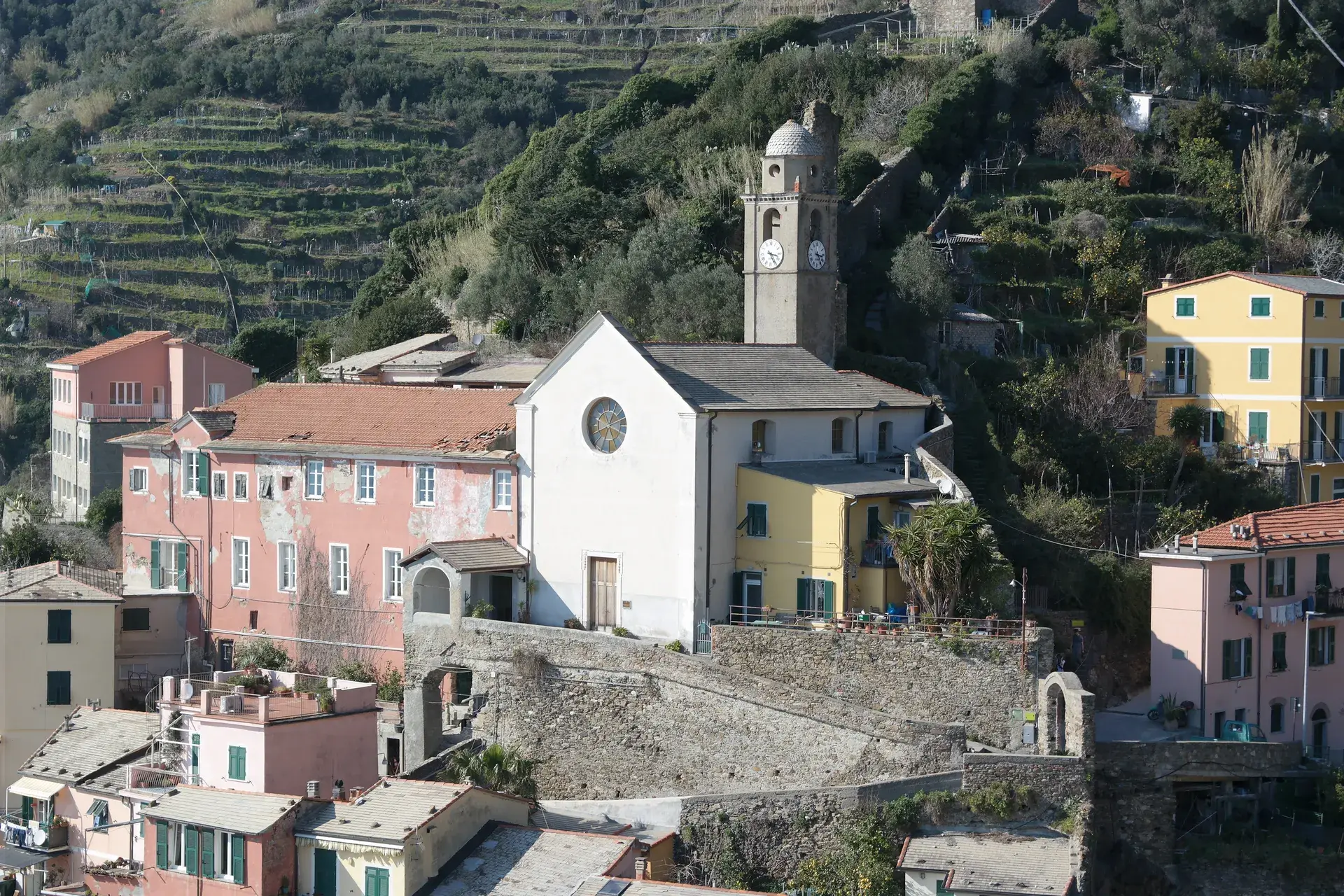
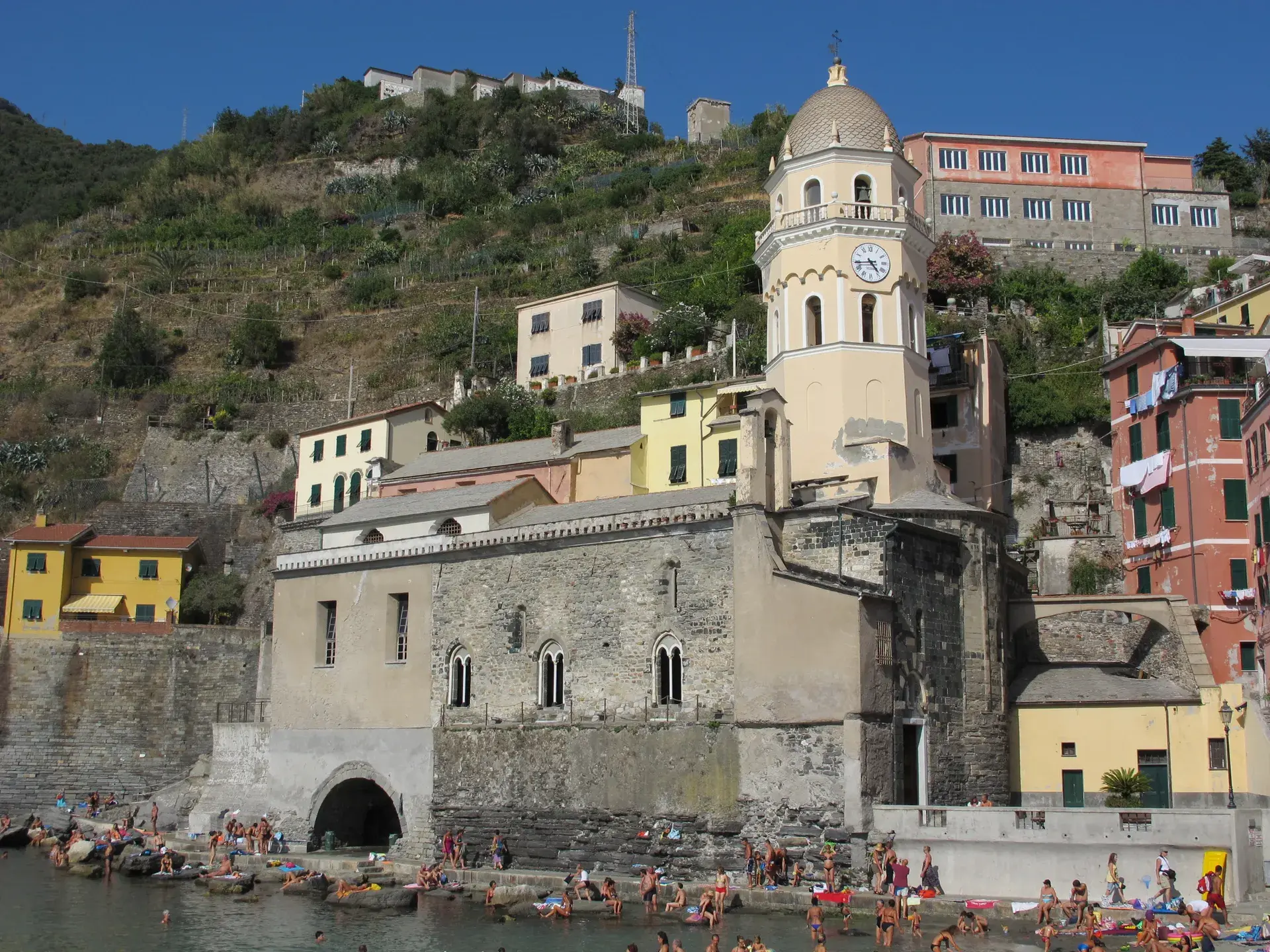
From the high platform, visitors can observe a complete 360-degree panorama of the Ligurian coastline, the colorful facades of Piazza Marconi, the bell tower of the Church of Santa Margherita d’Antiochia, and the steep terraced vineyards framing the village amphitheater. The castle is open daily, with an admission fee ranging between 1.50 and 2.00 euros that is payable on site and separate from standard Cinque Terre transit cards.
FAQ
How do visitors reach Castello di Vernazza?
Access is strictly on foot via steep stone staircases and narrow alleys (carruggi) leading up from Via Roma and the harbor area.
Is entry to the castle included in the Cinque Terre train pass?
No, entry requires a separate municipal admission ticket priced between 1.50 and 2.00 euros, which is not covered by the regional rail pass.
What historical role did the castle play in the Cinque Terre?
It served as a coastal watchtower against Barbary and Saracen pirates and guarded Vernazza's harbor, which was the only port in the Cinque Terre capable of docking and building Genoese naval war galleys.
What is the difference between the castle tower and the Belforte bastion?
While the round watchtower is sometimes mistakenly called Belforte, that name historically belongs to the square bastioned battery platform situated directly beneath the cliff at the mouth of the harbor.