Convento Di San Francesco: Vernazza's Friary
Upper Vernazza's Historic Franciscan Complex
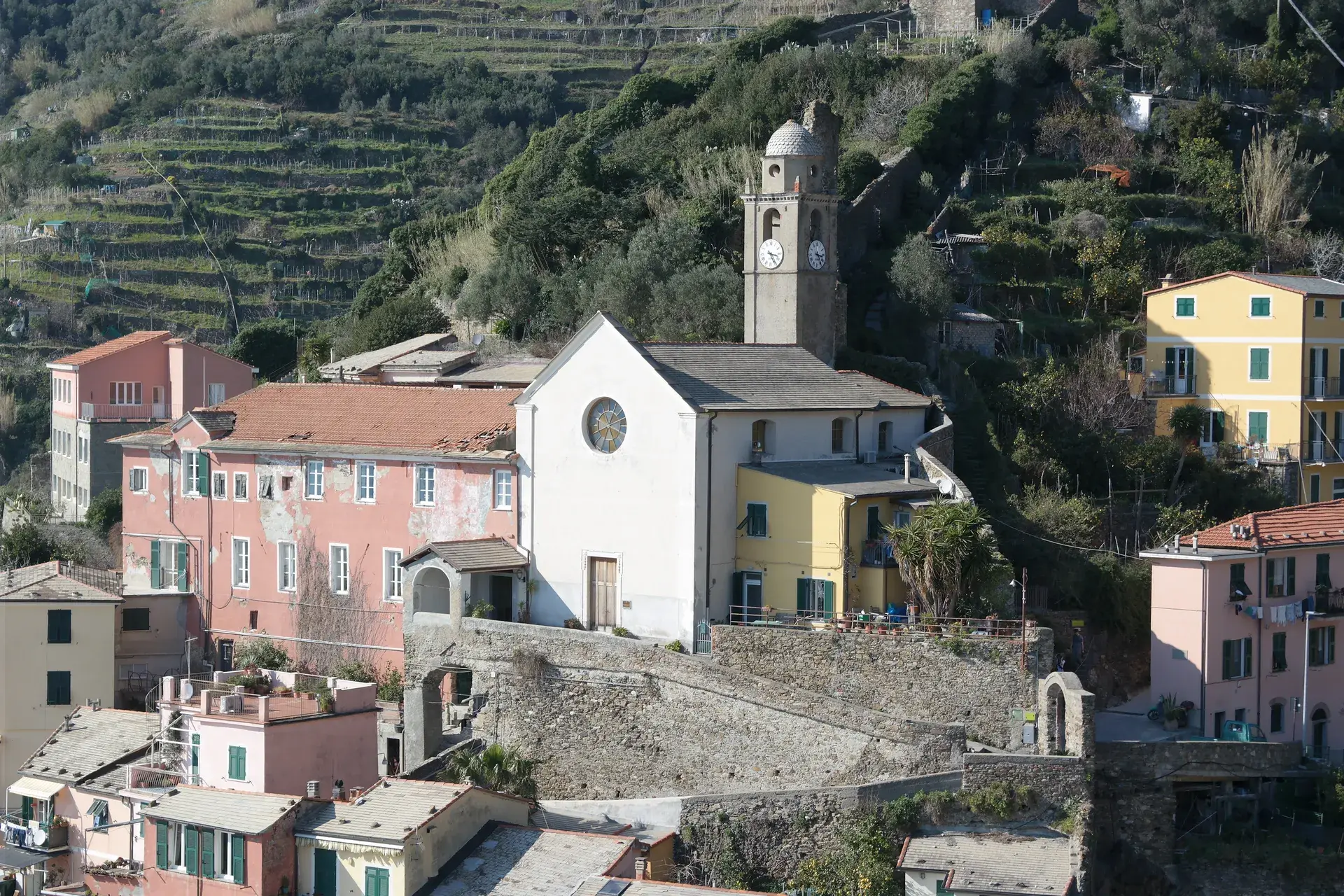
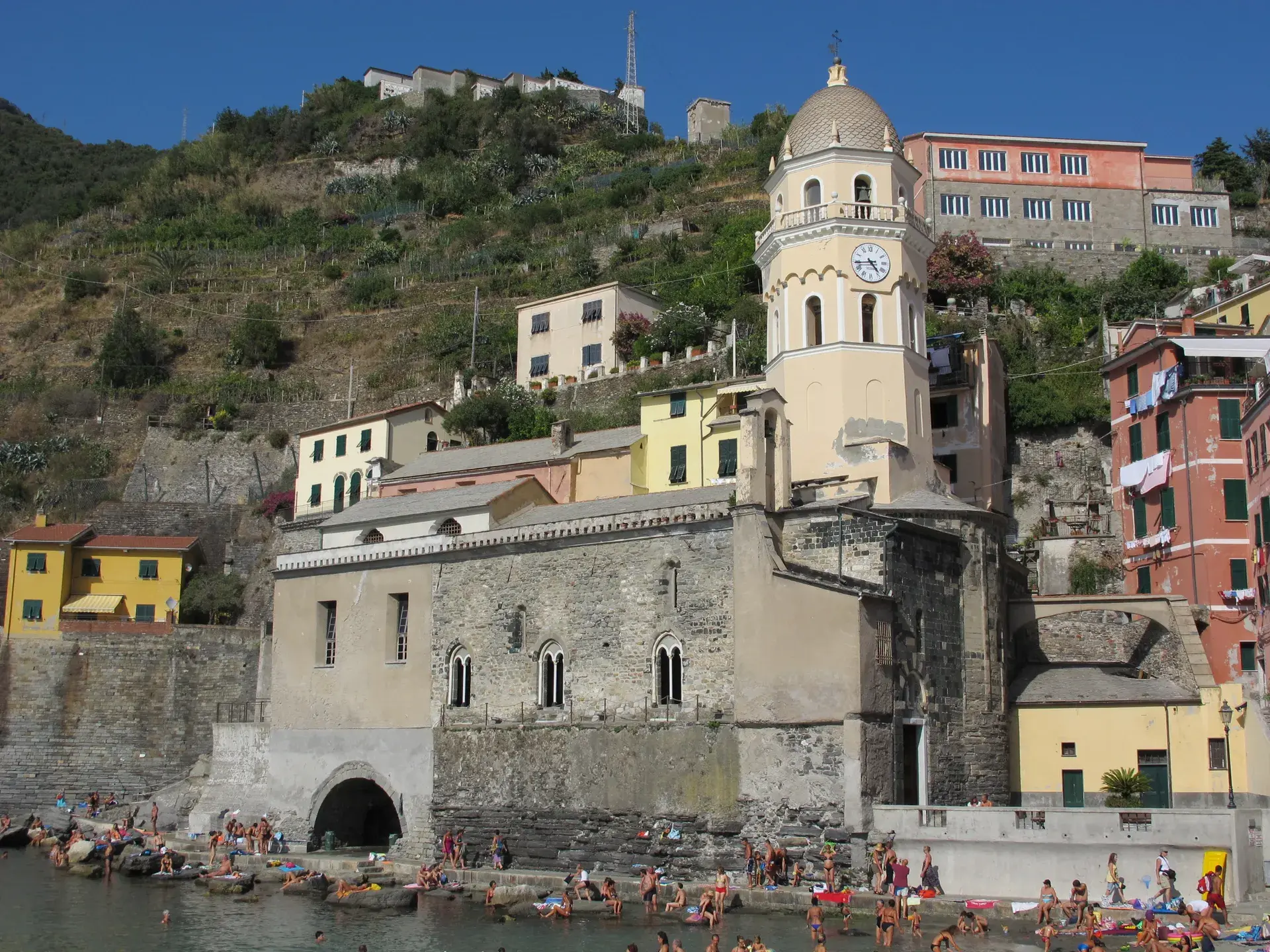
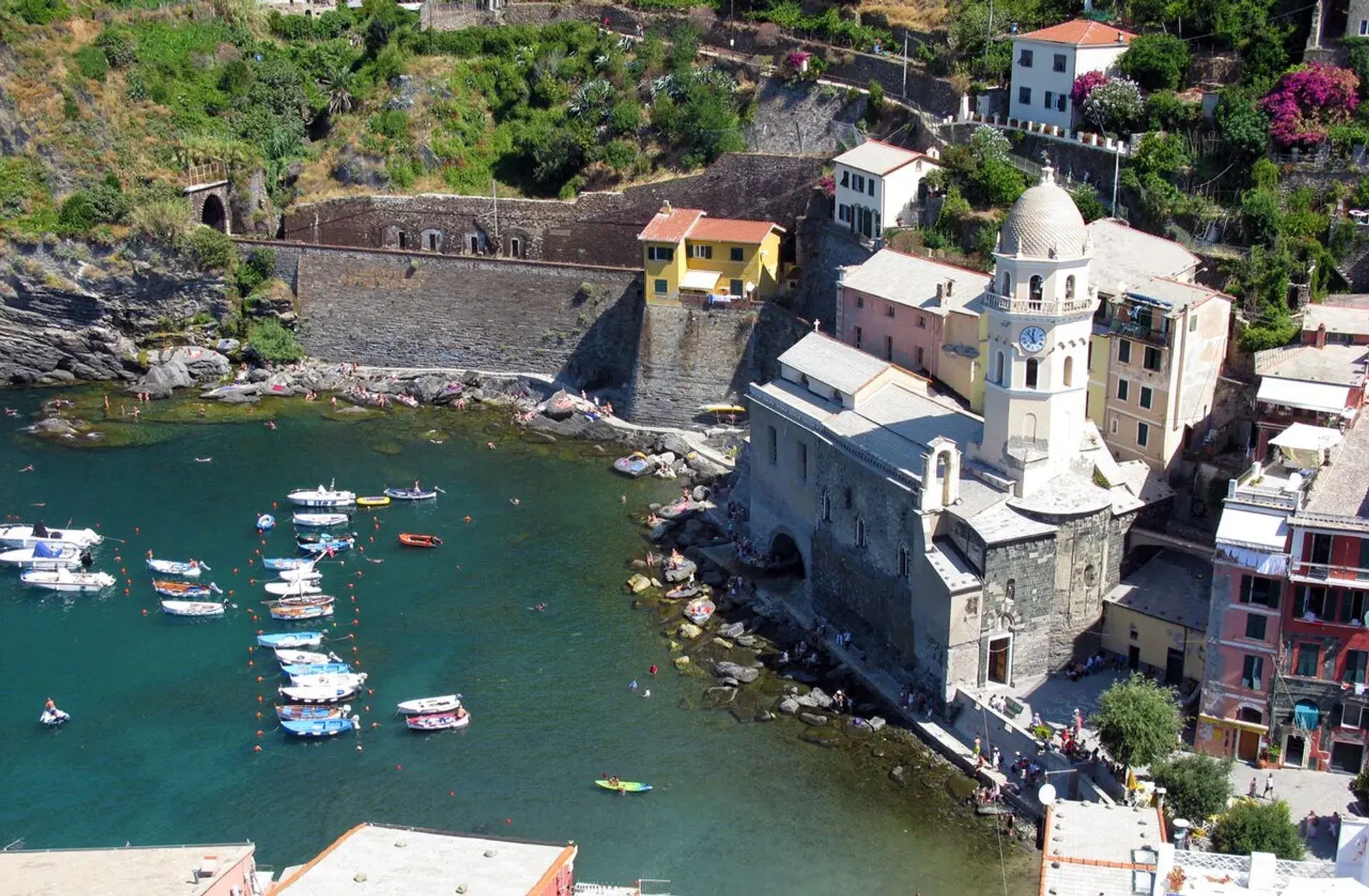
Situated along Via San Francesco in the upper reaches of Vernazza, the Convento Di San Francesco marks the historical boundary between the village and the inland trails heading toward the hillside sanctuaries. While Santa Margherita d'Antiochia and the Doria Castle anchor Vernazza at the water's edge, this monastic complex sits elevated on the rocky slope, offering a quiet atmosphere set apart from the activity of the harbor below.
Architectural Features and Layout
The complex consists of a deconsecrated church—known locally as the Chiesa dei Frati—an adjacent cloistered monastery, perimeter walls, and a square bell tower featuring an octagonal spire and a public clock. The church displays a Franciscan-style gabled facade characterized by a carved marble portal adorned with festoons and a rose-window opening. The interior contains a single nave with four recessed side chapels built directly into the thickness of the stone walls, each embellished with decorative stucco work.
Construction and Fortified Origins
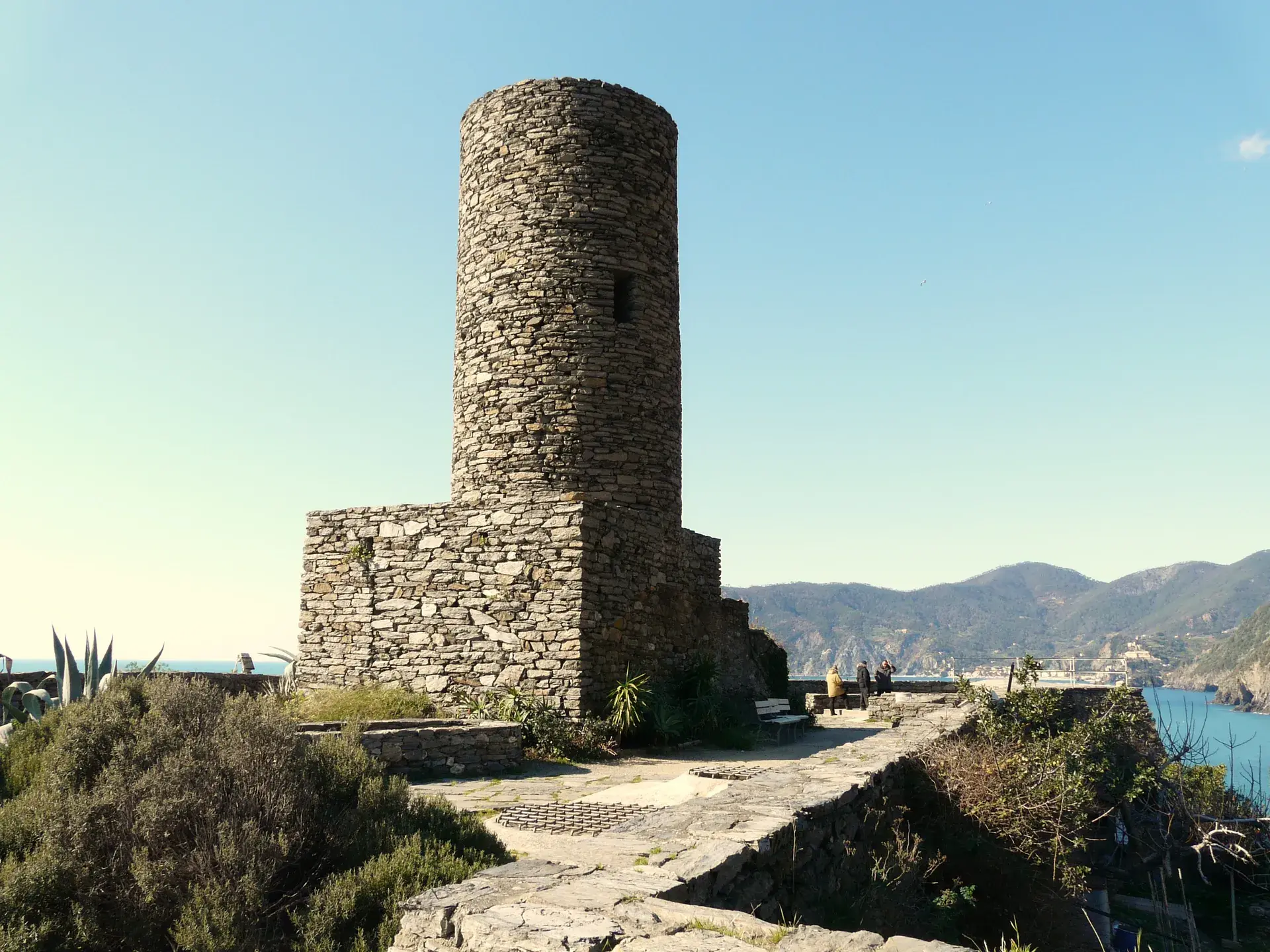
Established around 1618 following requests by the local population to house the Reformed Friars Minor, construction was finished in the mid-17th century. Erecting the complex required carving directly into the rocky hillside, which displaced the earlier medieval Oratorio di Sant'Antonio and fragments of 12th-century defensive barriers. On the western flank of the property, remnants of historic Genoese defensive walls that once formed a wedge-like defensive boundary around Vernazza remain visible.
Secularization and Civic Evolution
The monastic community faced expulsion in 1810 during Napoleonic decrees that dissolved religious houses. The friars returned in 1823 following a municipal petition under the Kingdom of Sardinia, though relations with town authorities eventually deteriorated. In 1847, civic leaders rejected claims for damages after municipal workers dismantled the convent's garden aqueduct during road construction toward Reggio. Following religious suppression laws enacted around Italian unification, the state permanently secularized the complex. It subsequently fulfilled several public roles, serving as an elementary school, a nursery, and the municipal seat.
Current Civic Role and Crypt Discoveries
Today, the preserved cloister functions as Vernazza's Town Hall. The deconsecrated church and its accompanying spaces serve as cultural venues for art exhibitions, musical performances, and theatrical events. Beneath the church floor, archaeological evaluations revealed 14 burial crypts that previously served as the final resting places for the convent's friars.
FAQ
What is the Convento Di San Francesco used for today?
The cloister serves as Vernazza's Town Hall, while the deconsecrated church is used as a cultural venue for art exhibitions, musical concerts, and theatrical performances.
When was the complex established?
The convent was founded around 1618 and the church was completed in the mid-17th century for the Reformed Friars Minor.
What historical structures predate the convent on this site?
Construction displaced the medieval Oratorio di Sant'Antonio and 12th-century defensive fortifications, portions of which survive on the western flank as Genoese defensive wall remnants.
What archaeological findings were uncovered beneath the church?
Excavations beneath the church floor uncovered 14 burial crypts where the monastery's friars were historically laid to rest.