Church of St. Margaret of Antioch in Vernazza
A Waterfront Landmark in Vernazza
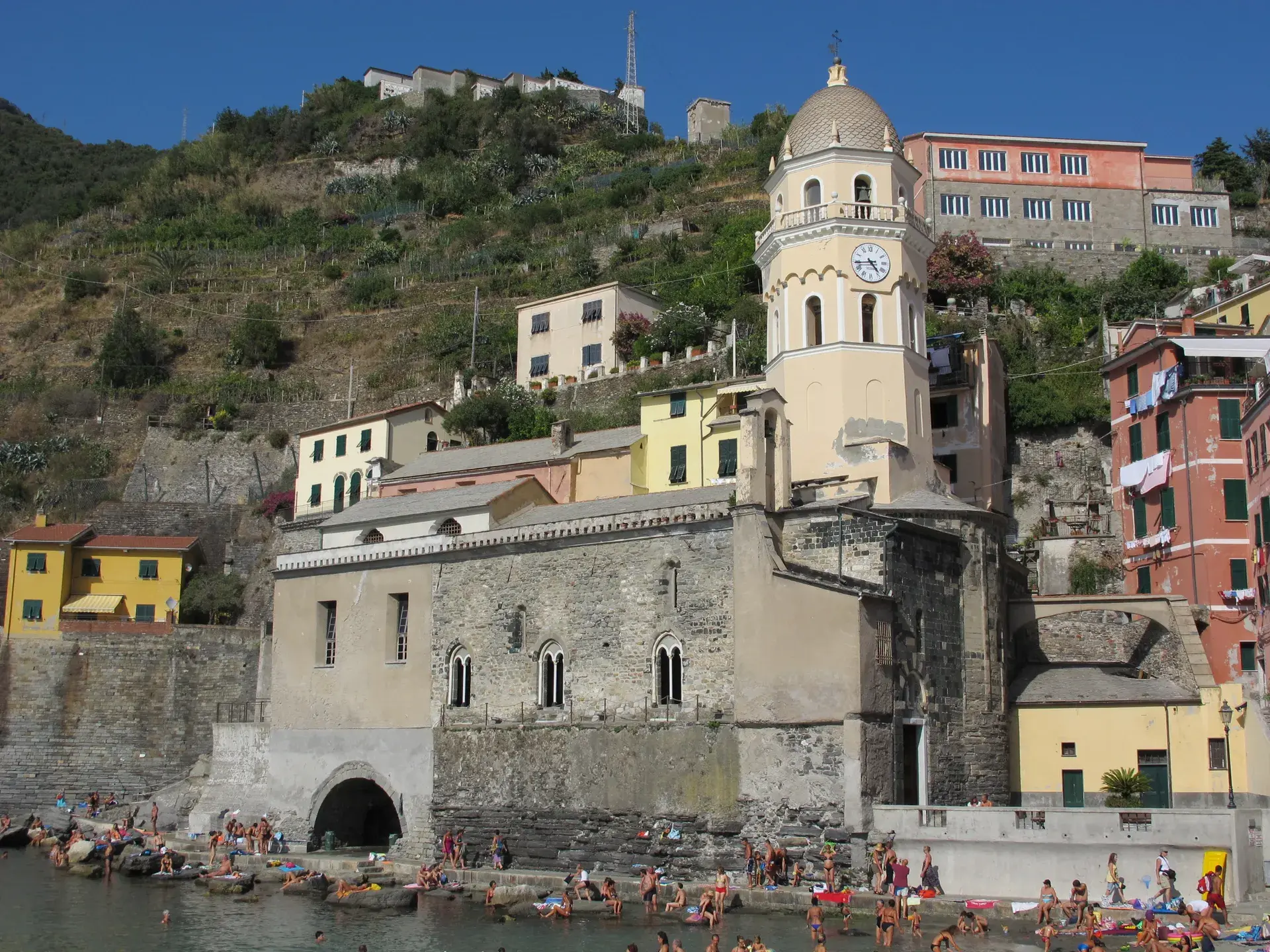
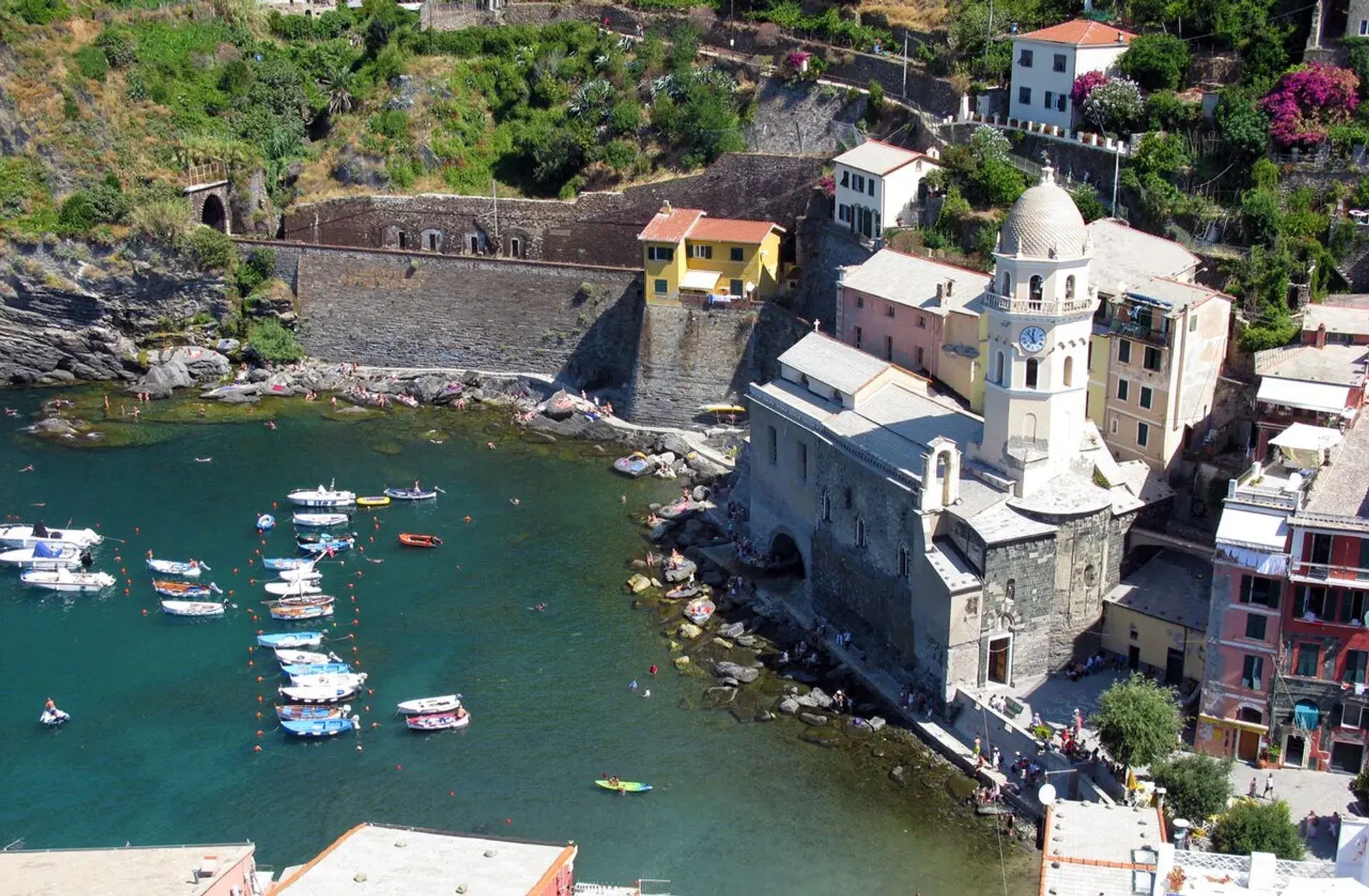
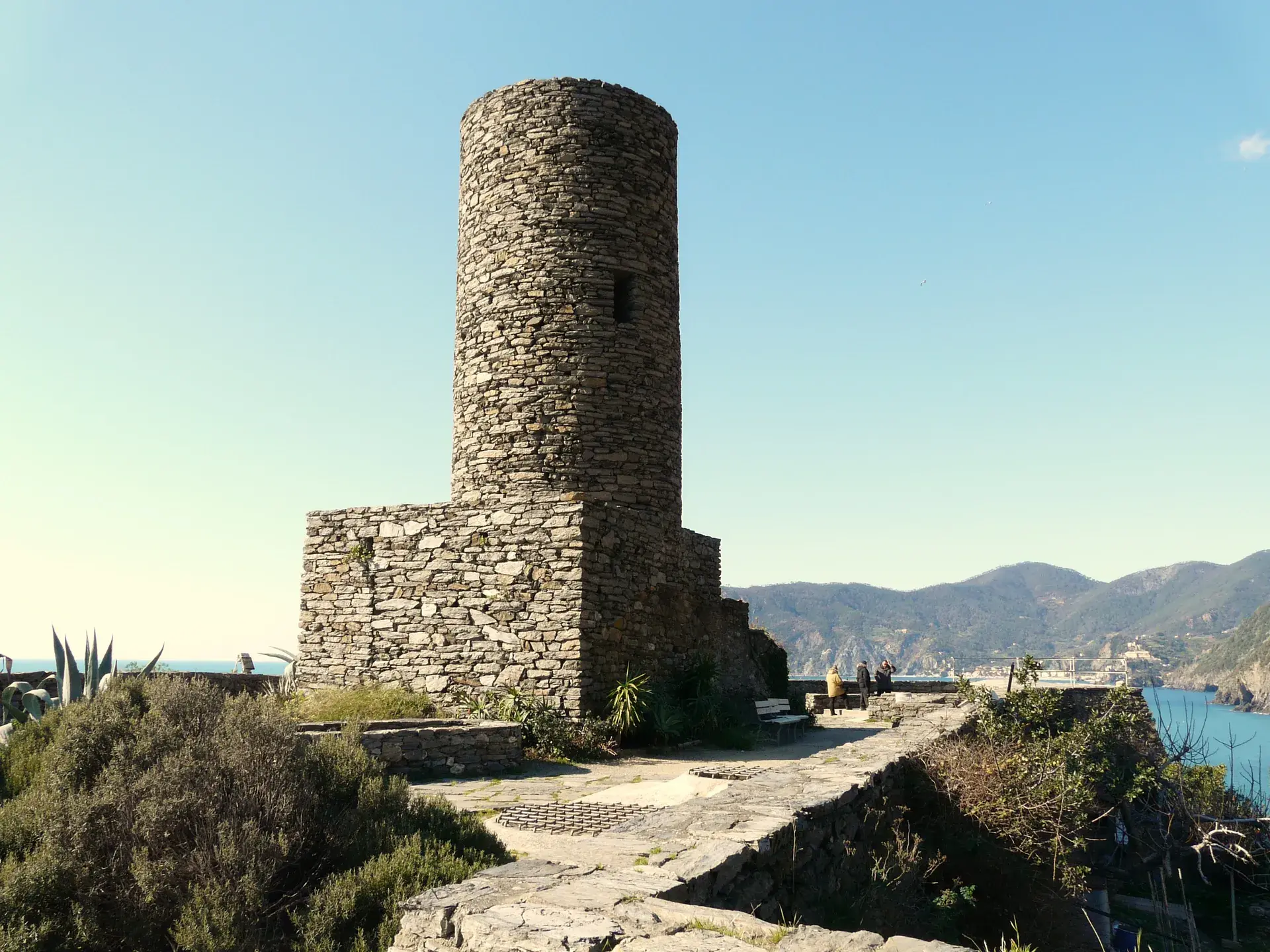
Perched on a rocky promontory directly over the water, the Church of Saint Margaret of Antioch (Chiesa di Santa Margherita d'Antiochia) dominates the waterfront of Piazza Guglielmo Marconi. Alongside Doria Castle and the Belforte watchtower across the bay, the church forms an essential visual anchor of Vernazza's harbor. It also serves as the final architectural terminus for travelers arriving from the village railway station and walking down to the sea.
Origins and Medieval Architecture
Official documents first recorded the church in 1318, when it was assigned to a priest named Leonardo. However, structural evidence indicates that its foundations date back between the 11th and 13th centuries, erected atop the remains of an earlier Romanesque chapel. The Ligurian-Gothic construction is historically credited to the Antelami masters (Magistri Antelami).
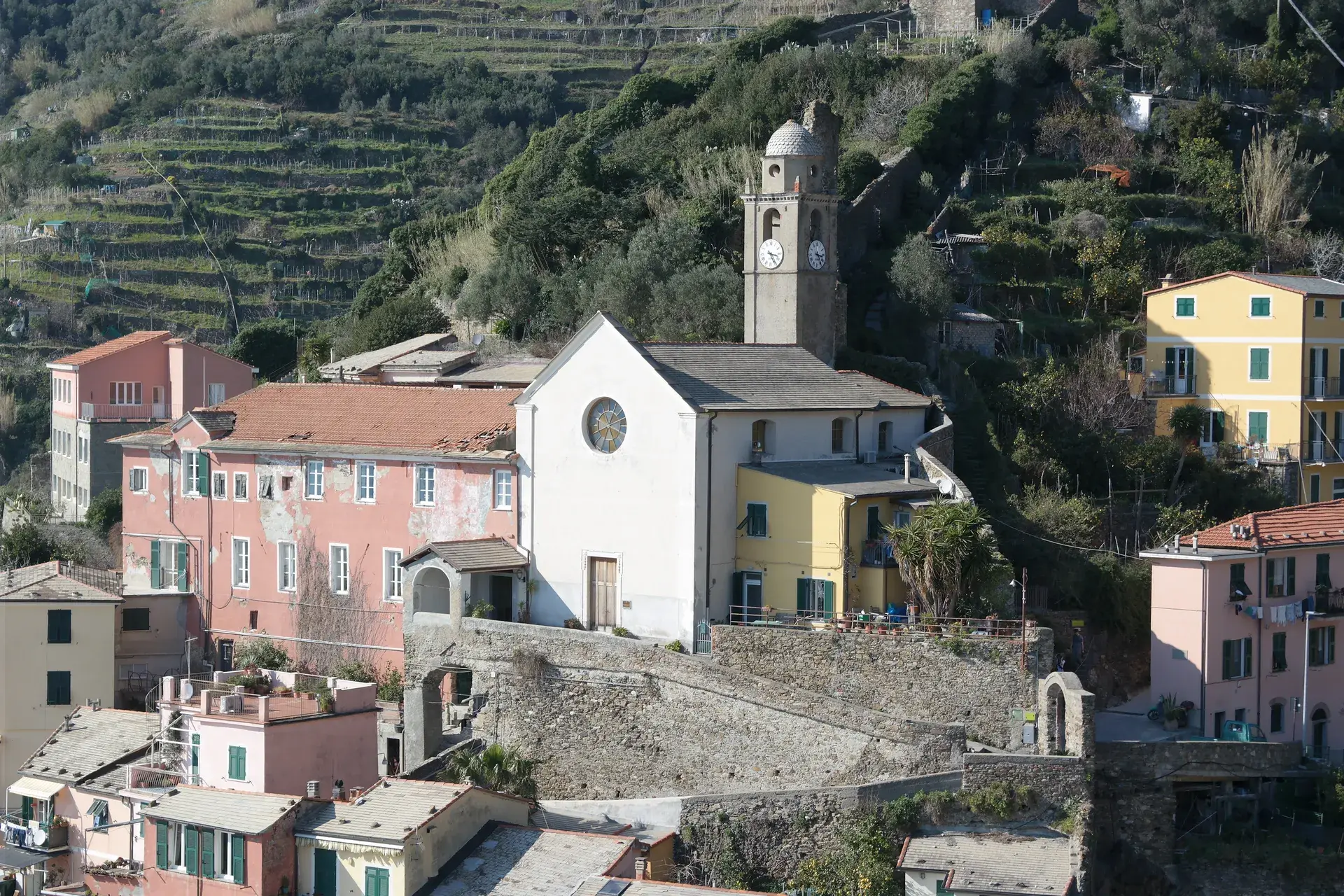
Built using dark stone quarried from nearby Punta Mesco, the structure follows a three-nave basilica plan. Its most recognizable exterior element is the 40-meter-tall octagonal bell tower, which terminates in an ogival dome overlooking the harbor basin.
Centuries of Architectural Change
The building underwent significant alterations over the centuries. During the 16th and 17th centuries, the nave was extended westward by two bays, an alteration that obliterated the original medieval facade. In 1750, workers raised the bell tower and refitted the interior with Baroque vaults and plasterwork.
Between 1964 and 1970, a major restoration program stripped away the Baroque additions to expose the original rustic stone masonry, pointed Gothic arcades, and open timber roof trusses. Decades later, on October 25, 2011, a devastating flash flood submerged Vernazza in over four meters of mud and debris. The church’s solid bedrock foundations held firm against the torrent, allowing the building to be cleaned, repaired, and reopened as a focal point of the town’s recovery.
Distinctive Layout and Sacred Relics
Unlike traditional Christian churches, which are entered from a western portal facing toward the sanctuary, this building features an inverted orientation. Visitors enter through a doorway integrated into the eastern apse side facing the town square—a layout formalized in the 19th century following the loss of the original facade. Inside, narrow arched windows look directly onto the Mediterranean, and during high tides and swells, the sound of waves hitting the exterior bedrock resonates audibly within the nave.
The church interior houses several notable works of art, including a Baroque high altar dating to 1750, an 18th-century processional chest, and a wooden crucifix attributed to the Genoese sculptor Anton Maria Maragliano.
The Legend of Saint Margaret
Local tradition ties the church's dramatic seaside setting to a miracle. According to lore, a small wooden casket containing a finger bone relic of Saint Margaret washed ashore on the local beach. Residents initially erected a chapel in the Isolotto quarter to shelter the relic, but a violent storm destroyed the structure and washed the casket back out to sea. When the relic washed ashore a second time on the harbor rocks, the community interpreted it as a sign to construct the parish church permanently along the surf.
Today, the church operates as an active parish within the Roman Catholic Diocese of La Spezia-Sarzana-Brugnato. It remains open daily for prayer and liturgical services, hosts weddings, and serves as the center of celebrations during the annual feast day of Saint Margaret on July 20.
FAQ
Why is the entrance to the church built into the apse?
The church was expanded westward by two bays during the 16th and 17th centuries, which destroyed the original medieval facade. In the 19th century, an entrance was established on the eastern apse side facing Piazza Guglielmo Marconi.
How did the church survive the 2011 flash flood?
During the flood of October 25, 2011, which covered Vernazza in four meters of mud, the church's solid bedrock foundation withstood the pressure, allowing it to be cleaned and restored as a centerpiece of the town's recovery.
What legend explains the church's seaside location?
Local tradition holds that a casket containing a finger bone relic of Saint Margaret washed ashore twice. After an initial chapel was washed away by a storm, the relic returned to the harbor rocks, which villagers saw as a sign to build the church directly over the water.