Vernazza Viewpoint: The Iconic Cinque Terre Vista
The Postcard Panorama of Vernazza
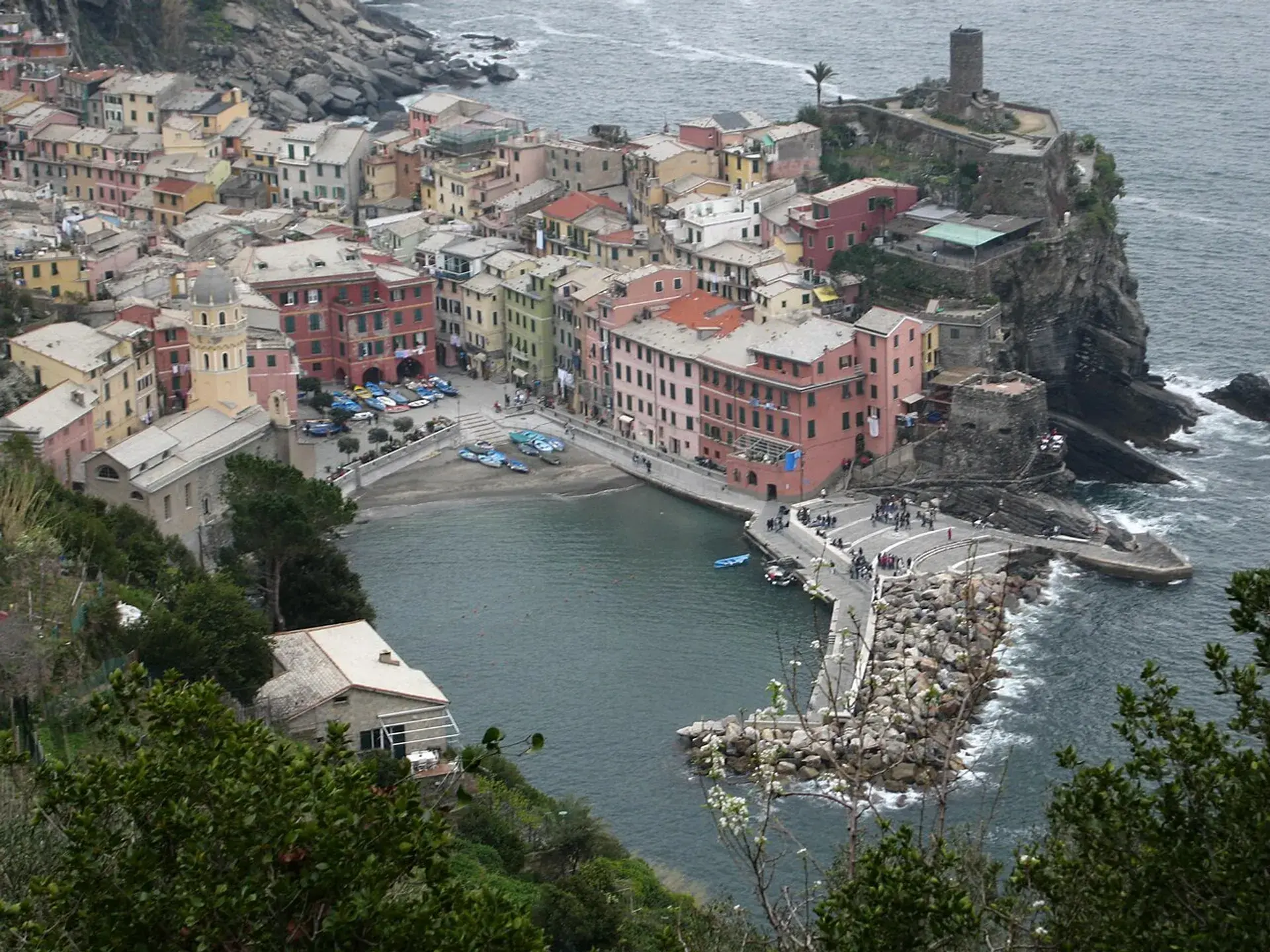
Perched along the Sentiero Azzurro (trail marker CAI 592-4 / SVA), a 5- to 10-minute ascent above the village toward Monterosso al Mare, sits the most celebrated viewpoint in Vernazza. This elevated vantage overlooks the only naturally protected harbor in the Cinque Terre. The panorama captures the settlement's defining landmarks in a single frame, revealing how its fortified maritime core adapted directly to the vertical coastal geology.
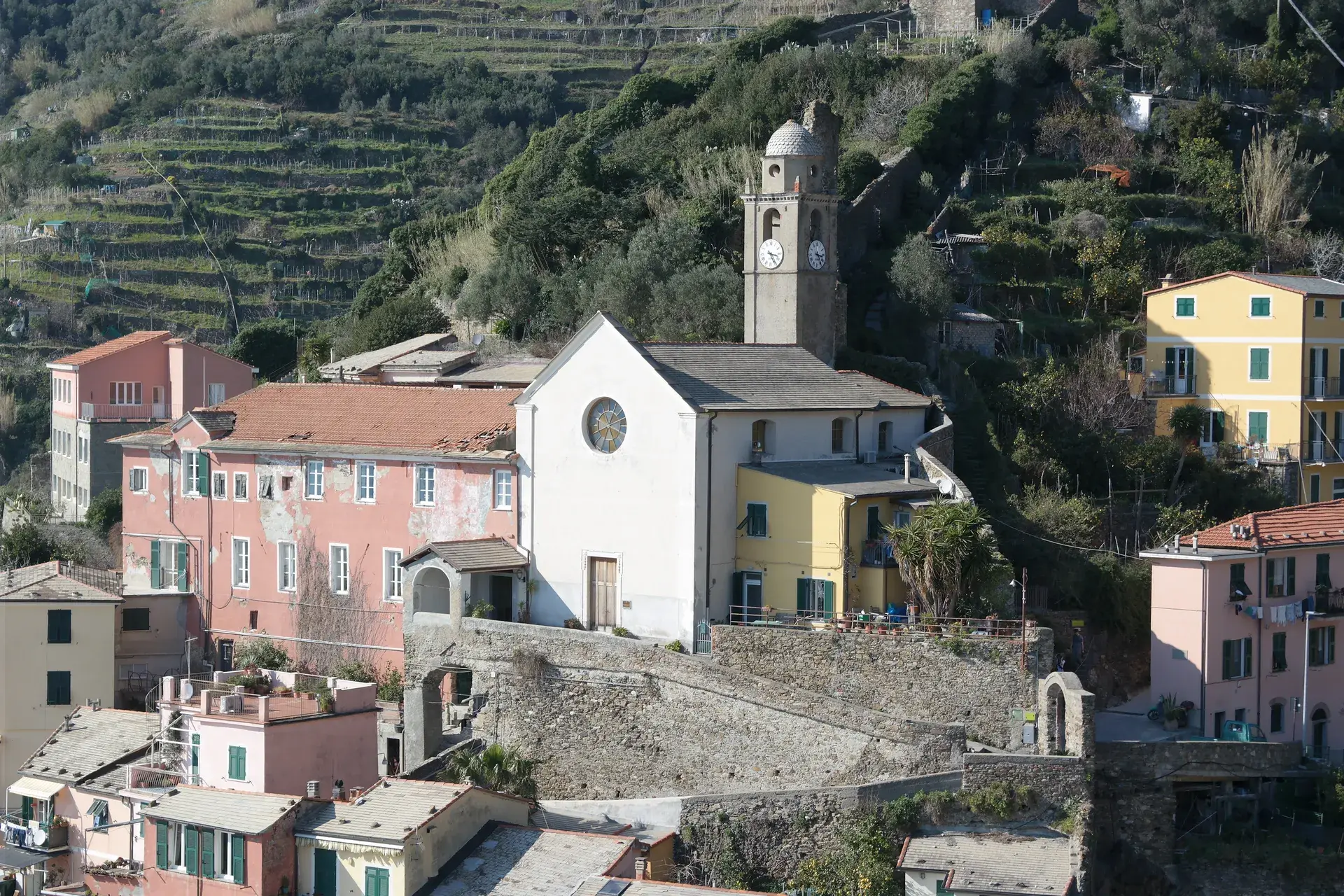
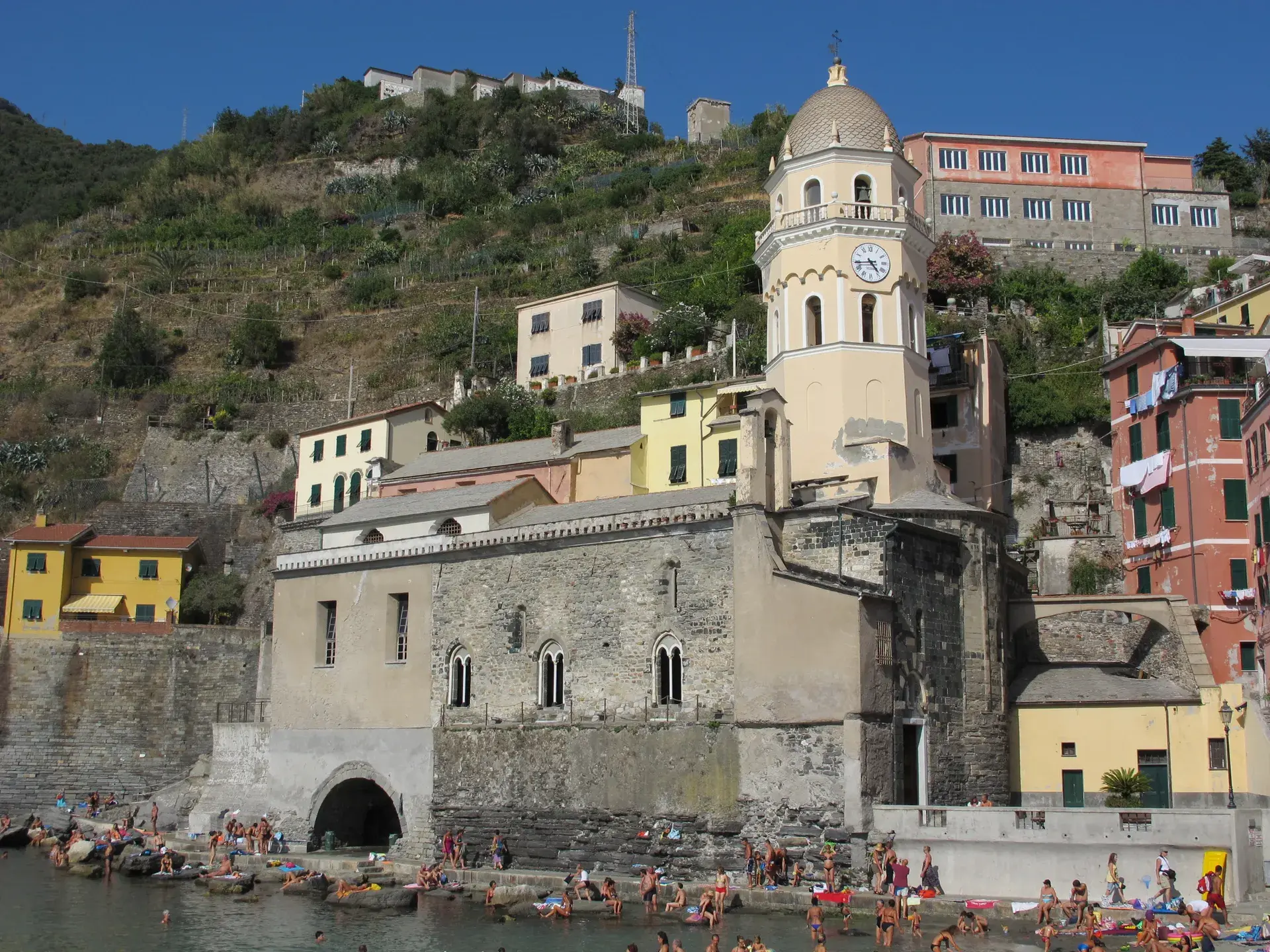
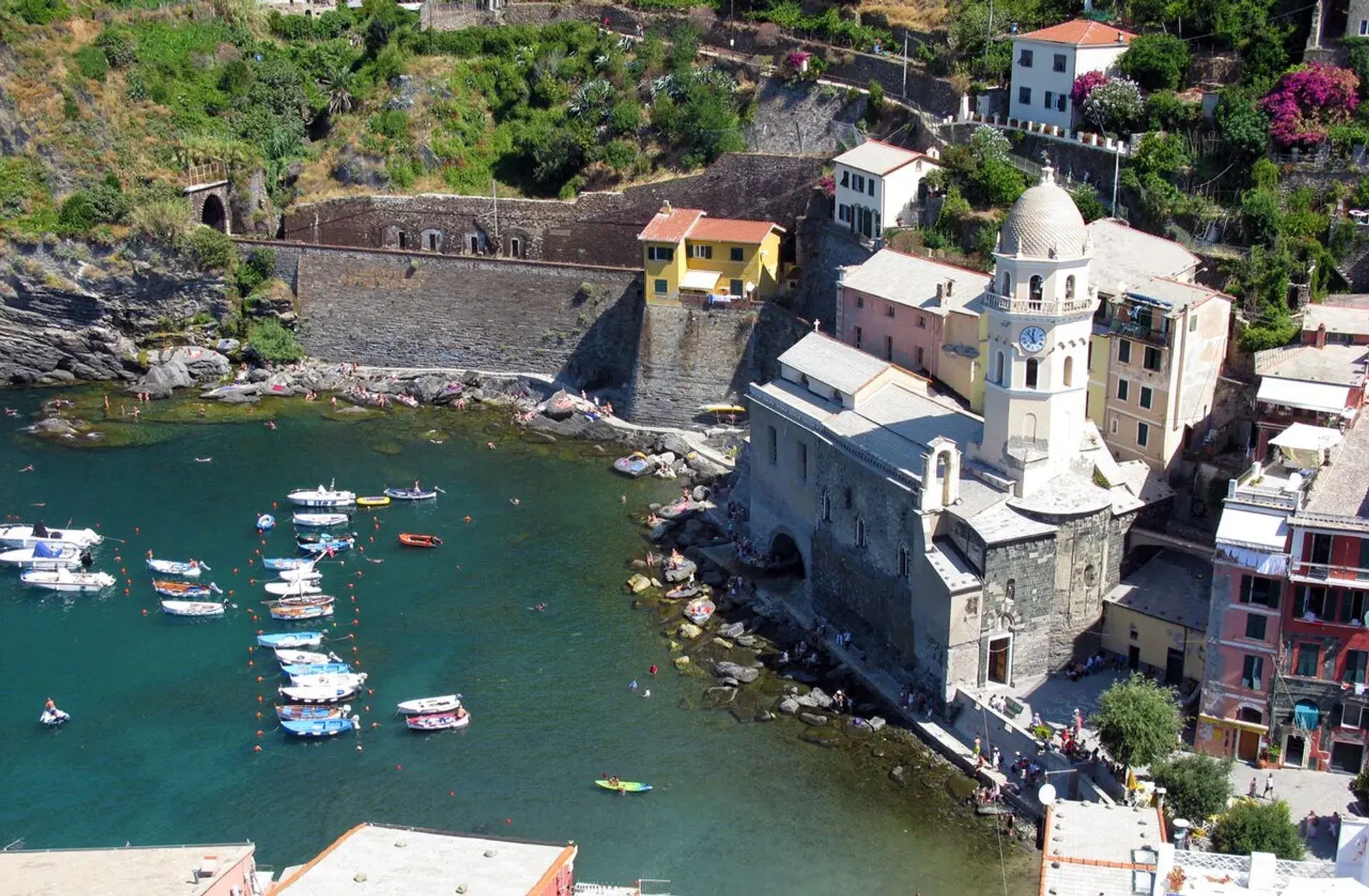
From the clearing, sightlines sweep across Piazza Marconi and the crescent-shaped harbor, protected by a curved breakwater. At the water's edge stands the 14th-century Church of Santa Margherita d'Antiochia, notable for its octagonal bell tower. Rising beside it are Vernazza’s pastel-toned tower-houses (case-torri), while the adjacent rocky promontory is crowned by the 11th- to 13th-century Castello Doria and its circular Belforte watchtower.
Origins as a Historic Mule Track
The Sentiero Azzurro was never designed as a scenic promenade. For centuries, it functioned as an essential coastal mule track (mulattiera) beaten down by fishermen, local farmers, and pack animals. Before the completion of the Genoa–La Spezia railway in the 1870s and the development of modern roads, these rugged cliffside paths were the sole overland connections between Vernazza and neighboring settlements.
The surrounding hillsides reflect centuries of intense manual engineering. Generations of cultivators built stepped agricultural terraces (ciàn) supported entirely by mortarless dry-stone walls (muretti a secco). These terraces allowed the cultivation of vineyards, olive groves, and citrus on sheer cliff faces, an accomplishment that led to the area receiving UNESCO World Heritage status in 1997.
Access, Regulations, and Trail Maintenance
Access to this section of the Sentiero Azzurro requires passing an official Cinque Terre National Park checkpoint during operating hours. Hikers must present either a valid Cinque Terre Trekking Card or a Cinque Terre Train Card. Park staff monitor the entrance to scan tickets and enforce strict safety requirements.
Due to the steep, uneven stone steps and rugged terrain, the national park strictly bans open sandals, flip-flops, and smooth-soled street shoes. Park authorities issue formal fines to violators, and these penalties escalate significantly if inappropriate footwear leads to an emergency mountain rescue. Additionally, the park authority routinely monitors slope stability, repairs dry-stone walls, and temporarily closes the trail following heavy rains to mitigate landslide hazards.
Photography and Cultural Influence
The viewpoint is one of the most photographed locations in the Cinque Terre National Park. Photographers often gather during the late-afternoon golden hour, when low western light illuminates the sea-facing façades, church walls, and harbor waters before dipping behind the headland.
Vernazza actually offers two distinct elevated perspectives along the Sentiero Azzurro. While the northern trail toward Monterosso frames the harbor, church, and town square, the southern trail heading toward Corniglia looks down over the fortifications of Castello Doria and the municipal cemetery. The iconic northern vista of the sheltered bay and medieval tower also served as the primary visual model for the fictional Italian Riviera village of Portorosso in Pixar’s animated feature Luca.
FAQ
Do visitors need a ticket to access the Vernazza viewpoint?
Yes. Access requires passing a national park checkpoint on the trail toward Monterosso al Mare, where hikers must present a valid Cinque Terre Trekking Card or Cinque Terre Train Card during operating hours.
What footwear is required to hike to the viewpoint?
Cinque Terre National Park strictly bans flip-flops, open sandals, and smooth-soled street shoes on the trail. Hikers must wear proper footwear, and park authorities issue fines for non-compliance.
Which landmarks are visible from the viewpoint?
The vantage point captures the sheltered harbor, the 14th-century Church of Santa Margherita d'Antiochia with its octagonal tower, Piazza Marconi, pastel tower-houses, and the medieval Castello Doria with its circular Belforte tower.
How does the northern viewpoint differ from the southern trail?
The northern trail toward Monterosso provides the classic view over the harbor, church, and piazza, while the southern trail toward Corniglia overlooks the fortifications of Castello Doria and the hillside cemetery.