Palazzo dei Papi di Viterbo: Birthplace of Conclaves
Seat of the 13th-Century Papacy
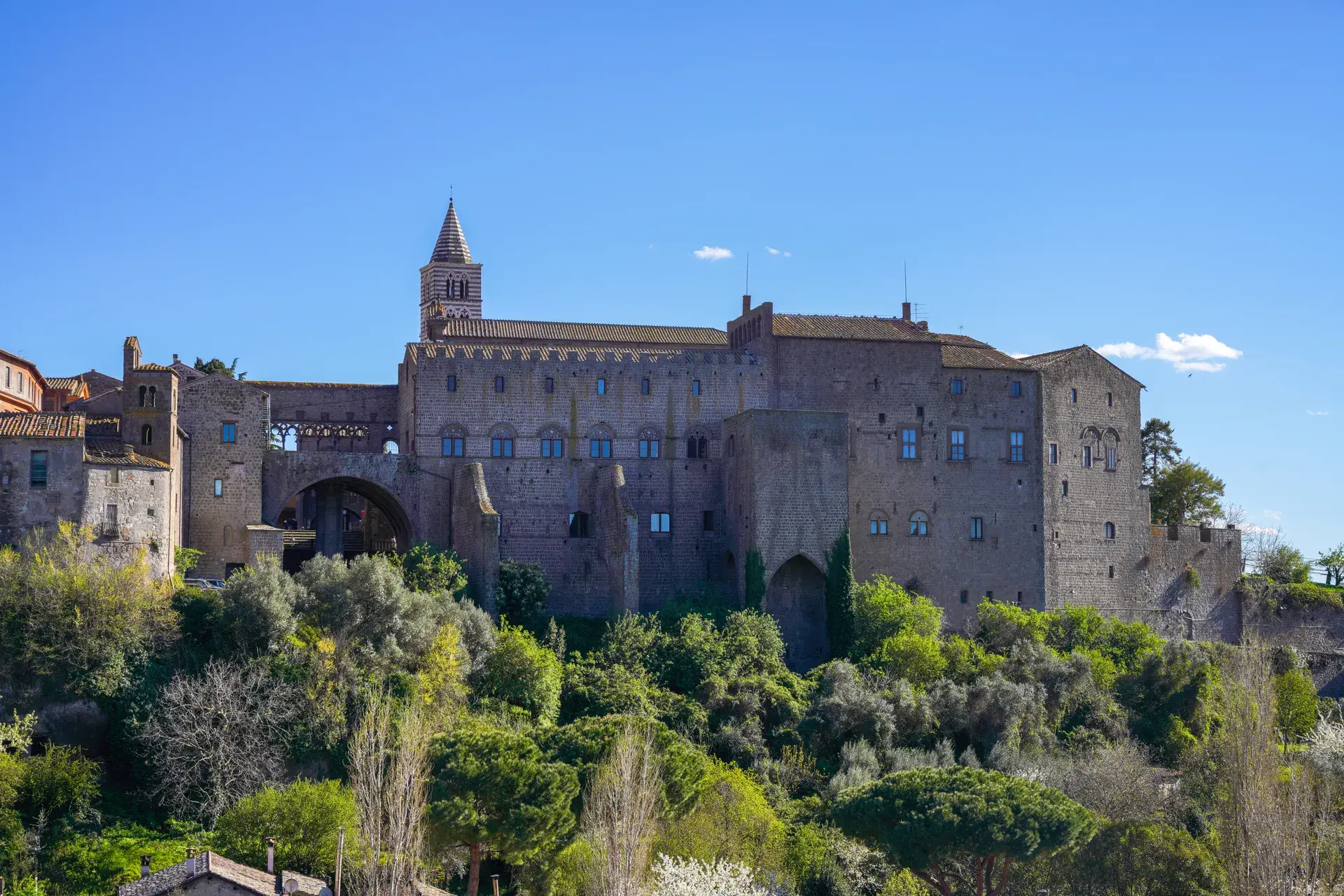
Perched atop the Colle del Duomo on Piazza San Lorenzo, the Palazzo dei Papi stands as the architectural anchor of Viterbo's 13th-century golden age. Commissioned between 1255 and 1266 by Capitano del Popolo Raniero Gatti, the complex expanded an existing bishop’s residence into a fortified palace designed to accommodate the papal court.
In 1257, Pope Alexander IV relocated from Rome to Viterbo to escape ongoing civil unrest. The palace subsequently served as the official residence and administrative hub of the Papacy until 1281. This 24-year tenure permanently secured Viterbo’s reputation as the Città dei Papi (City of Popes).
The Longest Papal Election in History
The Palazzo dei Papi is most famous as the setting for the longest papal election in Catholic history. Following the death of Pope Clement IV in November 1268, the College of Cardinals convened in the palace's great audience hall. Paralyzed by deep political and familial rivalries, the electors remained deadlocked for 33 months, spanning 1,006 days.
Exasperated by the prolonged vacancy and the growing expense of hosting the cardinals' retinues, civic authorities led by Raniero Gatti and the Podestà took unprecedented measures to force a resolution. They physically locked the cardinals inside the hall, giving rise to the institutional term conclave, derived from the Latin cum clave ("under lock and key"). When confinement proved insufficient, the authorities rationed their food to bread and water and removed the roof tiles and support beams, exposing the cardinals to rain and weather.
The electors eventually formed a compromise commission and chose Tedaldo Visconti on September 1, 1271, who assumed the papal throne as Pope Gregory X. In 1274, Gregory X codified these emergency isolation and rationing tactics into church law via the constitution Ubi periculum, creating the legal framework for the modern conclave system.
Fortress and Belvedere: The Architecture
The palace terminates the historic walking route across the medieval quarter, commanding Piazza San Lorenzo just past the Ponte del Duomo. Its primary facade reflects a Romanesque character capped with square battlements, approached by a wide ceremonial stone staircase added around 1267. While the square-facing facade presents a ceremonial front, the rear and northern walls drop steeply into the Valle Faul, reinforced by towering retaining walls and flying buttresses engineered for defense.
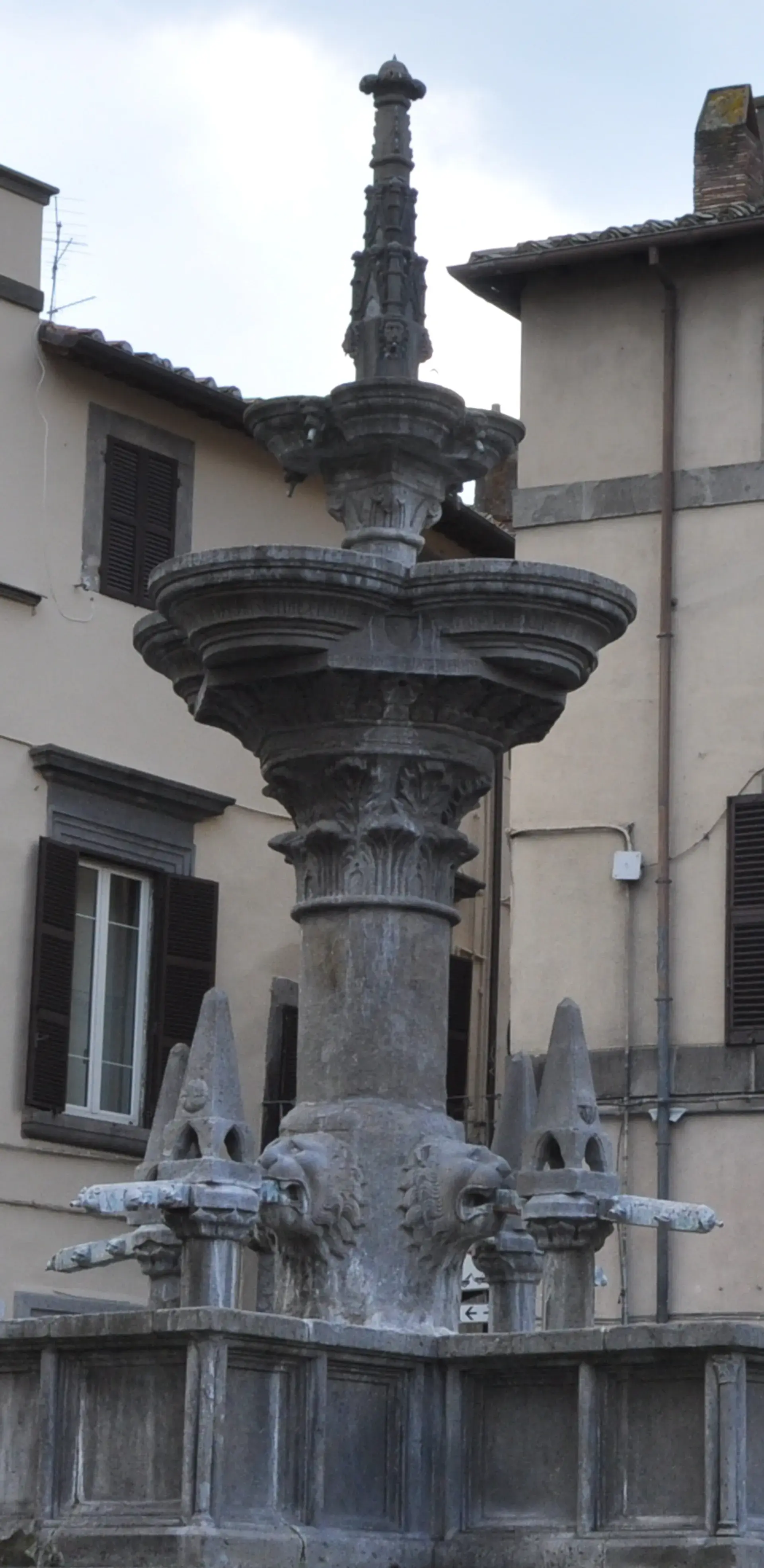
Extending from the main palace is the Gothic Loggia delle Benedizioni, completed in 1267. Originally an enclosed hall flanked by two matching arcades, its roof and outer wall collapsed during the early-to-mid 14th century. Today, it stands as an open-air stone terrace where winds pass through seven intersecting trilobed Gothic arches framing views of the valley below. The carved entablature above the arches documents the 13th-century political landscape, featuring crossed papal keys, the imperial eagle, the civic lion of Viterbo, and the diagonal stripes of the Gatti crest. The center of the loggia features a 15th-century polygonal fountain erected under Pope Sixtus IV, utilizing an earlier 13th-century basin carved with Gatti family heraldry.
Inside, the Sala del Conclave remains an austere, cavernous space lined with perimeter stone benches and illuminated by 12 double-arched bifora stone windows.
The Collapse of the Papal Study
In addition to political turbulence, the palace witnessed an unusual tragedy in 1277. Pope John XXI, a scholar and physician elected in Viterbo in 1276, commissioned a new private study within the residential quarters. In May 1277, after only eight months in office, the poorly built ceiling of the room collapsed directly on top of him, inflicting fatal crush injuries.
The Palace Complex Today
The Palazzo dei Papi is managed as part of the Polo Monumentale Colle del Duomo. The building retains an ecclesiastical function, serving as the Palazzo Vescovile and housing local diocesan administrative offices. The historic areas, including the Sala del Conclave, the Sala Gualterio, and the open-air Loggia delle Benedizioni, are accessible to visitors year-round alongside the adjacent Cathedral of San Lorenzo and the Museo Colle del Duomo.
FAQ
What happened during the 1,006-day election at Palazzo dei Papi?
Following the death of Pope Clement IV in 1268, cardinals deadlocked for nearly three years. Civic leaders locked them inside the audience hall, cut their rations to bread and water, and stripped off the roof to force the election of Pope Gregory X in 1271.
What is the origin of the word 'conclave'?
The word derives from the Latin phrase *cum clave*, meaning 'under lock and key.' It was popularized by the forced physical confinement of the cardinal electors inside this palace between 1268 and 1271.
Which spaces inside the Palazzo dei Papi are open to visitors?
Visitors can access the historic Sala del Conclave, the Sala Gualterio, and the Gothic Loggia delle Benedizioni, which are included in admissions to the Polo Monumentale Colle del Duomo.
How did Pope John XXI die at the palace?
In May 1277, after eight months in office, Pope John XXI was fatally crushed when the poorly constructed ceiling of his newly built private study collapsed on him.