Palazzo dei Priori: Viterbo's Historic Civic Palace
Civic Seat on Piazza del Plebiscito
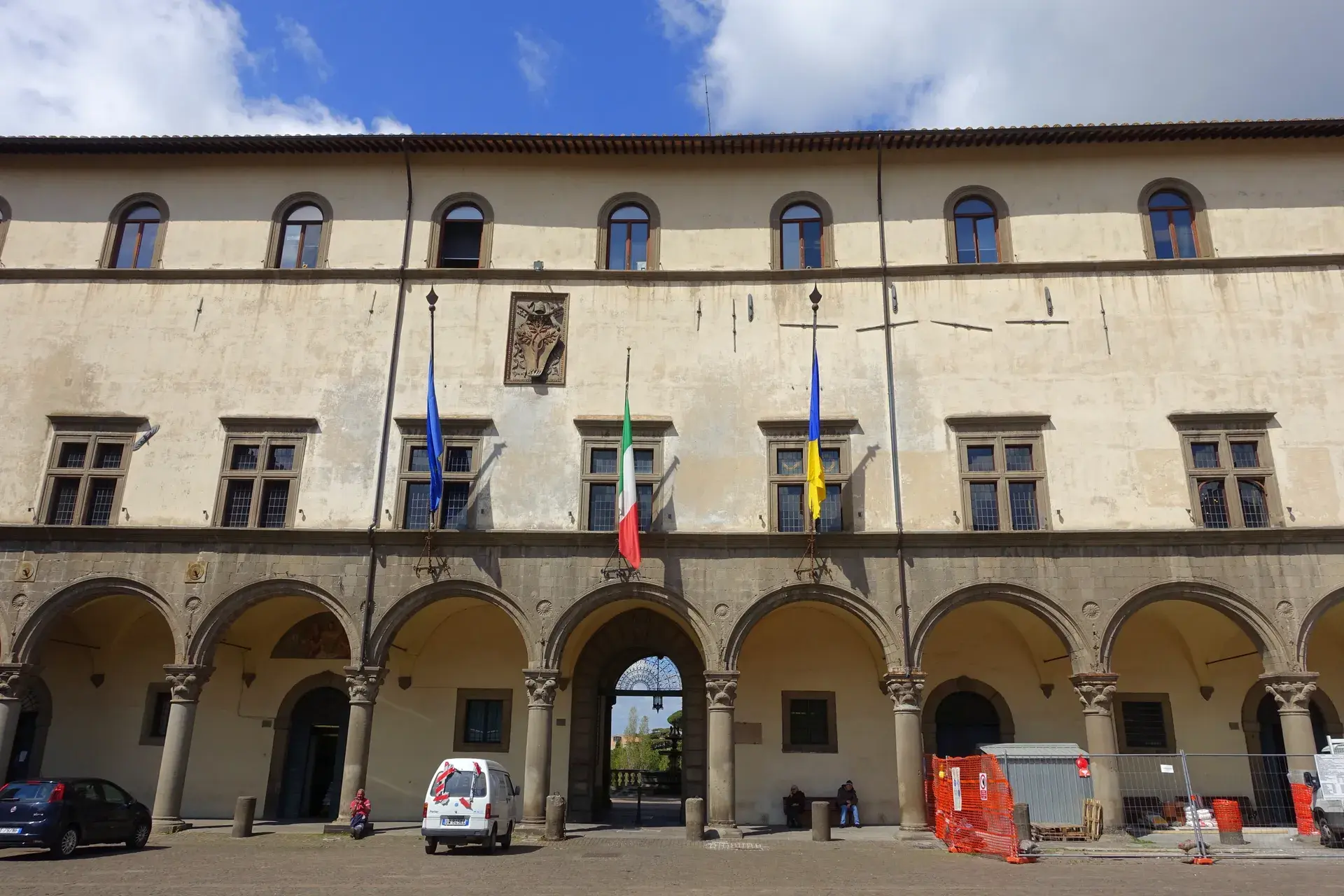
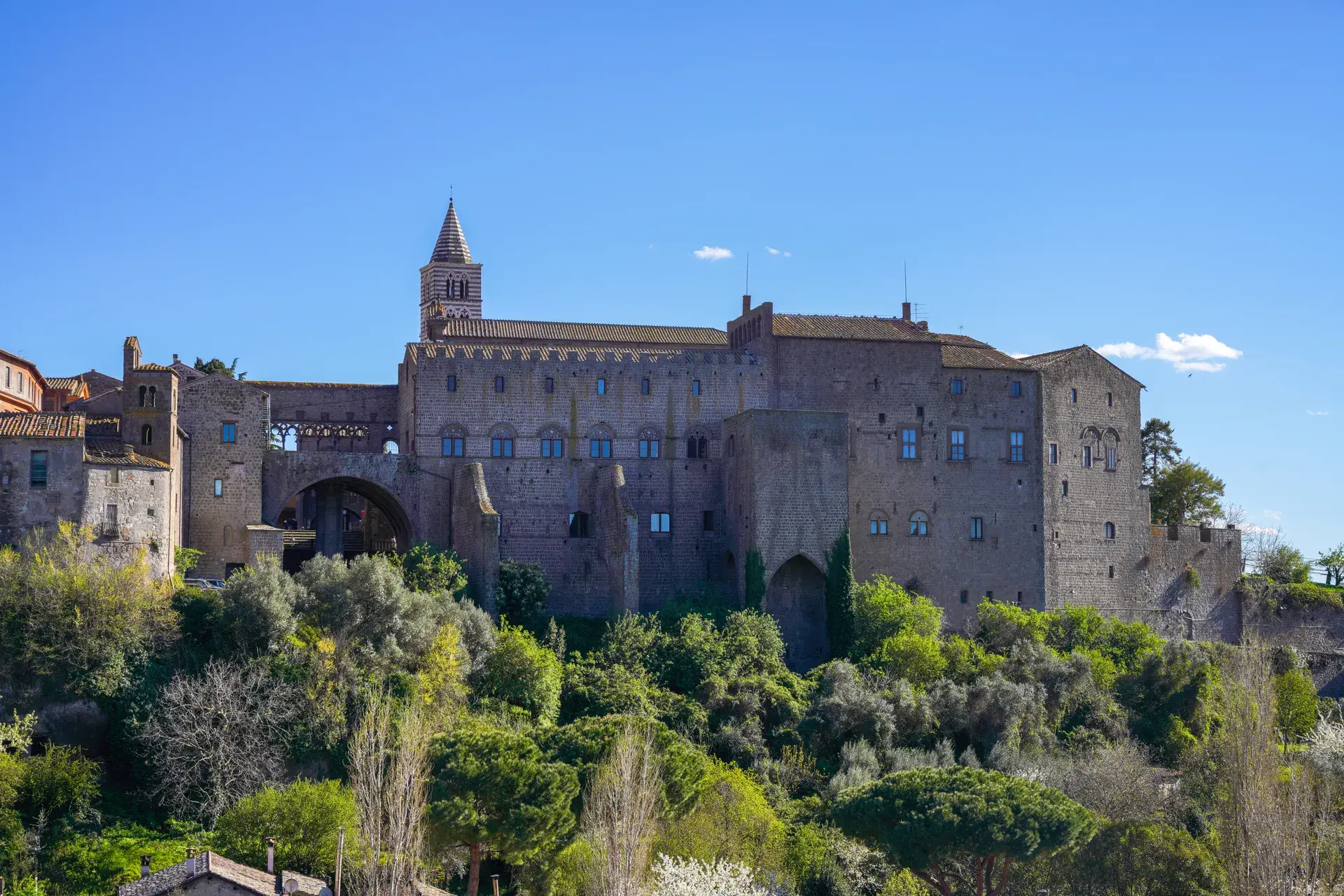
Palazzo dei Priori stands on Piazza del Plebiscito (historically called Piazza del Comune) as the long-standing center of municipal administration in Viterbo. Positioned along the urban corridor connecting the medieval quarter of San Pellegrino with the commercial route of Corso Italia, the palace represents the civic counterpart to the papal center at the Palazzo dei Papi.
The exterior of the Renaissance palace is defined by an open ground-floor portico of nine round arches supported by columns. Spanning overhead across Via Filippo Ascenzi, an elevated connecting arch links Palazzo dei Priori to the adjacent Palazzo del Podestà and its prominent civic clock tower. Carved heraldic symbols of Pope Sixtus IV della Rovere, featuring an oak tree surmounted by the papal tiara, decorate the facade. The pontiff's name remains chiseled across the exterior window architraves and inner door lintels.
Evolution from Papal Seat to Municipal Hall
The site originated through civic expansions of the public square beginning around 1264 over sections of the Sant'Angelo cemetery. Construction on the current palace began circa 1460 during the pontificate of Pope Pius II, who intended it as an official residence for the Governor of the Patrimony of Saint Peter in Tuscia.
During the reign of Pope Sixtus IV, Viterbo's civic rulers—the Priors—were displaced from their earlier seat and transferred to this complex. By 1510, the building officially became the permanent headquarters of the Priors, cementing its role as the administrative core of local self-government.
The Peperino Courtyard and Fountain
Behind the palace facade lies an elevated courtyard and garden framed by dark grey peperino stone benches, an arched loggia completed in 1632, and recumbent Etruscan sarcophagi lids. From its perimeter, the courtyard provides open views overlooking the Valle Faul.
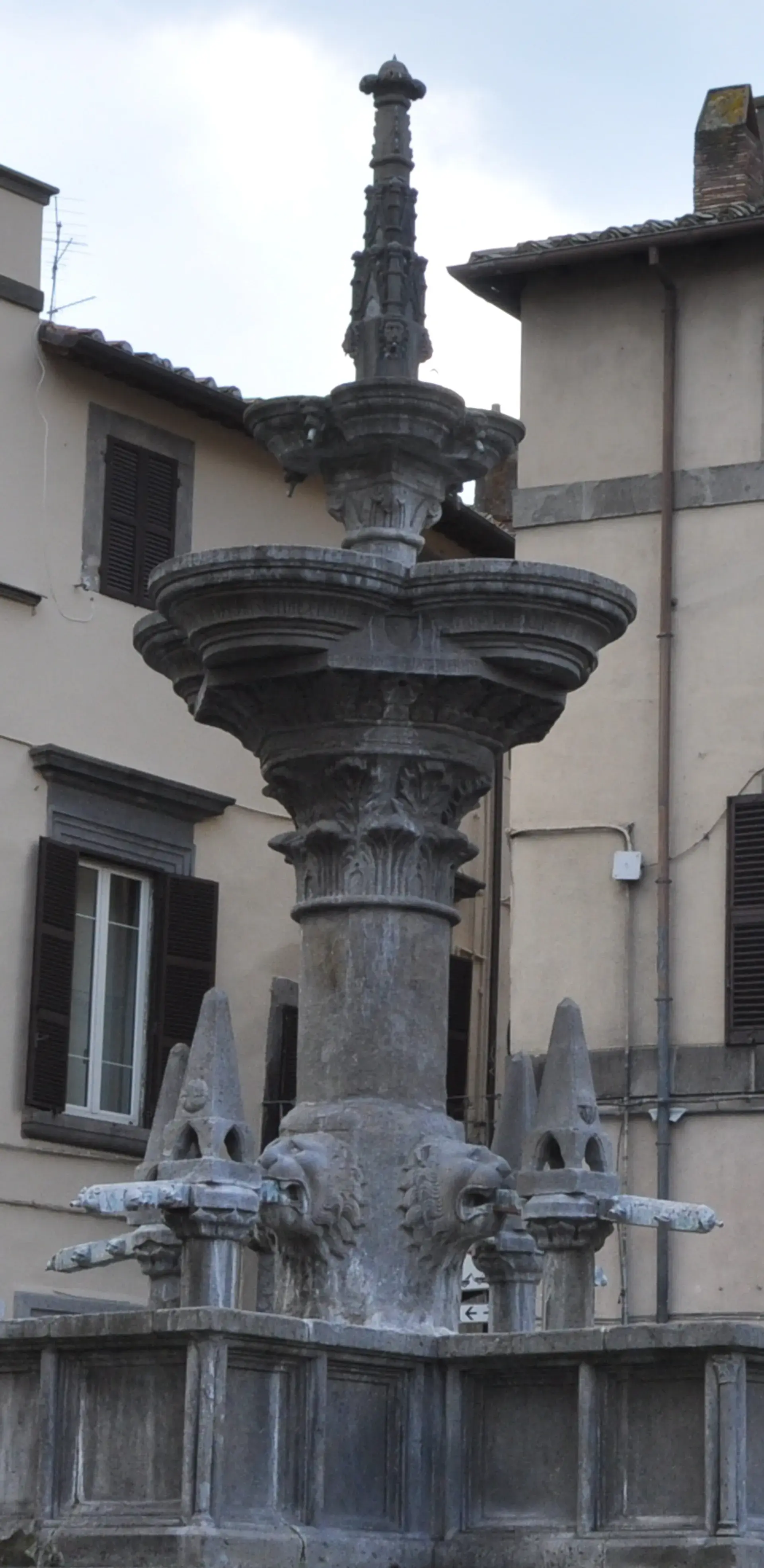
At the center of this enclosed space, water splashes in an ornate peperino fountain initiated in 1624, based on designs attributed to the painter Filippo Caparozzi. Atop the fountain stem, sculpted lions climb a central palm tree. This heraldic arrangement reflects the aftermath of 1172, when Viterbo conquered the rival neighboring city of Ferento and absorbed its traditional palm emblem into Viterbo's civic lion heraldry.
The Grand Frescoes of the Piano Nobile
The piano nobile is arranged into a series of decorated halls, including the Sala Regia, the Sala del Consiglio (also known as the Sala d’Ercole), the Sala della Madonna, the Sala dell'Aurora, the Sala dei Paesaggi, and the Cappella Palatina, which features religious paintings executed by Filippo Caparozzi and Marzio Ganassini.
Between 1588 and 1592, the grand Sala Regia underwent an extensive Mannerist redecoration to celebrate municipal authority. Bolognese painter Baldassarre Croce created the large wall frescoes, while Tarquinio Ligustri designed the painted coffered ceiling illustrating Viterbo's thirty-three vassal castles. The narrative murals illustrate legendary accounts of the city's foundation by the biblical figure Noah (conflated with the deity Janus) and Hercules. These scenes reflect late 15th-century historical fabrications published by the Dominican scholar Annio da Viterbo rather than authentic ancient mythology.
Contemporary Administration and Museum Collections
Palazzo dei Priori remains Viterbo's functioning municipal hall. The city council meets within the historic Sala del Consiglio, while the mayor's office operates from the adjoining Sala Rossa. The Sala dei Paesaggi, historically called the Sala delle Bandiere, hosts civil marriage ceremonies.
The mullioned window of the Sala dei Paesaggi preserves a unique structural element: a removable central stone pillar (pilastrino mobile). Engineered to be temporarily dismantled for major public events, it offered an unimpeded vista during occurrences such as the 1986 visit of Pope John Paul II and provides a direct view of the towering Macchina di Santa Rosa procession arriving in Piazza del Plebiscito.
The historic reception rooms on the piano nobile are accessible to visitors alongside the Museo dei Portici. Operating as a branch of the Museo Civico Luigi Rossi Danielli, the museum displays prominent Renaissance altarpieces, including Sebastiano del Piombo's Pietà and Flagellation.
FAQ
What is the historical significance of the courtyard fountain?
Begun in 1624 after designs attributed to Filippo Caparozzi, the peperino fountain depicts lions climbing a palm tree. This imagery marks Viterbo's destruction of neighboring Ferento in 1172, after which Ferento's palm symbol was assimilated into Viterbo's civic coat of arms.
What are the foundation frescoes in the Sala Regia based on?
The murals painted by Baldassarre Croce depicting Viterbo's origins through Noah (Janus) and Hercules were based on Renaissance literary forgeries published by Dominican scholar Annio da Viterbo in the late 15th century.
What artworks are housed in the palace's Museo dei Portici?
The Museo dei Portici, a branch of the Museo Civico Luigi Rossi Danielli located in the complex, preserves two notable Renaissance paintings by Sebastiano del Piombo: the Pietà and the Flagellation.
Why does the window in the Sala dei Paesaggi feature a removable pillar?
The central pillar (pilastrino mobile) was engineered to be removed during major civic and religious gatherings, such as papal visits and the annual entry of the Macchina di Santa Rosa procession into Piazza del Plebiscito, creating an unobstructed view.