Piazza del Gesù: Historic Medieval Square in Viterbo
The Historic Heart of Medieval Viterbo
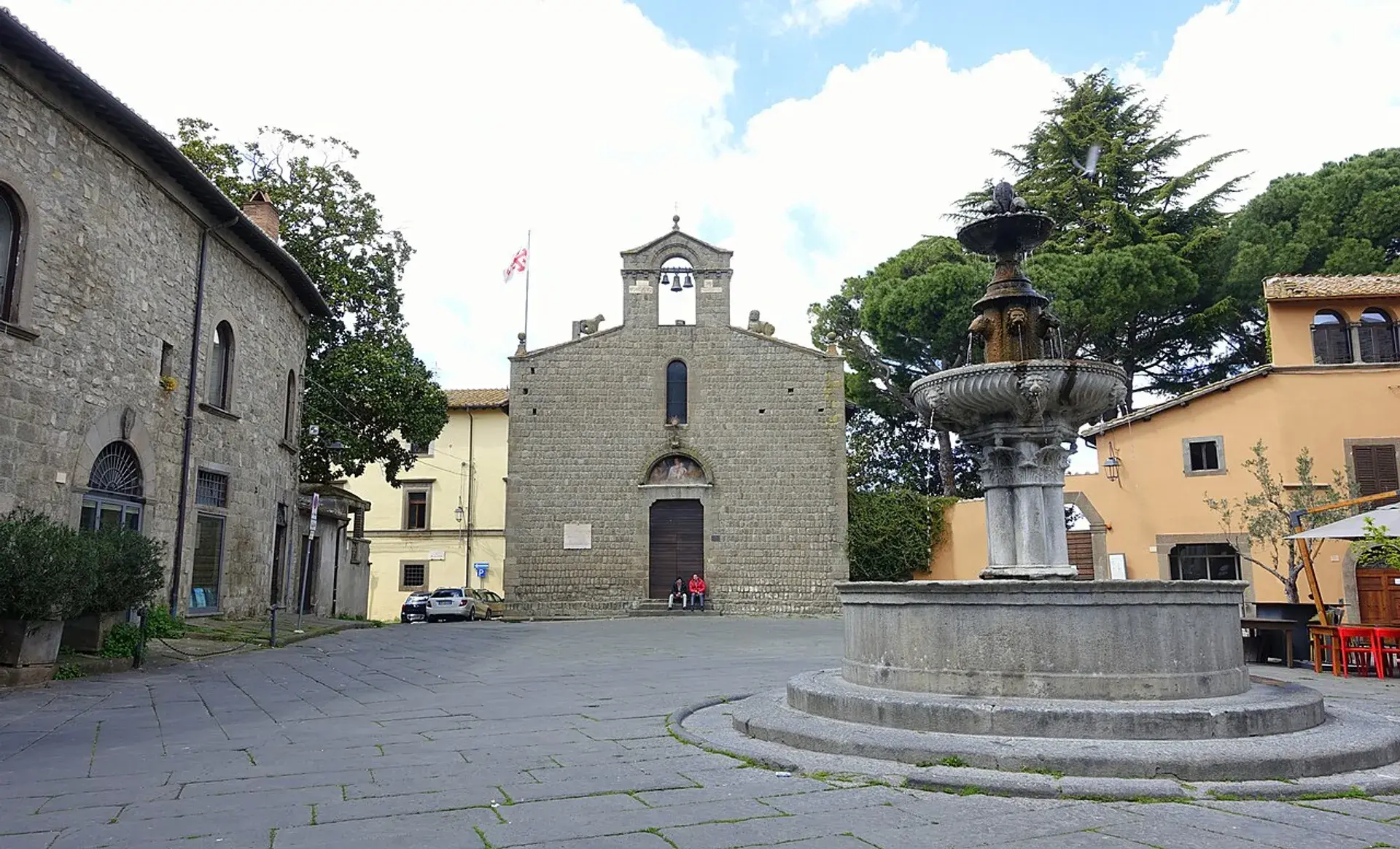
Piazza del Gesù, historically recorded as Piazza del Mercato or Piazza San Silvestro, is an irregular medieval square situated in the historic center of Viterbo. During the early Middle Ages, this open space served as the primary commercial and administrative heart of the city, hosting the central market alongside the original municipal seat, the Palazzo del Comune. Civic governance operated from the square until roughly 1270, when municipal authority shifted to the nearby Piazza del Plebiscito.
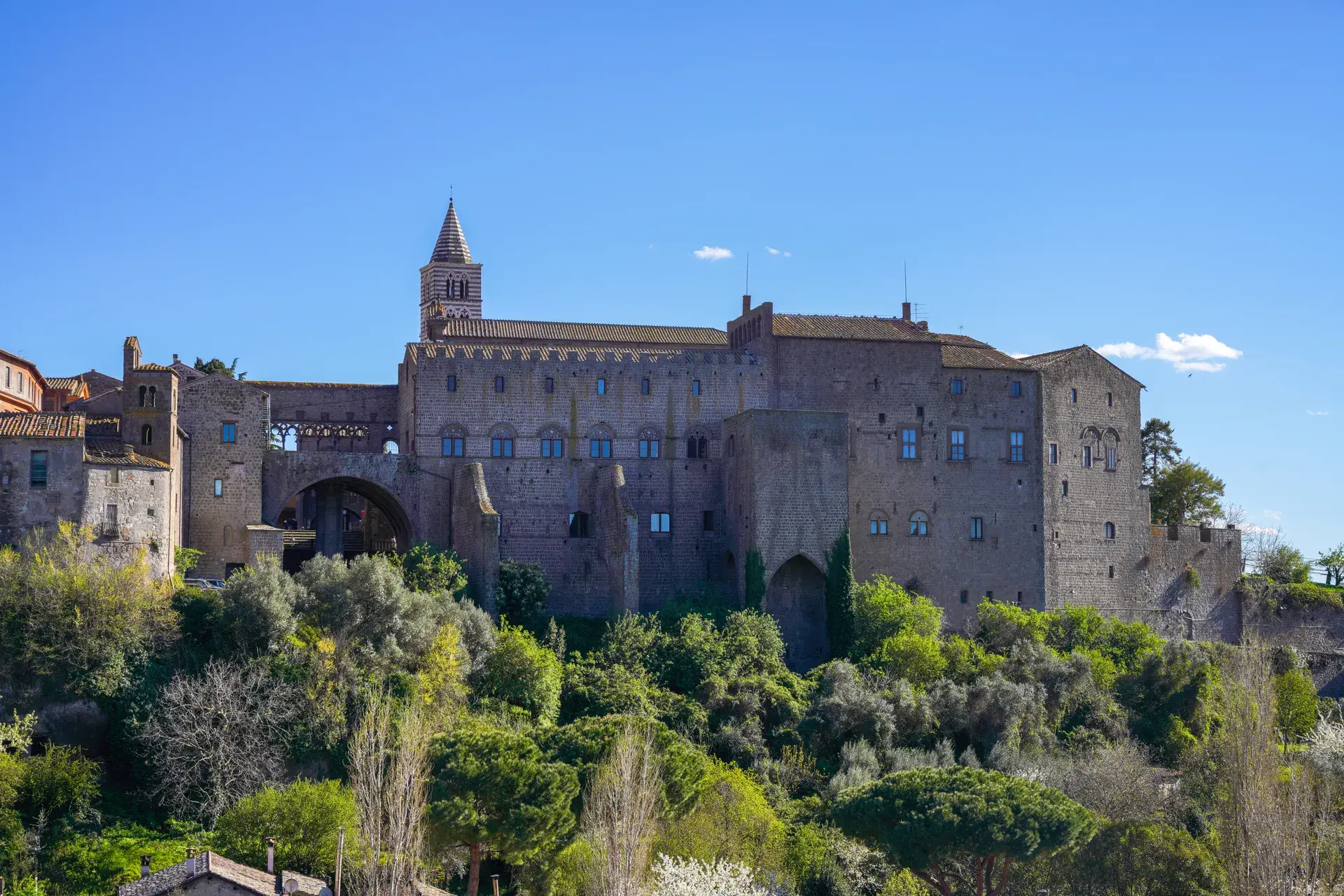
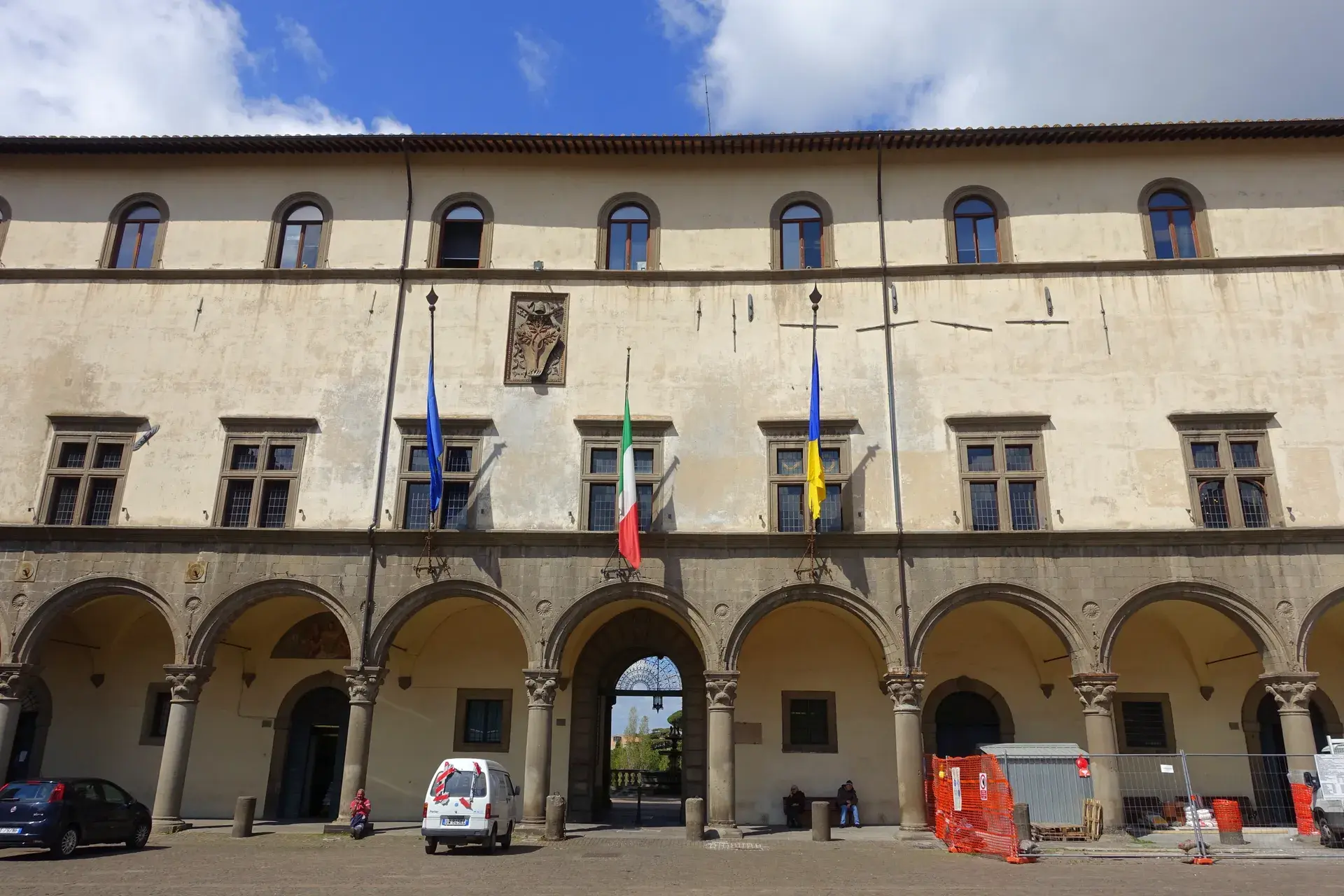
Today, the square functions as an essential transitional corridor within Viterbo's historic urban layout, linking Piazza del Plebiscito with the medieval San Pellegrino quarter and the papal complex on the Colle del Duomo.
Architectural Landmarks of the Square
The square's architectural character is defined by structures fashioned from local dark grey volcanic peperino stone. Dominating one side is the Chiesa di San Silvestro, also known as the Chiesa del Gesù. Documented as early as 1080, this small Romanesque church features a plain peperino facade topped by a bell gable (campanile a vela).
Opposite the church stands the Torre del Borgognone, a prominent 13th-century stone tower built over the footprint of the former town hall. According to local tradition, an incised footprint found at the base of the tower acted as the official unit of measurement for merchants trading goods in the market.
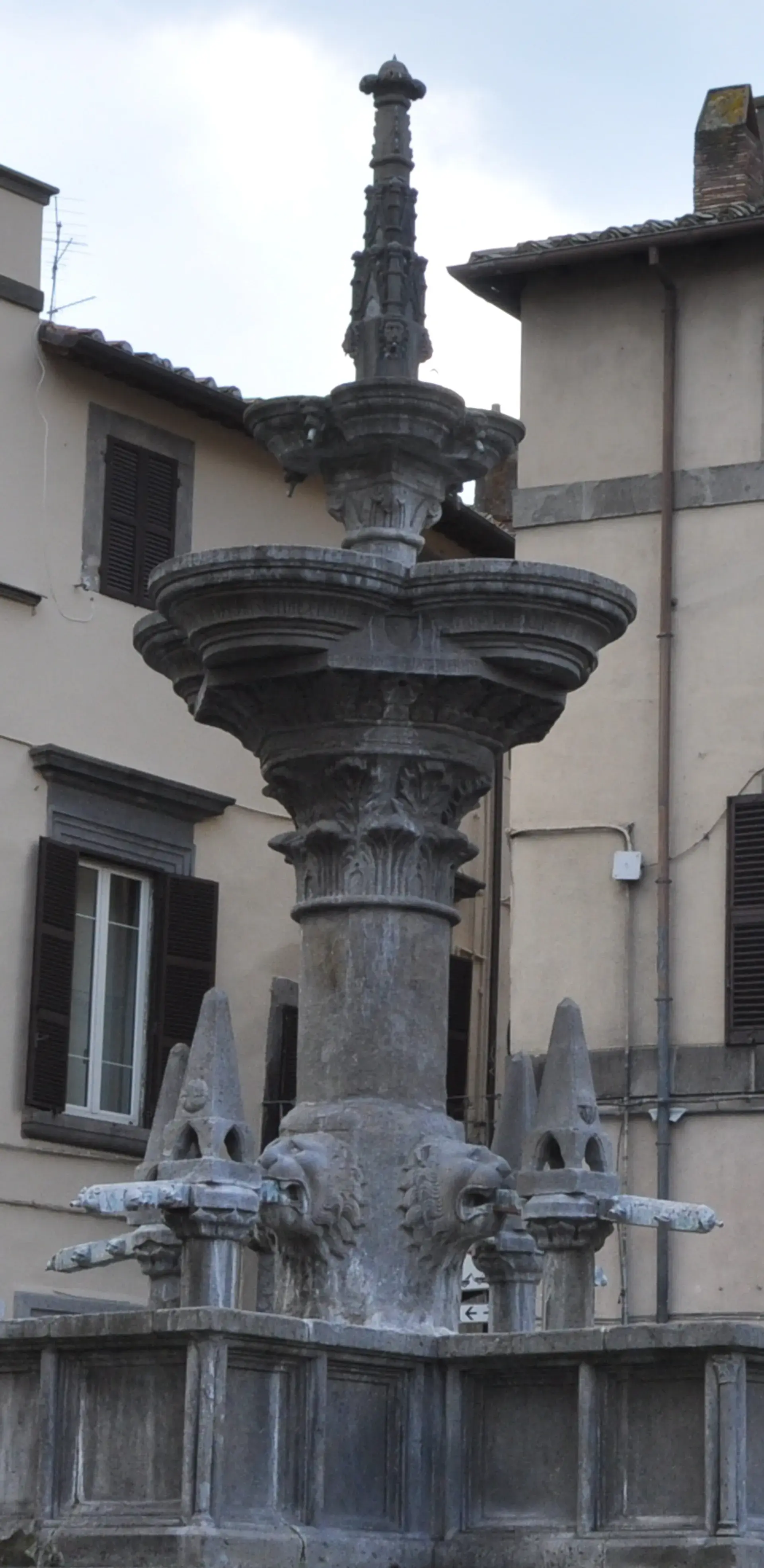
In the center of the square sits a multi-tiered stone fountain assembled in 1915 by Giovanni Pizzichetti. The fountain was constructed using architectural spolia salvaged from the former convent of San Domenico, introducing running water whose sound reverberates against the surrounding stone facades.
The 1271 Papal Conclave Assassination
Between 1268 and 1271, Viterbo hosted the longest papal conclave in Catholic history. The protracted political deadlock brought numerous European dignitaries to the city, including Prince Henry of Almain (Henry of Cornwall), nephew of King Henry III of England and cousin to Edward I.
On March 13, 1271, while attending Mass inside the Church of San Silvestro, Henry was ambushed by his cousins, Guy and Simon de Montfort the Younger. The attack was driven by blood vengeance for their father, Simon de Montfort, Earl of Leicester, who had been killed and mutilated at the Battle of Evesham in 1265. Henry sought refuge by clutching the altar during the elevation of the Host, but Guy de Montfort severed his hand and ran him through with a sword. Two clerics attempting to protect the prince were either killed or mortally wounded. The assassins dragged Henry's corpse onto the church steps before escaping unhindered into Tuscany.
Following the murder, the prince's body underwent the medieval preservation process known as mos teutonicus (excarnation). His flesh and viscera were buried locally in Viterbo, his skeletal remains were transported to Hailes Abbey in Gloucestershire, and his heart was encased in a reliquary in London.
Cultural Legacy and Dante's Inferno
The brazen sacrilege of an assassination committed inside a sanctuary during Mass resonated throughout Europe. Dante Alighieri was so impacted by the crime that he assigned Guy de Montfort to eternal punishment in Canto XII of the Inferno. In the poem, Montfort is positioned in the seventh circle of Hell, submerged up to his neck in the Phlegethon—a river of boiling blood—standing solitary and ostracized from other murderers.
Present-Day Atmosphere
Piazza del Gesù operates as a pedestrian public space framed by outdoor cafe and restaurant terraces. Daily market stalls maintain the square’s long-standing commercial tradition, while adjacent medieval buildings have been adapted into private housing and boutique guest lodging. The deconsecrated Church of San Silvestro, bearing a historical plaque detailing its past, hosts cultural events, exhibitions, and educational visits.
FAQ
What significant historical event took place in Piazza del Gesù?
On March 13, 1271, English Prince Henry of Almain was assassinated inside the square's Church of San Silvestro by his cousins Guy and Simon de Montfort the Younger during the longest papal conclave in Catholic history.
What is the origin of the fountain in Piazza del Gesù?
The multi-tiered stone fountain was assembled in 1915 by Giovanni Pizzichetti using architectural spolia taken from the convent of San Domenico.
Why is the assassination connected to Dante's Inferno?
Dante Alighieri was shocked by the sacrilegious murder at the altar and condemned the killer, Guy de Montfort, to the seventh circle of Hell in Canto XII of the Inferno, submerging him in the boiling river Phlegethon.
What was the medieval function of Piazza del Gesù?
Originally known as Piazza del Mercato, the square served as Viterbo's main public market and civic administrative seat (Palazzo del Comune) before municipal power moved to Piazza del Plebiscito around 1270.