St. Lawrence Cathedral: Viterbo's Papal Duomo
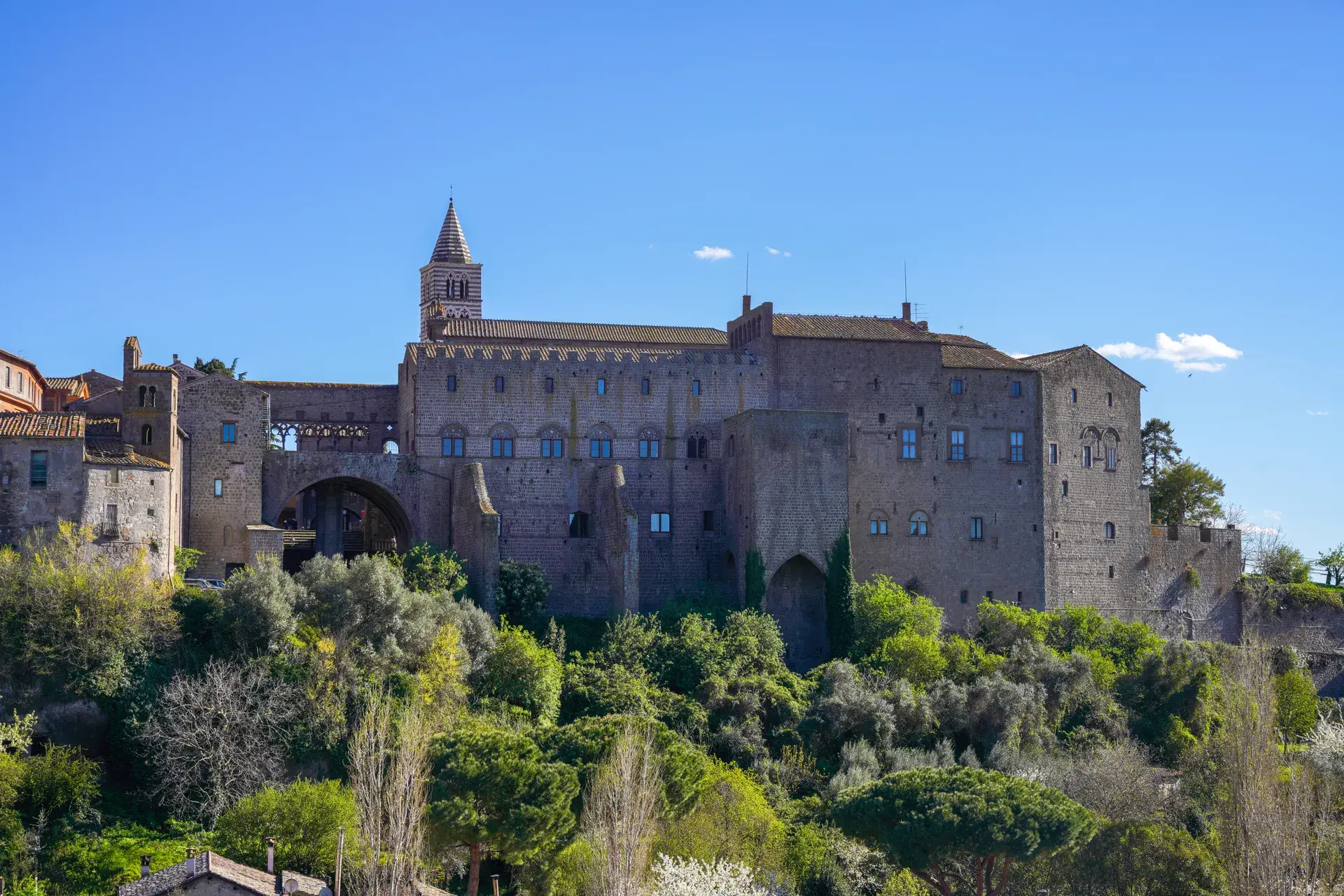
St. Lawrence Cathedral (Duomo di Viterbo) stands on the Colle del Duomo, the elevated acropolis overlooking the Faul and Urcionio valleys. Serving as the bishop's seat of the Diocese of Viterbo, the church occupies the historical heart of the city, which originated as the Etruscan settlement of Surrena and later developed as the Roman Castrum Viterbii. Dedicated to Saint Lawrence, the church was elevated to the rank of minor basilica by Pope Pius XII in 1940 and forms an integral part of the Polo Monumentale del Colle del Duomo alongside the adjacent Papal Palace.
Documented as an early Christian parish church as far back as 775 AD, the building began its transformation into a large Romanesque cathedral in 1192 under Pope Celestine III following the establishment of the diocese. While local lore suggests the site was once home to a pagan temple of Hercules, this remains an unverified tradition rather than an archaeologically confirmed fact.
Architectural Contrasts and the Exterior
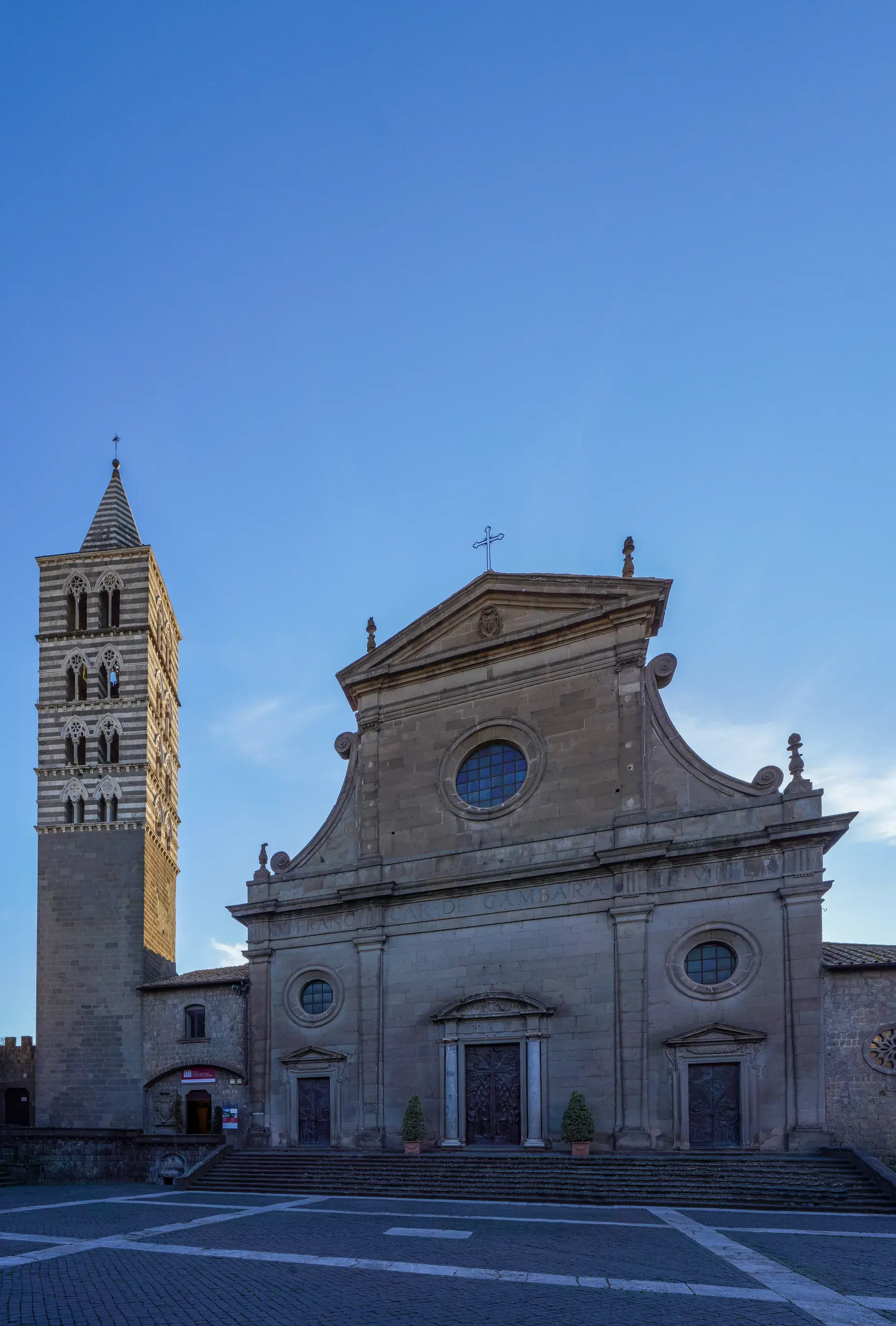
The exterior presents a vivid juxtaposition of distinct architectural eras. The main facade, completed around 1570 under Cardinal Giovan Francesco Gambara, exhibits restrained Renaissance ashlar stonework. This understated front stands directly beside a free-standing bell tower completed in 1369.
The campanile reflects a classic Tuscan Gothic design, constructed with alternating horizontal bands of dark local peperino stone and light-colored stone. This striped tower punctuates the skyline of Piazza San Lorenzo, creating a sharp aesthetic contrast with both the neighboring 13th-century Papal Palace and the classical facade.
The Romanesque Interior and Ancient Capitals
Inside, the cathedral preserves a traditional Romanesque basilical plan arranged across three naves. Two parallel rows of monolithic grey peperino stone columns divide the interior, casting long shadows across the central aisle. The floor retains a restored 12th-century Cosmatesque geometric mosaic pavement, crafted from polished stone arrangements.
Crowing the nave columns are finely carved 12th-century capitals. These stones display an unusual synthesis of sacred and secular imagery, combining traditional foliage with mythological and animal figures. Carvings of acanthus leaves and eagles appear alongside confronting dolphins and winged sphinxes, reflecting medieval allegorical traditions.
Center of Thirteenth-Century Papacy
Between 1257 and 1281, Viterbo functioned as the official seat of the Holy See, elevating St. Lawrence Cathedral to the epicenter of Catholic administration. The basilica hosted significant conclaves and high-level political gatherings, including Pope Clement IV’s public excommunication of Conradin of Hohenstaufen.
Several pontiffs are closely tied to the monument. Pope Alexander IV was interred here in 1261, though his burial site was lost during structural modifications in the 16th century and has never been recovered. The cathedral also preserves the tomb of Pope John XXI (Pietro Ispano), the only Portuguese pope in history. Renowned as a philosopher and logician, he was praised by Dante Alighieri in the Paradiso of the Divine Comedy. John XXI died in 1277 when the ceiling of his study in the adjacent palace collapsed; his memorial was relocated inside the cathedral seven times before being placed in the restored Chapel of San Filippo Neri.
Wartime Bombing and the Sealed Baroque Choir
Over the centuries, the cathedral experienced extensive stylistic updates. Cardinal Gambara added side chapels in 1570, while 17th-century bishops installed barrel vaults over the nave to mask the medieval wooden trusses and commissioned an expansive Baroque choir behind the altar. However, heavy Allied bombing on May 17, 1944, caused extensive damage to the nave.
Post-war reconstruction reversed many later modifications to highlight the earlier medieval church. Restorers removed the damaged 17th-century barrel vaulting to expose the original open-timber roof trusses and closed off eight side chapels. In the process, workers rebuilt the central Romanesque semicircular apse wall. This created an unusual architectural arrangement: the wall completely sealed off the intact 17th-century Baroque choir behind it. Preserved within this hidden chamber are Giuseppe Passeri's ceiling vault fresco of The Last Judgement and an altarpiece painted by Giovan Francesco Romanelli, accessible via guided visits organized by the Museo Colle del Duomo.
FAQ
Why is there a hidden Baroque choir behind the apse?
During post-World War II restorations following a 1944 bombing raid, workers reconstructed the original medieval Romanesque apse wall, which sealed off the undamaged 17th-century Baroque sanctuary containing Giuseppe Passeri's frescoes and a Giovan Francesco Romanelli altarpiece.
Which popes were buried at St. Lawrence Cathedral?
Pope Alexander IV was buried here in 1261, though his tomb was lost during 16th-century alterations. Pope John XXI, who died in 1277 when a ceiling in the adjacent palace collapsed, is also commemorated inside the cathedral.
What architectural styles are featured in the cathedral complex?
The cathedral combines a three-nave 12th-century Romanesque interior, a Renaissance facade built around 1570, and a detached 1369 Tuscan Gothic bell tower featuring horizontal stripes of dark peperino and light stone.