Ninenzaka: Kyoto's Historic and Preserved Slope
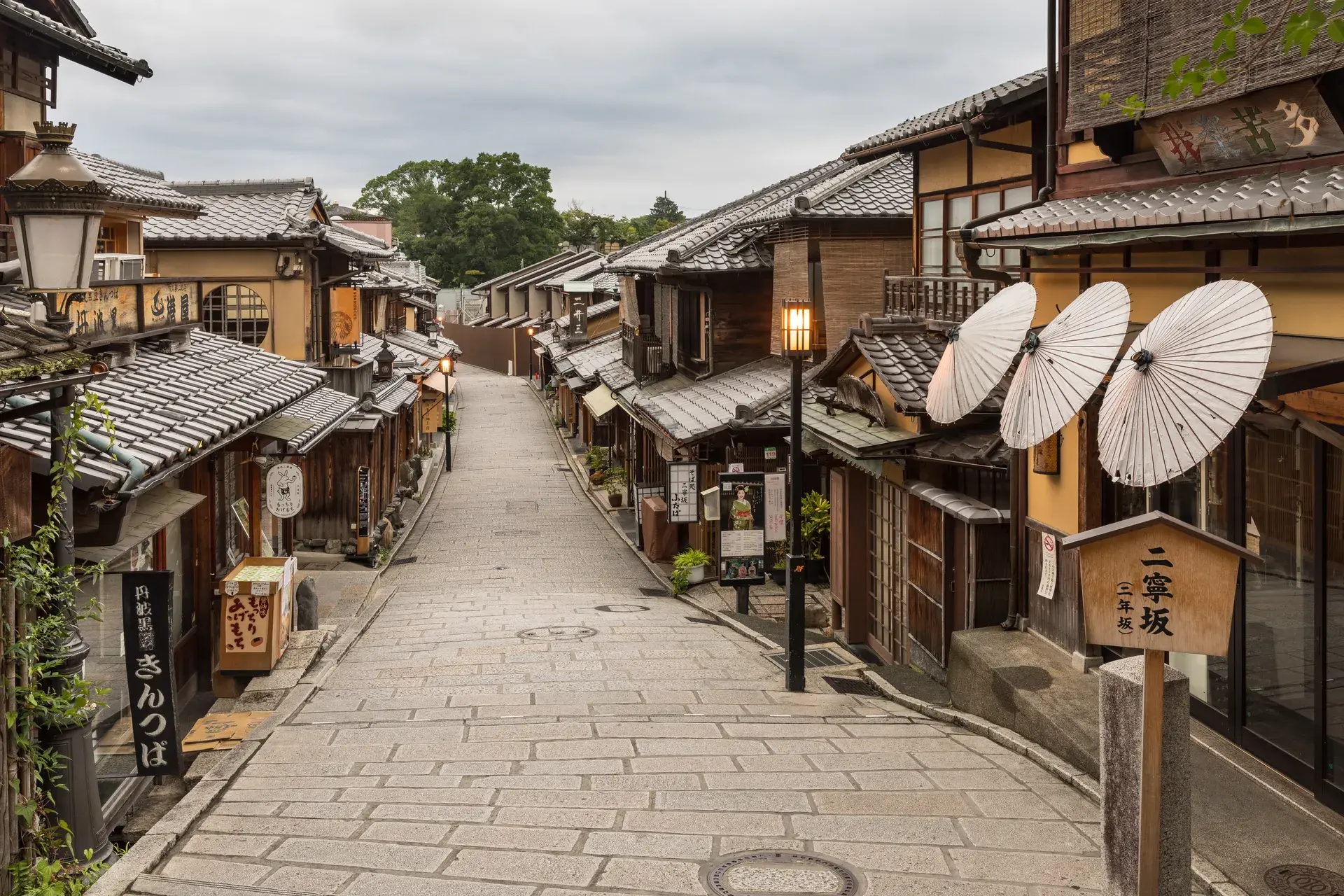
Ninenzaka, meaning "Two-Year Hill," is a picturesque 150-meter-long, stone-paved pedestrian path in Kyoto's renowned Higashiyama district. Lined with beautifully preserved traditional wooden machiya houses, the street offers an immersive experience of ancient Kyoto.
A Rich History Through the Ages
Ninenzaka's origins date back to the Heian period (794-1185 AD), established around 807 AD as a path for pilgrims traveling to the famous Kiyomizu-dera Temple. By the Edo period (1603-1868), the slope had transformed into a bustling commercial center for merchants and travelers, known for its teahouses, inns, and traditional crafts like Kiyomizu-yaki ceramics.
A significant historical figure connected to the area is Nene, wife of the warlord Toyotomi Hideyoshi. After founding the nearby Kodaiji Temple, she reportedly used this path to pray for safe childbirth at Kiyomizu-dera. Another notable resident was the painter and poet Yumeji Takehisa, who lived in the neighborhood for two years starting in 1917; a stone monument marks his former residence.
A Preserved Historical Landscape
In 1976, Ninenzaka and its surroundings were designated an "Important Preservation District for Groups of Traditional Buildings." This status ensures the maintenance of its historical integrity, which includes prohibiting motor vehicles, power poles, and overhead wires. The architectural style is defined by the traditional wooden machiya houses that line the slope.
While preservation efforts focus on maintaining the historic facades, many of these buildings have been converted from residences into commercial stores, highlighting a balance between conservation and tourism. The area's cinematic allure is also enhanced by its association with the film "Memoirs of a Geisha," as parts of the movie were filmed in or around the area.
Ninenzaka Today
Today, Ninenzaka functions as a "living museum." The traditional machiya houses now host a variety of establishments, including souvenir shops, artisan boutiques, sweet shops, and restaurants. Visitors can find the century-old confectionery shop "Kasagiya" and Yudofu Okutan Kiyomizu, recognized as Kyoto's oldest yudofu (tofu specialties) restaurant, founded in 1635.
A unique Starbucks Coffee also operates from a renovated, over 100-year-old Japanese townhouse, blending modern commerce with traditional sukiya architecture. The street is particularly bustling between 10 AM and 4 PM, especially during peak seasons. For a more tranquil experience, an evening stroll is recommended when the path is softly lit by gas lamps.
The Superstition of the Slope
A well-known local superstition adds a layer of intrigue to Ninenzaka. It is believed that anyone who stumbles and falls on the cobblestone steps will suffer two years of bad luck or may even face death within that time. This cautionary tale encourages visitors to watch their step as they navigate the historic incline.
FAQ
What is the meaning of Ninenzaka?
Ninenzaka means "Two-Year Hill." This name is linked to a local superstition about falling on its steps.
What is the superstition associated with Ninenzaka?
A local belief holds that if you fall on the steps of Ninenzaka, you will have bad luck for two years or even face death within that period.
Are there historic restaurants on Ninenzaka?
Yes, Yudofu Okutan Kiyomizu, founded in 1635, is located on Ninenzaka and is known as Kyoto's oldest yudofu (tofu specialty) restaurant.
Why does Ninenzaka look so traditional?
The area was designated a Preservation District in 1976. This status helps maintain its historical character by preserving the traditional wooden buildings and prohibiting modern infrastructure like overhead power lines and motor vehicles.