Greeks Gate (Bieb il-Griegi): Mdina's Historic Portal
The Working Entrance to Mdina
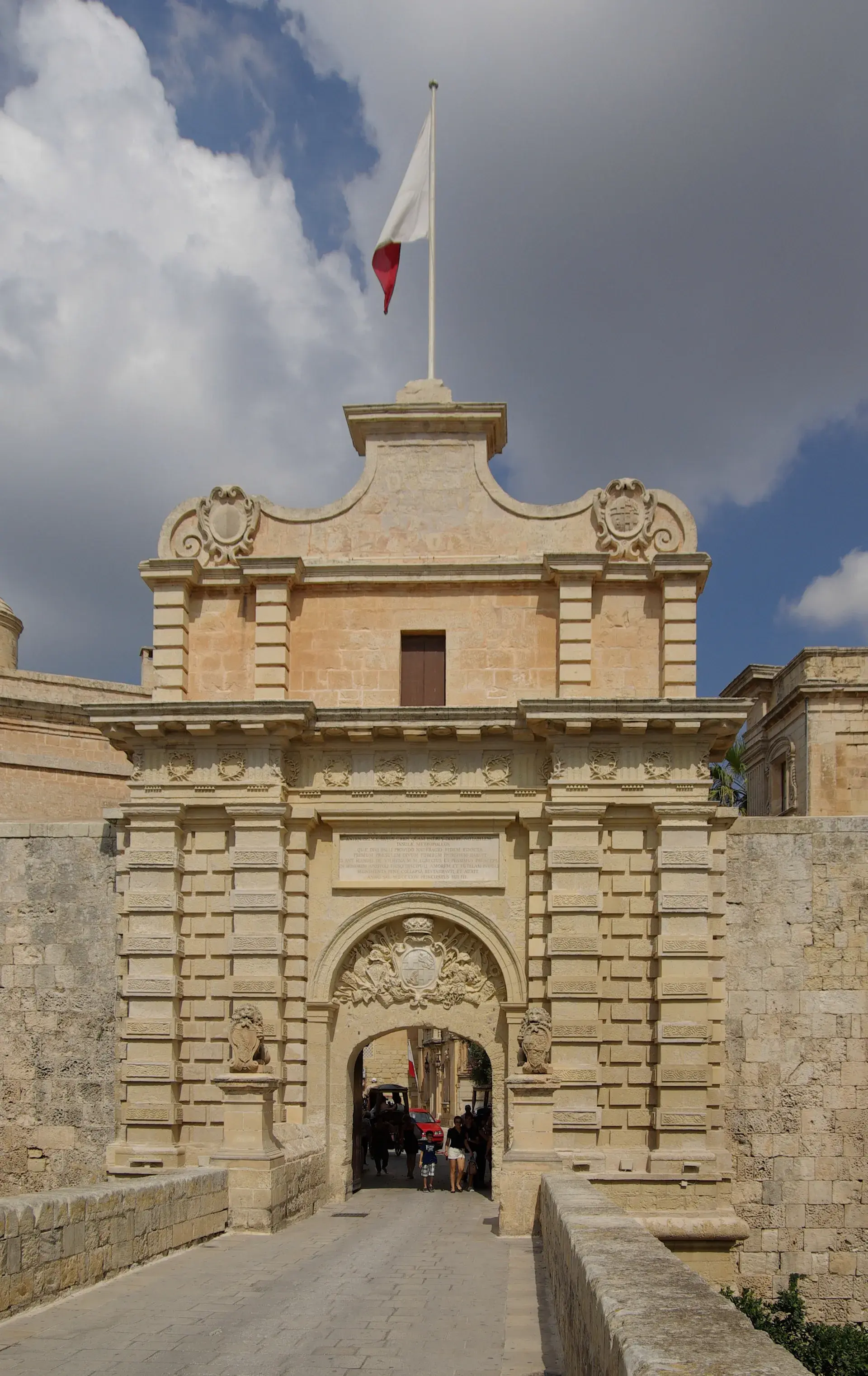
Greeks' Gate (Maltese: Bieb il-Griegi; Italian: Porta dei Greci) serves as the secondary historic gateway into the fortified city of Mdina. While the monumental Main Gate was reserved for formal state retinues and the nobility, Greeks' Gate functioned as the city's utilitarian entry point. Through this portal passed agricultural labourers, carters, and daily provisions arriving from the surrounding countryside and the neighbouring suburb of Rabat.
During the rule of the Order of Saint John, the gateway was bound to strict social hierarchies. Regulations dictated that Greeks' Gate was the sole portal through which enslaved people were legally permitted to enter the fortified city.
Medieval Fortifications and Baroque Engineering
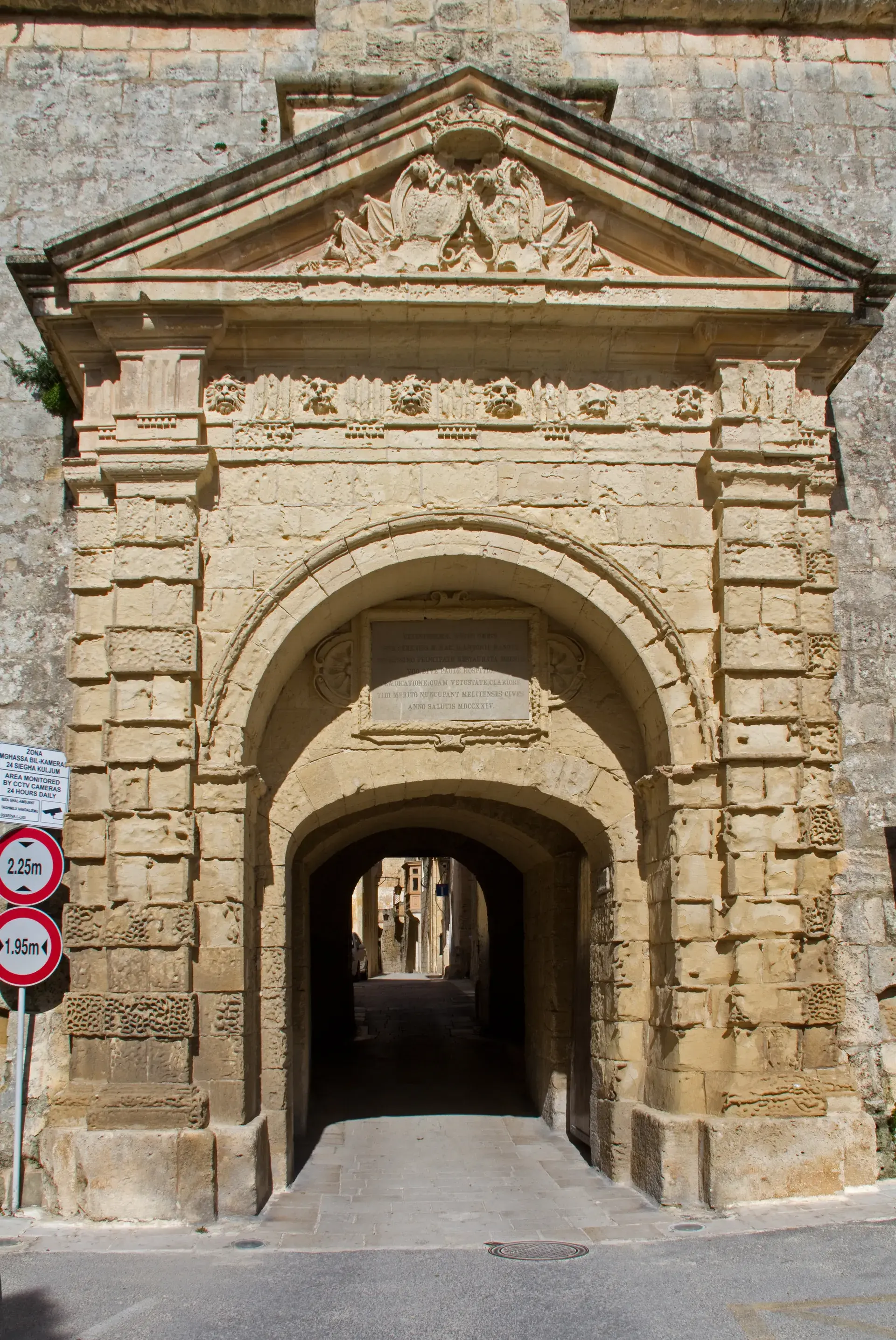
Unlike most of Mdina's medieval infrastructure, which was rebuilt in the Baroque style following the 1693 Sicily earthquake, Greeks' Gate remains the only visible survivor of the city's original portal system. The gateway features a two-part passage that reflects distinct eras of military engineering. The interior preserves a 12th- to 13th-century medieval pointed arch, whereas the outer portal was redesigned in 1724 by the French military engineer Charles François de Mondion under Grand Master António Manoel de Vilhena.
Rather than tearing down the earlier medieval fortifications, Mondion integrated the existing fabric into the 18th-century bastioned land front. The original medieval D-shaped wall tower and curtain wall were encased whole within thicker limestone ramparts. Mondion embellished the outer curtain with coats of arms and a Latin inscription while preserving the inner medieval route. Beneath the threshold, an underground chamber still holds the mechanics of a former counterbalanced wooden drawbridge that once spanned the drop ditch.
Masonry and Historic Vault Paintings
The architectural transition through the gate moves from the open Mdina ditch into a low, shadowy, barrel-vaulted stone passage. The lower wall courses contain weathered, irregular medieval ashlar blocks interspersed with reused Roman-era stones, which meet the uniform limestone joints of Mondion's 18th-century vault above.
Mounted inside the upper vault passage are preserved religious artworks. These include an early-modern depiction of the Virgin and Child with St. Anne and the Trinity, as well as a late-Mannerist painting illustrating the Baptism of Governor Publius by the Apostle Paul, accompanied by St. Luke. A longstanding local folk tradition associated with these murals recalls an ancient custom of welcoming outsiders through the gateway with shared bread.
Origins and Preservation
The gateway takes its name from a Greek merchant community that settled in the extramural area. Historical accounts frequently link this community to Rhodian refugees who accompanied the Knights Hospitaller to Malta after their departure from Rhodes in 1522. Archival records also identify the portal as the entry nearest to Mdina's historic Jewish quarter.
Today, Greeks' Gate is protected as a Grade 1 national monument and listed on the National Inventory of the Cultural Property of the Maltese Islands (NICPMI 01460). Following a conservation project carried out by the Restoration Directorate in 2016, its original timber doors, vaulted masonry, and overhead murals remain preserved in situ, providing a quiet pedestrian connection between the Mdina ditch and Piazza dei Greci.
FAQ
Why is the portal called Greeks' Gate?
The name stems from a historical Greek merchant community settled near the entrance, often linked to Rhodians who accompanied the Knights Hospitaller to Malta following their 1522 departure from Rhodes. Early records also identify it as the gate nearest to the medieval Jewish quarter.
How did Greeks' Gate differ in function from Mdina's Main Gate?
While the ceremonial Main Gate was reserved for nobility and official state retinues, Greeks' Gate operated as a working entrance for agricultural labourers, carters, and provisions. Under the Order of Saint John, it was also the only gate through which enslaved workers were legally allowed to enter Mdina.
What architectural styles can be seen at Greeks' Gate?
The gateway features a composite structure comprising a 12th- to 13th-century medieval pointed arch in the interior and a Baroque exterior portal built in 1724 by French military engineer Charles François de Mondion. The stonework includes reused Roman blocks in the lower courses beneath 18th-century limestone vaulting.