Vilhena Palace: Mdina's Baroque Masterpiece
French Baroque Design at Mdina's Gate
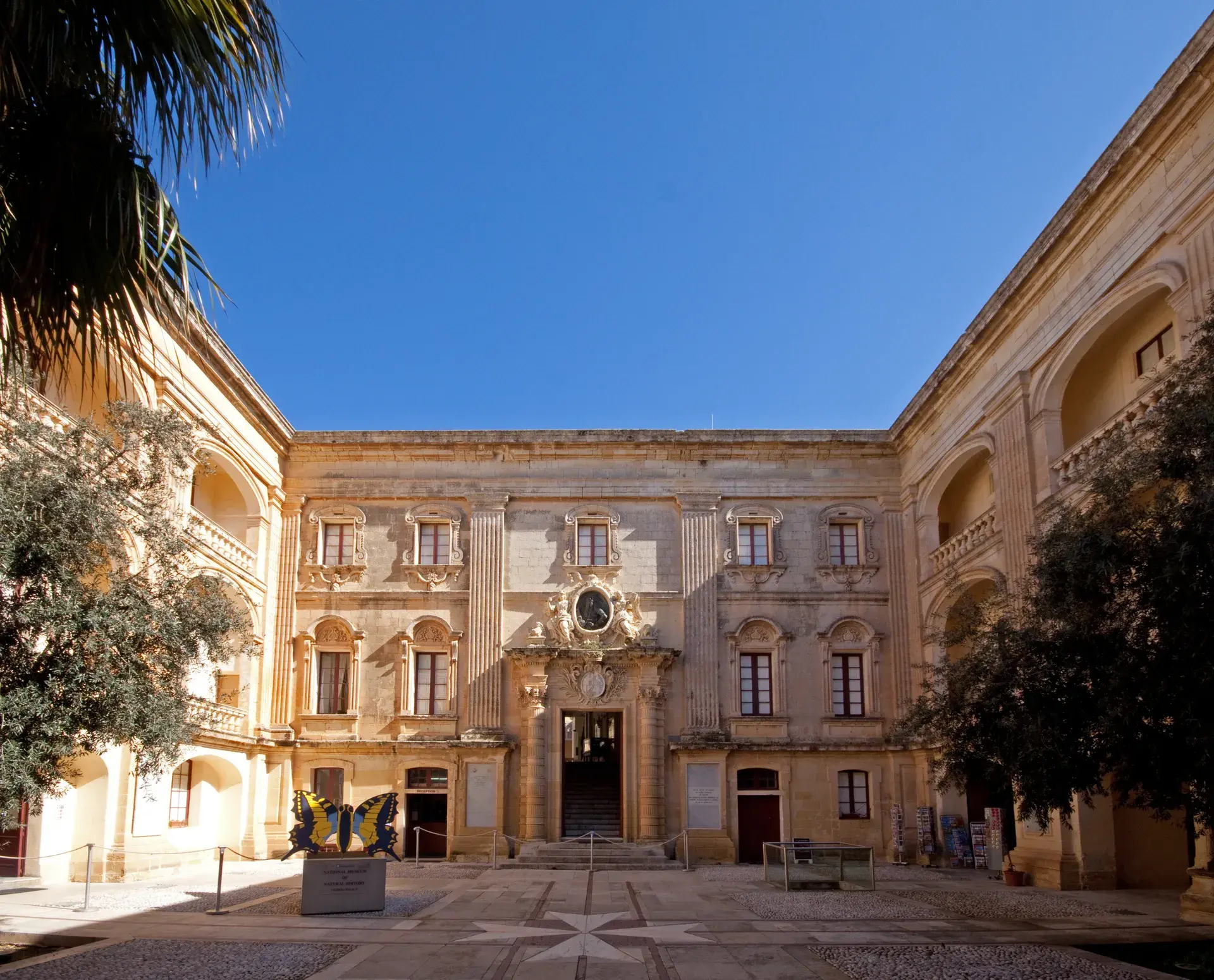
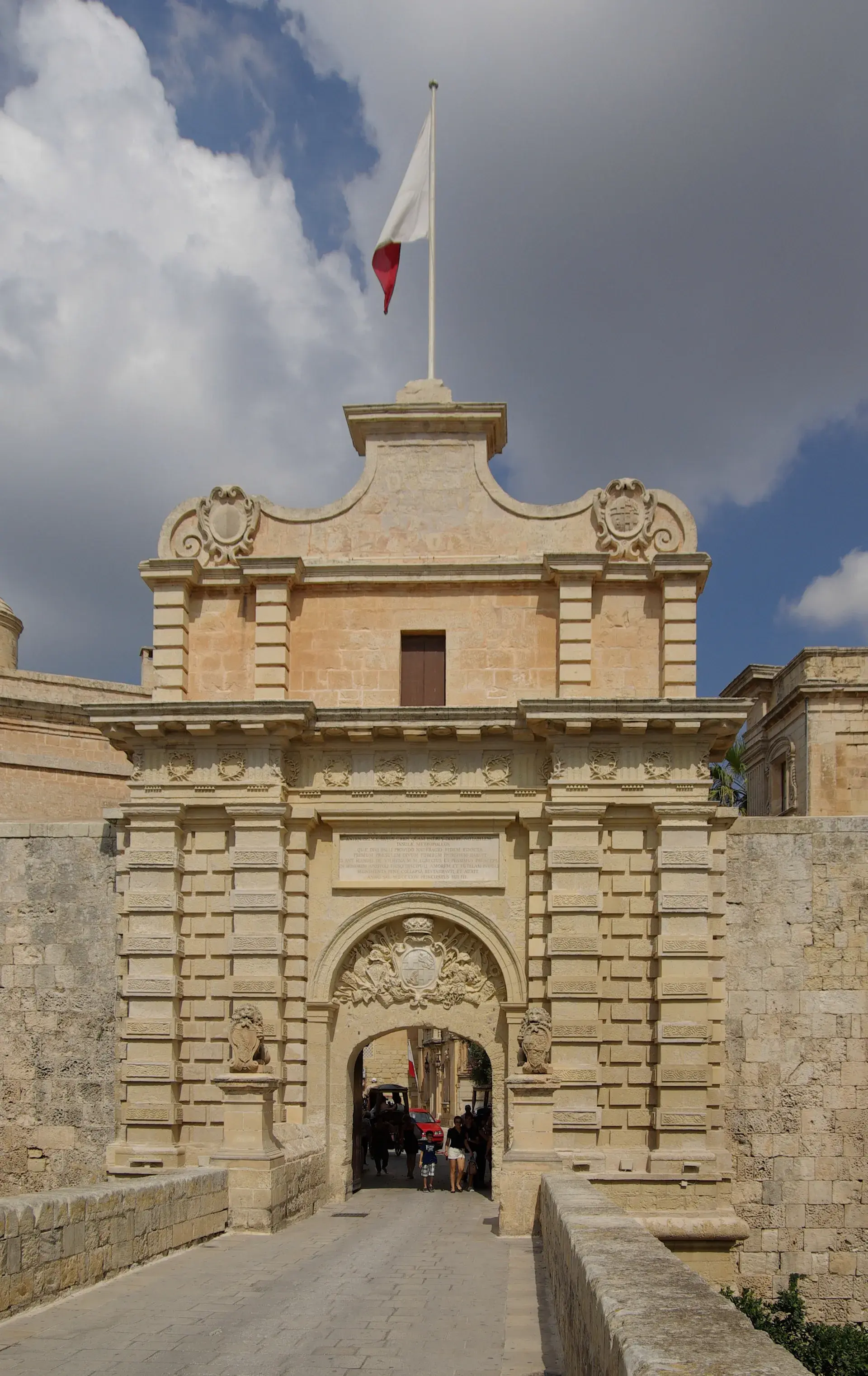
Vilhena Palace, also known as Palazzo Vilhena or the Magisterial Palace, stands immediately inside the Main Gate of Mdina on Saint Publius Square. Commissioned around 1724 and constructed between 1726 and 1728, the palace was built for António Manoel de Vilhena, the Portuguese Grand Master of the Order of Saint John.
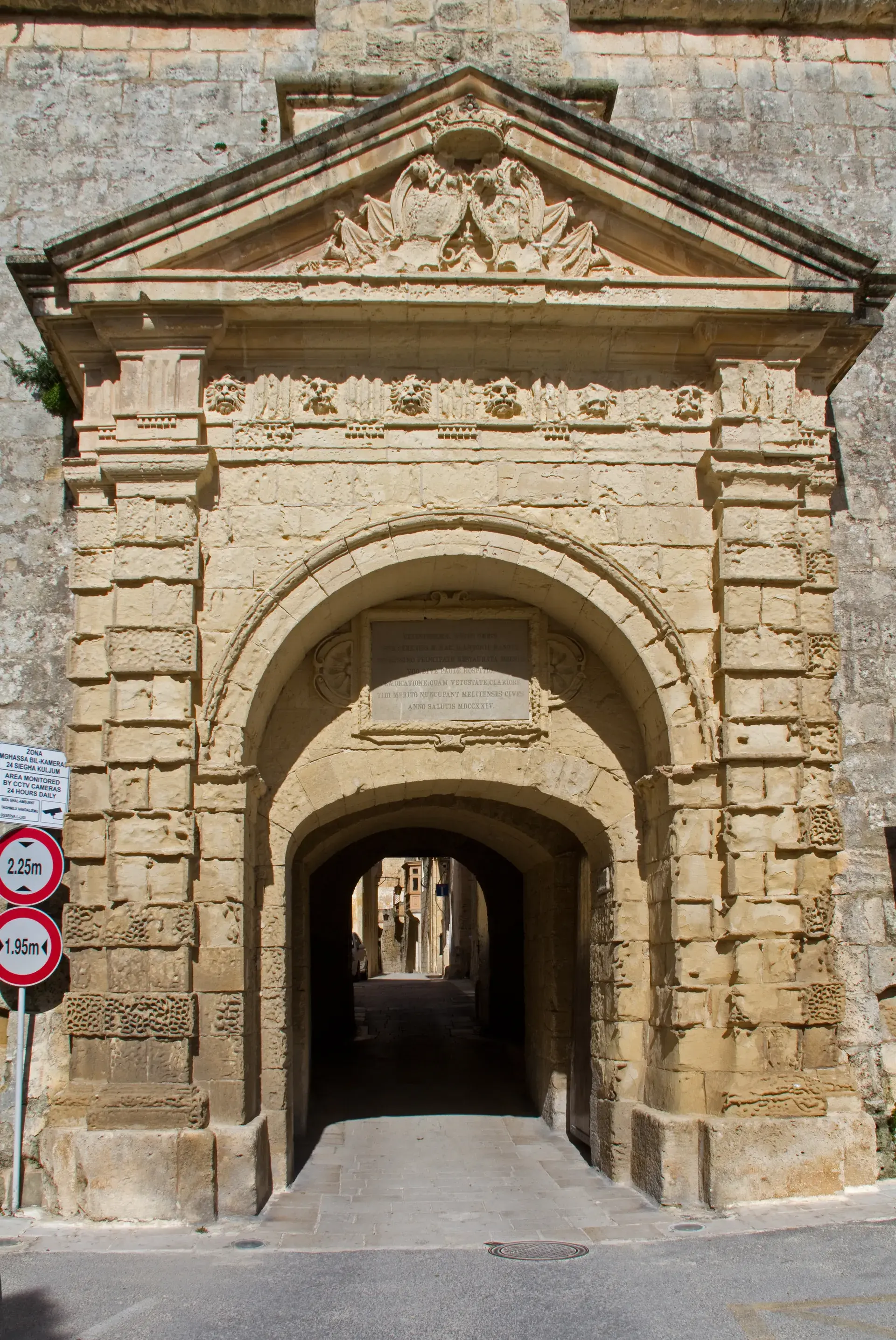
The complex was designed by French military engineer and architect Charles François de Mondion. In contrast to the Italian Baroque style prevalent in contemporary Valletta, Mondion introduced a Parisian French Baroque aesthetic. The palace features a grand facade with an entrance archway surmounted by Vilhena's coat of arms, leading into an enclosed courtyard flanked by classical pilasters and globigerina limestone walls.
From Medieval Council to Magisterial Authority
The construction of the palace was part of a broader reconstruction initiative following the 1693 Sicily earthquake, which caused extensive damage to Mdina. Grand Master Vilhena sought to revitalize the ancient fortified settlement into a Baroque center.
The palace was erected directly over the site of the medieval Università, the former administrative seat of Mdina's municipal council. Demolishing the native council's headquarters and substituting it with an imposing magisterial residence served as a deliberate assertion of the Order's sovereign authority over the local Maltese nobility. The building served both as the Grand Master’s official residence in the old capital and as the seat of the law courts, known as the Palazzo Pretorio.
British Medical Facilities and Museum Conversion
During the 19th and 20th centuries under British administration, the palace was repeatedly repurposed to serve as a medical facility. It functioned as a temporary cholera hospital in 1837 and was later converted into a British military sanatorium in 1860. It subsequently operated as the Connaught Hospital, an institution treating tuberculosis patients, until closing in January 1956.
After sustaining bomb damage during World War II, the property underwent structural repairs. On June 22, 1973, the complex was officially reopened to the public as Malta's National Museum of Natural History. Managed by Heritage Malta, the museum displays national collections covering geology, paleontology, and biology, featuring minerals, fossils, flora, fauna, and marine life specimens. Its state rooms and inner courtyard also host temporary exhibitions and cultural events.
Architectural Curiosities and the 2004 Heist
Remnants of the building's legal history remain integrated into its foundations, where subterranean detention cells from the old law courts are still preserved. On the exterior side facade facing toward the Xara Palace, an allegorical stone relief depicts Lady Justice without the traditional blindfold, sculpted to represent local judicial power as all-seeing and all-knowing.
Palazzo Vilhena was also the site of a high-profile criminal investigation. On May 18, 2004, an Apollo 17 Goodwill Moon rock, gifted to the people of Malta by the United States and valued at approximately $5 million, was stolen from its display case inside the museum. The artifact has never been recovered.
FAQ
What is Vilhena Palace used for today?
The palace houses Malta's National Museum of Natural History, operated by Heritage Malta, which showcases biological and geological exhibits including fossils, minerals, and regional wildlife specimens.
Who designed and commissioned Vilhena Palace?
The palace was commissioned around 1724 by Grand Master António Manoel de Vilhena and designed in a French Baroque style by the French architect and military engineer Charles François de Mondion.
What significant theft occurred at the palace?
On May 18, 2004, an Apollo 17 Goodwill Moon rock valued at roughly $5 million was stolen from a display case inside the palace museum and remains unrecovered.