Mdina Gate: History of Malta's Baroque City Portal
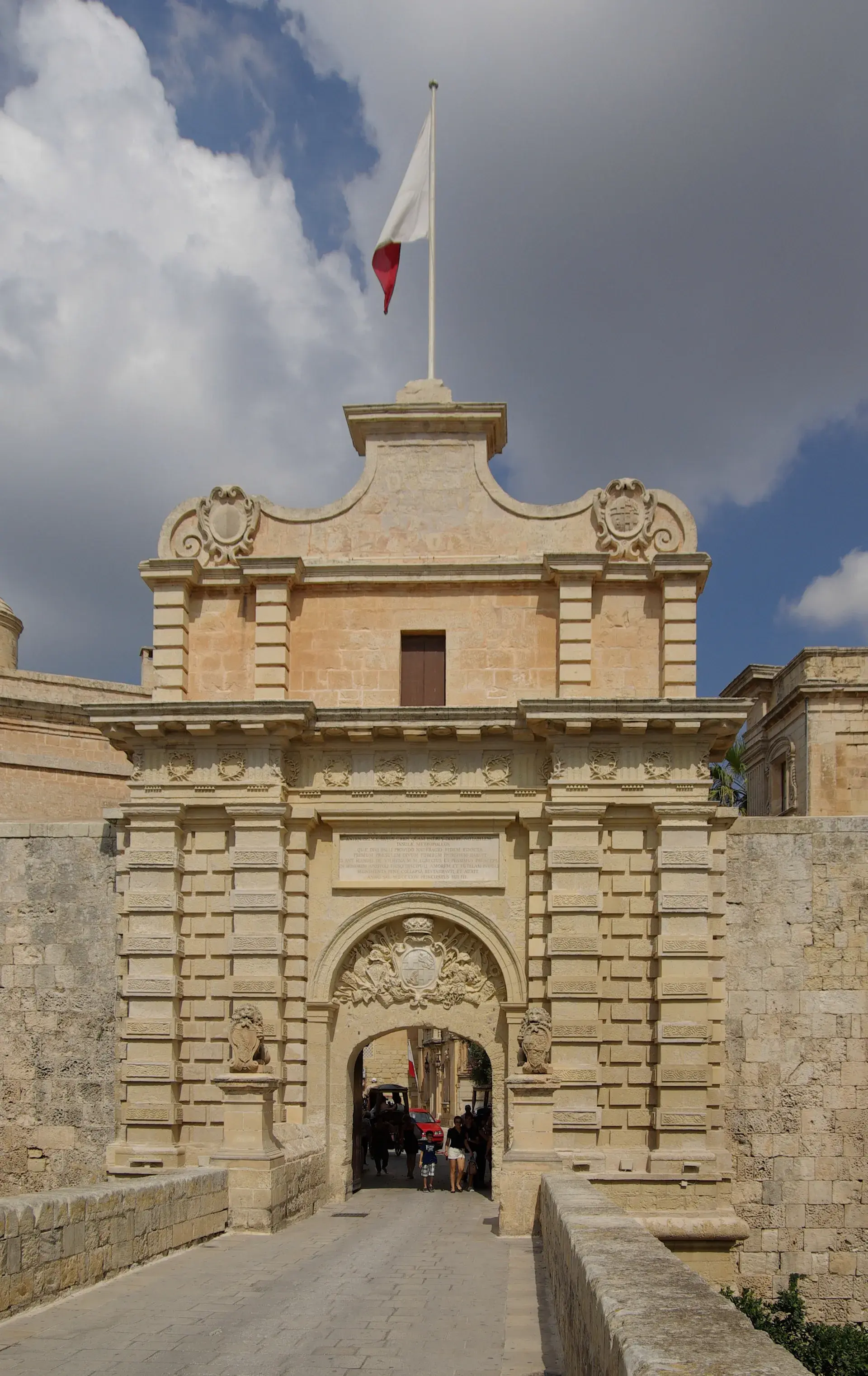
Mdina Gate, also known as the Vilhena Gate or Main Gate, serves as the primary entrance to Malta's historic fortified citadel of Mdina. Spanning a deep dry moat that separates the old capital from neighbouring Rabat and Howard Gardens, the monumental gateway marks the physical and architectural boundary between modern roadways and the pedestrianised streets of the historic citadel.
Built in 1724, the portal is listed on the 1925 Antiquities List and is scheduled as a Grade 1 national monument. It stands as one of three surviving entrances to the city, alongside the older medieval Greeks Gate and the 19th-century Għarreqin Gate.
Origins and Post-Earthquake Reconstruction
During medieval times, entry into Mdina required passing through a fortified sequence of three consecutive gateways separated by courtyards, guarded by the defensive tower known as the Turri Mastra. In 1693, the Sicily earthquake severely compromised Mdina's medieval fortifications and surrounding structures. This prompted Grand Master António Manoel de Vilhena of the Order of Saint John to initiate an extensive modernization of the city's perimeter.
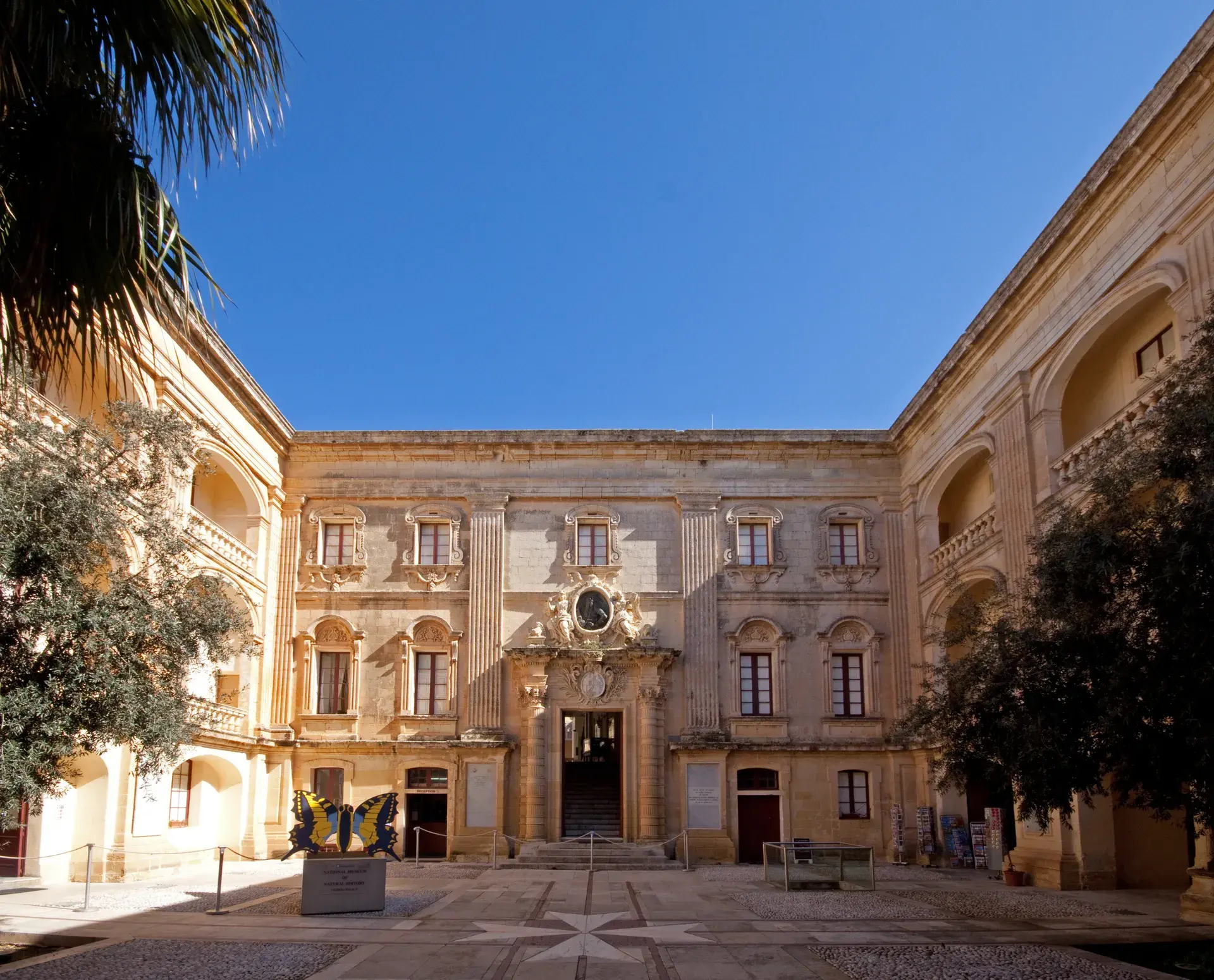
French military architect Charles François de Mondion oversaw the reconstruction. Mondion relocated the primary entrance several metres to the left of the former medieval gate, which was subsequently walled up. This shift cleared essential space for the adjacent Vilhena Palace. The original approach featured an arched stone bridge leading to a wooden à la Vauban drawbridge, which was later replaced by a permanent stone span.
Architectural Features and Heraldry
Mdina Gate was designed in the High Baroque style and executed in local globigerina limestone, a material that reflects sunlight with a distinctive golden hue. The exterior portal is framed by double pilasters and adorned with carved trophies of arms, heraldic shields bearing the arms of Grand Master Vilhena and the city of Mdina, and a Latin dedicatory inscription dating to 1724.
Pedestrians cross a stone bridge over the sunken dry moat, which has since been landscaped into public gardens. The parapets of the bridge are guarded by stone statues of heraldic lions, leading visitors toward the gate's thick central arch.
The Interior Façade and Sensory Transition
Passing beneath the deep masonry of the gatehouse creates an acoustic choke-point. The stone passage dampens the vehicular sound from Rabat, opening immediately into the echoing quiet of Mdina's stone lanes, where motorized traffic is strictly restricted to residents and permit holders.
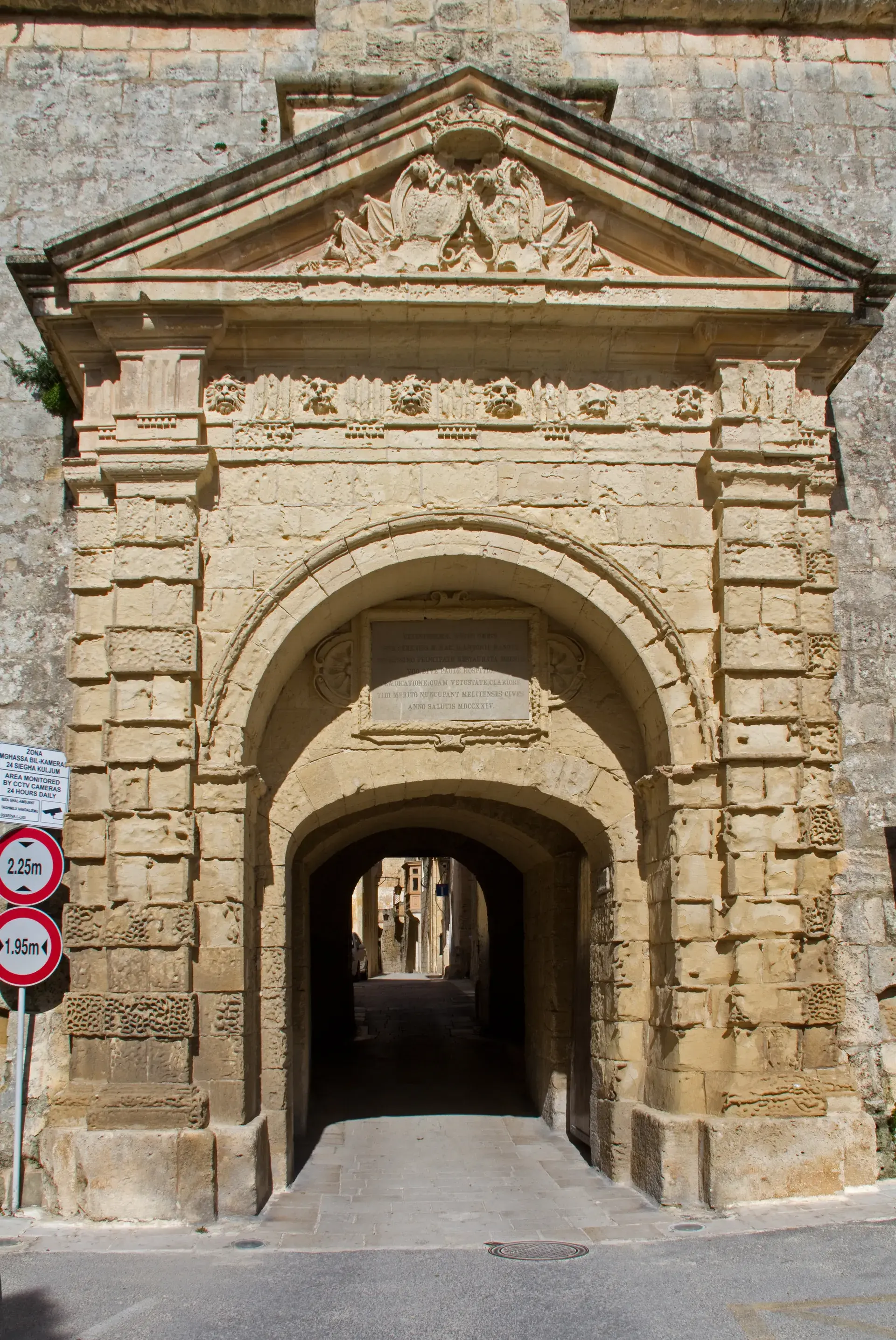
Upon entering the city, the rear interior façade of the gate reveals carved relief portraits of Malta's three patron saints: St. Publius, St. Agatha, and St. Paul. Each figure is depicted holding a palm of martyrdom as they overlook travelers passing through the portal.
Pop Culture and Modern Heritage
In addition to its architectural importance, Mdina Gate holds a notable place in Maltese currency history and popular culture. Before Malta adopted the euro in 2008, the gate and the adjacent Torre dello Standardo appeared on the Maltese five-lira banknote.
The gate also gained international visibility as a backdrop in television and film, notably appearing as the gateway to King's Landing in Season 1, Episode 3 of Game of Thrones. Today, the monument remains an open, accessible pedestrian thoroughfare, welcoming the public free of charge at all hours.
FAQ
Who designed Mdina Gate and when was it constructed?
Mdina Gate was designed in the High Baroque style by French military architect Charles François de Mondion and completed in 1724 under Grand Master António Manoel de Vilhena.
What carvings appear on the rear façade of the gatehouse?
The interior rear façade features relief carvings of Malta's three patron saints—St. Publius, St. Agatha, and St. Paul—each holding a palm of martyrdom.
Was Mdina Gate used as a filming location?
Yes, Mdina Gate and its stone bridge were used as a filming location for the entrance to King's Landing in Season 1, Episode 3 of the television series Game of Thrones.
Is an admission ticket required to pass through Mdina Gate?
No, Mdina Gate is an open public monument and pedestrian bridge accessible free of charge at all hours.