St Paul's Collegiate Church & Grotto in Rabat
Baroque Design and the Unified Facade
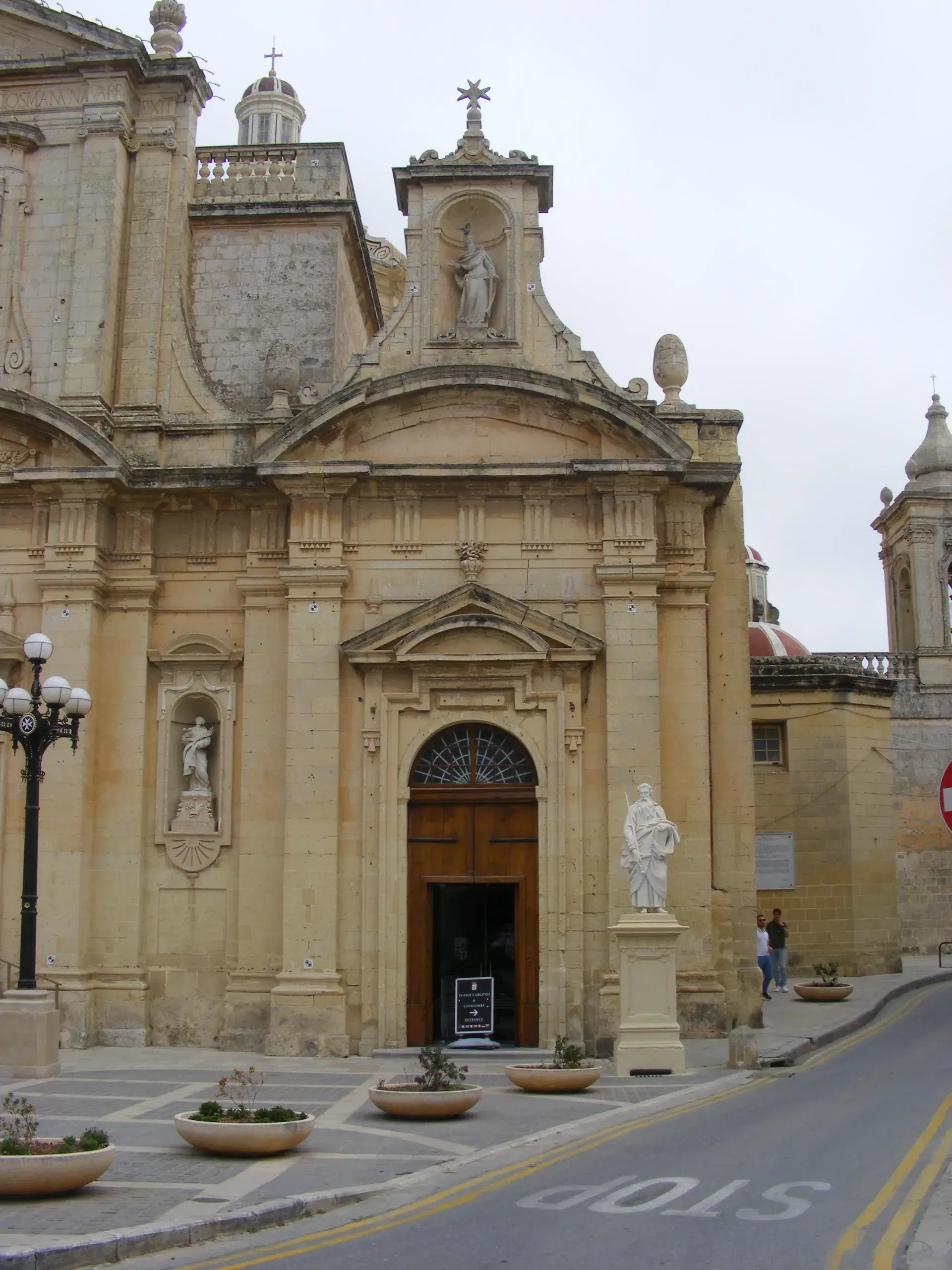
The Collegiate and Proto-Parish Church of Saint Paul (Il-Bażilika Kolleġġjata u Proto-Parrokkjali ta' San Pawl) is a monument of Maltese High Baroque architecture located in Rabat, Malta. Built from native Globigerina limestone, the current structure was commissioned to replace a smaller church completed in 1578. The noblewoman Guzmana Navarra funded the monumental project, which began construction in 1653 under the direction of Italian military engineer and architect Francesco Buonamici. Maltese architect Lorenzo Gafà subsequently took over the work, bringing the building to substantial completion in 1683. The church was officially consecrated on September 21, 1726, and later elevated to the status of a Minor Basilica in 2020.
One of the most notable architectural achievements of Buonamici and Gafà is the unified exterior facade. To preserve visual balance across Pjazza San Pawl, the architects integrated three nearly identical stone portals. Rather than opening into a single hall, these doors grant dignified access to three individual sacred spaces: the main parish church, the interconnected Church of Saint Publius (rebuilt in 1692 and 1726), and the direct descent into the subterranean grottos and cemetery.
Saint Paul's Grotto and Ancient Origins
The basilica stands on land once occupied by ancient Melite, the Roman city that encompassed both modern Mdina and Rabat. In 1336, Bishop Hilarius documented an ecclesia Sancti Pauli de crypta on this ground, recording the existence of an ancient cemetery and an adjacent Roman defensive ditch. In the early 17th century, Grand Master Alof de Wignacourt established an administrative collegiate of the Order of Saint John at the site, cementing the Knights Hospitaller's stewardship of the shrine.
According to Christian tradition, Saint Paul the Apostle lived, prayed, and preached inside the natural rock cave beneath the church for three months following his shipwreck on Malta in 60 AD. In 1748, Grand Master Manuel Pinto da Fonseca presented a white marble statue of Saint Paul that remains the centerpiece of the cavern. In modern times, the grotto has served as a major pilgrimage destination, receiving visits from Pope John Paul II in 1990 and 2001, Pope Benedict XVI in 2010, and Pope Francis in 2022.
Subterranean Catacombs and Wartime Shelters
The architectural complex extends far beneath the street level of Rabat, linking the Pauline sanctuary to extensive rock-hewn chambers. Entering the site involves a marked sensory contrast, moving from the sun-bleached stone parvis of Pjazza San Pawl into a high-ceilinged, gilded Baroque nave, and then descending into the cool, shadowed dampness of the subterranean bedrock.
Beneath the basilica, visitors can access paleochristian catacombs that preserve early burial chambers carved directly into the rock. Connected to these ancient corridors is an extensive underground network of World War II air-raid shelters, excavated to protect the local population during aerial bombardments.
Parish Life and Extramural Setting
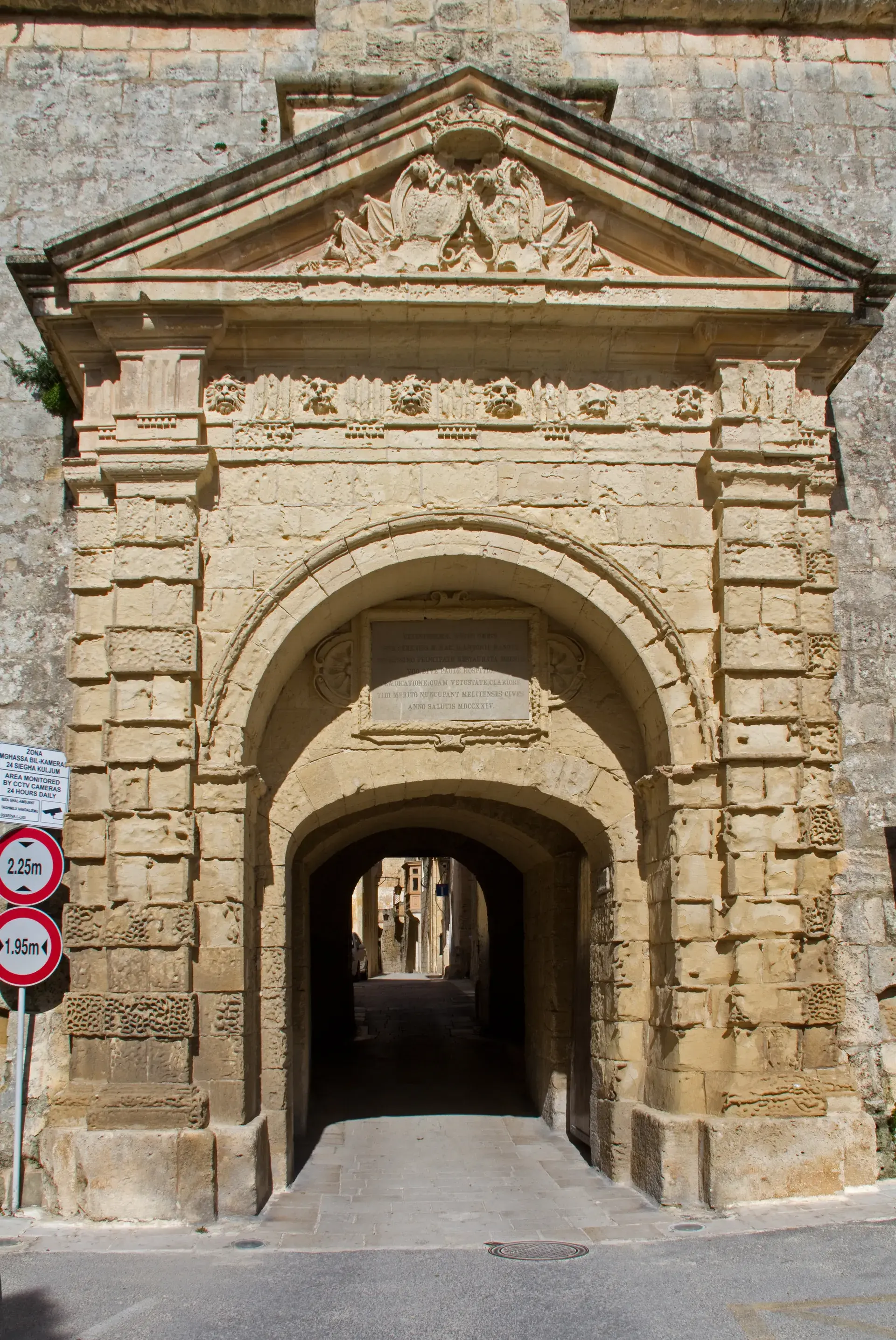
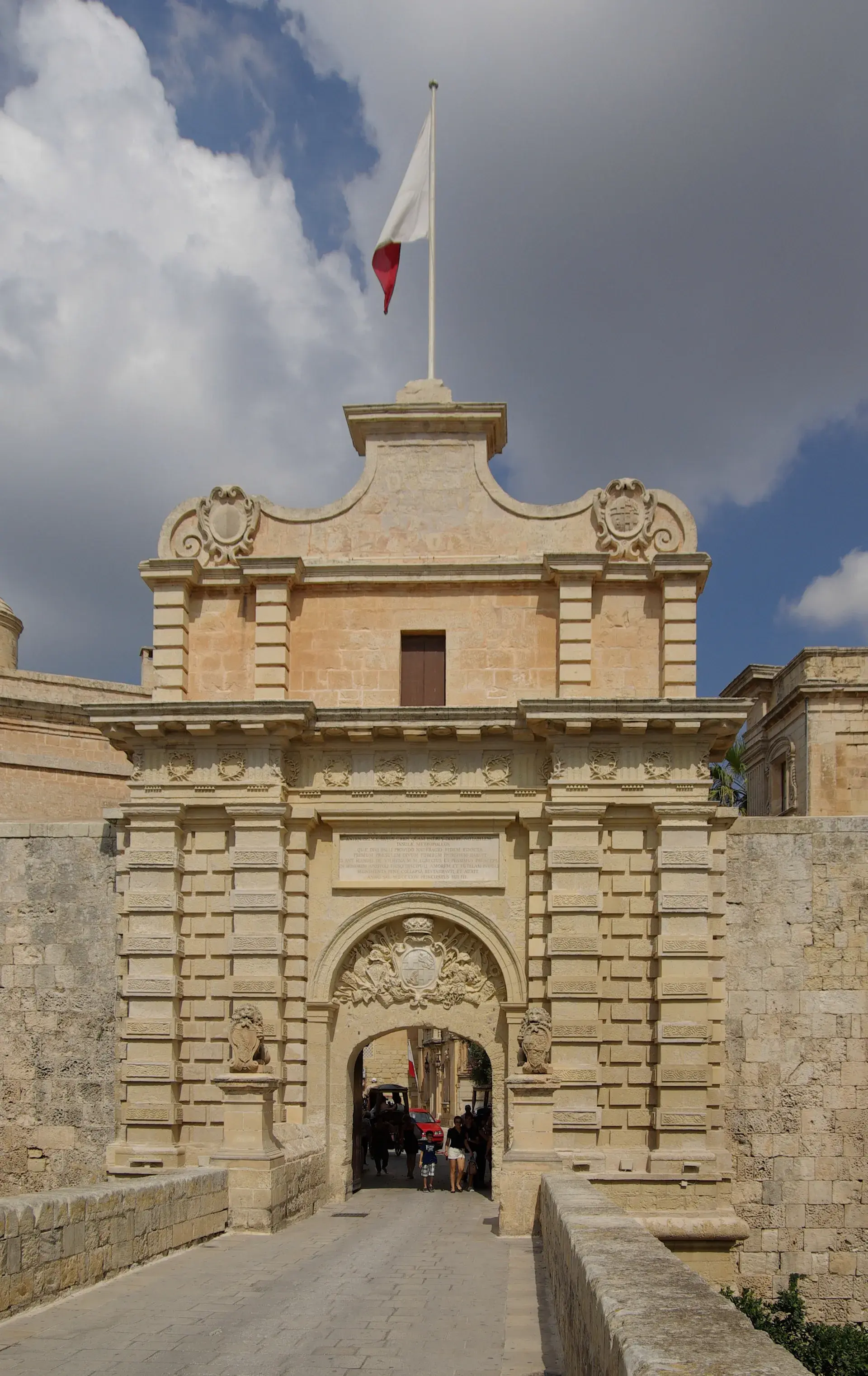
While frequently included in itineraries covering nearby Mdina, the basilica belongs to the extramural town of Rabat. During the medieval Arab period, ancient Melite was divided into a fortified citadel (al-Madīnah) and an outer suburb (rabaḍ). The collegiate church developed as the enduring religious and cultural heart of this outer settlement, positioned just outside Mdina's defensive ditch and Main Gate.
Today, the site continues to serve as an active Roman Catholic parish basilica, hosting regular liturgical services, community sacraments, and confessions. It also serves as the focal point for Rabat's annual feast celebrating Saint Paul, marked by street decorations, church bell ringing, brass band marches, and religious processions, while maintaining ticketed daily access to the grotto, catacombs, and wartime shelters.
FAQ
Why does the church facade feature three identical portals?
Architects Francesco Buonamici and Lorenzo Gafà designed three matching portals to maintain visual symmetry while providing separate, equally dignified entrances to three distinct sacred spaces: the main collegiate church, the Church of Saint Publius, and the underground grotto complex.
What is the historical significance of Saint Paul's Grotto?
Christian tradition states that Saint Paul the Apostle sheltered, prayed, and preached in the cave for three months after his shipwreck on Malta in 60 AD. The grotto holds a marble statue donated by Grand Master Manuel Pinto da Fonseca in 1748 and has hosted papal visits by John Paul II, Benedict XVI, and Francis.
What underground areas are located beneath the basilica?
The subterranean complex includes Saint Paul's Grotto, early Christian (paleochristian) burial catacombs, and a connected network of rock-hewn World War II air-raid shelters.