St. Paul's Cathedral Mdina: History & Architecture
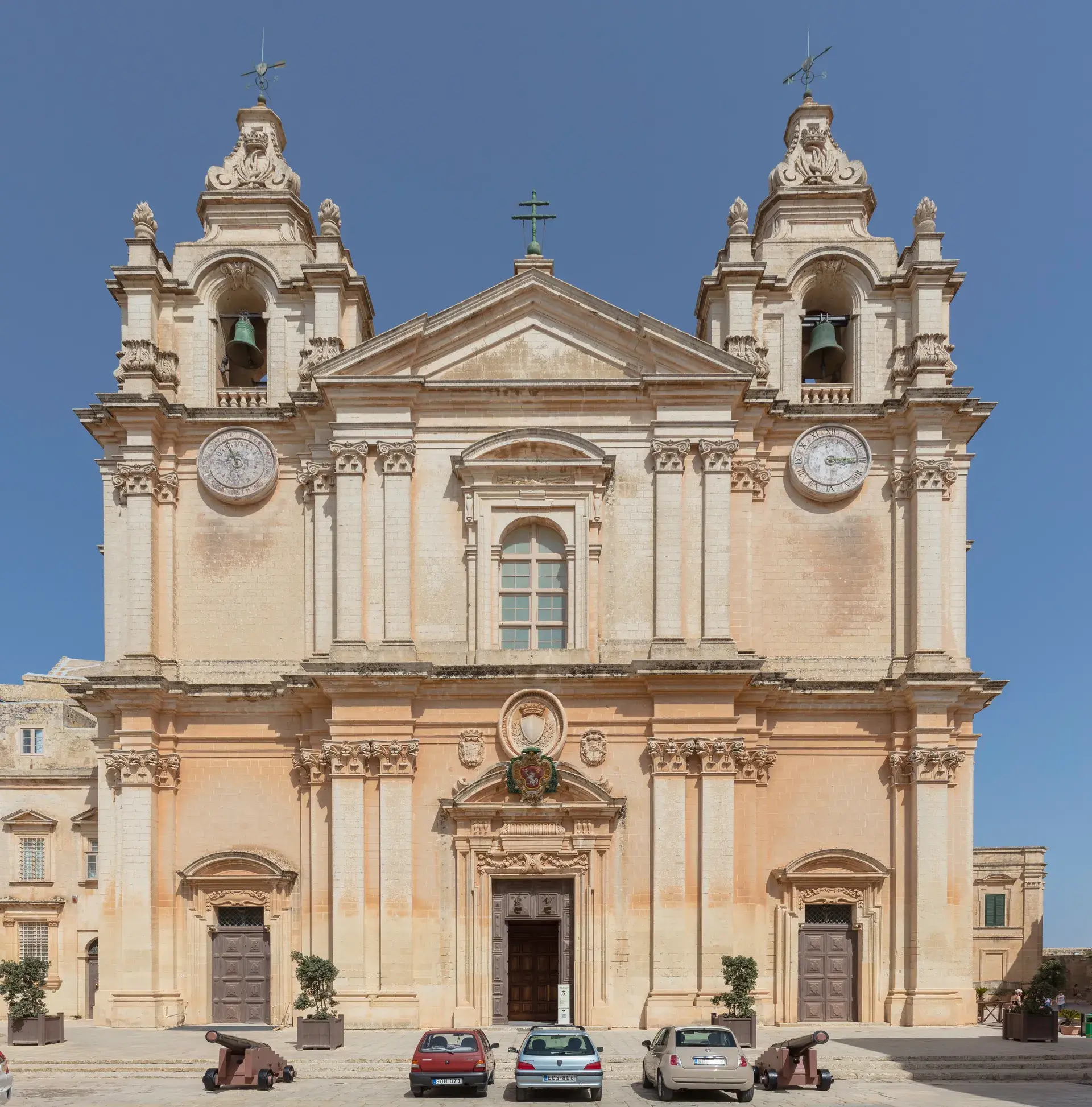
The Metropolitan Cathedral of Saint Paul stands as a monumental centerpiece in the fortified city of Mdina. Serving as the mother church and episcopal seat of the Roman Catholic Archdiocese of Malta—a status it shares co-equally with St John's Co-Cathedral in Valletta—the structure is recognized as a Grade 1 scheduled monument. Constructed between 1696 and 1702, the cathedral represents the pinnacle of Maltese Baroque architecture, designed by the celebrated Maltese architect Lorenzo Gafà.
Origins and Post-Earthquake Reconstruction
According to church tradition, the cathedral occupies the site where the Roman governor Publius welcomed the Apostle Paul in 60 AD following his shipwreck on the island. A medieval Sicolo-Norman cathedral stood on the grounds for centuries until January 1693, when a catastrophic regional earthquake fractured Mdina's fortifications and collapsed the nave and bell towers.
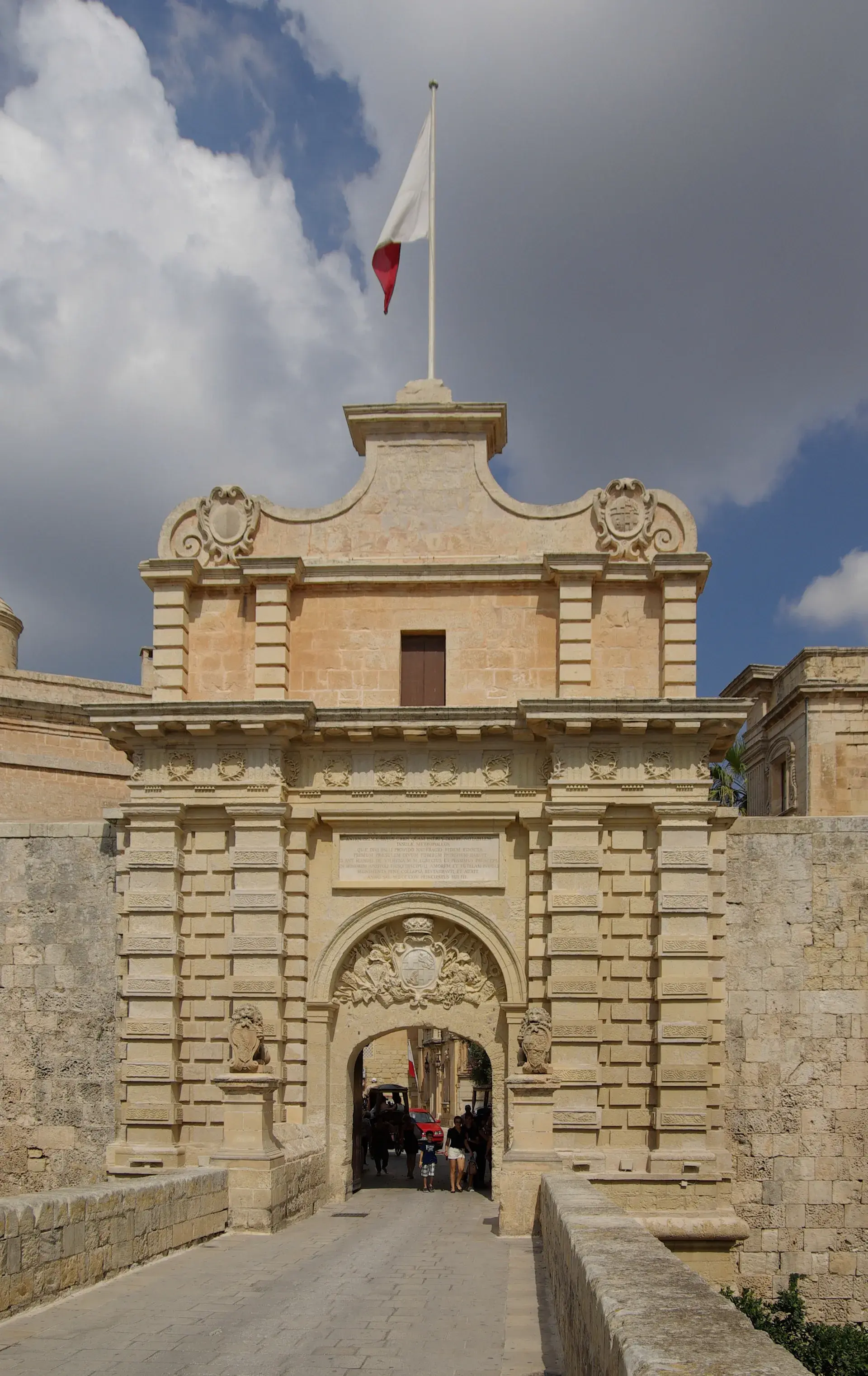
A newly added Baroque choir and sacristy, built by Lorenzo Gafà between 1679 and 1682, survived the earthquake intact. Gafà integrated these preserved sections directly into his comprehensive rebuilding plan. To showcase the monumental proportions of the new facade, medieval residences and narrow lanes fronting the site were cleared to form St. Paul's Square. Situated along Villegaignon Street between Mdina's Main Gate and the Bastion Viewpoint, this broad plaza signaled the city's transition from a medieval stronghold into an episcopal showcase.
Architectural Features and Belfry Curiosities
The exterior of the cathedral is built from warm Globigerina limestone and crowned by an octagonal Baroque dome painted deep red, resting atop a drum adorned with carved stone scrolls. Twin square belfries frame the facade, with their spires capped by sculpted stone finials portraying serpents and fire—an iconographic reference to the biblical account of Paul remaining unharmed after a viper bite.
The towers also display two distinct clock faces, giving rise to long-standing local folklore. Legend claims the mismatched dials were designed to confuse the Devil and prevent him from disrupting sacred liturgies. In reality, the right dial operates as a functioning clock that strikes every quarter-hour, while the left dial indicates the calendar date and month.
Preserved Interior Treasures
The cathedral houses significant pre-earthquake furnishings that were carefully salvaged and reinstalled. Chief among these is Mattia Preti's apse painting, The Conversion of St Paul, alongside late-medieval wooden choir stalls, a 15th-century Tuscan Madonna, and a 15th-century baptismal font.
The nave floor features an elaborate expanse of multicolored inlaid marble tombstones. Serving as burial vaults for clergy and nobility, these slabs are ornately detailed with heraldic coats of arms, winged hourglasses, and skeleton motifs.
Practical Information and Visitor Guidelines
St. Paul's Cathedral remains an active Catholic parish, hosting daily masses, confessions, and annual celebrations such as the Feast of the Conversion of St Paul in January and the Feast of Saints Peter and Paul in June.
For visitors, the cathedral is open Monday through Saturday, with restricted hours on Sunday afternoons. Entry is available through a combined admission ticket that includes access to the adjacent Cathedral Museum. Visitors must observe a modest dress code covering both shoulders and knees. Inside the cathedral, flash photography is prohibited, and stiletto heels are strictly forbidden to protect the delicate inlaid marble floor.
FAQ
Why do the clock faces on the cathedral towers show different times?
Local folklore suggests the dials show different times to confuse the Devil so he cannot disrupt church services. In truth, the right dial is an operational clock striking every 15 minutes, while the left dial displays the month and date.
Why are stiletto heels prohibited inside St. Paul's Cathedral?
Cathedral regulations ban stiletto heels to protect the intricate multicolored marble tombstones across the nave floor from physical wear and cracking.
Did any elements of the earlier cathedral survive the 1693 earthquake?
Yes. The Baroque choir and sacristy completed by Lorenzo Gafà between 1679 and 1682 survived the disaster and were integrated into the new building. Other preserved artifacts include Mattia Preti's apse painting of the Conversion of St Paul, late-medieval choir stalls, a 15th-century Tuscan Madonna, and a 15th-century baptismal font.