Cathedral of Saint Tryphon: Kotor's Historic Heart
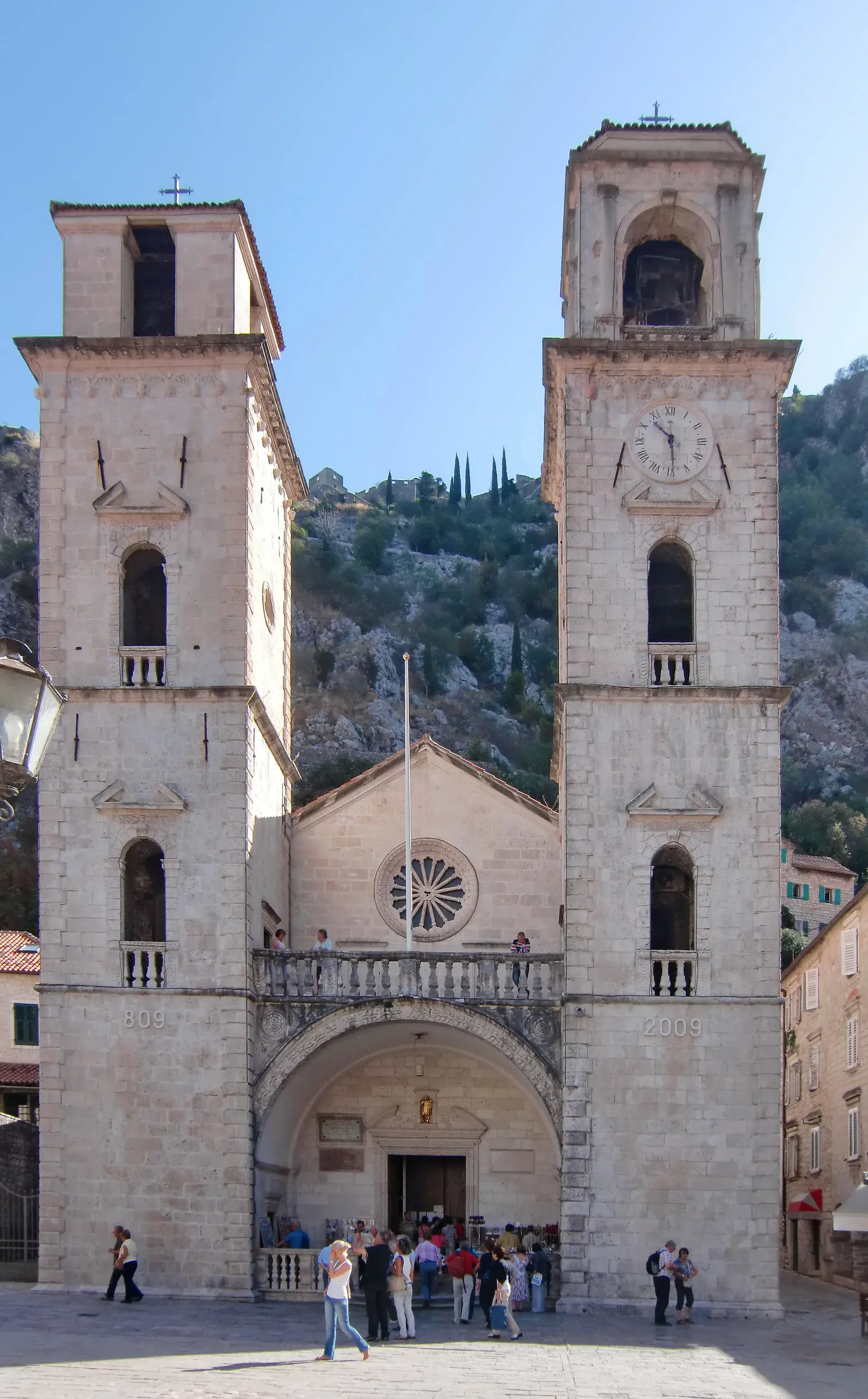
The Cathedral of Saint Tryphon is a monumental landmark in Kotor and one of only two Roman Catholic cathedrals in Montenegro. As the seat of the Roman Catholic Diocese of Kotor, it stands as the spiritual heart of the Boka Bay. This historic structure is a key component of the UNESCO World Heritage Site designated as the 'Natural and Culturo-Historical Region of Kotor.'
A History Forged Through Centuries
The cathedral's story begins in 809 AD when a wealthy Kotor nobleman, Andrija Saracenis, built a church to house the sacred relics of Saint Tryphon, which he had acquired from Constantinople. Legend holds that the ship carrying the relics to Dubrovnik was forced by a storm to shelter in Kotor, an event interpreted as a divine sign that the relics should remain there. The 3rd-century martyr Saint Tryphon became the city's patron saint, revered by both Catholic and Orthodox traditions as a patron of gardeners and a healer of animals.
The original 9th-century church was replaced by the grander structure seen today, which was largely completed and consecrated on June 19, 1166. This massive Romanesque cathedral was conceived as a 'fortress of faith' to protect the saint's remains.
Architectural Resilience and Evolution
The Cathedral of Saint Tryphon showcases a remarkable blend of architectural styles, telling the story of its long and often turbulent history. Its core is predominantly Romanesque, but it also incorporates Gothic elements. The building has endured several devastating earthquakes, most notably in 1667 and 1979.
The 1667 earthquake destroyed the original façade and bell towers. During the subsequent reconstruction, the current Baroque bell towers were added. A famous feature of the cathedral is its asymmetrical towers; the northern tower stands two meters shorter than the southern one, as its completion was reportedly halted due to a lack of funds.
Sacred Treasures and Art
Inside, the cathedral houses a museum of sacral art and a relic chapel. Among its most significant treasures is a silver reliquary casket, completed around 1539. This piece artistically reflects the historical context of its creation, depicting the figures martyring Saint Tryphon as 'bearded and turbaned warriors in Turkish military dress,' a direct reference to the Ottoman advances into the Bay of Kotor during that period. Other notable artistic works include silver figures forged by John of Basel in 1440.
The Cathedral Today
Today, the Cathedral of Saint Tryphon functions as an active church, a cultural monument, and a major attraction for tourists and pilgrims. It is the focal point for the annual Feast of Saint Tryphon, Kotor's oldest celebration, which begins in late January and culminates on February 3rd with a solemn mass and a procession of the saint's relics. A modest entrance fee, payable in cash, allows visitors to explore the interior, including the museum. Visitors are required to dress respectfully, with shoulders and knees covered. On January 13, 2009, the cathedral was granted the honorary title of Papal Basilica.
FAQ
Why are the cathedral's towers different heights?
The northern bell tower is two meters shorter than its southern counterpart. The upper portion was never completed during the reconstruction that followed the 1667 earthquake, reportedly due to a lack of funds.
Who is Saint Tryphon?
Saint Tryphon is a 3rd-century Christian martyr from Phrygia who is the patron saint of Kotor. He is revered in both Catholic and Orthodox faiths as a patron of gardeners and birds, and a healer of animals. The cathedral was built to house his relics.
What is the architectural style of the Cathedral of Saint Tryphon?
The cathedral's core structure is predominantly Romanesque, as it was consecrated in 1166. However, due to centuries of reconstructions after earthquakes, it also features Gothic elements and prominent Baroque bell towers.
Can you visit the Cathedral of Saint Tryphon?
Yes, the cathedral is open to visitors. A modest entrance fee is charged, which includes access to the Relic Chapel and the Sacral Art Museum. A respectful dress code requiring covered shoulders and knees is in effect.