The Sea Gate: Kotor's Historic Main Entrance
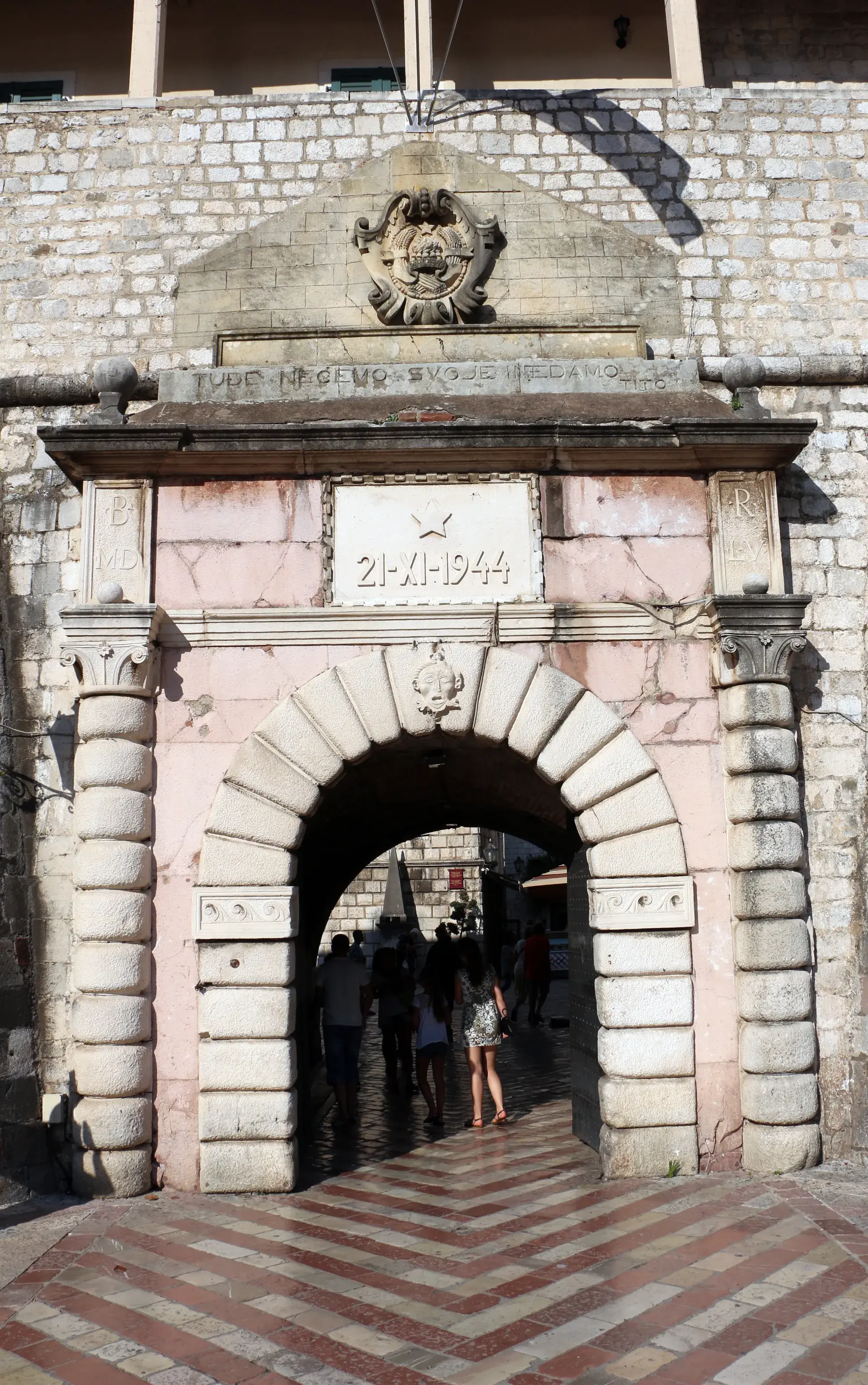
The Sea Gate, also known as the Main Gate, serves as the principal entrance to Kotor's historic Old Town. Constructed in 1555, this Renaissance-style gate was once the city's primary maritime access point, with the shoreline situated much closer to the fortifications than it is today. A remarkable testament to time, the massive stone structure has subsided more than 70 centimeters into the unstable ground since its construction.
A Venetian Fortress Entrance
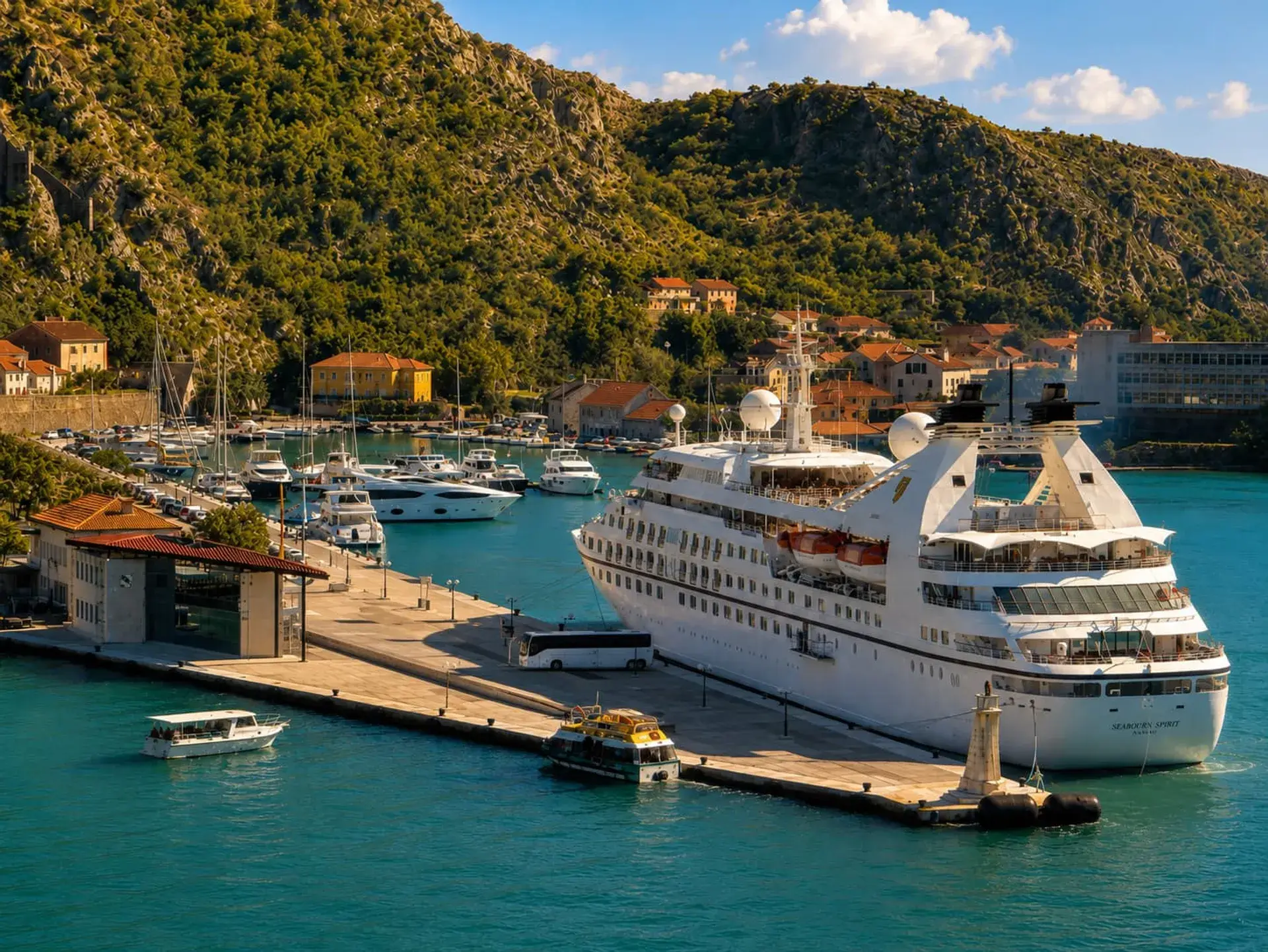
Built during the long period of Venetian rule (1420–1797), the Sea Gate was a key defensive structure. Its location was strategic, providing direct access for those arriving by boat. The gate's architecture is a product of the Venetian Republic, which heavily influenced the fortifications and style of the city. Originally, the gate was accessible directly from the waterfront, a stark contrast to the modern approach over an embankment.
A Chronicle in Stone
The facade of the Sea Gate tells a story of Kotor's shifting political landscape. For centuries, it was adorned with the winged Lion of Saint Mark, the powerful emblem of the Venetian Republic. This changed following a major historical turning point: the city's liberation from Nazi occupation on November 21, 1944. After this date, the Venetian symbol was replaced with socialist heraldry, including the Yugoslav emblem and a prominent quote from leader Josip Broz Tito: “What belongs to others, we don't want, what is ours, we will never surrender.”
Interior Details and Present-Day Role
Within the vaulted passage of the gate, visitors can observe a late 15th-century stone relief. This artwork, which predates the gate itself, depicts the Virgin Mary with Christ, flanked by Saint Tryphon, Kotor's patron saint, and Saint Bernard, reflecting the city's deep-rooted religious heritage.
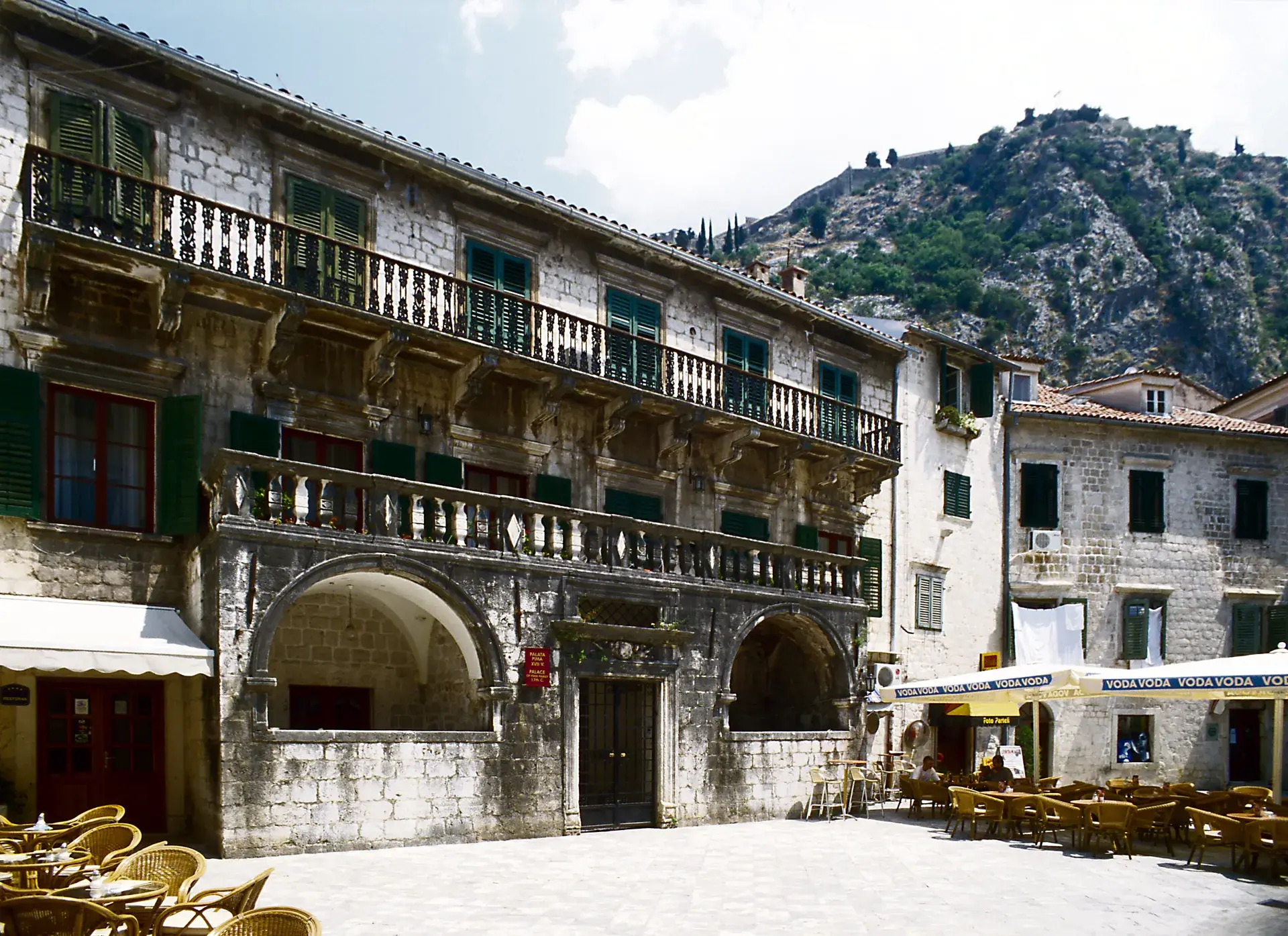
Today, the Sea Gate is the most recognizable entry point into the UNESCO-protected Old Town. Passing through it leads directly into the Square of Arms (Trg od Oružja), the city's main social hub. It functions as a primary meeting point for guided tours and the starting point for exploring the medieval settlement's many landmarks. A tourist kiosk is located just to the left after entering the Old Town through the gate.
FAQ
When was the Sea Gate in Kotor built?
The Sea Gate was constructed in 1555 during the Venetian period, when Kotor was under the rule of the Venetian Republic.
What is the quote above the Sea Gate?
The quote inscribed on the Sea Gate is from Josip Broz Tito: “What belongs to others, we don't want, what is ours, we will never surrender.” It was added after the city's liberation on November 21, 1944.
What is depicted on the stone relief inside the Sea Gate?
Inside the gate's passage is a late 15th-century stone relief that shows the Virgin Mary with Christ, alongside Saint Tryphon (Kotor's patron saint) and Saint Bernard.
Why is the Sea Gate no longer right on the water?
At the time of its construction in 1555, the shoreline was much closer to the city walls. The waterfront has since receded. Furthermore, the gate itself has subsided more than 70 centimeters due to its immense weight and the unstable ground beneath it.