Kotor's Square of Flour: Palaces and Feline Friends
In the heart of Kotor's Old Town lies the Square of Flour, or Trg od Brašna, a space defined by its rich history, aristocratic architecture, and the city's beloved feline residents. Once the commercial center for the vital flour trade, the square is framed by the impressive Pima and Buća palaces, each telling a story of nobility, resilience, and architectural evolution.
Architectural Grandeur: Pima and Buća Palaces
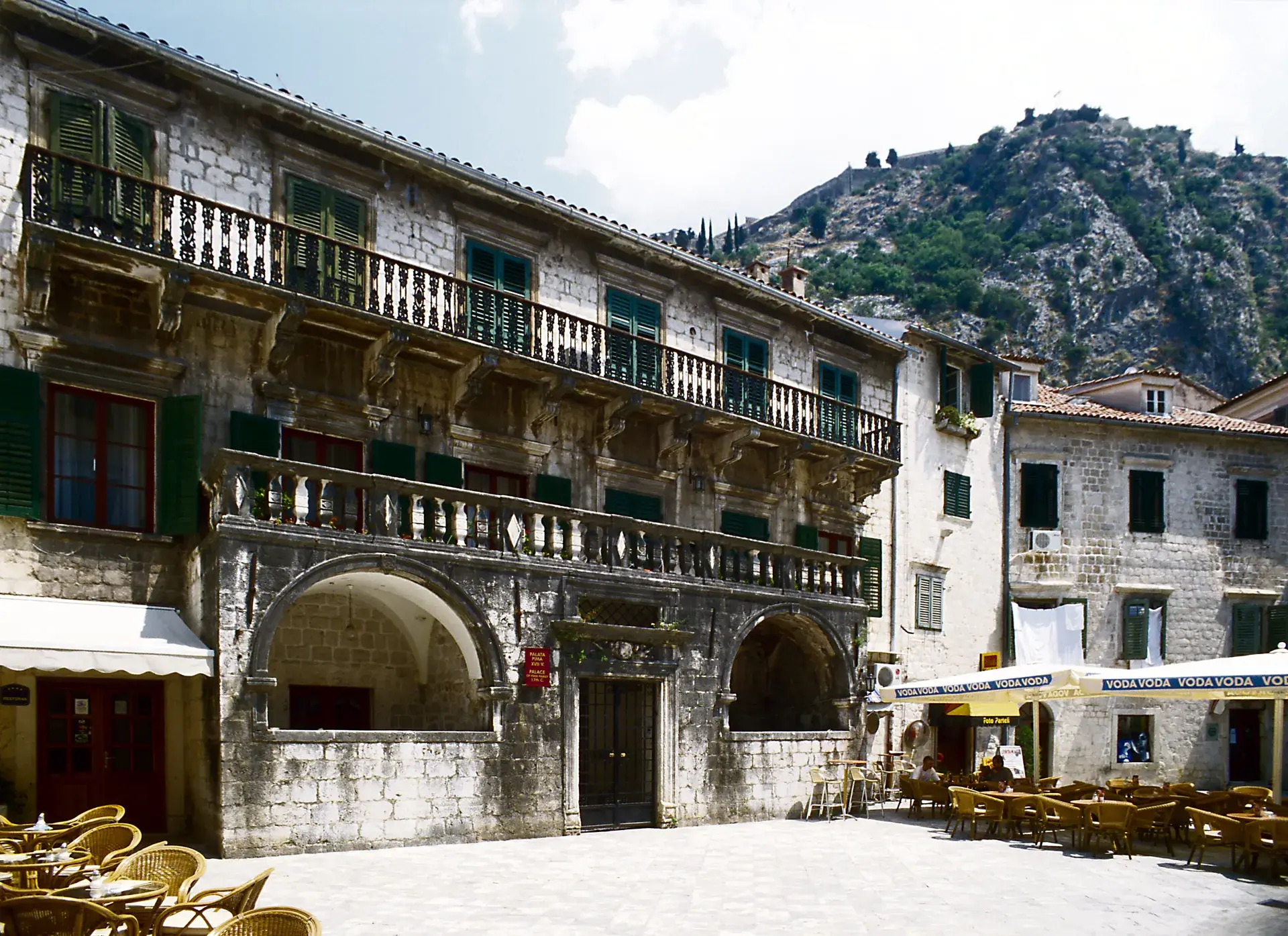
The Pima Palace, a 17th-century structure, showcases a harmonious blend of Renaissance and Baroque styles. Its facade is distinguished by a long stone balcony supported by twelve consoles. Above the main portal, the Pima family crest is held aloft by two carved angels, a testament to the family's status, which included notable poets like Jerome and Bernard Pima. The palace underwent restoration following the 1979 earthquake.
Opposite stands the Buća Palace, which dates to the 14th century. Originally a Gothic masterpiece, its appearance was drastically altered by the devastating 1667 earthquake. The damage was so severe that the palace was subsequently subdivided into three adjoining buildings. The Buća family was once one of Kotor's most influential, serving as ambassadors, soldiers, and court officials.
Archaeological excavations on the square's northern side, at house number 328, unearthed the remnants of a medieval church. It is believed these are the remains of the Buća family's private chapel, offering a hidden glimpse into the area's past.
A History of Resilience
The square's name is a direct reference to its origins as the city's hub for storing and trading flour. This practical function placed it at the center of daily life for centuries. The architecture reflects Kotor's evolution, particularly under Venetian rule, blending Gothic, Renaissance, and Baroque elements.
The history of the square and its palaces is also a story of survival. Both the 1667 and 1979 earthquakes caused significant damage, necessitating major rebuilding and restoration efforts. These events, especially the 1667 quake that transformed Buća Palace, highlight the city's enduring capacity to recover and adapt while preserving its historical grandeur.
The Beloved Cats of Kotor
A defining feature of Kotor, and indeed the Square of Flour, is its large population of cats. Historically, felines arrived in the port city via ships, where their presence was encouraged to control rodent populations. They became invaluable protectors against pests.
Today, the cats are a cherished symbol of the city, considered by many to be a sign of good luck. They roam freely and are cared for by locals and tourists alike. The municipality has provided dedicated feeding stations, and the city is also home to a cat sanctuary and the Cat Museum (Museo del Gatto di Cattaro), which supports the stray population through its proceeds.
The Square Today
Currently, the Square of Flour serves as a vibrant public space where people gather to enjoy coffee and observe the flow of life in the Old Town. The historic palaces have found new purposes; Pima Palace houses the 'Solidarity' Gallery with rotating art exhibits, while a portion of the former Buća Palace complex has been adapted for modern hospitality as part of the Hotel Astoria.
FAQ
Why is it called the Square of Flour?
The square, known locally as Trg od Brašna, gets its name from its historical role as the central location for storing and trading flour, which was a vital commodity in Kotor.
What are the main buildings on the Square of Flour?
The square is framed by two significant noble residences: the 17th-century Pima Palace, which combines Renaissance and Baroque styles, and the 14th-century Buća Palace, originally Gothic but heavily altered after earthquakes.
Why are there so many cats in Kotor?
Cats originally arrived in Kotor on ships and were valued for controlling rat and mouse populations. Over time, they became a cherished symbol of the city, viewed as protectors and bringers of good luck.
What is the Pima Palace used for today?
The Pima Palace currently houses the 'Solidarity' Gallery, which features rotating art exhibitions from various artists.