Binnenrotte Square: Where Rotterdam Got Its Name
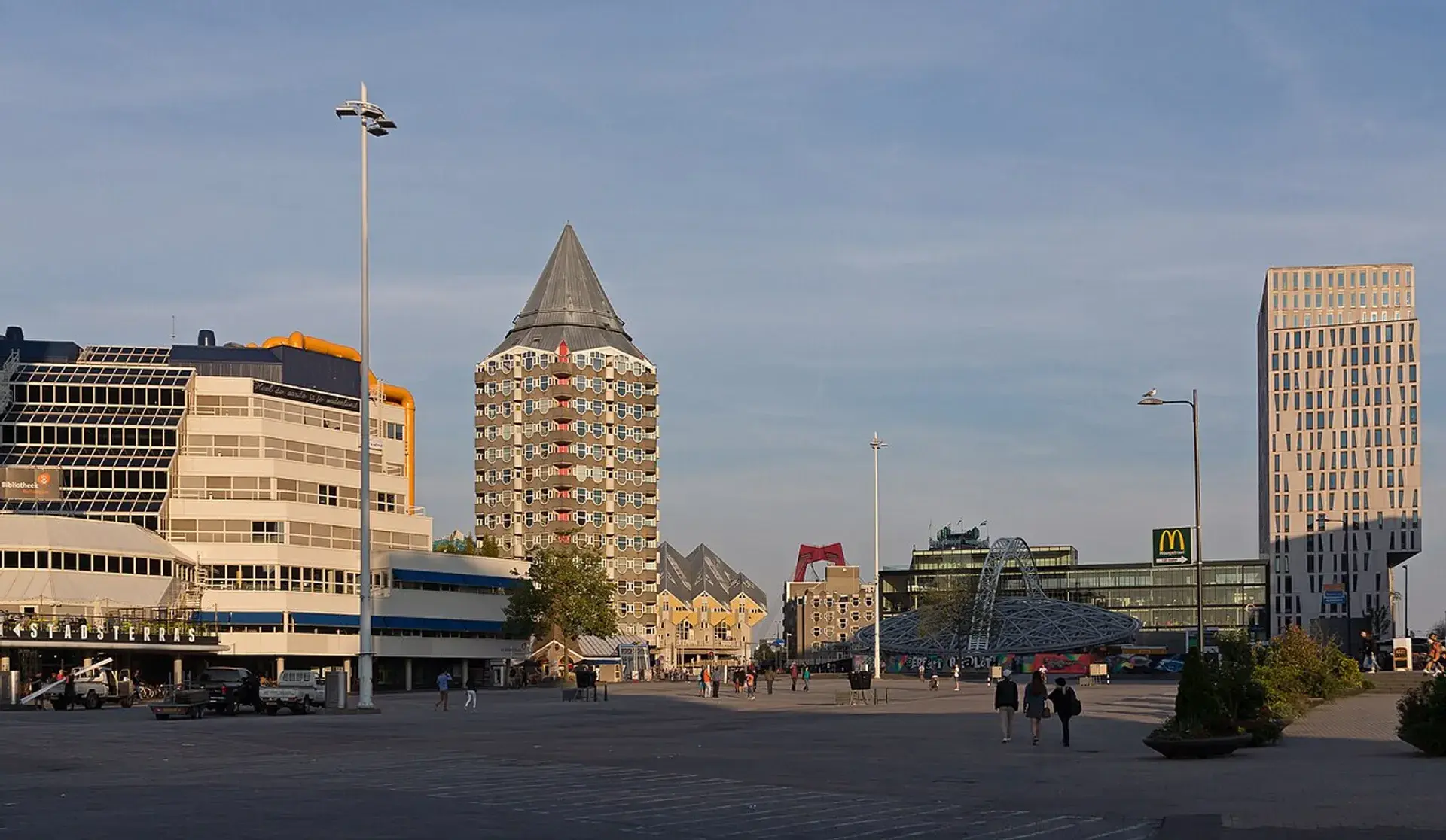
Stand in the vast open expanse of Binnenrotte square, a historic urban hub that hosts bustling open-air markets. Stretching through the Laurenskwartier between the Hoogstraat and the Meent, this expansive 800-meter-long paved plaza serves as the geographic and historical pivot point of central Rotterdam. It is the exact location where the medieval city was born, now surrounded by bold symbols of postwar and modern reconstruction.
The River That Named a City
The Binnenrotte is Rotterdam's largest open public square, but it was once a waterway. The square is named after the inner section of the peat river Rotte, which historically flowed through the medieval city perimeter. The original medieval name of the river, "Rotta," comes from the Old Dutch words "rot" (muddy) and "a" (water), translating simply to muddy water.
Around the 1260s and 1270s, a protective dike and dam were built across the Rotte to prevent storm flooding from the nearby Nieuwe Maas. This dam literally gave Rotterdam its name. A small fishing and trading village quickly formed around the lock and dam, eventually gaining official city rights in 1340.
A Century of Railways
The landscape of the Binnenrotte changed drastically in the 19th century. Between 1868 and 1874, municipal authorities and the Dutch state drained and filled the Binnenrotte riverbed to accommodate a new railway line connecting Rotterdam to Dordrecht. By 1877, a 2.2-kilometer elevated railway viaduct known as the Luchtspoor opened directly over the filled-in river, cutting a path straight through the city center.
This elevated train line dominated the area for over a century until 1993, when train traffic was moved underground into the newly constructed Willemsspoortunnel. The above-ground viaduct was demolished, leaving behind the massive open footprint that constitutes the modern square.
Modern Markets and Architecture
Today, the Binnenrotte is famous for its massive open-air market. Every Tuesday and Saturday, the square transforms with the bustling din of shouting vendors and the sight of seafood resting on ice. Roughly 450 stalls fill the plaza, selling fresh produce, fish, flowers, clothing, and vintage goods.
On non-market days, the space reveals a cavernous, wind-swept expanse that highlights its modern landscaping. A major redesign between 2012 and 2016 introduced stepped green lawns, pocket seating areas, contrasting stone paving, water features, and outdoor terrace dining. The wide-open sightlines offer a unique architectural panorama, contrasting the towering medieval Grote of Sint-Laurenskerk against the massive contemporary arch of the Markthal and the bright yellow tilts of the Cube Houses.
A Multi-Layered Engineering Feat
Beneath the surface, the Binnenrotte functions as a massive, multi-layered engineering sandwich. The buried historical river continues to flow at the very base. Directly above the river sits a four-track subterranean railway and metro interchange, which in turn lies entirely beneath the pedestrian plaza.
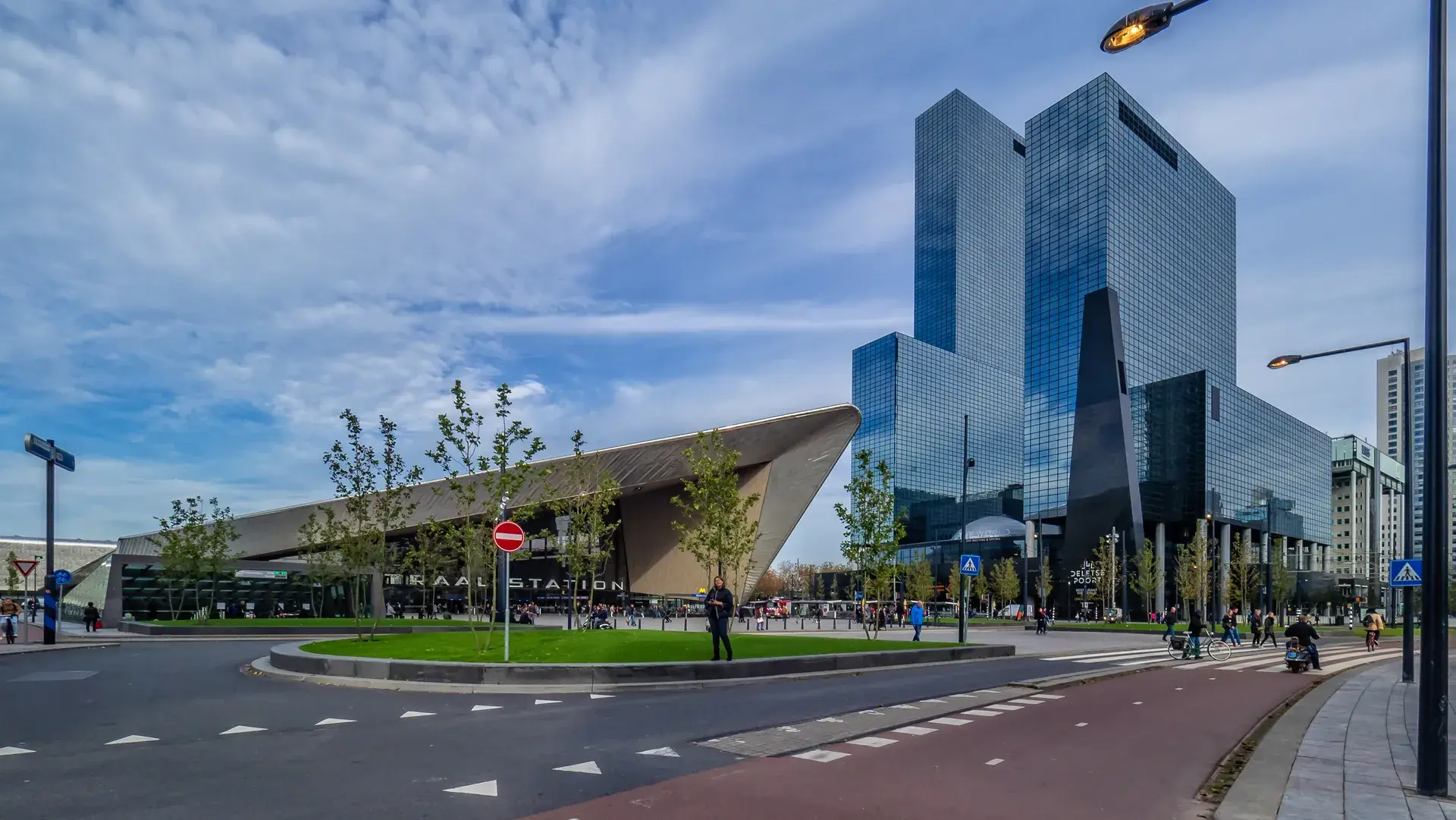
During the excavations for this underground rail tunnel in the 1980s and 1990s, archaeologists unearthed the buried foundations of 14th-century city walls and gate towers. Today, sections of these excavated medieval foundations remain preserved and visible inside the adjacent Rotterdam Blaak Station.
FAQ
Why is the square named Binnenrotte?
The square is named after the section of the peat river Rotte that historically ran inside the medieval city's perimeter. The word "Binnenrotte" translates to Inner Rotte.
When does the Binnenrotte Market take place?
The Binnenrotte Market operates every Tuesday and Saturday. It features approximately 450 stalls selling a variety of goods, including fresh produce, fish, clothing, and vintage items.
What is located beneath Binnenrotte square?
The square sits on top of a multi-layered underground infrastructure. Directly beneath the plaza is a four-track railway and metro interchange, and below that flows the original, buried river Rotte.
What historical artifacts were found at Binnenrotte?
During underground railway excavations in the 1980s and 1990s, archaeologists discovered 14th-century city walls and gate towers. Sections of these foundations can be seen inside Rotterdam Blaak Station.