Bergen Cathedral: A Historic Norwegian Landmark
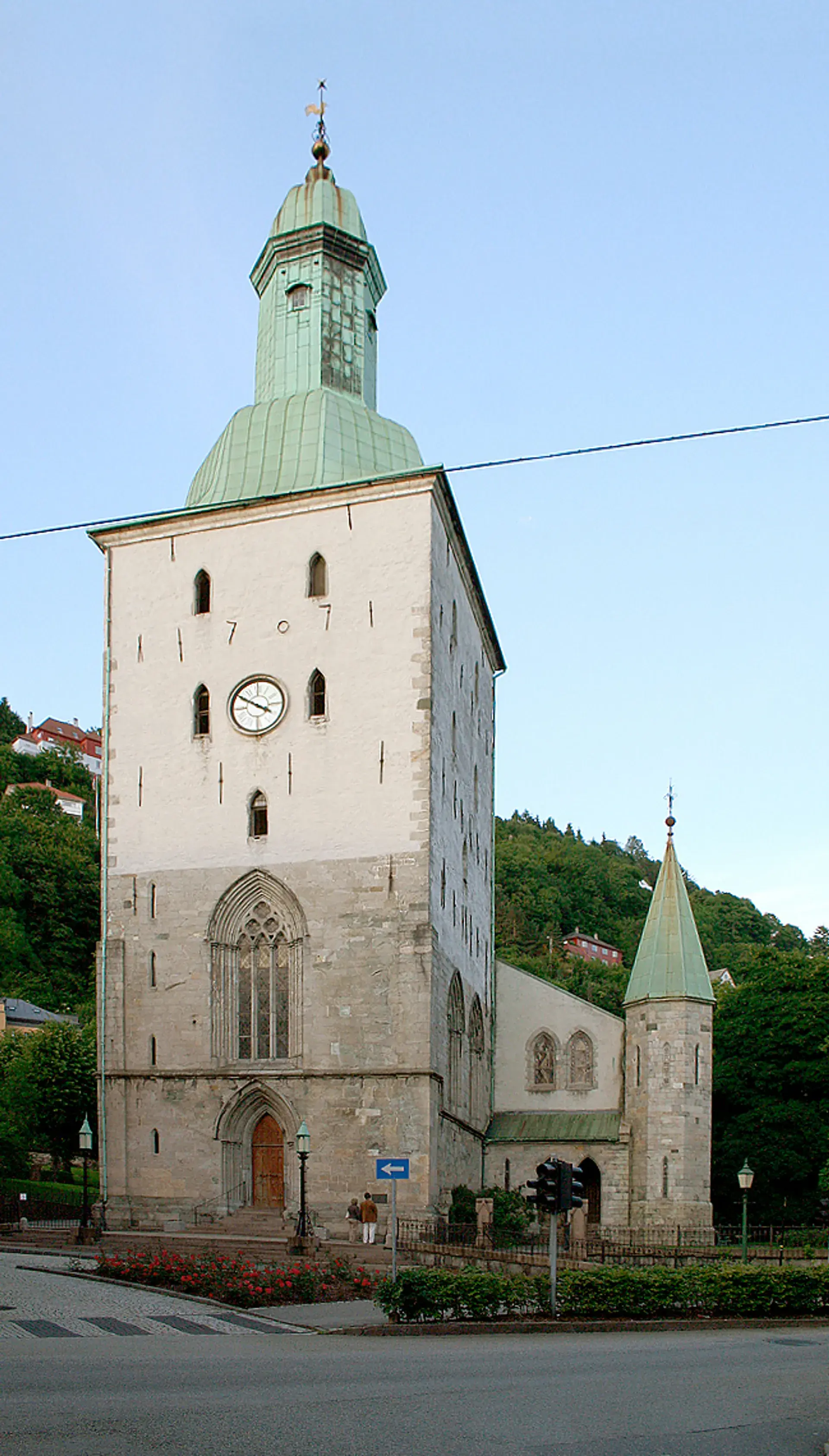
Bergen Cathedral, known as Domkirken, stands as a testament to nearly nine centuries of the city's history. Its stone walls and soaring spire tell stories of faith, fire, and resilience, beginning as a modest parish church and evolving into the significant landmark it is today.
A History Forged in Fire and Faith
Originally a small stone church dedicated to Saint Olav, Bergen Cathedral's construction dates to around 1150. The first historical record of the church appears in 1181, a time of turmoil when King Sverre Sigurdsson's men sought refuge inside. In the 13th century, Franciscan friars took over the church, building an adjacent friary.
The cathedral's history is marked by a series of devastating fires in 1248, 1270, 1463, and 1623. After the 13th-century fires, King Magnus "the Lawmender" provided significant funding for its reconstruction, leading to its consecration as a Franciscan basilica in 1301. A pivotal moment came with the Protestant Reformation in 1537, when the building was designated the new cathedral for the Diocese of Bjørgvin, a role it continues to fulfill.
Architectural Journey Through Time
The building's architecture showcases a blend of styles, reflecting its long and complex history. It began in a Romanesque style, with Gothic elements incorporated during subsequent rebuilds. A major restoration in the 1880s, led by architects Christian Christie and Peter Andreas Blix, sought to return the cathedral to its medieval appearance by removing Rococo-era interiors.
A Cannonball and Other Curiosities
One of the most surprising features of the cathedral is a cannonball visibly lodged in the exterior of the west wall. This is a relic from the 1665 Battle of Vågen, a naval conflict between British and Dutch fleets in Bergen's harbor. A stray shot struck the church and was left embedded in the masonry as a historical marker.
From 1624 until 1903, the cathedral's tower served a vital civic function as a post for the city's fire watchmen. They kept a lookout for fires and maintained firefighting equipment. Another curiosity is the mystery of King Magnus "the Lawmender," a key benefactor who was allegedly buried in the choir, though his remains have never been located.
Notable Figures
Several important figures are connected to the cathedral's history. Gjeble Pederssøn, Bergen's first Protestant bishop, claimed the church as the new cathedral after the Reformation and installed its first organ. Dorothea Engelbrektsdatter, recognized as Norway's first female poet, is honored with a memorial inside. The churchyard is the final resting place of Johan Nordahl Brun, a bishop and poet who authored "The Bergen Song."
The Cathedral Today
Bergen Cathedral remains an active Lutheran parish church for the Diocese of Bjørgvin. It holds regular services and serves as a major cultural venue, renowned for its exceptional acoustics. The cathedral hosts numerous concerts, organ recitals, and art exhibitions, utilizing its 1997 Rieger Orgelbau organ. It is accessible to visitors, with features like a ramp entrance and induction loops for the hearing impaired.
FAQ
Why is there a cannonball in the wall of Bergen Cathedral?
A cannonball is embedded in the cathedral's west wall as a relic from the Battle of Vågen in 1665. A shot from the naval conflict between English and Dutch fleets struck the church and was left as a historical marker.
When was Bergen Cathedral built?
The cathedral's origins trace back to around 1150 when it was a small stone church named St. Olav's Church. It has been rebuilt and altered many times throughout its history due to fires and renovations.
Is Bergen Cathedral still an active church?
Yes, it is an active Lutheran parish church for the Diocese of Bjørgvin. It holds regular religious services and also functions as a prominent cultural venue for concerts and events.
What is the significance of King Magnus 'the Lawmender' to the cathedral?
King Magnus 'the Lawmender' was a major benefactor who funded the church's reconstruction after devastating fires in the 13th century. It is believed he was buried in the church choir, but his remains have never been found.