Håkon's Hall: Bergen's Medieval Royal Residence
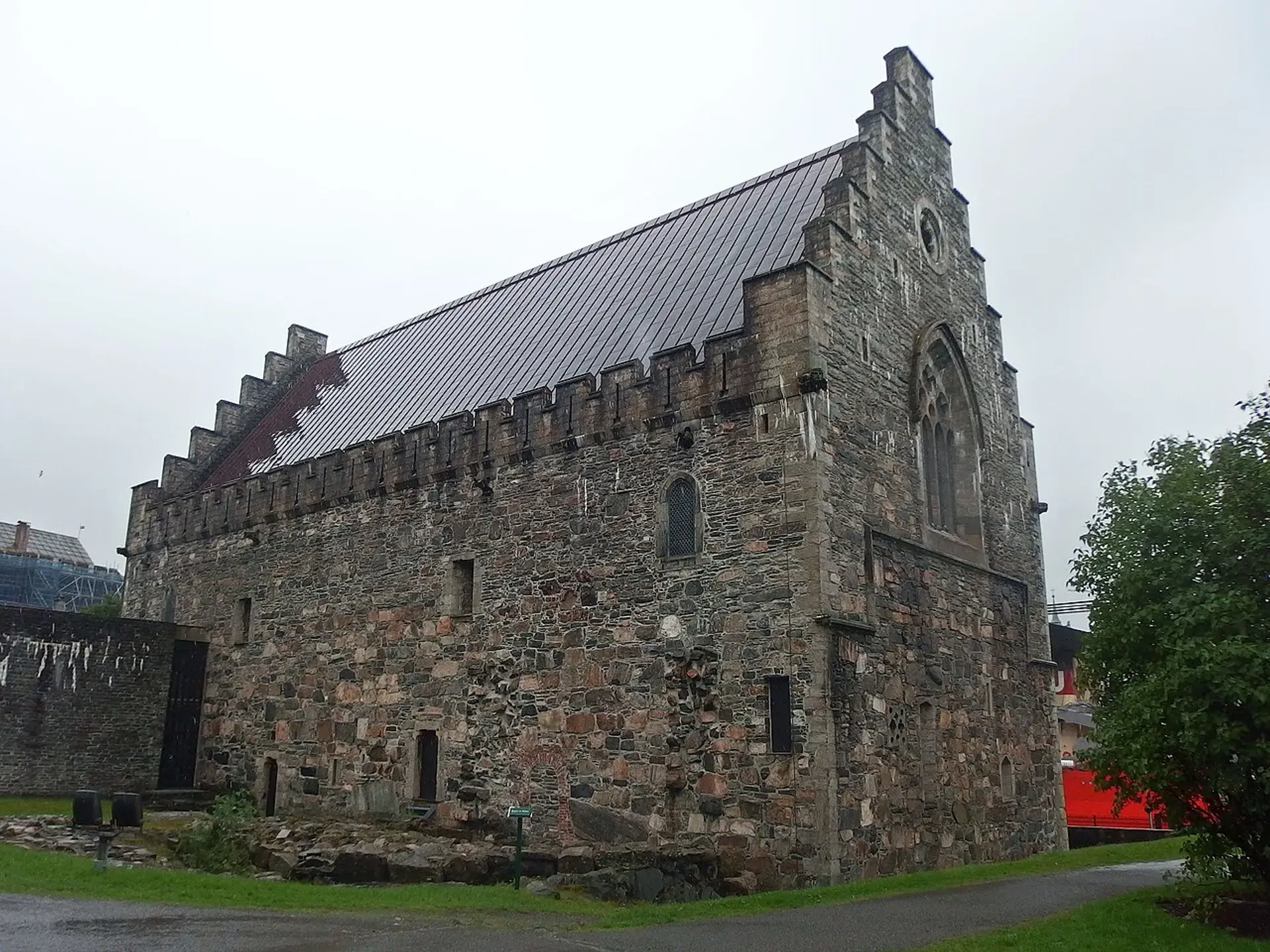
Behold the impressive stone facade of Håkonshallen, a grand 13th-century royal hall that still stands proud, hosting significant events just as it did for medieval kings. Located within the Bergenhus Fortress, this building is a profound symbol of Norway's golden age and a testament to resilience through centuries of change.
A Royal Foundation
Håkon's Hall was constructed between 1247 and 1261 at the behest of King Håkon Håkonsson. As the first stone banquet hall in Norway, it was a monumental project designed to showcase the power and wealth of the Norwegian monarchy following a period of civil war. The Gothic architecture displays English influences, possibly due to King Håkon's connections with King Henry III of England.
The hall was inaugurated on September 11, 1261, with the lavish wedding feast for the king's son, Magnus Håkonsson, and the Danish princess Ingeborg. Magnus, later known as 'the Lawmender', also used the hall for the promulgation of Norway's first complete set of laws.
Decline and Rediscovery
After King Erik Magnusson's death in 1299, Bergen lost its status as the nation's capital, and the hall's royal function diminished. Over the following centuries, it was repurposed for more utilitarian functions, serving as a storeroom and an ammunition depot. The structure suffered damage from a fire in 1429 and at one point was even left without a roof.
By the 18th century, the hall was largely forgotten. However, a wave of Norwegian romantic nationalism in the 19th century led to its rediscovery as a tangible link to the country's independent medieval past. This renewed interest spurred its first major restoration, which was completed in 1916.
Destruction and Restoration
The hall faced its greatest challenge on April 20, 1944. During the German occupation in World War II, a Dutch ammunition ship, the 'Voorbode', exploded in the nearby harbor. The blast was so powerful that it destroyed Håkon's Hall, leaving only the stone walls standing.
A second, meticulous restoration effort began in the 1950s. The hall was carefully rebuilt and officially reopened on September 11, 1961, exactly 700 years after its first use.
Håkon's Hall Today
Today, Håkon's Hall is administered by the Bergen City Museum as a cultural heritage attraction. It has resumed its ceremonial role, hosting royal dinners and official state occasions. The hall is also a prized venue for concerts, particularly choir and chamber music, and is a regular host for the Bergen International Festival. It stands within the Bergenhus Fortress area, which is freely accessible to the public.
FAQ
When was Håkon's Hall built?
Håkon's Hall was constructed between 1247 and 1261 under the direction of King Håkon Håkonsson, during a period considered Norway's golden age.
Why was Håkon's Hall rebuilt in the 1950s?
The hall was rebuilt after being almost completely destroyed on April 20, 1944. An ammunition ship exploded in Bergen's harbor during World War II, leaving only the hall's stone walls intact. A major restoration project brought it back to its former glory.
What is Håkon's Hall used for today?
Today, Håkon's Hall serves as a museum and a venue for official events. It hosts royal dinners, state occasions, and cultural events like concerts, including performances for the Bergen International Festival.
What was the first major event held in Håkon's Hall?
The first recorded use of Håkon's Hall was on September 11, 1261, for the wedding celebration of Magnus Håkonsson Lagabøte, the king's son, and Princess Ingeborg of Denmark.