Rosenkrantz Tower: Bergen's Historic Fortress
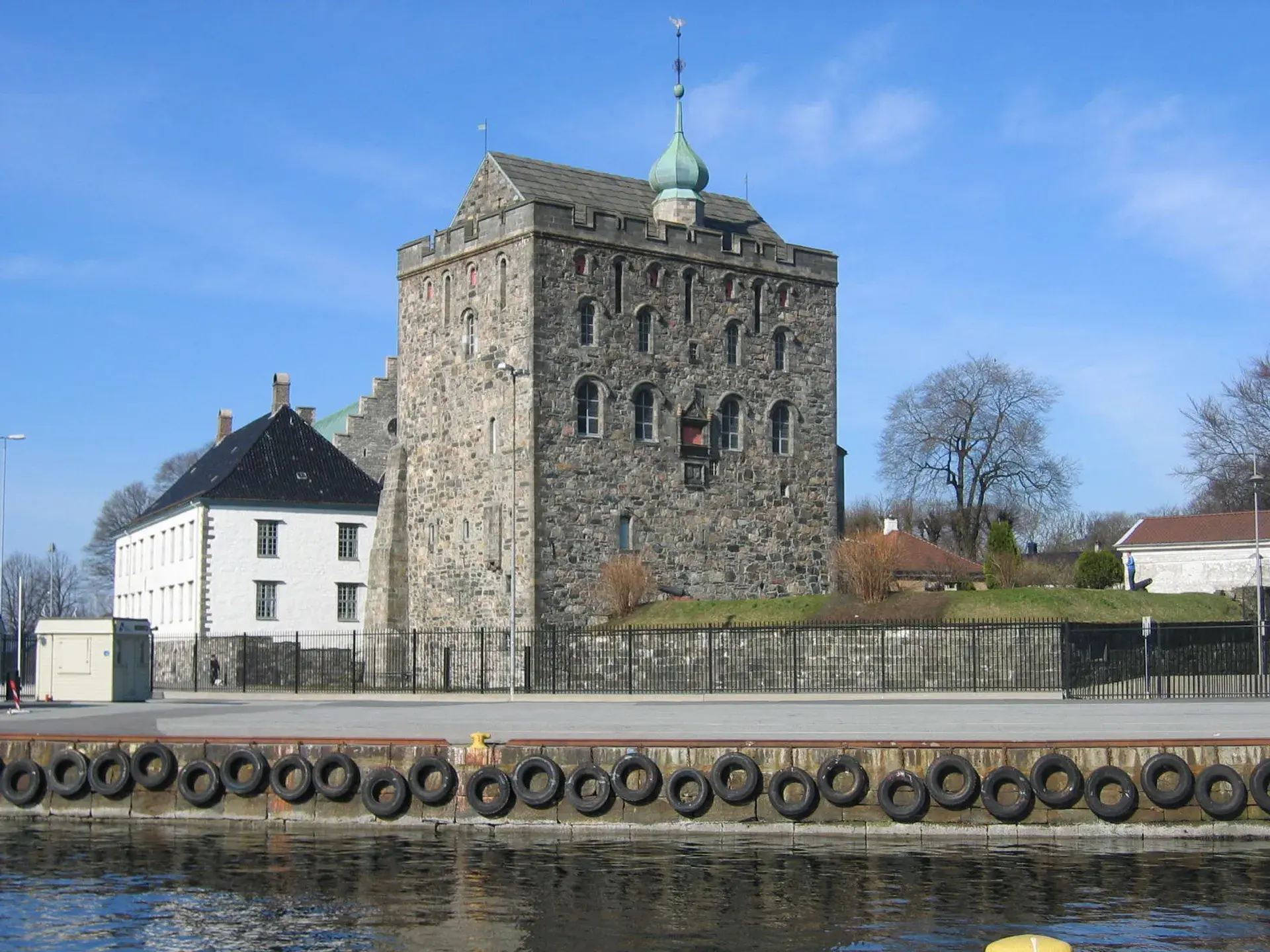
Behold the formidable Rosenkrantz Tower, a prominent defensive structure whose powerful stone walls have stood guard over Bergen's harbor for centuries. As an integral part of the Bergenhus Fortress, the tower's layered architecture tells the story of Bergen's evolution from Norway's medieval capital to a city under Danish rule.
Medieval Origins
The tower's history begins in the 1270s with a medieval keep constructed by King Magnus the Lawmender. It was part of the royal castle complex at a time when Bergen was the capital of Norway. The tower served as a royal residence, housing King Eirik Magnusson, the last king to hold court in Bergen until his death in 1299.
Renaissance Transformation
The structure was reinforced around 1520 by Jørgen Hanssøn, but its most significant transformation occurred in the 1560s. Erik Rosenkrantz, the Danish governor of Bergenhus Fortress, extensively expanded the tower, giving it its present Renaissance form and name. The work, carried out by Scottish stonemasons and architects, created a unique structure that combined residential rooms for the governor, notorious dungeons on the ground floor, and strategic cannon positions on the top floor. This expansion symbolized Denmark's growing control over Norway. The Rosenkrantz noble family is also known through William Shakespeare's 'Hamlet,' which features a character named Rosencrantz.
A Storied Later History
From the 1740s until the 1930s, the Rosenkrantz Tower served a new purpose as a gunpowder magazine. Its most dramatic modern event occurred on April 20, 1944, during World War II. An ammunition ship exploded in Bergen harbor, causing severe damage to the historic tower. Following the war, extensive restoration work was undertaken, and the tower was reopened to the public in 1966.
The Tower Today
Today, the Rosenkrantz Tower operates as a museum and tourist attraction. While the surrounding Bergenhus Fortress area is free to enter, a ticket is required to go inside the tower. Visitors can explore rooms with exhibitions on medieval life and the tower's history. Climbing the narrow, dark, and uneven stairs—a testament to its original design as a functional fortress—leads to the roof, which offers panoramic views of Bergen and its harbor.
FAQ
When was the Rosenkrantz Tower built?
The Rosenkrantz Tower originated as a medieval keep in the 1270s, built by King Magnus the Lawmender. It was extensively modified and expanded into its current form in the 1560s by Erik Rosenkrantz.
Why is it called the Rosenkrantz Tower?
The tower is named after Erik Rosenkrantz, the Danish governor of Bergenhus Fortress from 1560 to 1568, who commissioned its major expansion and used it as his residence.
What happened to the Rosenkrantz Tower during World War II?
The tower was severely damaged on April 20, 1944, when an ammunition ship exploded in Bergen harbor during the German occupation. It was restored after the war and reopened in 1966.
Can you go inside the Rosenkrantz Tower?
Yes, the Rosenkrantz Tower is a museum open to the public. Visitors need a ticket to enter the tower, where they can explore its historic rooms and climb to the roof for views of the harbor.