St. Mary's Church: Bergen's Oldest Building
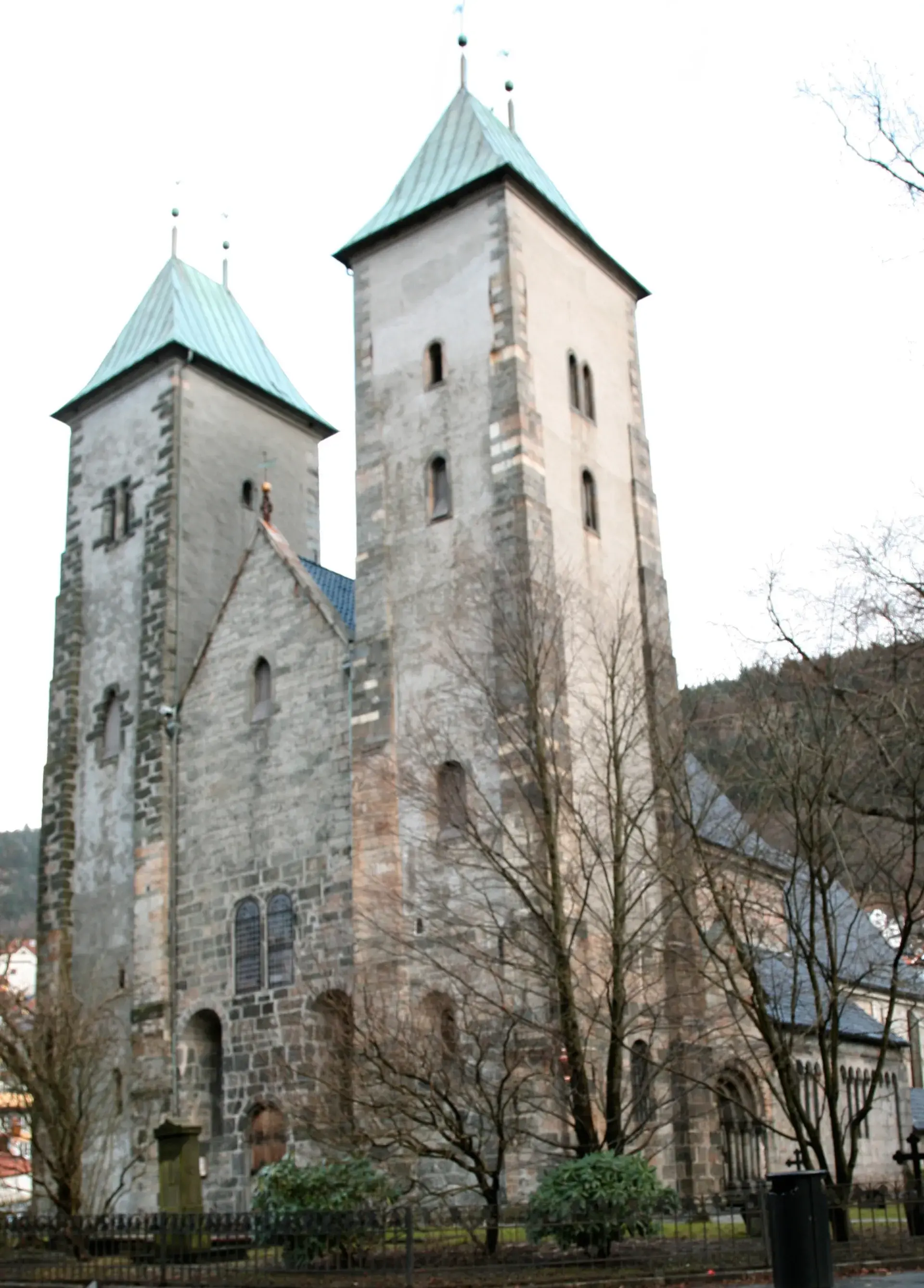
St. Mary's Church, or Mariakirken, is a robust Romanesque structure and the oldest existing building in Bergen, with a history stretching back to the 12th century. This enduring landmark stands as a testament to the city's long history, surviving fires and changing times to remain one of its best-preserved medieval churches.
Architectural History
Construction of St. Mary's Church is believed to have started between the 1130s and 1140s, with completion around 1180. The primary architectural style is Romanesque, evident in its basilica form featuring two towers, three naves, and a design reminiscent of Lund Cathedral in then-Danish Scania. Craftsmen may also have drawn inspiration from architecture in Northern Italy and England.
The church endured significant fires in 1198 and 1248. The latter blaze prompted a major reconstruction that introduced High Gothic characteristics, most notably in the choir, which was enlarged. Later, major restorations were undertaken by architect Christian Christie between 1863 and 1876, and more recently from 2010 to 2015.
The Hanseatic "German Church"
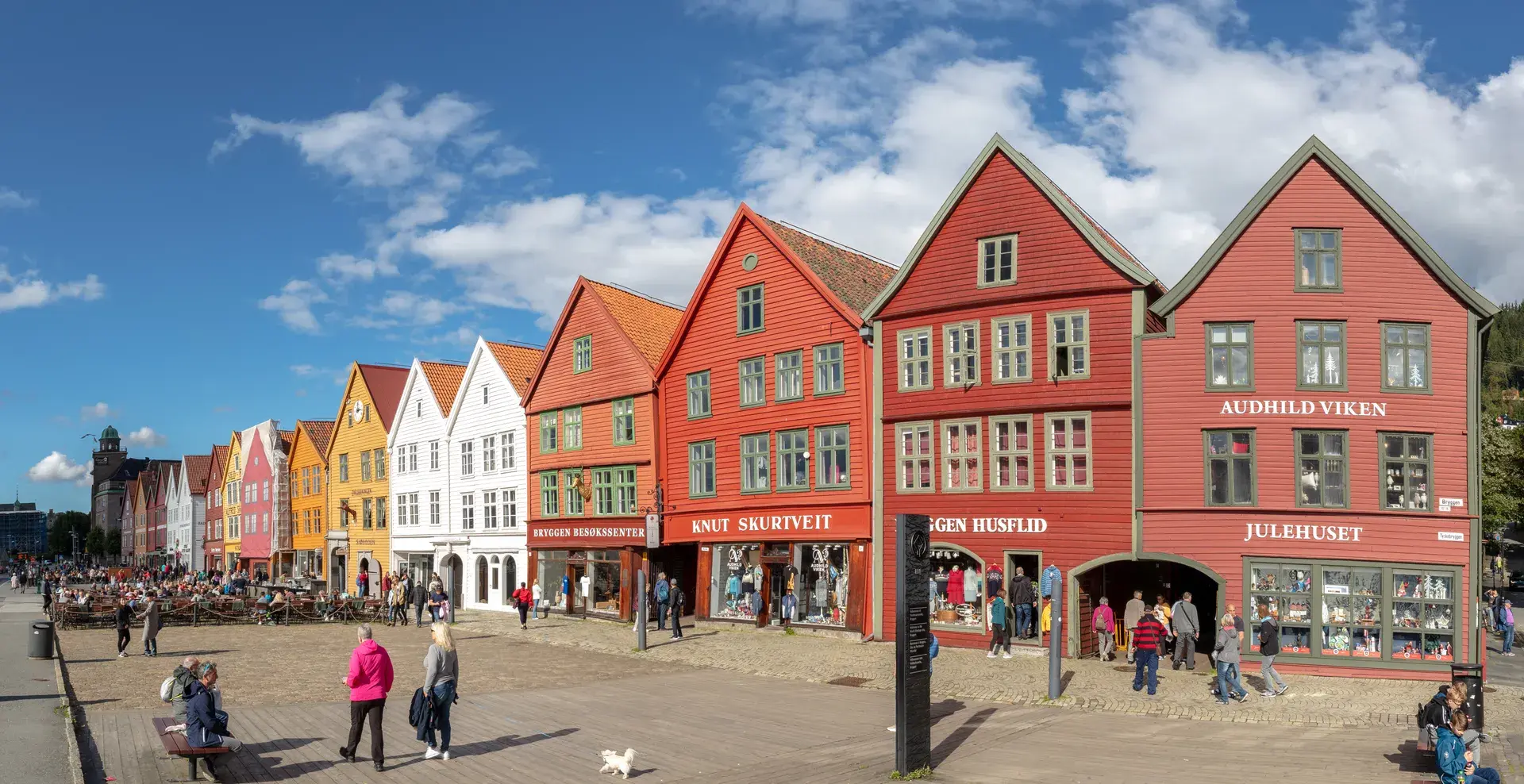
In 1408, the church was officially acquired by the powerful Hanseatic merchants based in Bryggen, after which it became known as "the German church." This patronage was crucial for its survival; the wealthy merchants kept the church in "wonderful condition," richly adorning its interior and ensuring its preservation while many other city churches fell into ruin.
The German influence was long-lasting. Although the Norwegian Parliament annulled the German congregation in 1839, sermons continued to be held in German until after the First World War. The church only became an ordinary Norwegian parish church in 1874.
Art and Interior Highlights
The interior of St. Mary's is famed for its ornate pulpit, a 1676 gift from German merchants. Considered unique in Norway, it features intricate carvings of eight Christian virtues personified as women. Other notable artworks include 15 life-sized statues of the apostles, John the Baptist, Moses, and Paul, sculpted by Søfferen Oelsen in 1643.
During a restoration in the 1930s, gravestones of German sea captains, merchants, and clergy from the 16th to 18th centuries were gathered from around the church and relaid on the choir floor. The same restoration uncovered faint traces of 15th-century medieval frescoes, though they are now fragmentary. The church also received Norway's first stained-glass window in 1336.
St. Mary's Church Today
Today, Mariakirken serves as an active parish church within the Church of Norway and is also used by the Bergen Anglican Church for English-language services. It is a significant cultural heritage site and a popular concert venue, hosting organ recitals, especially during the summer. In the summer months, the church is open to visitors as a museum with guided tours available. The building is handicap accessible, but visitors should note that photography is generally not permitted inside.
FAQ
When was St. Mary's Church in Bergen built?
Construction on St. Mary's Church began between the 1130s and 1140s and was completed around 1180, making it the oldest existing building in Bergen.
Why is St. Mary's Church also called "the German church"?
It was acquired by German merchants of the Hanseatic League in 1408 and served as their primary church for over 350 years. Reflecting this long history, German-language sermons were held there until after World War I.
What is the architectural style of St. Mary's Church?
The church is primarily a Romanesque basilica with two towers and three naves. It also incorporates Gothic elements, especially in the choir, which were added after a major fire in 1248.
What is the most famous feature inside St. Mary's Church?
The church is renowned for its magnificent baroque pulpit from 1676. A gift from German merchants, it is considered one of the finest in Norway and features detailed carvings of the eight virtues.