Bryggen: Bergen's Hanseatic Wharf & UNESCO Site
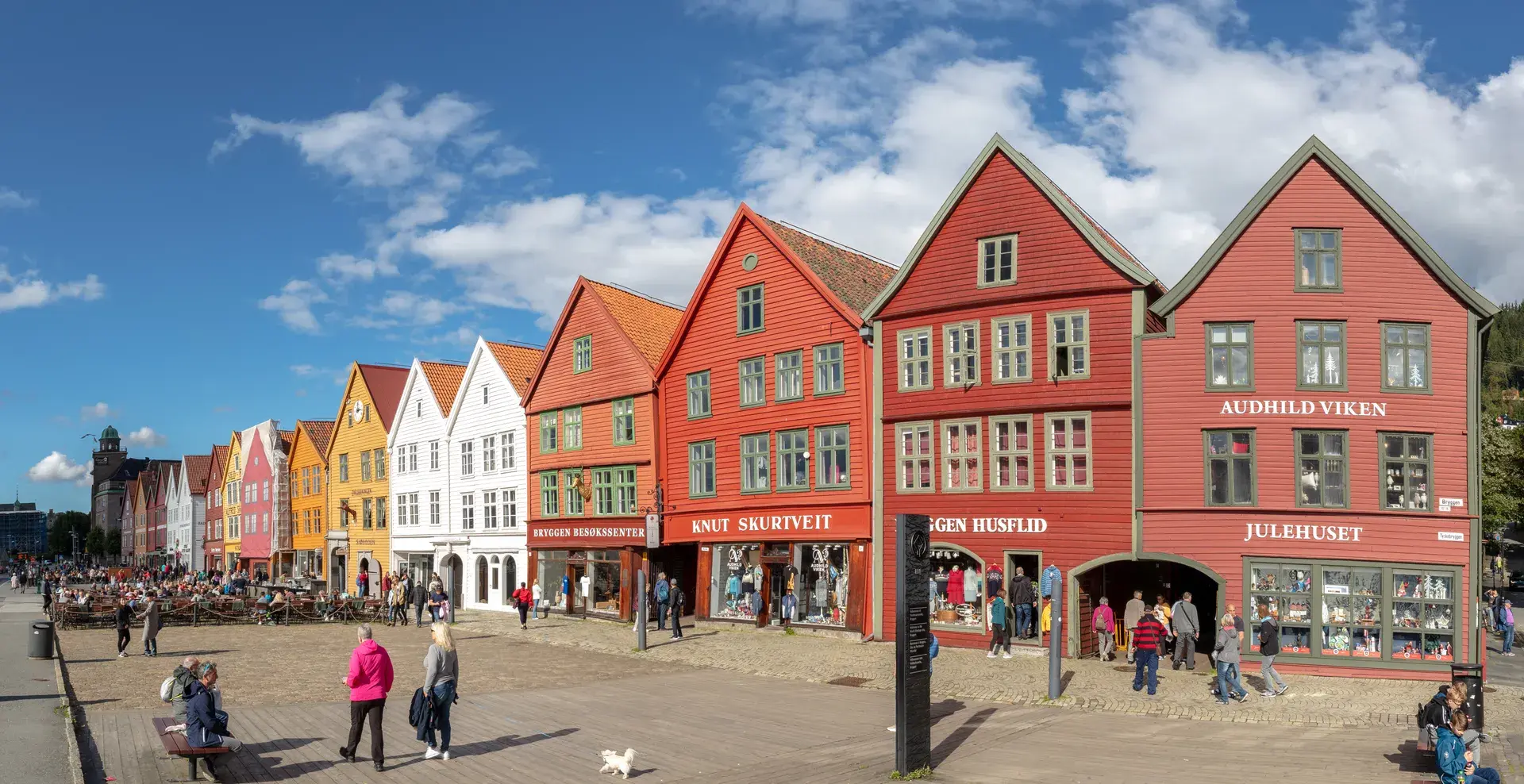
Bryggen, meaning 'the dock' in Norwegian, is the iconic row of colorful, timber-clad commercial buildings lining the eastern side of the Vågen harbor in Bergen. A protected UNESCO World Heritage site since 1979, this historic wharf stands as a testament to Bergen's importance as a major trading hub for centuries.
A Hub of Hanseatic Trade
Bergen was founded around 1070 AD, and the Bryggen area, with pier constructions dating to 1100, quickly became a vital center for trade, particularly for stockfish from northern Norway. Around 1350, the Hanseatic League, a powerful German merchant guild, established one of its four main overseas trading offices, or 'Kontors,' here. For nearly 400 years, these merchants dominated commerce, exchanging stockfish for grain and other European goods. During this period, the area was known as 'Tyskebryggen' (the German dock), a name that officially changed back to Bryggen in 1945.
A History Forged in Fire and Rebirth
Bryggen's wooden structures have been susceptible to fire throughout its history, with major blazes recorded in 1198, 1248, 1476, 1702, and 1955. Despite the destruction, the wharf was consistently rebuilt on its original 12th-century foundations, preserving the traditional medieval urban layout. Most of the existing gabled houses seen today date back to the reconstruction following the 1702 fire. Six of the houses are more recent copies, rebuilt after the fire of 1955.
From Near Demolition to Preservation
The greatest threat to Bryggen's existence came not from an ancient fire, but from modern development. After a devastating fire in 1955 destroyed a large section of the wharf, a public debate ensued, with many residents advocating for the demolition of the remaining fragile buildings to create a parking lot. Fortunately, preservationists prevailed. The fire led to a 13-year archaeological excavation, which unearthed hundreds of thousands of artifacts, including runic inscriptions detailing medieval daily life. These discoveries were a driving force for chief curator Asbjørn Herteig in establishing the Bryggens Museum in 1976 to preserve the site's heritage.
Bryggen Today: A Living Heritage Site
Today, Bryggen is a vibrant part of Bergen's cultural landscape and one of its main attractions. The narrow passages behind the famous facades house a variety of shops, art galleries, artist studios, restaurants, and pubs. The area includes museums such as the Bryggens Museum and the Hanseatic Museum and Schøtstuene, where the distinct smell of dried fish still evokes its trading past. Ongoing conservation projects, partly funded by the Port of Bergen, work to preserve the historical integrity of the timber structures for future generations.
FAQ
What is Bryggen?
Bryggen, meaning 'the dock,' is a series of historic Hanseatic commercial buildings on the Vågen harbor in Bergen, Norway. It is a UNESCO World Heritage Site known for its iconic, colorful wooden houses.
Why is Bryggen a UNESCO World Heritage Site?
Bryggen was inscribed as a UNESCO World Heritage Site in 1979. It represents a unique, preserved example of a medieval urban structure that was once common in Northern Europe and testifies to the history of the Hanseatic League's trading empire.
How old are the buildings in Bryggen?
While the area's foundations date back to the 12th century, most of the existing wooden buildings were rebuilt after a major fire in 1702. A smaller section was reconstructed following another fire in 1955.
What was the Hanseatic League's role in Bryggen?
The Hanseatic League established a major trading office (Kontor) in Bryggen around 1350. For almost 400 years, German merchants controlled the trade of stockfish from northern Norway in exchange for grain and other goods from Europe.